
Tea Knowledge
Lishan vs Alishan Tea: Price, Batch Details and a Tasting Budget
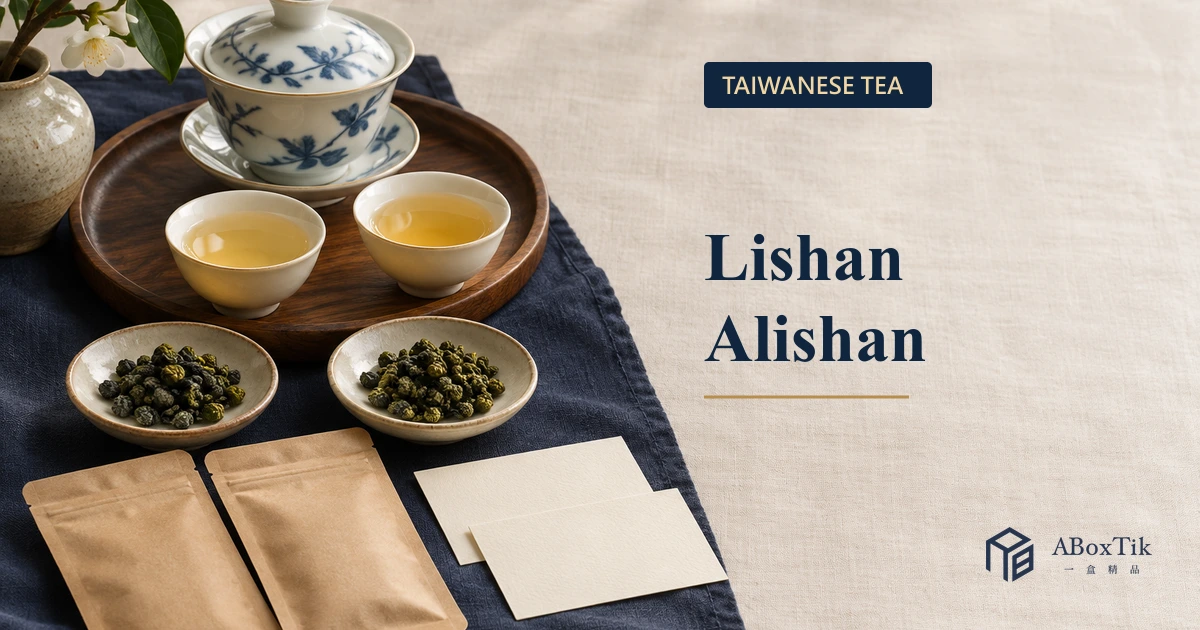
Choose between Lishan and Alishan tea by separating the total payment from the price for an equal weight, then asking which batch details explain the difference. Not every Lishan packet costs more than every Alishan packet. A higher price also cannot decide personal preference. A small comparison before a larger purchase often makes the decision easier.
This guide focuses on reading a price difference. It includes an explicitly fictional quotation and a staged sampling method, rather than a market-price survey or regional quality ranking. If the broader tea style is still undecided, begin with the Taiwanese tea overview and return to the budget once the shortlist is narrower.
A regional name starts the source question
Agricultural information places Lishan and Alishan within Taiwan’s high-mountain tea landscape. Products may supply a finer place name, garden or producer. Check the detail actually offered and ask about missing information; do not add an exact altitude or assign one guaranteed aroma to a whole mountain area.
The Lishan guide and Alishan regional comparison provide background. The item in the basket, however, has a particular cultivar, harvest year, season, processing direction and size. Matching regional names need not mean matching batches, while different regional names do not tell us whether everything else is comparable.
Convert the quotations to an equal buying unit
The following is an editorial calculation example, not an ABoxTik offer or a statement of current market prices. Suppose Alishan tea A costs NT$800 for 150 g, while Lishan tea B costs NT$700 for 100 g. B requires NT$100 less at checkout; A costs about NT$533 per 100 g while B costs NT$700. Both observations are correct, but they answer different questions.
| Fictional product | Whole packet | Approximate price per 100 g | Leaf cost for a 5 g portion |
|---|---|---|---|
| Alishan A: 150 g | NT$800 | NT$533.33 | NT$26.67 |
| Lishan B: 100 g | NT$700 | NT$700 | NT$35 |
The formula is price divided by net grams, multiplied by 100. For a serving’s leaf cost, multiply the price per gram by the actual amount taken. Five grams is merely the quantity chosen for this example, not a recipe for every vessel or a retail cup price. The number of infusions and the volume drunk remain separate variables, so the table promises neither.
Keep shipping, discounts, tins and gift packaging separate. A gram comparison is simplest between loose teas of similar format. Individually packed bags also include convenience, packaging and portioning. Separating the tea from the delivery format helps identify which part of the offer deserves a larger share of this particular budget.
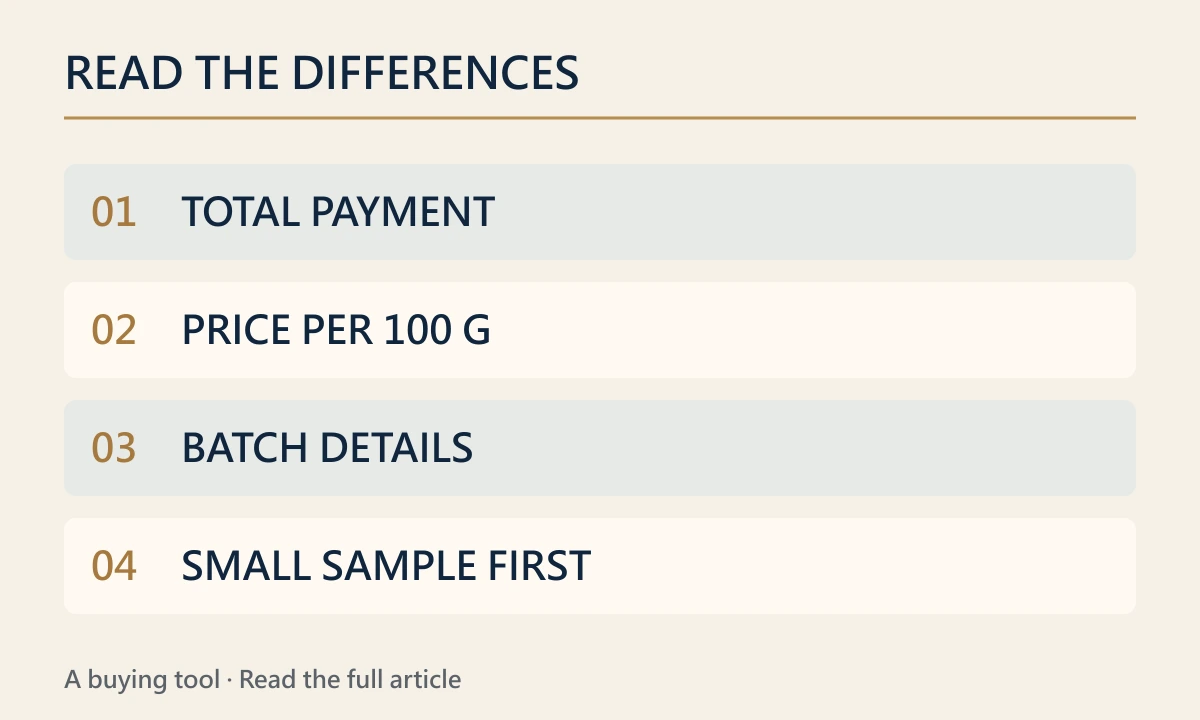
Ask what the premium means without inventing a reason
List cultivar, harvest year, season, roast and confirmed source details for both products. Ask the seller what distinguishes these two batches. If the answer concerns flavour, request a concrete description and preparation advice. If it concerns packaging or a limited quantity, record that as an offer condition rather than automatically translating it into a better-tasting cup.
Where origin-certification or lookup information is supplied, use the relevant official material to check the particular tea and scope. Compare the mark, lookup result and package details together, and ask the seller about unclear source fields. Asking for details or postponing a purchase are reasonable responses to an incomplete description.
If several conditions differ, you can still choose between the actual products, but calling the entire difference a Lishan premium goes beyond the comparison. Cultivar, processing, quantity and service may all change. The Taiwanese tea price and value guide offers a broader breakdown; here the useful fields are those that directly explain these two purchases.
Divide a sampling budget into three decisions
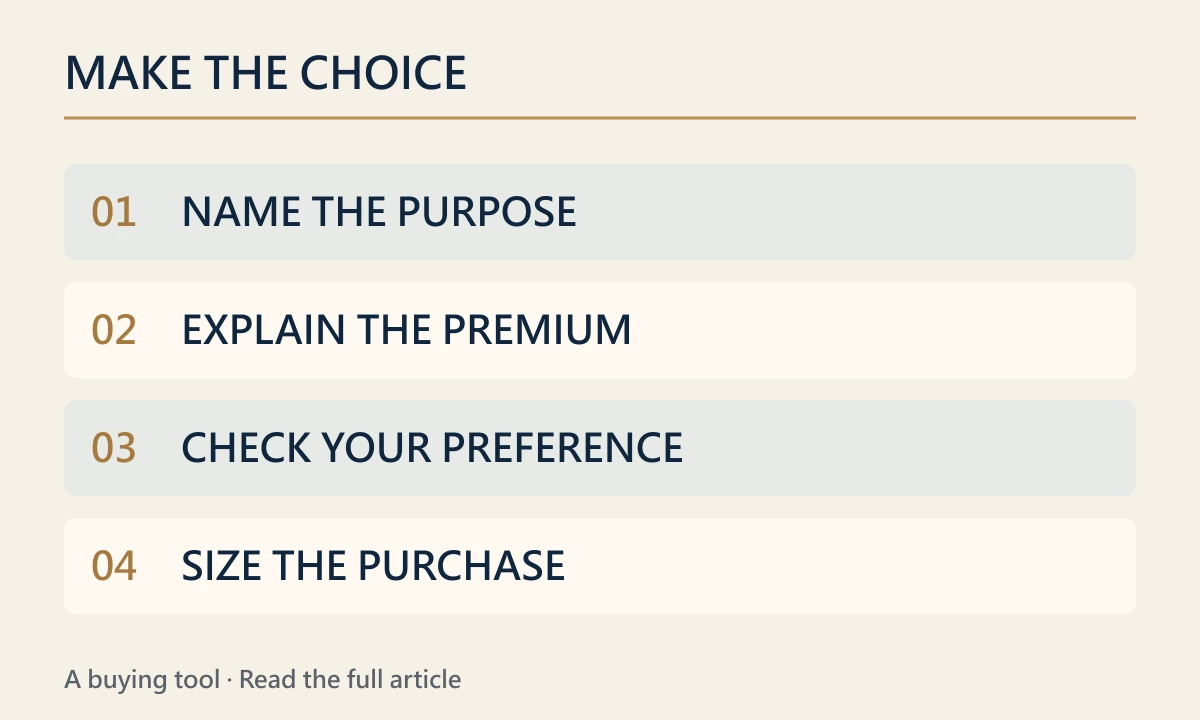
First, name the purpose: an everyday tea, a slower weekend comparison, or a gift for someone with an established preference. Set the acceptable total outlay, including shipping and the smallest available packet. It need not match the seller’s best-value bundle. If even a small quantity of one tea exceeds that limit, trying the other first is a complete and reasonable decision.
Second, if small portions or an in-store tasting are available, identify one difference that matters personally. It might be a preferred aroma, a comfortable body or a tea that is easier to prepare with the usual cup. Follow the product instructions and record leaf weight, water volume and time. Keep those conditions beside the impressions so the next tasting can build on the first.
Third, check the preference on another occasion. If the dearer tea offers an identifiable feature you value, choose a quantity that suits actual drinking frequency. If the difference remains unimportant, the less expensive or more convenient product can be a satisfying choice. If both appeal, one can serve daily use and the other occasional enjoyment without making a mountain name the only standard.
Keep enough detail to make the next purchase recognisable
Save the full product name, harvest information, size and batch details. Begin a repeat-order question with that item or a similar processing direction. Remembering only “the Lishan tea from last time” makes it harder to notice a new season or a changed product. Natural material and production batches vary, so rereading the current description is more useful than guaranteeing an identical cup from memory.
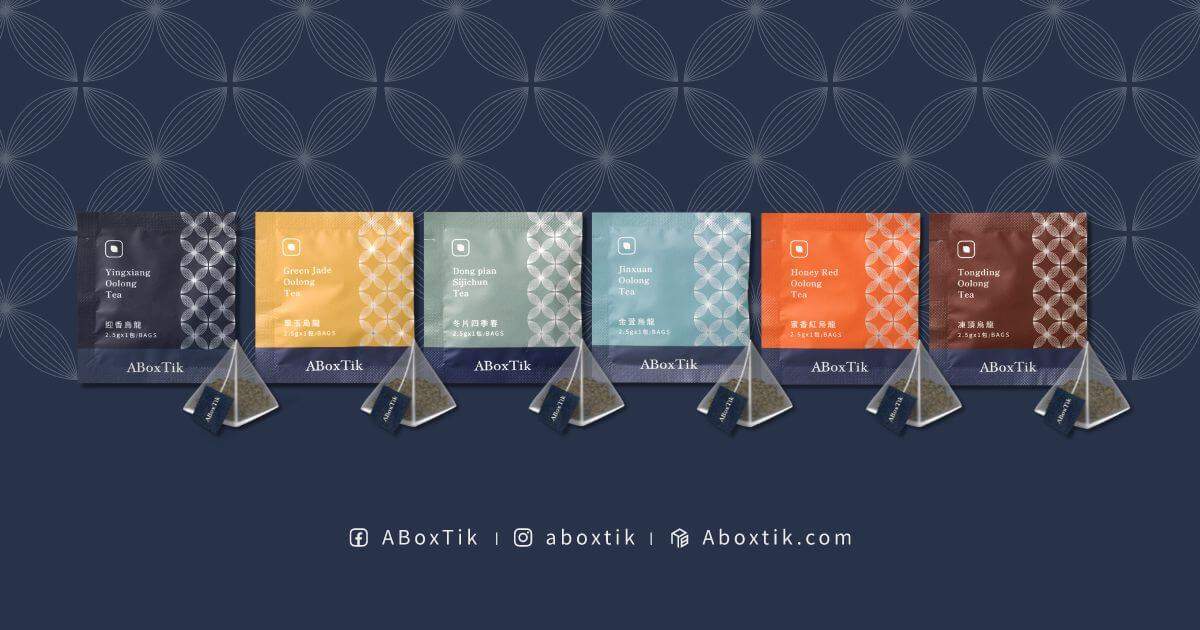
For gifts, add the recipient’s preferences, brewing equipment and presentation needs. A larger budget may usefully fund convenient portions or a clear preparation note instead of a higher unit price. The ABoxTik Taiwanese tea and gift selection shows actual products. Use the actual product specifications and contents when applying the calculation to a purchase.
Common questions about Lishan and Alishan prices
Is Lishan always more expensive?
A regional name cannot establish that. Compare actual weights, harvests, cultivars, processing and offer contents. This guide supplies no regional average price.
Should I buy a larger packet for a lower unit price?
Check the total payment and a usable quantity too. A lower price per gram does not make tea that will remain unused a suitable purchase.
Should I spend more if I cannot taste the price difference?
Check preparation and product information first, then choose according to a difference that matters personally. A budget sets a purchasing boundary; it does not score tasting ability.
The arithmetic is finished; preference can take its time. Tea gifts, further reading and current selections below offer a comfortable place to plan the next cup.
Sources
- Agricultural Knowledge Portal: Taiwanese Tea Regions
- Tea and Beverage Research Station: Origin Certification Marks
Sources reviewed 17 November 2026. Methods and fictional calculations are editorial tools; product details follow the current listing.