
Tea Knowledge
How to Ask Whether Someone Drinks Tea Before Giving a Gift
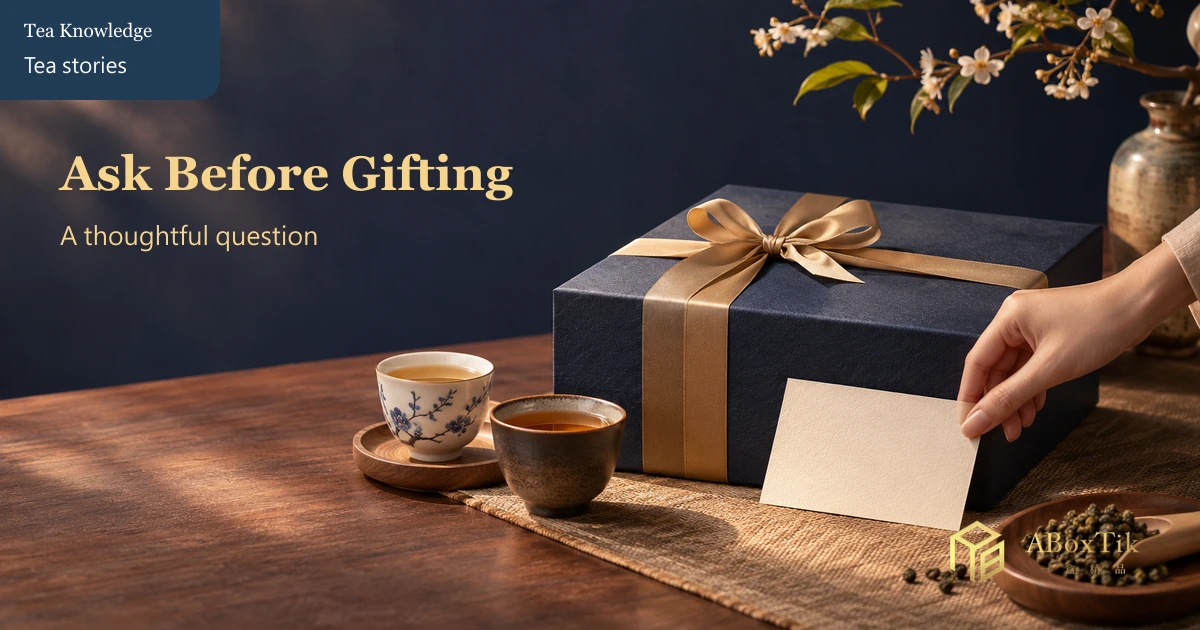
A tea gift can begin with a small question: does the recipient actually drink tea? There is no need for a survey. A gentle question about everyday drinks, the equipment they use or the occasion can make the choice more useful while leaving room for an easy answer.
Ask about a routine rather than guessing
Try “Have you been enjoying any particular drinks lately?” and listen for tea, coffee or caffeine-free options. If the response is uncertain, there is no need to ask why. Another kind of gift may fit better. One tea does not have to be everyone’s favourite, and thoughtfulness is not a guessing competition.
Three natural ways to ask
A close friend: “Have you been drinking tea lately? Do you prefer a light floral cup or a roasted one?” A host: “I would love to bring a small gift to share. Does your household enjoy tea?” A business contact: “I am preparing a small thank-you; is there a gift policy I should keep in mind?” Adapt the words to the relationship and leave space for a comfortable no.
Consider the preparation barrier
If tea is welcome, ask whether the person usually uses a mug, teapot or office hot-water dispenser. Loose leaf and tea bags involve different routines; check the current package for what is actually included. When you do not know the recipient’s vessel size, include the package directions and an invitation to adjust, rather than prescribing one fixed ratio.
Respect ingredients and timing
Tea from the tea plant generally contains caffeine, and herbal blends have their own ingredient lists. If someone mentions avoiding an ingredient or drink, respect that choice and check the label without asking for private medical details. A person needing individual guidance can consult an appropriate professional. A light colour alone does not establish that a tea is caffeine-free.
Think about delivery and a note
For a shared gift, consider the number of people and applicable workplace rules. Before shipping, confirm a convenient delivery method and time; handle addresses only as needed. A note can say, “I thought of your quiet tea moments and chose this small gift. Enjoy it whenever it suits you.” A simple message leaves the recipient free to enjoy it at their own pace.
Common questions
Must I spoil the surprise by asking? You can ask about drinks without revealing the gift. What if the person does not drink tea? Thank them for telling you and choose something else. What if there is no clear answer? Give them room, then consider whether a shareable option is appropriate before deciding.
Make the question easy to answer
After an open question, a few relaxed choices can help: “Have you been drinking more tea, coffee or something else lately?” If the answer is “anything is fine,” accept it rather than interviewing the person through an entire flavour wheel. With a close friend, you might ask about a preferred aroma. With someone you know less well, ask whether hot water and a cup are convenient in their usual routine. “I rarely prepare drinks at home” is already useful information about equipment and occasion.
If you want to preserve a surprise, mention a tea you recently tried and ask naturally what the person usually chooses. Do not seek private health details through mutual friends, and do not treat silence as consent. Use an answer for this gift decision; confirm any shipping details through an appropriate channel and handle contact information only as needed.
Adapt to the relationship and occasion
A close friend might welcome a direct question about floral or roasted notes, tea bags or loose leaf, or even an invitation to choose. For a first visit, ask whether the household drinks tea and whether a shareable gift is convenient. In a business relationship, check the organisation’s gift policy and avoid creating pressure through the value of the gift. Do not assume a personal address is available or appropriate for delivery.
For a group, consider the actual number of recipients, storage and available equipment alongside the package size. For one person, consider how easily a serving can be prepared. Products and packaging can change, so check the current ingredients, date information and instructions before ordering. Ask the supplier about anything that is not clear rather than promising a format or service from an old description.
When the answer is uncertain
“I am not sure” may simply mean the person has not noticed a preference. A friendly response is “No problem, thank you for telling me; I will find something convenient.” If someone says tea affects their routine, respect the choice rather than promising that a particular tea has no caffeine. Check any flowers, fruit or other additions against the actual ingredient list. If no suitable tea is apparent, another gift can be just as considerate.
A gift note need not prescribe when the tea should be consumed. “I hope you enjoy this whenever it suits you” or a simple thank-you is enough. Put the original package’s brewing guidance somewhere easy to find, leaving the recipient room to decide whether and when to open the gift.
Match the question to the relationship
A close friend can usually answer a direct preference question. A host may find an occasion-based question easier: “Would tea be useful for the gathering, and does the household usually brew with bags, a pot or neither?” For a colleague or client, begin with the organisation’s gift policy and a work channel. For someone you barely know, asking the person who invited you about an appropriate shared gift may be kinder than collecting a private profile.
| Situation | A natural first question | If the answer is unclear |
|---|---|---|
| Friend or relative | “What drinks have you been enjoying lately?” | Offer two broad directions or choose another gift |
| First visit | “Would a small tea gift be useful for the household?” | Choose a shareable alternative without special equipment |
| Work relationship | “Is there a gift policy or delivery process I should follow?” | Pause until the appropriate contact confirms |
| Remote delivery | “Which authorised delivery method and time are convenient?” | Do not obtain a private address from an unrelated source |
Keep the surprise in the wrapping, not in the suitability
A surprise can survive one small question. Ask about the recipient’s routine without naming the product, or offer a choice between “a drink to share” and “something non-food.” If they say they avoid tea, ingredients or gifts at work, accept the answer without asking for a diagnosis or explanation. Emily Post’s workplace guidance notes that organisational gift rules can limit what employees may accept; it is a reminder to check the actual recipient’s policy, not a universal dollar threshold.
If there is no answer, do not turn silence into approval. Set a simple decision point: wait, choose a low-pressure shared option that has been confirmed appropriate, or give something else. A gift should arrive with warmth, not an unexpected form to complete.
Use a six-line note before buying
Write: relationship and occasion; drinks they have actually mentioned; convenient equipment; ingredients or formats they volunteered avoiding; gift or delivery policy; and what remains unknown. Then choose only from current product information. Keep the note for this decision rather than building a permanent dossier of somebody’s habits. For delivery, ask the recipient or an authorised organiser for the necessary details and use the agreed channel.
Before checkout, read the current product name, net contents, ingredient declaration, preparation directions, storage information and delivery terms. A tasting description helps choose a direction but does not replace the ingredient list. If one essential field remains unclear, ask the supplier or change the gift. That tiny pause is often the most considerate part of the package.
Explore next
A gift for a host · Tea gifts for parents
Sources
- Emily Post Institute: Corporate Gift Giving
- Emily Post Institute: Returning a Client’s Gift
- Emily Post Institute: The Business of Thanks
Checked 12 November 2026. These are etiquette references, not universal company policies; confirm the recipient organisation’s current rules.