
Tea Knowledge
Packing Tea Gifts for International Delegations: A Practical Checklist
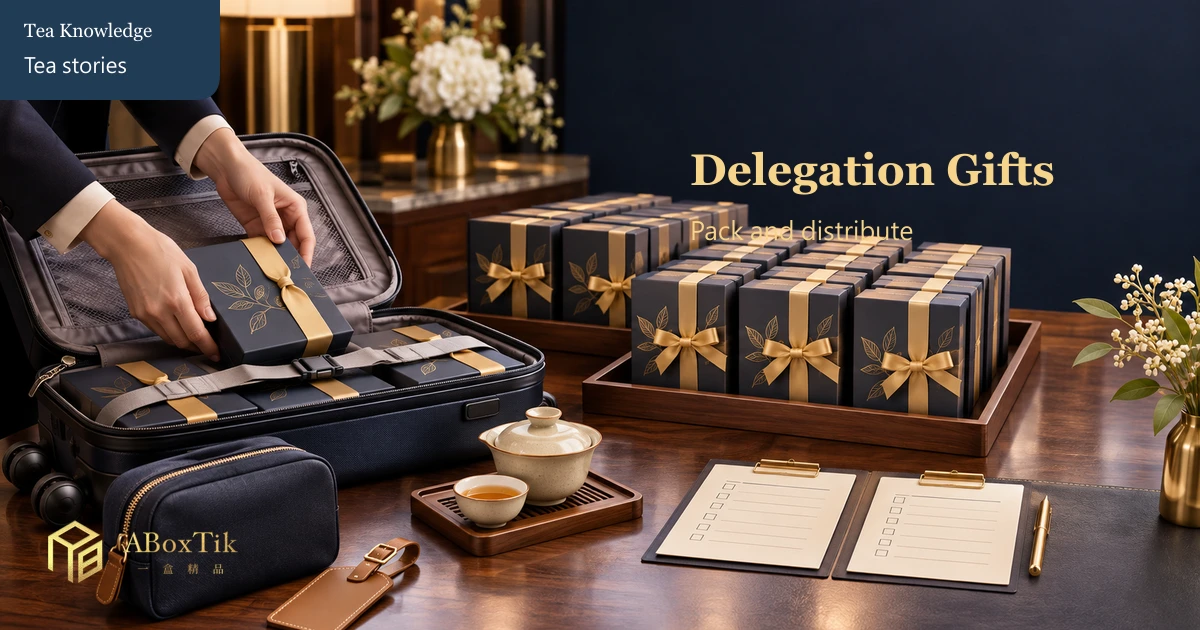
Start with people, routes and handover times
Packing tea gifts for an international delegation begins with three decisions: who will receive a gift, how the gifts will travel, and when each group will receive them. Put those answers in one shared list before choosing boxes. A large stack of gifts is manageable when the next person can see where each one belongs.
List delegates, hosts and any other intended recipients. Mark whether the plan is one gift per person or one per group. Separate confirmed numbers from estimates and record the date of the latest update. Keep spare gifts in their own column and name the person who can allocate them. That small distinction prevents the reserve from quietly becoming part of two different groups’ counts.
Make a group list that travels with the boxes
For each group, record its name, quantity, tea selection, language version, handover location and responsible person. Add a clear external identifier when boxes contain different selections. Leave a column for the actual handover and another for exceptions, so the list remains useful after the first gift has been presented.
Imagine one group receiving gifts at an airport welcome and another after a meeting. Pack those groups separately and label each outer carton with its group and count. Put cards in the same place inside each gift. If the detailed list contains personal information, share it only with people who need it; a group code on an outer carton is often enough for handling.
Check each leg before choosing carry-on, checked baggage or shipping
Write the outbound journey, connections and destination as separate lines. For each, note whether a traveller will carry the gifts, place them in checked baggage or send them through a carrier. These routes may have different requirements. Check the current size, weight and contents rules with the airline, airport and relevant authorities, and ask a shipping provider about destination and clearance documents when using a separate shipment.
Do not stop at a search for “tea”. The actual gift could contain plain tea leaves, a blend with flowers or fruit, or other foods alongside the tea. Keep the original packaging and ingredient information and check the actual contents with the destination authority. If a connection involves entry or rechecking baggage, check that part of the journey too. When a rule is unclear, ask the carrier and the responsible authority before packing.
Use the US traveller guidance as an example of the process
The US Department of Agriculture’s Animal and Plant Health Inspection Service distinguishes tea made solely from tea leaves from herbal mixtures in its traveller guidance. The same guidance says travellers entering the United States must declare agricultural products. Some herbal ingredients have additional packaging or inspection conditions, and officials make the entry determination.
The useful habit is the sequence: identify the ingredients, identify the destination and transport method, read the applicable current official guidance, and save its link and the date checked in the planning sheet. US traveller guidance is specific to that situation. It should not be treated as the rule for another country, postal shipment or commercial import. For those cases, check the authority and carrier responsible for the actual route.
Pack for the person who opens the next box
Inspect the original seals and gift boxes first, then choose cartons that fit the actual dimensions. Use dividers or clear labels to separate groups, leaving enough room to avoid crushing the presentation boxes. A card placed consistently in each gift helps a busy host find it without unpacking every layer. Include an appropriate greeting, the giving organisation and a short message.
When checking language versions, compare the tea name, contents and brewing information with the product itself. Keep an editable card text and a contact for corrections if a replacement is needed. Avoid reconstructing ingredient information from memory at the venue. For a broader planning view, the existing overseas corporate tea gift guide is a useful companion.
Count once before departure and once at handover
Have two people check the list against the packed gifts: total count, group quantities, reserve, cards and responsible contacts. Record where each carton is going and confirm everyone is using the current list. If the itinerary changes, update the master copy first and tell the next person in the chain what changed. Two independently edited lists can be more confusing than one imperfect box.
At the venue, record how many gifts were handed over for each group and why any remained undelivered. Assign one person to look after the reserve. Before returning or arranging shipment, count the remaining gifts and pass on the relevant list. The process can be quiet and simple: its purpose is to give the host a clear next step, not to turn a welcome into an inventory meeting.
Leave room for a gracious welcome
Choose a tea gift around the occasion, quantity and available carrying space, then confirm the current product specifications and delivery timing. Where guests need information in different languages, prepare matching cards in advance so that the tea name and brewing instructions are easy to find. A small, legible card can do more work than a long message tucked somewhere unexpected.
For a second look at quantities and delivery milestones, use the corporate gift final checklist linked below. Once the route and recipients are clear, select the teas that fit the occasion and the actual product information. With the details settled before departure, there is a little more room at the event for the conversation that the gift was meant to begin.
Related reading
One final check: keep the record with the real object
Before handover, storage or use, compare the sheet with the actual item once more. Check the name, version, quantity, date, language and owner. If information will be separated from its original package, keep the necessary details with the item in a form the next person can find. When a condition changes, update the master version and tell the person taking over. Finish with a short result and one next adjustment, so this experience becomes a useful starting point rather than a page everyone remembers seeing but nobody can find.
Turn the rule check into a destination card
Create one card for each destination: country or region, transit point, travel method, full product name, ingredients, origin, package condition, official link, check date and owner. U.S. Customs and Border Protection tells travellers to declare food and agricultural items, while the European Commission’s plant-health page shows that passengers’ plant products can be subject to different documents and exemptions. One search cannot give a tea box a worldwide passport.
Record only what was confirmed for this trip; never write “always allowed” or “all teas allowed.” Check pure tea separately from blends containing fruit peel, seeds or herbs, and check mixed food gift sets separately again. Passenger baggage, checked luggage, post and commercial import are different routes. When the official page does not answer the exact case, keep the original packaging, ask the destination authority or carrier, and attach the dated reply to the handover sheet.