
Tea Knowledge
A Tea Gift for a First Home Visit: A Host-Gift Guide
Bring a little thoughtfulness into a home, and leave room for the host’s own rhythm.
Tea can be a useful first-visit host gift when the household drinks it, the format fits and it creates no extra entertaining work. Ask whether a little tea would be welcome, learn what utensils are normally used and choose a manageable, clearly labelled portion. When handing it over, say it can be enjoyed another day.
The gift and the evening’s refreshments are separate decisions. A box of tea need not quietly become an instruction to wash another set of cups. This guide concerns private homes; preparing tea gifts across cultures addresses workplace policies and handover arrangements.
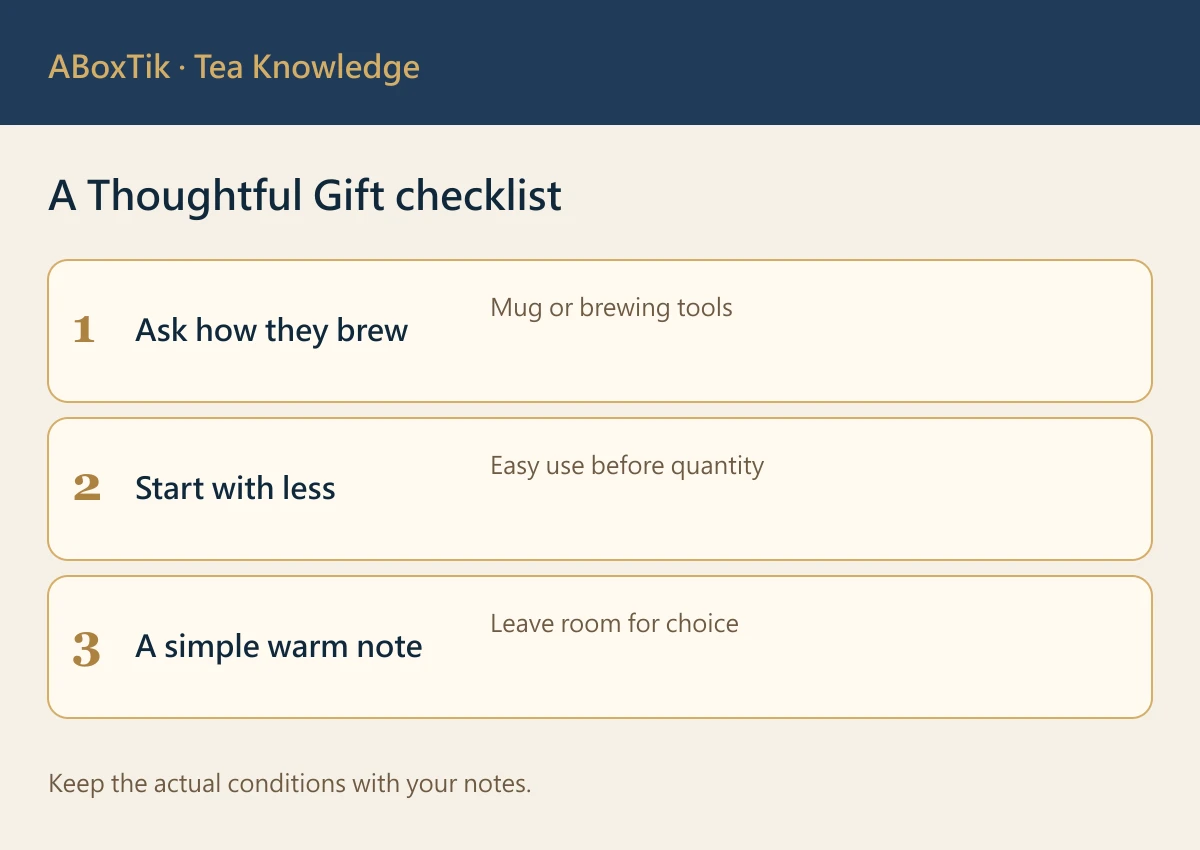
Ask whether bringing tea would be welcome
A light, answerable question works well: “Would a little tea for another day be welcome?” It is easier to respond to than a demand to name a favourite cultivar. If the host says there is no need to bring anything, accept that answer rather than beginning a second round of persuasion.
If there is a familiar tea habit, ask about bags or loose leaf and a fresh or roasted direction. the tea gift box guide offers a fuller checklist. For a first visit, choose the two or three questions that matter instead of turning a friendly conversation into a preference survey.
Taiwan’s cultural record of roadside tea provision offers background on tea and care for travellers. A private host gift is a different setting. The arrangements here are editorial suggestions for consideration, rather than a uniform rule for every Taiwanese household.
Choose for the household’s cups before choosing a tea name
For someone using a mug and kettle, individually wrapped tea bags with clear removal guidance can be practical. For a household accustomed to pot brewing, loose leaf may fit an established preference. Whole-leaf tea bags and gaiwans and teapots explain formats without grading how knowledgeable the host is.
When preferences are uncertain, modest portions and clearly different flavour directions are easier to use than many similar teas. Ask whether fresh floral or warm roasted notes sound more familiar, then read the actual product contents. Light and roasted styles supplies a simple vocabulary.
Confirm ingredients and anything the recipient does not wish to drink. If tea itself is unwelcome, choose an appropriate alternative or bring only a warm greeting. Do not decide on the host’s behalf that a particular tea must be acceptable.
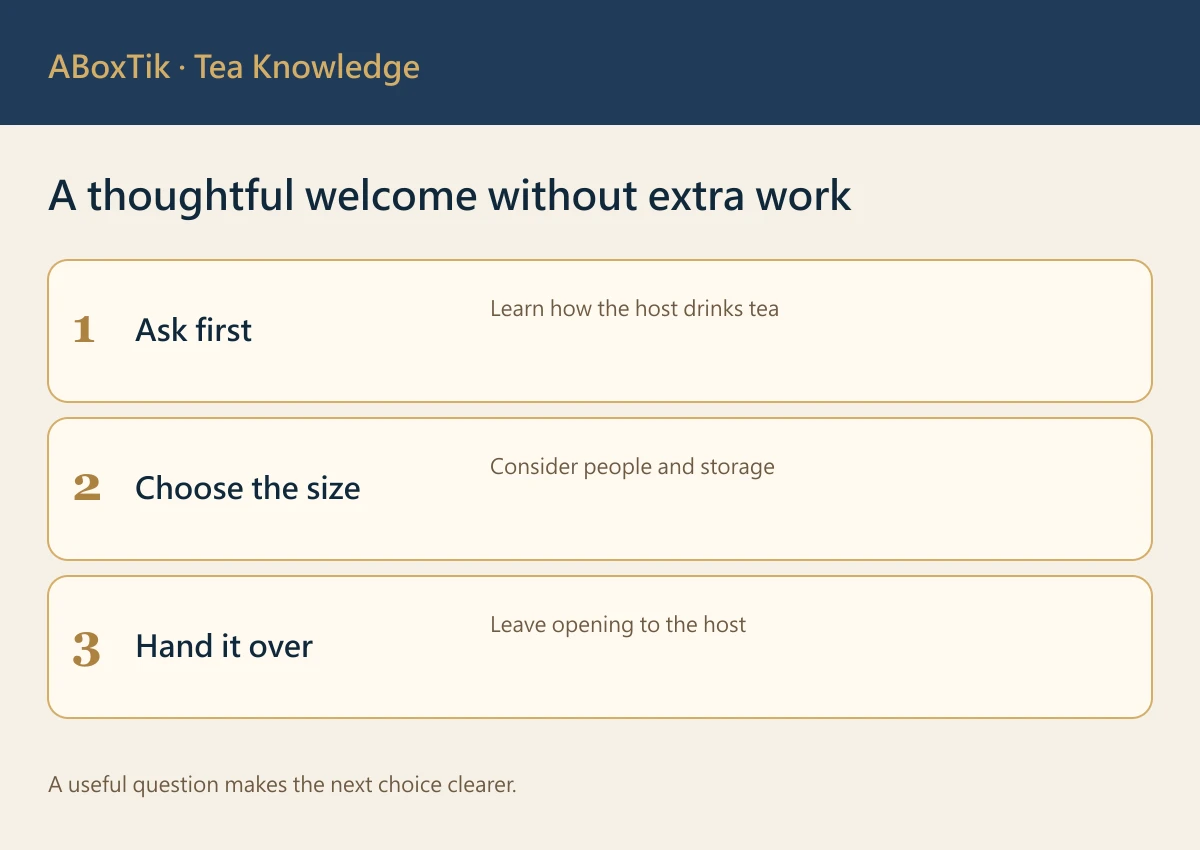
Portion and packaging should fit into a home
Think about one or two people enjoying tea gradually, or a household sharing it. Choose packaging that can be opened and kept conveniently. An oversized box or awkward inner package can become a problem before the tea is tasted; occupying half a cupboard is not a necessary measure of thoughtfulness.
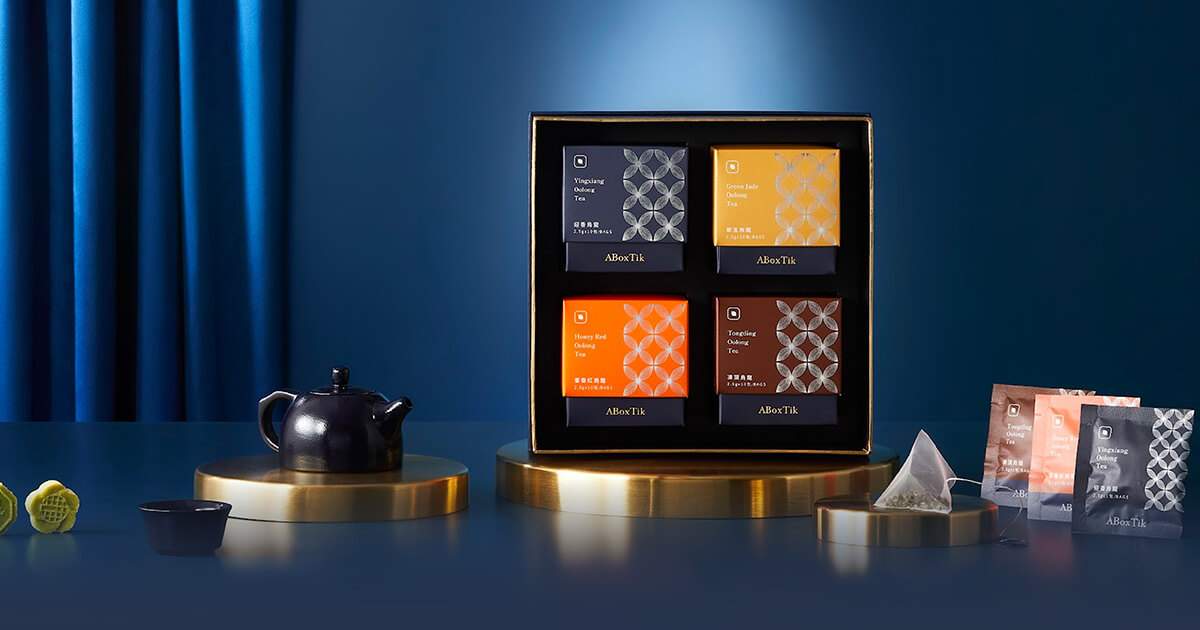
Read net weight, contents, seals, storage directions and dates. Compare the formats in the two-box tea bag gift, the four-box tea selection and the mixed tea bag set. Confirm current contents rather than treating the number of boxes as the number of servings.
For a longer journey, check carrying dimensions and protection from knocks. Once delivered, a brief storage note is enough. The host can decide where it belongs and when it will be shared; the gift does not reserve a permanent place in the living room.
Write the card to a person, rather than to a tasting panel
A short message can say, “Thank you for inviting us—some Taiwanese tea for an ordinary day.” Add the actual tea name and useful preparation information. An understandable greeting and an easy first step do more than insisting something is expensive, rare or compulsory to try.
If adding background, choose one supported place or processing detail. Taiwanese tea landscapes and craft can be read later by someone who wants more context. Keep aroma associations open to personal perception and leave health promises out of a friendly gift message.
Include a name so the recipient can remember the gift later. Price and purchase details need not lead the evening’s conversation. Tea can remain a present without carrying a certificate of the giver’s good intentions.
Make it clear that opening the gift can wait
At a suitable moment after arriving, offer the tea briefly: “A little tea for another day; there is no need to make it tonight.” That separates the gift from a serving task and respects the drinks and food the host has already planned.
If the host wants to brew it, help find the actual directions and let the host arrange the table. Avoid taking over or reviewing the tea already being served. Comfortable tea hospitality depends on genuine choice; a visitor can help preserve it too.
Someone may prefer water, no drink or a later cup. Allow each answer to stand. A first gathering does not require unanimous applause for one tea. Comfortable conversation is already a generous form of welcome.
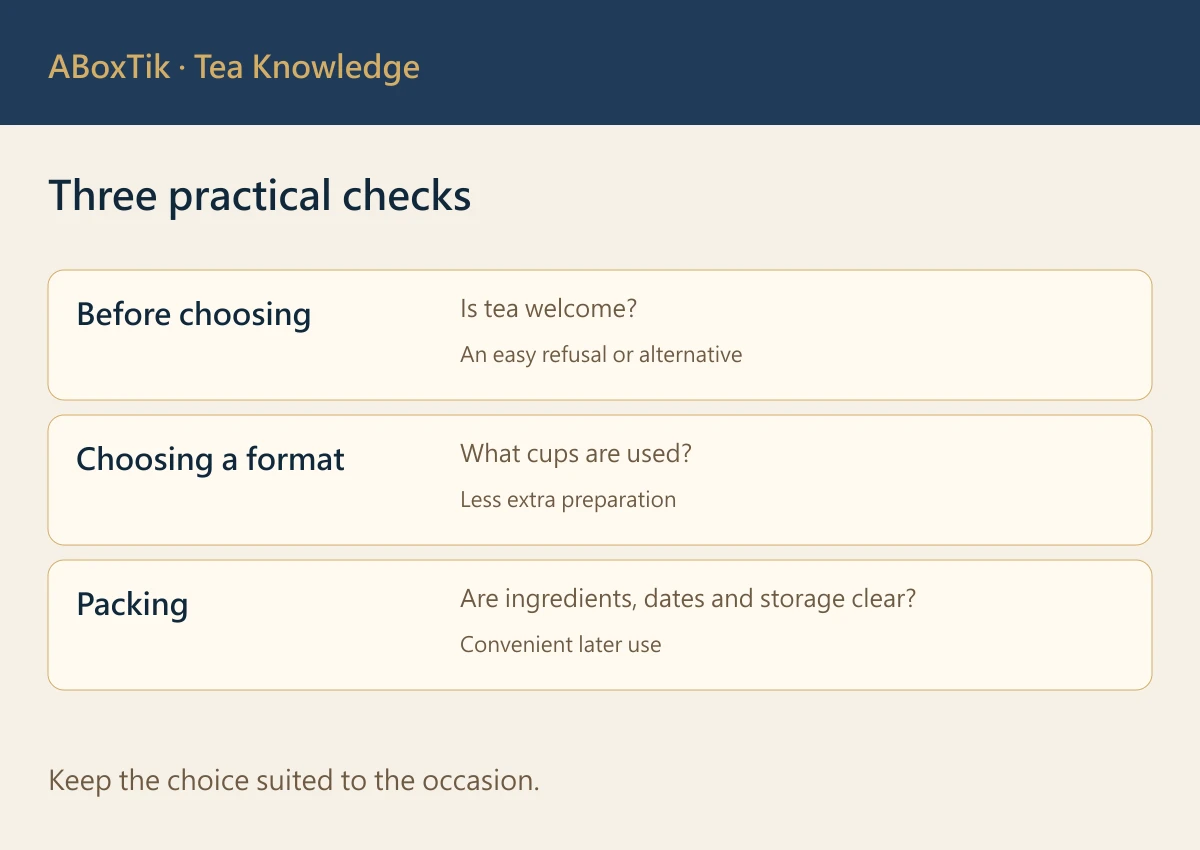
Five checks before the visit, and a little room afterwards
| Moment | Check | Make room for |
|---|---|---|
| Before choosing | Is tea welcome? | An easy refusal or alternative |
| Choosing a format | What cups are used? | Less extra preparation |
| Packing | Are ingredients, dates and storage clear? | Convenient later use |
| Handover | Is the host busy? | A brief greeting without opening demands |
| Afterwards | Is more information wanted? | Answering without chasing a review |
Try writing the one sentence you want the card to convey, then remove a request that might create pressure, such as “You must try it tonight.” Let the greeting remain and give the present its own timetable.
If brewing questions arrive later, send the relevant product guidance and basic brewing and pouring steps. Aroma and timing can follow when useful. There is no need to ask the next morning for a score: tea and new friendships both have room to develop gradually.
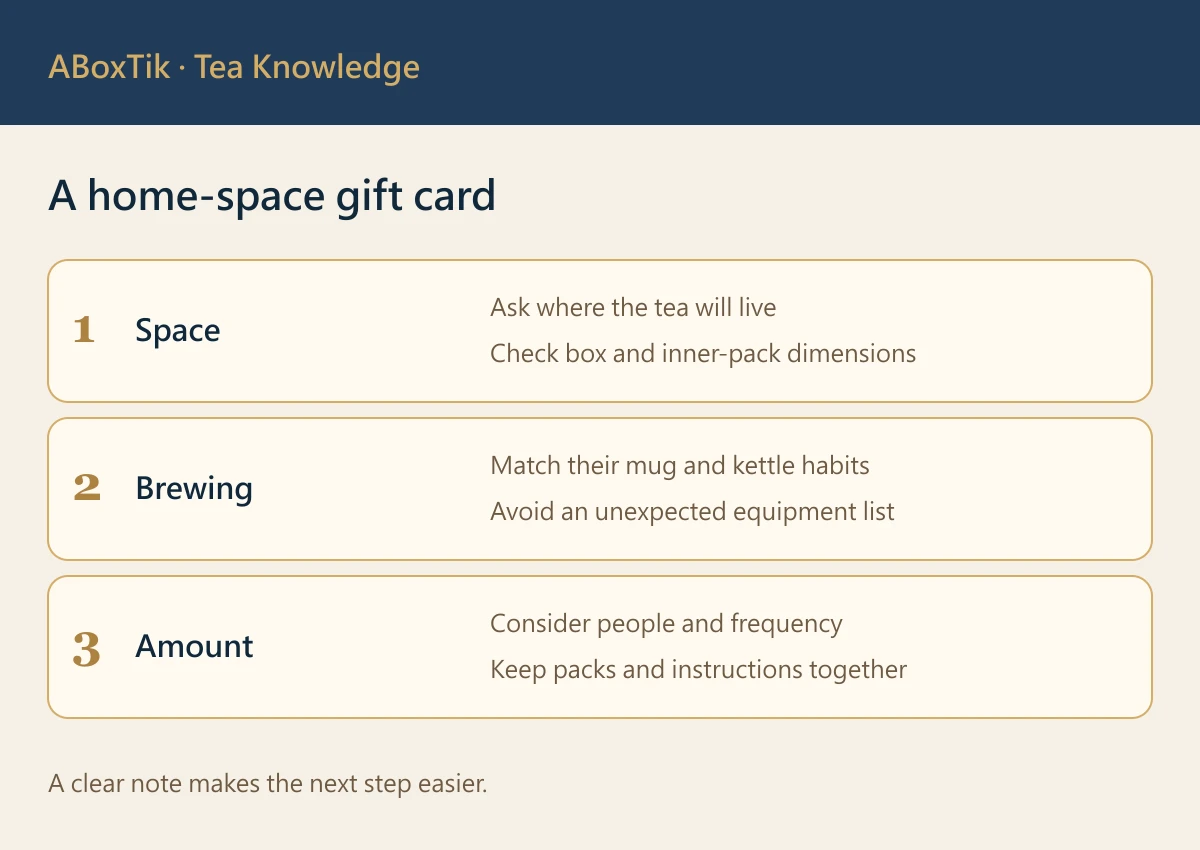
A new-home tea gift card: fit the space before choosing the box
In a newly occupied home, even the cupboard may still be on probation. Ask whether the household currently uses mugs or an established tea setup. No floor plan is required, and the gift need not become a home inspection.
| Daily setting | One gentle question | Specification to compare |
|---|---|---|
| Small kitchen and limited storage | Where will tea live, and will the outer box stay? | Box dimensions, identifiable inner packs and resealing |
| Mug and kettle only | What size mug is normally used? | An easy leaf-separation format and actual instructions |
| Two people on different schedules | Do you drink together or separately? | Manageable portions and convenient access |
| Occasional visitors | Is the tea mainly for ordinary days or sharing? | Real portion count, tea identification and guidance |
If the answer is “we have not found a place for tea yet,” choose a manageable format or wait until the household settles. A card can say, “Enjoy this whenever it suits you; there is no need to brew it today.” The hosts keep control of their new space.
A quick exercise: complete three blanks: where it will live, how it will be brewed, and who will use it. Compare the answers with package dimensions and contents. Ask about a missing field instead of adding more boxes. The size of the thought and the size of the packaging do not have to match.
For a relative whose preferences you do not know
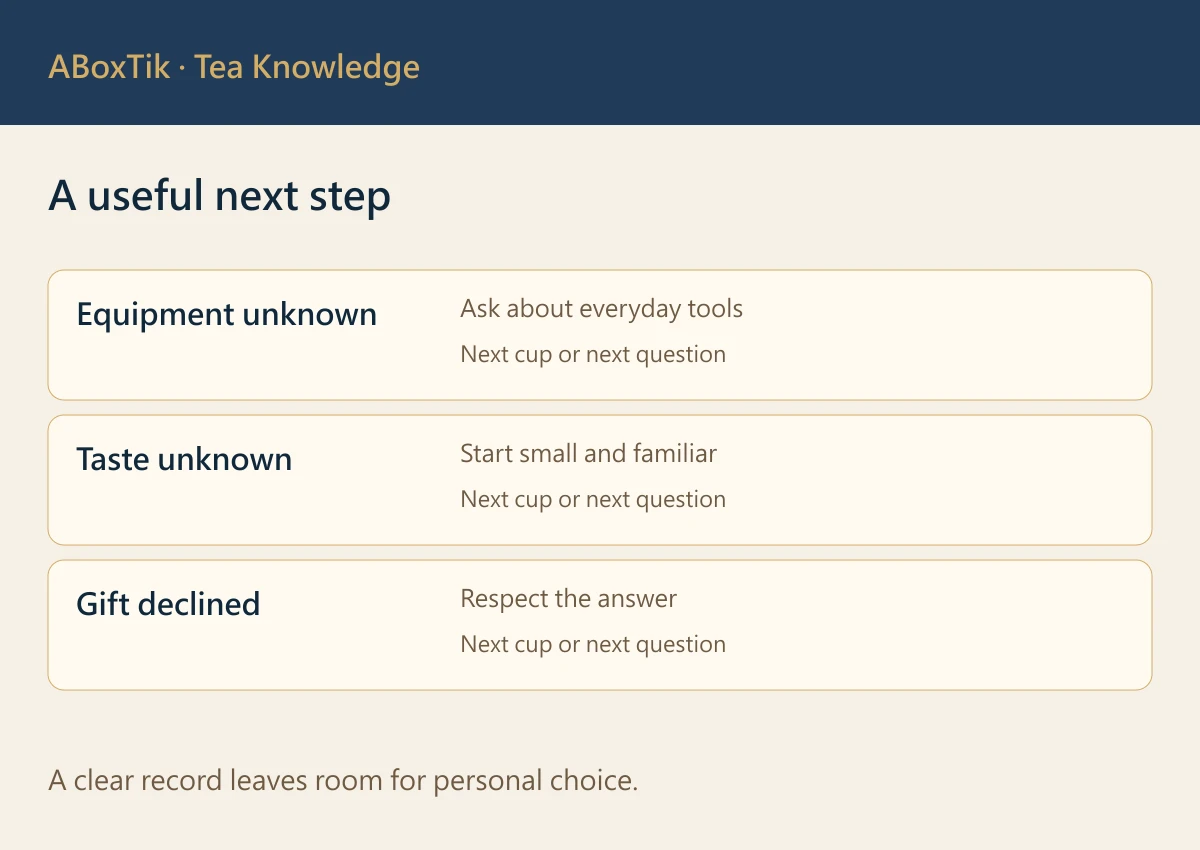
If you rarely share tea, ask someone who knows the recipient whether they drink tea, usually use tea bags or loose leaves, and avoid any ingredients. If you cannot find out, consider a small format with clear information and leave room for the person to decline or choose something else. Family connection does not automatically reveal taste; a gift that is easy to use can be a considerate beginning.
| What is known | Direction | Check before giving |
|---|---|---|
| Usually uses a mug | Individually portioned, easy-to-remove tea bags | Ingredients, quantity and brewing guidance |
| Uses a teapot | Compare loose tea against known preferences | Tea, amount and storage |
| Flavour unknown | A small selection with clear differences | Avoid assuming a favourite |
| Does not drink tea or cannot accept gifts | Respect the answer and choose another gesture | No need to insist on tea |
At the handover, a simple ‘Please enjoy this whenever convenient; there is no need to open it today’ gives the recipient space. Include the tea name, sender and a brief greeting with the actual product instructions. If the box will be divided among several people, make sure each portion can be identified and stored appropriately. The size of a box need not measure a relationship; clarity makes a thoughtful gift easier to enjoy.
If a family member can help, keep the question light: ‘Do they usually drink tea? Would tea bags or loose leaves be more convenient?’ Listen before asking about flavours. If the answer is simply ‘either is fine’, there is no need to turn it into a detailed questionnaire. Choose a clearly labelled, manageable amount and leave room for a different choice.
Some gifts are intended for sharing; others fit one person’s quiet routine. Check the actual number of portions, individual packaging and how the package closes after opening. If it will be divided among family members, a recognizable tea name is more helpful than an elegant outer sleeve that leaves every inner packet anonymous. Confirm the current contents and options before ordering.
If the recipient later asks how to brew it, send the instructions for that product. If they do not report back, there is no need to ask whether it has all been finished. Leave a simple way to ask questions and let the tea wait for a convenient day.
Tea, one box at a time
Keep the first-visit gesture light enough to enjoy
At ABoxTik, a fitting host gift helps someone feel remembered while leaving their day intact. An easy-to-use tea and a clear invitation to enjoy it later give the present a natural route into ordinary life.
Begin with the two-box tea bag gift or the questions in the tea gift box guide. On the visit itself, leave time for the people at the table. The box need not audition to be the evening’s main attraction.
Related reading
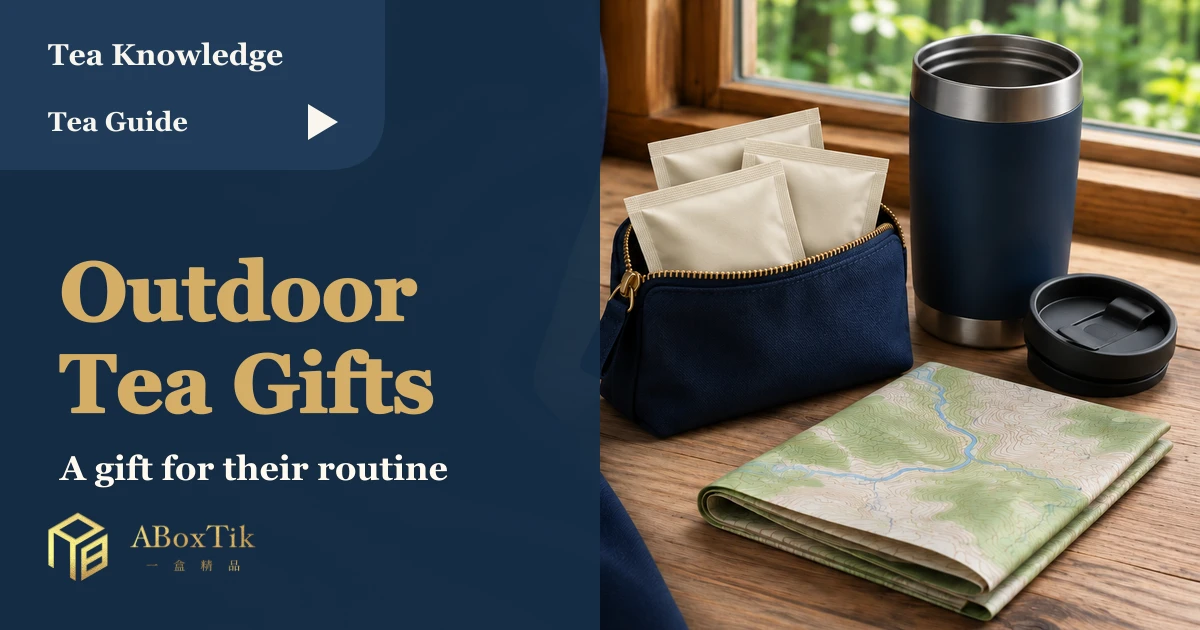
A tea gift for someone who enjoys the outdoors
Ask whether the recipient usually camps, takes short walks or spends long days travelling, and whether drinking water and cup-cleaning facilities are available. Enjoying the outdoors does not mean carrying a stove. Choose a gift around the trip rather than giving the backpack another task.
| Check first | Choice to consider |
|---|---|
| Water and equipment | Confirm drinking water, cup and a way to separate leaves |
| Weight and space | Compare actual size, portions and packaging |
| Storage and cleanup | Protect dry tea from moisture and odours; carry used leaves out separately |
| Preference | Ask whether tea is welcome, and check flavour and ingredients |
Compare individually wrapped tea bags, a small amount of loose leaf or a format the recipient already uses. Check the actual package and brewing instructions. Add a short card with the tea name and starting instructions; if the conditions are unknown, leave the choice of when to use it to the recipient.
Try filling in: where to drink it, which cup is available, and how to carry used leaves home. An unanswered field is a friendly question to ask before buying.
Sources
- National Cultural Memory Bank: roadside tea provision
- Tea and Beverage Research Station: tea packaging and storage
Sources checked 20 October 2026.