
Tea Knowledge
Preparing tea for the day
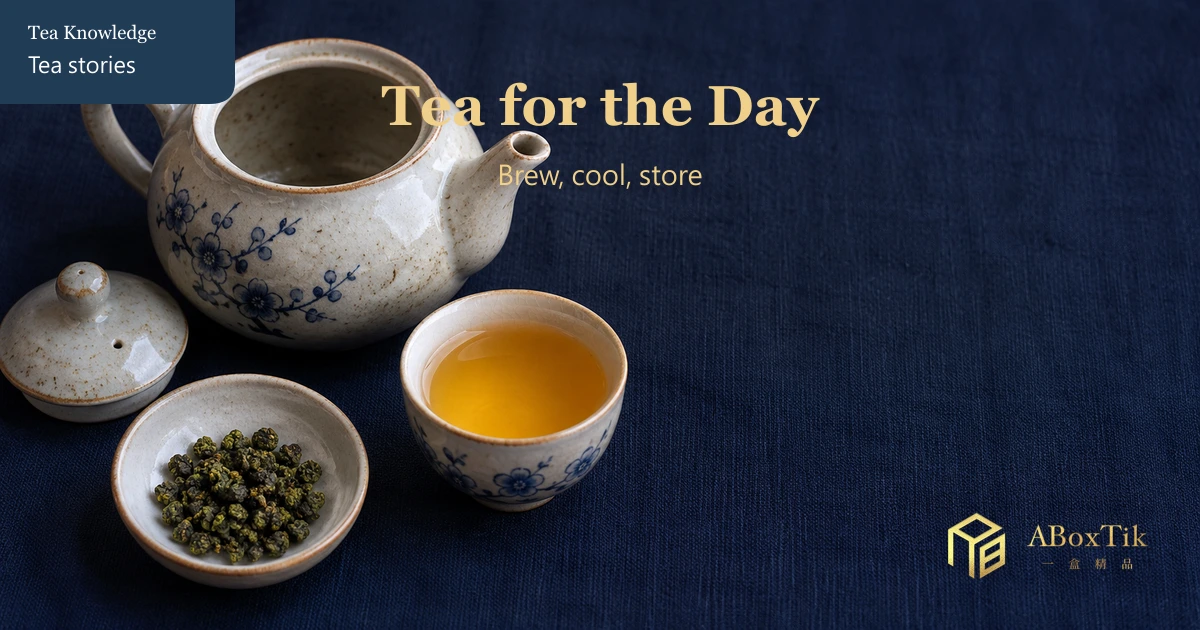
Plan the amount
Estimate what you expect to drink and portion it into clean, food-safe containers. Before heading out, consider whether you can keep it chilled and when you plan to drink it.
Cool and store
Brew according to the tea instructions and remove the leaves to limit further extraction. Use containers suitable for the temperature and cool and refrigerate promptly; do not leave a large pot of brewed tea at room temperature for a long period.
Serve and carry
Pour into a clean cup rather than returning leftovers to the storage container. For longer outings, use appropriate cooling equipment and a sealed container. Milk, fruit or other additions require care according to their own storage conditions. When storage is uncertain, discard the drink.
Make a note
Write down the tea, water and strength you enjoyed. If refrigeration cannot be maintained, brewing smaller portions as needed is easier to manage.
Decide how much you will drink before deciding how much to brew
Divide the day into morning, after lunch, afternoon and travel, estimate a realistic portion for each, and then check refrigeration and carrying conditions. A two-litre bottle does not create an obligation to fill two litres. Tea left over at the end of the day does not acquire overtime enthusiasm merely because it was called meal prep. With a reliable refrigerator, portions can remain chilled. Without dependable cold holding, smaller batches brewed nearer to drinking are easier to manage.
Follow the current package directions for the tea or bag and scale cautiously to the intended volume. Do not simply enlarge a high-leaf, short-steep pot recipe into one bottle. Begin with a smaller batch and record tea, water, time and final volume. This page addresses portioning, cooling and carrying; the separate Taiwanese tea steeping-time guide handles brewing comparisons.
Use a one-way path from brewing to refrigeration
- Clean: wash hands and clean and dry the pot, filter, cups, lids and seals; use clean drinking water.
- Brew: follow the tea directions and separate the leaves or bag from the liquor when the brew is complete.
- Portion: use food-contact containers suitable for the current temperature. Follow the maker’s instructions rather than pouring boiling tea into a cold-drink-only bottle.
- Cool: divide into smaller covered portions, protect them from contamination and move them promptly through the food-safety danger zone into refrigeration.
- Label: write the tea, preparation date and time, and whether other ingredients were added.
Taiwan FDA’s general food-safety guidance defines 7–60°C as a danger zone and recommends that prepared food not remain at room temperature for more than two hours, or one hour when room temperature exceeds 32°C. This is a general upper limit, not a tea-specific shelf-life promise for every home, and it does not guarantee unchanged quality within that period. When refrigeration can begin earlier, there is no benefit in waiting for the final minute.
The same guidance states that refrigeration below 7°C suppresses bacterial growth and recommends 5°C or lower for cooked or perishable food. Cold is risk management, not a pause button for time. This article therefore gives no universal number of refrigerator days for homemade tea. Prepare an amount that fits same-day drinking and controlled storage; when the time and temperature history are uncertain, do not force the drink to complete the schedule.
Portion, carry and pour: open only what you need
Use a morning bottle, afternoon bottle and travel bottle, leaving the rest refrigerated. Pour into a clean cup. Do not return tea from a used cup to the main container, and do not repeatedly touch a shared opening with a used straw or cup rim. For a group, the main bottle should pour rather than become a communal drinking vessel. This modest rule does more practical work than ten wellness slogans on the label.
For travel, use a clean sealed container designed for cold drinks and appropriate cold-holding equipment. Consider the commute and expected drinking time before leaving. If cooling fails, the container spends a long period in a hot vehicle, or the time and temperature can no longer be reconstructed, smell is not a safety test. Normal appearance or aroma cannot establish that a drink is safe.
Set a contingency before leaving: if the cold carrier loses its ice source, a meeting runs late, or the afternoon portion is no longer wanted, will the tea return immediately to reliable refrigeration, be consumed within the safe plan, or be discarded? Deciding beforehand prevents an evening debate with a bottle that has forgotten its temperature history. A time label on the outside is useful memory support, but it cannot repair an interrupted cold chain.
Avoid topping a partly used bottle with a new batch. The mixed container would inherit two preparation times and handling histories, making the label less meaningful. Finish or discard the earlier portion, clean the container, and begin a new record. Simple separation is easier than asking tomorrow’s self to perform beverage archaeology.
For warm tea later in the day, carrying hot water and a dry tea bag separately and brewing near the time of drinking may be easier to control than keeping prepared tea lukewarm for hours. A hot drink requires a container rated for hot liquid, with attention to burns and pressure; use it as the manufacturer directs.
Milk, fruit and sweet additions require a separate plan
Adding dairy, fruit, juice, syrup or another ingredient changes composition, opportunities for contamination and storage conditions. Advice for plain tea no longer applies unchanged. Read each ingredient label, use clean utensils and add ingredients close to serving when practical. If milk or cut fruit requires refrigeration, manage the complete drink according to the stricter condition.
Taiwan FDA’s food-poisoning prevention guide for higher-risk food service tells beverage preparers to check packaging and expiry information and refrigerate a prepared drink when temporary storage is required. That still does not create one storage time for every milk or fruit tea. Commercial and home recipes, pasteurised dairy, plant drinks, fresh fruit and sugar levels differ. When ingredient history, refrigeration or cross-contact cannot be confirmed, disposal is safer than reheating and hoping.
A day-batch operating card
| Point | Action | If uncertain |
|---|---|---|
| Night before or morning | Confirm tea, quantity, containers, refrigerator and cold carrier | Reduce the batch when reliable refrigeration is absent |
| After brewing | Remove leaves, portion in suitable containers and label | Check the maker if heat tolerance is unknown |
| Cooling and storage | Cool promptly, keep refrigerated and avoid repeated warming | Do not carry an unknown history into the next period |
| Drinking | Pour into a clean cup and open only the needed portion | Never return a used serving |
| Travel or additions | Use cold holding; manage dairy and fruit by their own labels | Brew near serving when conditions cannot be maintained |
At the end of the day, note how much was actually consumed, which portion was too strong or light and which container worked. Next time, adjust the total before asking leftover tea to hold a late meeting in the refrigerator. For teas that can fit a portioned routine, review the current ABoxTik Taiwanese tea selection and follow the actual package for tea amount, water and storage information.
Sources
- Taiwan Food and Drug Administration: food-poisoning questions and answers
- Taiwan Food and Drug Administration: food-poisoning prevention guide for higher-risk food service
- Taiwan Food and Drug Administration: cooling, reheating and five food-safety principles
Sources checked 11 November 2026. General food-safety limits are not a fixed refrigerated shelf life for homemade tea. Seek medical care and follow official guidance if food poisoning is suspected.