
Tea Knowledge
Shipping Mid-Autumn Tea Gifts Overseas: Packing, Customs and Timing
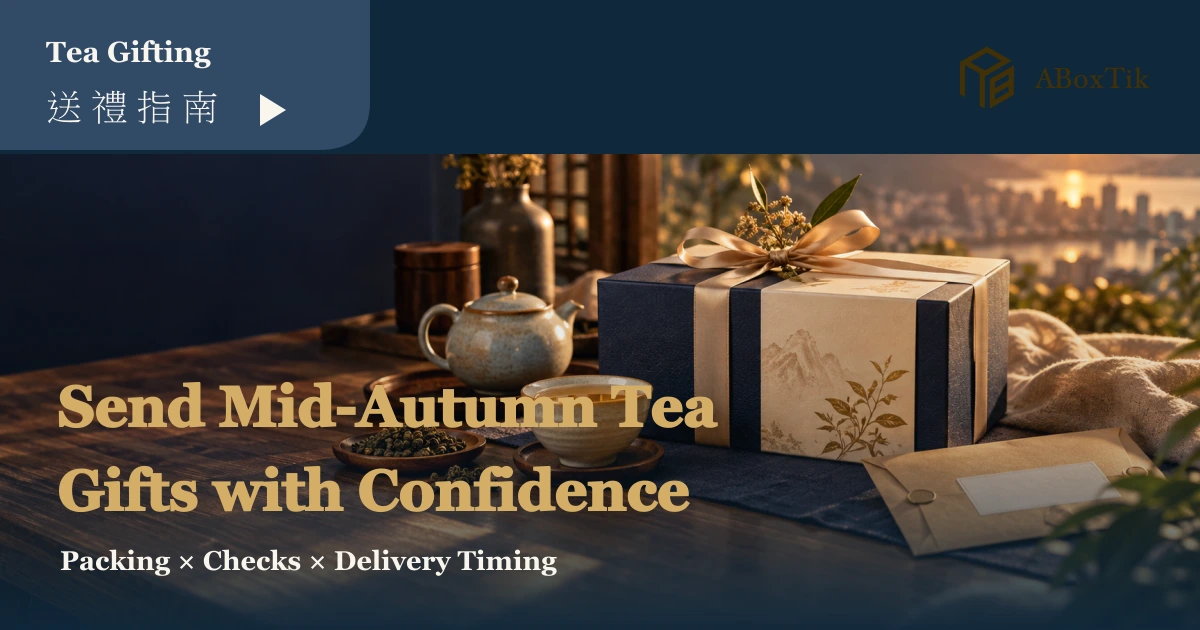
A tea gift sent across borders carries more than leaves and wrapping. A little preparation gives that thoughtful gesture a calmer journey.
Shipping Mid-Autumn tea gifts overseas starts with eligibility, not speed. Confirm the destination rules for every item in the box, identify whether the shipment is personal or commercial, describe and value the contents accurately, protect the tea inside a separate shipping carton, and add time for customs and last-mile delivery. Tea can often be mailed internationally, but writing “gift” on a form does not remove food, plant, tax or documentation requirements.
If this is your first international tea parcel, you do not need to learn every country’s regulations at once. Begin with the recipient’s country, state or province, and whether the recipient is an individual or a business. Then work through the checks below. If you are still deciding what belongs in the box, our Mid-Autumn tea gift guide covers flavor and sharing occasions; this article begins after the tea has been chosen.
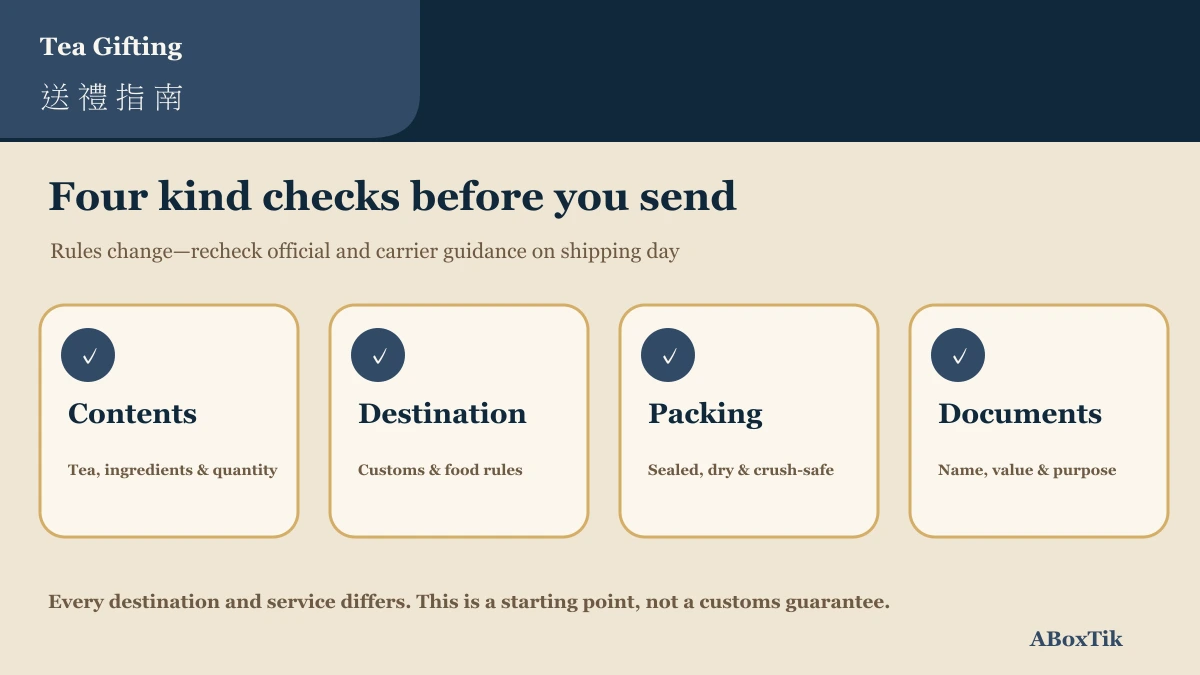
Before mailing a Mid-Autumn tea gift, make these five checks
- Name the exact destination. Country-level guidance is only a starting point. States, islands and remote regions may have different biosecurity or delivery conditions.
- List every item and ingredient. Pure tea, herbal blends, dried fruit, mooncakes, honey, ceramics and wood or bamboo decorations should not be collapsed into the phrase “tea gift.”
- Identify who is shipping to whom. A private gift from one person to another may not be treated the same as a company gift or a parcel dispatched directly by a retailer.
- Check both the destination authority and the carrier. Legal admissibility does not mean every carrier accepts an item, while carrier acceptance does not guarantee customs release.
- Prepare the recipient. Verify their full name, address, phone number and email, and let them know they may need to answer a clearance request or pay assessed taxes and fees.
This ingredient-by-ingredient approach matters most with mixed infusions. Australia’s BICON system, for example, has a case for tea intended for human consumption, while products containing stems, leaves, roots, flowers, bark, dried fruit or seeds may point to additional cases. That does not mean a blend is automatically prohibited. It means “tea” is too broad a description for a reliable decision. Starting with sealed, clearly labelled products with a short ingredient list can make the review easier. Our guide to whole-leaf tea bags explains what to look for in the inner pack itself.
Can tea be sent to the United States or Australia?
Often, but the answer depends on the actual product and shipment. In the United States, USDA APHIS lists dried Camellia sinensis tea among generally admissible non-propagative plant products that do not require an APHIS import permit or other APHIS conditions. Parcels can still be inspected, and a blend containing other plant materials should not inherit the pure-tea answer.
Food rules are a separate question. The U.S. FDA describes an enforcement policy for food sent for a non-commercial purpose by one individual to another individual. Its example is not the same as a store or company shipping the food directly. Calling a business shipment a personal gift does not create an exemption, and FDA prior-notice requirements may still need to be addressed. Ask the carrier or customs professional to review the actual sender, recipient and use before dispatch.
For Australia, search BICON on the day of mailing using each ingredient, its processing state and intended use. International mail may be screened by biosecurity officers. If the search result does not closely match the label in your hands, pause and ask for an item-specific answer. These examples show how to investigate; they are not legal advice or a promise that a parcel will clear.
How should tea be packed for both flavor protection and transit?
Taiwan’s Tea and Beverage Research Station identifies moisture, light, heat, oxygen, time and odors as factors that can degrade tea. It recommends packaging with low moisture and gas permeability, no unwanted odor, light protection and resistance to compression. For an international parcel, it helps to give three different layers three different jobs:
| Layer | Its job | What to check |
|---|---|---|
| Food pack | Keep out moisture, light and odors | Retain the original seal and readable product name, ingredients, net weight, origin and date marking |
| Gift box | Present and hold the tea neatly | Nothing shifts when gently moved; cards do not cover required labels |
| Shipping carton | Withstand stacking, impacts and handling | Use a sturdy outer carton, protect corners and fill movement gaps; do not mail the presentation box with only a paper wrap |
Before sealing, photograph the contents, labels, cushioning and closed parcel, and keep the shipment weight and paperwork. Cups, tins or ceramics should be immobilized separately so they cannot strike one another. For more on moisture and odor control, see our tea storage guide; for origin and label context, visit our Taiwan tea traceability guide.
What should the customs description say?
A useful description tells an officer what the product is, what it is made from, its intended use, quantity and origin. If it is factually correct for the parcel, a line might read: Retail-packed oolong tea bags (Camellia sinensis), 20 sachets, 60 g net, for brewing, country of origin: Taiwan. A blend containing herbs, peel or another component needs its own accurate ingredient-level description.
- Match the product name, ingredients, units, net and gross weight, value and country of origin to the physical goods and labels.
- Declare a reasonable actual value even when no money changes hands. Do not enter zero or undervalue the parcel simply because it is a gift.
- Confirm any HS classification, FDA prior notice, origin statement or health certificate for this destination and shipment type; do not copy a code from an unrelated example.
- Keep the postal declaration, commercial or pro forma invoice, and outer description consistent. Chunghwa Post requires dispatch paperwork and a commercial invoice for merchandise sent by EMS.
For a company campaign or a multi-address list, use the corporate Mid-Autumn gift timeline and recipient-tier quantity checklist, then separate every overseas destination from the domestic schedule. A single spreadsheet date should never hide different customs pathways.
How early should you ship a Mid-Autumn tea gift?
As checked on 24 September 2026, Chunghwa Post’s EMS table showed 2–3 working days to the destination postal service for Japan, South Korea and Singapore; 4–5 for the United States and the United Kingdom; and 4–6 for Australia. The same page says these periods exclude customs clearance. They are not promises of delivery to the recipient’s door.
| Clock | What can add time | Where to confirm |
|---|---|---|
| Preparation | Stock, personalization, ingredient data and invoice preparation | Written confirmation from the seller |
| Transport | Acceptance, flights, transfers and service disruptions | Carrier tool on the mailing date |
| Customs and biosecurity | Inspection, documents, taxes and recipient response | Destination authority and carrier or broker |
| Last mile | Remote area, holidays, weather or missed delivery | Destination delivery network and tracking |
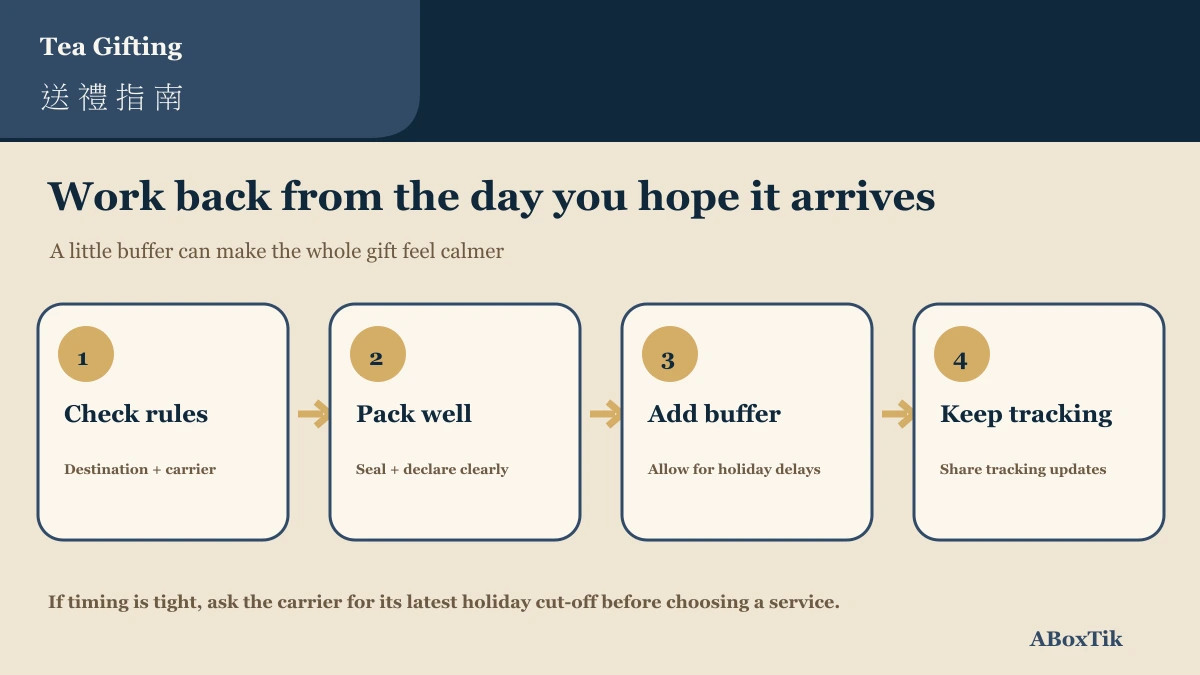
For personal planning, a cautious starting point is the carrier’s current transit estimate plus at least 7–14 calendar days for seasonal volume, clearance and recipient follow-up. Allow more for multiple parcels, business shipments, mixed food or botanical ingredients, personalization or remote addresses. This is a planning cushion, not an ABoxTik or carrier delivery commitment. If the festival is already close, a thoughtful digital note can arrive first while the physical gift travels only after the checks are complete.
Peace of mind rarely comes from the boldest date. It comes from making space for each part of the journey.
Frequently asked questions about mailing tea gifts overseas
Are sealed tea bags always easier to mail than loose tea?
Sealed retail packs with clear labels are usually easier to identify, but they are not automatically admissible. The destination may still treat the tea type, other ingredients, purpose, quantity or sender differently.
Does writing “gift” prevent duty or paperwork?
No. “Gift” describes the purpose, not the contents. State the goods, ingredients, quantity, weight, value and origin accurately. Customs decides whether duty relief or additional documentation applies.
Can mooncakes, honey or dried fruit travel in the same gift box?
Check each one separately. Meat, egg, dairy, honey, fruit and seeds can trigger requirements unrelated to tea. A pure-tea gift with clear labels may be the calmer option when you want fewer variables.
Tracking says “arrived at destination.” Why has the recipient not received it?
The scan may mean the parcel reached the destination postal or airport network, not that it cleared customs. Ask the recipient to watch email, text messages and missed calls while you follow the carrier’s tracking and clearance instructions.

Follow ABoxTik
Let a well-prepared Taiwan tea gift carry the message
For a first overseas tea gift, begin with a short ingredient list, complete labeling and a format the recipient can easily brew. Our seven-question tea gift guide can help with the choice, while why Taiwanese tea is special gives the recipient a welcoming place to learn about the craft behind the cup.
When you are ready to discuss an actual parcel, explore the two-selection tea gift, four-selection Taiwan tea gift or the ABoxTik gift collection, then contact ABoxTik with the destination, quantity and preferred arrival window. Contents, stock, shipping availability and timing must be confirmed for that request.
Related guides
- Choosing a Mid-Autumn Tea Gift for Mooncakes, Barbecue and Sharing
- A 6–8 Week Corporate Mid-Autumn Gift Timeline
- About ABoxTik and Taiwanese Craft
Sources
- Chunghwa Post: EMS expected transit days, size and weight limits (accessed 24 September 2026)
- Chunghwa Post: International EMS documents and prohibited-item guidance (accessed 24 September 2026)
- Taiwan Tea and Beverage Research Station: Tea packaging and storage (accessed 24 September 2026)
- USDA APHIS: Generally Authorized Non-Propagative Plant Products (accessed 24 September 2026)
- U.S. FDA: Prior Notice Policy for Sending Gifts to Friends and Family (accessed 24 September 2026)
- Australian Government BICON: Tea for human consumption (accessed 24 September 2026)
- FedEx Taiwan: Service news and precise commodity-description guidance (accessed 24 September 2026)
Rules, services, taxes and transit times change. This article offers general planning information, not legal or customs advice and not a delivery guarantee. Recheck the destination authority and carrier on the day you ship.