
Tea News
2026 Nantou Global Tea Expo: Dates, Highlights and Visit Guide
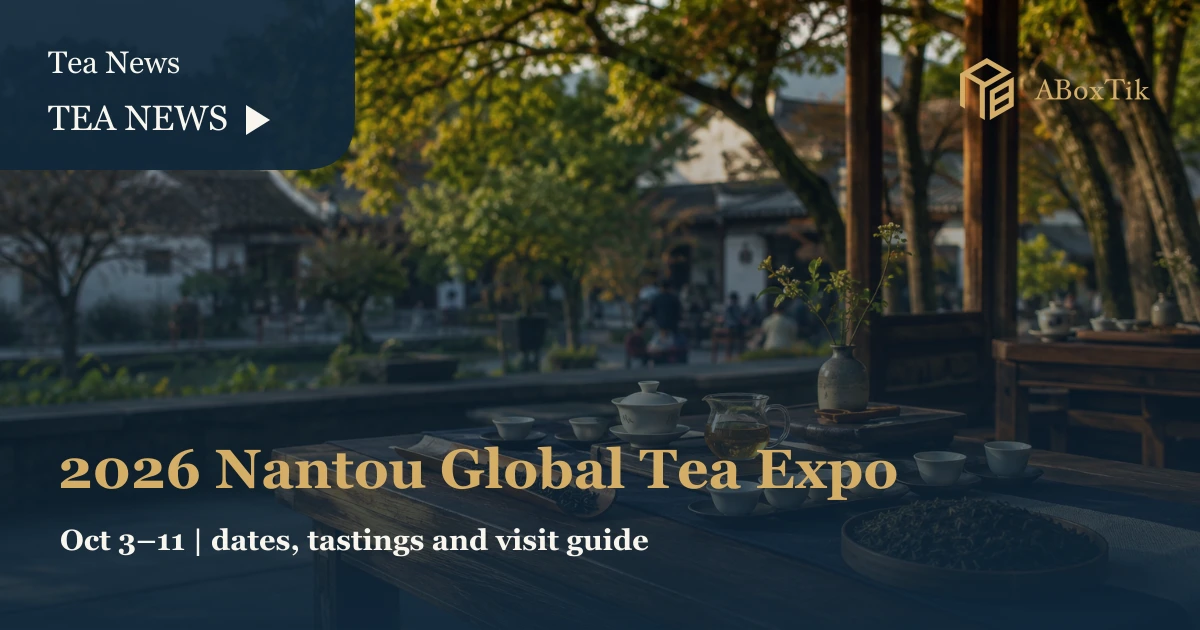
In autumn, Zhongxing New Village becomes a place to pause over tea. Let an origin, an aroma and one conversation with a maker become what you truly take home.
The 2026 Nantou Global Tea Expo is scheduled for October 3–11, 2026 in Zhongxing New Village, Nantou City, according to Nantou County Government and Taiwan’s official agricultural tourism portal. The Nantou tourism page currently lists sales hours as 9:00 a.m.–5:00 p.m. on weekdays and 9:00 a.m.–6:00 p.m. on holidays. Detailed hall schedules, reservations, parking and shuttle arrangements may still change, so check the official Tea Expo website again before travelling.
This update preserves the useful heart of ABoxTik’s original 2023 article: exploring Nantou’s tea regions, tasting at the event and learning directly from growers and makers. It does not simply replace the year. Instead, it removes outdated attendance figures and pavilion schedules, then adds practical tasting routes, questions to ask when buying tea and a clear boundary between confirmed facts and details that need a last-minute check.
2026 Nantou Global Tea Expo dates, venue and hours
| Item | Currently confirmed |
|---|---|
| Dates | October 3–11, 2026; nine days |
| Venue | Zhongxing New Village, Nantou City; the official address is No. 1, Guangrong North Road |
| Organizer | Nantou County Government |
| Sales hours | The tourism page currently says 9:00–17:00 weekdays and 9:00–18:00 holidays |
The expo covers two weekends and Taiwan’s National Day holiday period. Crowds, parking and waiting times can differ substantially by day. A weekday may allow more time for questions, while weekend visitors can benefit from arriving early and choosing one priority hall before adding other activities. That is editorial planning advice, not a guarantee about attendance.
What can visitors expect at the Nantou Tea Expo?
The current official website presents the expo as an annual gathering connecting land, tea growers and tea drinkers. It highlights Nantou’s eight tea regions, exhibition halls, tea sales and cultural experiences. The original ABoxTik article correctly used Dong Ding oolong, high mountain oolong, Mingjian teas and Sun Moon Lake black tea as gateways into the county’s diversity. Those remain valuable themes, but pavilion names and programs change from year to year.
For that reason, this guide does not promise the 28 themed pavilions or the exact 2023 displays found in the old article. Treat the event as a chance to compare origins and processing choices, not as a checklist to complete. If you want a geographical primer first, read our Taiwan tea regions guide. For a more disciplined way to describe a cup, use the tea aroma guide.
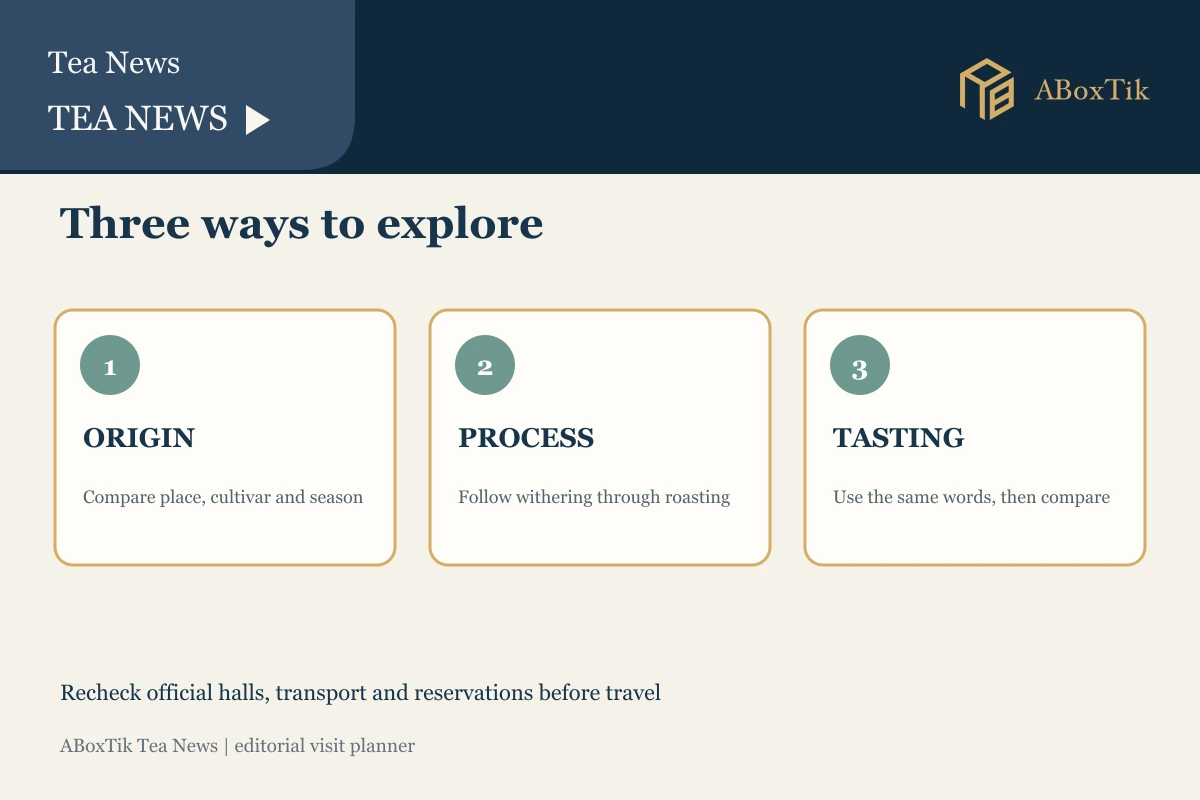
Three ways to explore: origin, processing or tasting
- Origin route: Compare Lugu and Dong Ding, Mingjian, Zhushan and Shanlinxi, Ren’ai high mountain teas, and Yuchi black teas. Township and elevation are only a start; cultivar, harvest season and processing matter too.
- Processing route: Ask how withering, tossing, oxidation, rolling, drying and roasting shape the finished tea. Our guides to tea withering and oolong oxidation provide useful vocabulary before you go.
- Tasting route: Use the same few descriptors for aroma, flavour, texture and finish. Compare several cups before judging, rather than chasing the highest elevation or the strongest fragrance.
If people in your group have different interests, each person can follow one route and meet later to exchange discoveries. This gives the day a structure without turning tea tasting into a race through every booth.
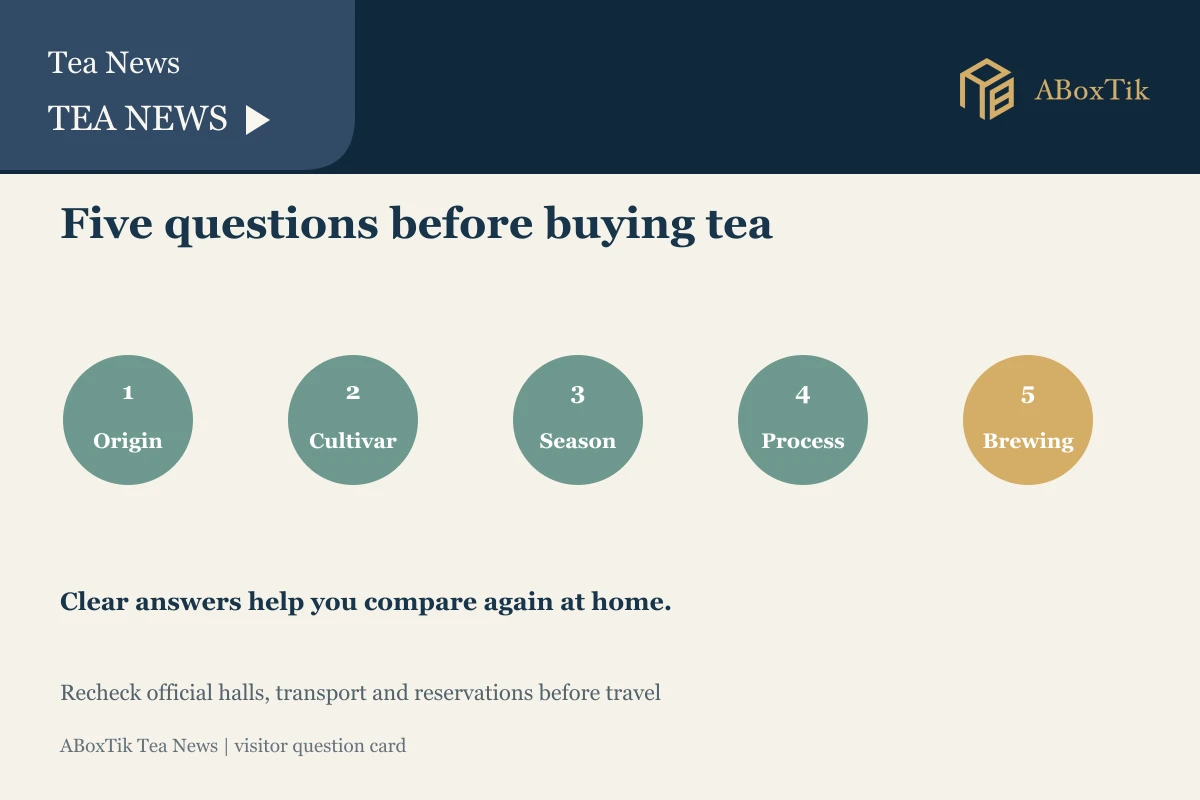
Five questions to ask before buying tea at the expo
A busy sales hall can make every cup feel urgent. Keep five questions on your phone: Where was it grown? Which cultivar is it? When was it harvested? How was it processed? How does the maker recommend brewing it? If a label says “high mountain tea,” “competition tea” or “aged tea,” ask for a more specific origin, lot, year and storage explanation.
Taste from lighter to stronger teas and from lower to higher roast when practical. Drink water between samples and photograph the package or written information so you can compare later. Enjoying a cup is important, but clear traceability and reproducible brewing advice make the purchase more useful once you return home. Sampling is an invitation to learn, not an obligation to buy immediately.
Transport, shuttles and reservations: what must be rechecked?
The event is spread across more than one building and outdoor area in Zhongxing New Village. Walking distance, weather and crowds can change the pace of a visit. Wear comfortable shoes, carry water and light rain protection, and agree on a meeting point if travelling with children or older relatives. Drivers should verify the year’s designated parking and traffic controls; public transport users should confirm services for their actual travel date.
One important caution: the Nantou tourism article is labelled for 2026, but its shuttle table includes a date sequence ending on October 12 that aligns with the 2025 event. We therefore do not reproduce that table as a confirmed 2026 schedule. Check official announcements one to three days before departure for shuttle routes, intervals, parking, large-group tea events and reservation rules.
More than a market: a field lesson in Taiwanese tea
The original article described the expo as a place to buy, recognize and experience tea. That value is worth keeping. A cup at a booth can connect an origin name with processing language and what you actually smell or taste. Tea tables and cultural presentations can also show how hospitality and technique give tea meaning beyond a product specification. Taiwan’s agricultural tourism portal similarly describes the 2026 event through tasting experiences, cultural displays and an industry marketplace.
Still, a single cup cannot represent an entire region, and one brief tasting cannot prove long-term quality. Write down the tea, producer or booth, lot information and brewing conditions. Those notes help separate a memorable event moment from observations you can test again at home.
Bring one useful comparison home from Nantou
Follow ABoxTik
When you find an aroma you enjoy at the expo, brew related teas at home with the same vessel, water volume and infusion time. This makes it easier to notice how origin, cultivar and processing work together. Continue with our guides to Jin Xuan oolong and TRES No. 8 and Sun Moon Lake black tea, or browse the ABoxTik Taiwanese tea collection. Availability and flavour notes should always be checked on the current product page.
Sources
- 2026 Nantou Global Tea Expo official website (accessed September 7, 2026)
- Nantou County Government: 2026 Tea Expo exhibitor information (accessed September 7, 2026)
- Taiwan agricultural tourism portal: 2026 Nantou Global Tea Expo (accessed September 7, 2026)
- Nantou Tourism: 2026 Nantou Global Tea Expo (accessed September 7, 2026; recheck transport details)