
Tea Knowledge
Why Qing Xin Oolong Is Classic: One Cultivar, Many Tea Styles
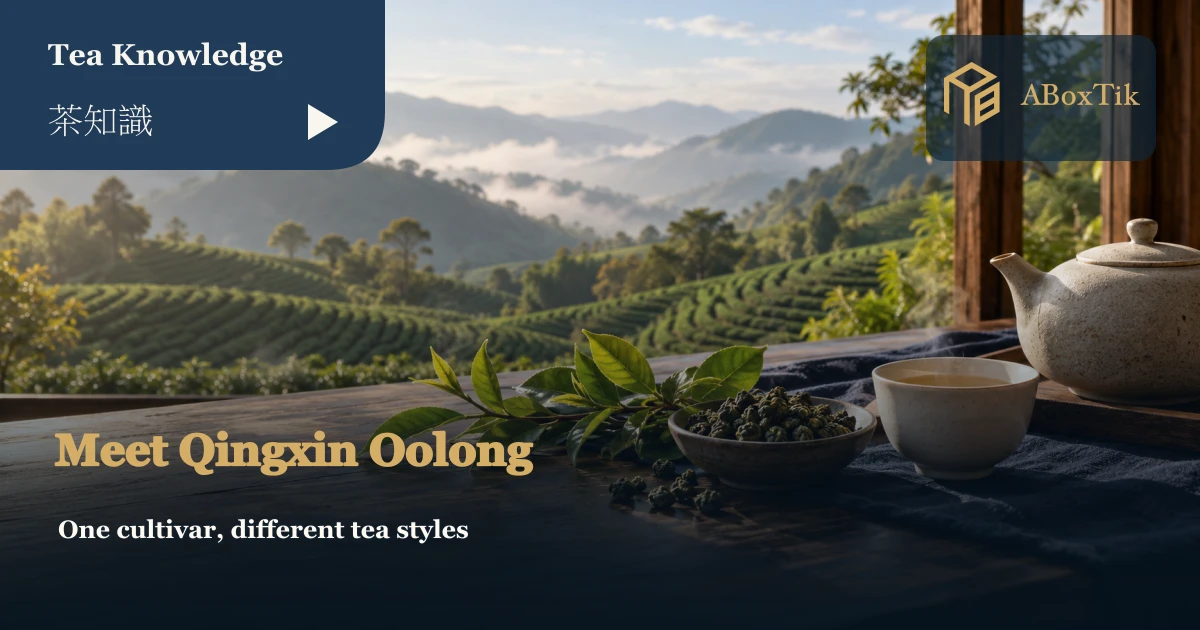
A cultivar gives the tea tree its identity; finished tea turns that identity into different chapters.
Qing Xin Oolong is a cultivar, not a region or a single tea type. It can appear in high-mountain tea, Dong Ding and Baozhong contexts, while different locations, seasons and processing choices give each lot its own expression.
Read it as one field on a label, then ask where it was grown, what it became and how the maker suggests brewing it.
Cultivar, region and finished tea answer different questions
Qing Xin Oolong is a tea-tree cultivar, not a region and not one finished tea style. The Taiwan Tea Research and Extension Station describes it as a late-budding cultivar suitable for Baozhong and oolong production. That tells us about the leaf and appropriate processing direction, while leaving origin, shape, roast and lot open. Qing Xin Da Mao is a different cultivar, despite the similar name.
Keep cultivar, origin and finished tea in separate columns. That small habit stops a place name from pretending to be a flavour promise, and stops a cultivar from carrying every detail of a finished cup.
When a packet gives only the word Qingxin, ask for the complete cultivar name before comparing it with another tea. Qingxin Oolong and Qingxin Damao should occupy different fields in the notebook. A friendly question can be short: ‘Is Qingxin Oolong the confirmed cultivar for this lot?’ If the information is unavailable, an empty field is more useful than an attractive guess.
Why high mountain, Dong Ding and Baozhong can share a cultivar
One cultivar can appear in high-mountain tea, Dong Ding oolong and Baozhong because leaf material is only one part of finished tea. Growing place, seasonal conditions and processing choices guide it in different directions. High mountain describes growing conditions, Dong Ding carries regional and style context, and Baozhong names a finished-tea tradition.
Read high-mountain quality, Dong Ding terroir and Pinglin Baozhong together: each answers a different part of the question.
Try placing three label descriptions next to one another: a high-mountain tea naming Qingxin Oolong, a Dong Ding tea without a stated cultivar, and a Pouchong naming Qingxin Oolong. Only the first and third examples confirm the shared cultivar. The second still needs a question. This simple exercise keeps the tea’s style, growing place and plant identity from quietly exchanging jobs.
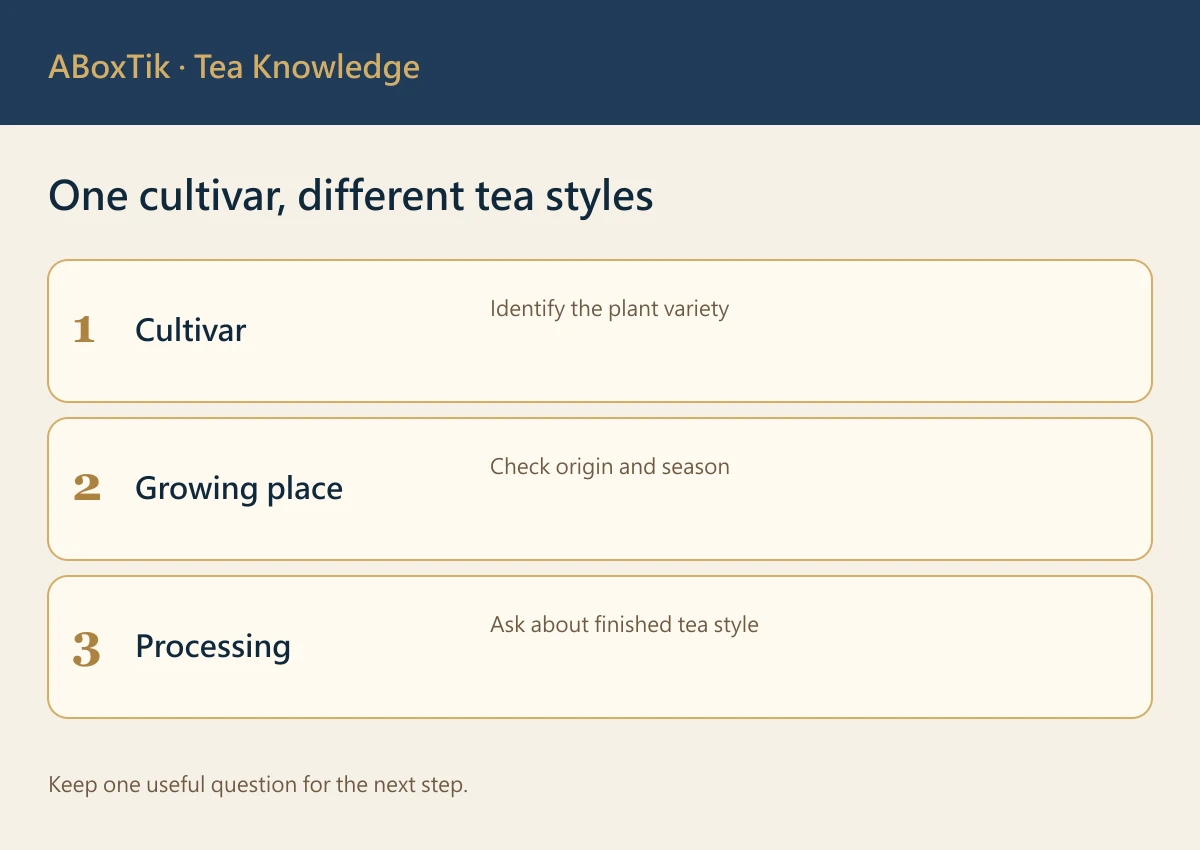
What late budding means to a tea drinker
Late budding is a growth trait, not a quality medal. It does not guarantee that a tea is rare, sweet or superior. For a drinker, it is a piece of cultivar context. Altitude, weather, picking time and handling still influence a particular season’s material. A cultivar name is an ingredient line, not the entire recipe.
A careful drinker does not need to memorise botany before boiling water. The useful next move is simply to notice which facts the product supplies and which remain unknown.
A late-budding description is useful agricultural context, rather than a medal or a promise of superior flavour. For a buyer, the next useful details are the actual harvest and finished tea. There is no need to turn the cultivar sheet into a test to pass before pouring a cup. Keep the background beside the tasting notes, where it can explain a little without deciding everything.
Do not skip the route from leaf to finished tea
Cultivar cannot tell you whether a tea is lightly aromatic, roasted, strip-shaped or tightly rolled. Withering, agitation, oxidation, rolling and roasting shape finished tea. Oolong oxidation, withering and rolling make that route easier to read.
“Made with Qing Xin Oolong” is useful but incomplete. Add what it became, when it was picked and who made it before treating the label as a preference guide.
Three label examples that keep clues separate
A label reading Qing Xin Oolong, Alishan and light roast gives cultivar, origin and processing clues. A Dong Ding winter tea label without a cultivar should not be silently completed as Qing Xin Oolong. A Baozhong label that names it still needs product-specific leaf quantity and steeping guidance.
Ask one focused question at a time; it is easier for a seller to answer and easier for a notebook to remember. Tea packaging need not become a quiz show.
For a small comparison, select two clearly identified finished teas and keep the vessels and water consistent. Use the product instructions as the starting point and record any deliberate change. If both cultivar and processing differ, describe a comparison of those two products. The result may guide a purchase, while remaining much smaller than a verdict on an entire cultivar.
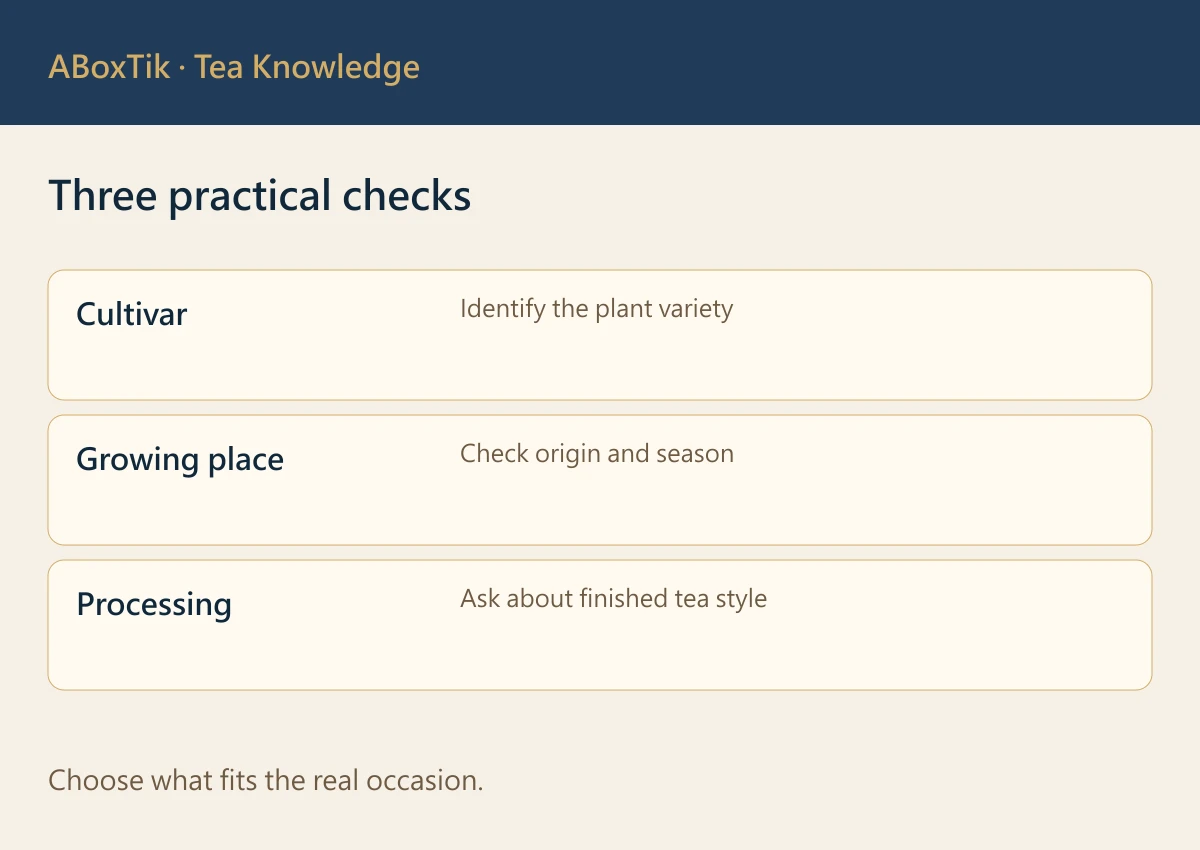
Brew the finished tea, not an imagined cultivar
There is no single brewing prescription for Qing Xin Oolong regardless of finished form. Start with the pack’s directions, then use water-temperature guidance, steeping-time and re-steeping observations to adjust one variable at a time.
Write three short notes: aroma in the first infusion, body in the second, and what changes as the liquor cools. Taiwan tea selections and whole-leaf tea bags offer different formats.
Use cultivar information for the next choice
Ask what the complete cultivar name is, what finished tea this is, and what first infusion the maker recommends. Those three questions turn a fashionable label into useful information. Taiwanese tea terroir and craft and aroma notes help the next cup begin with recognition rather than guesswork.
Qing Xin Oolong is classic because it can be read attentively across different places and processes, not because it forces every cup into one answer.
A useful gift card can keep the same layers: the confirmed cultivar, the actual source, the tea style and the maker’s suggested brewing method. If space is limited, start with the finished tea and instructions, then offer a link for the background. The recipient should be able to make a pleasant first cup without having to memorise a family tree of tea plants.

Follow ABoxTik
Let cultivar information clarify the tea in front of you
ABoxTik values clear tea information and leaves the final judgment with the drinker. Start with a cultivar name, then connect origin, processing and a personal brewing note.
Related reading
- Understand oolong processing
- Read Baozhong terroir and craft
- Compare Taiwanese tea selections
Sources
- Taiwan Tea Research and Extension Station: Qing Xin Oolong cultivar characteristics
- Taiwan Tea Research and Extension Station: cultivation and finished tea
Sources checked 21 October 2026.