
Tea Knowledge
Taiwan Tea with Sushi: Rice, Soy Sauce and a Comfortable Cup
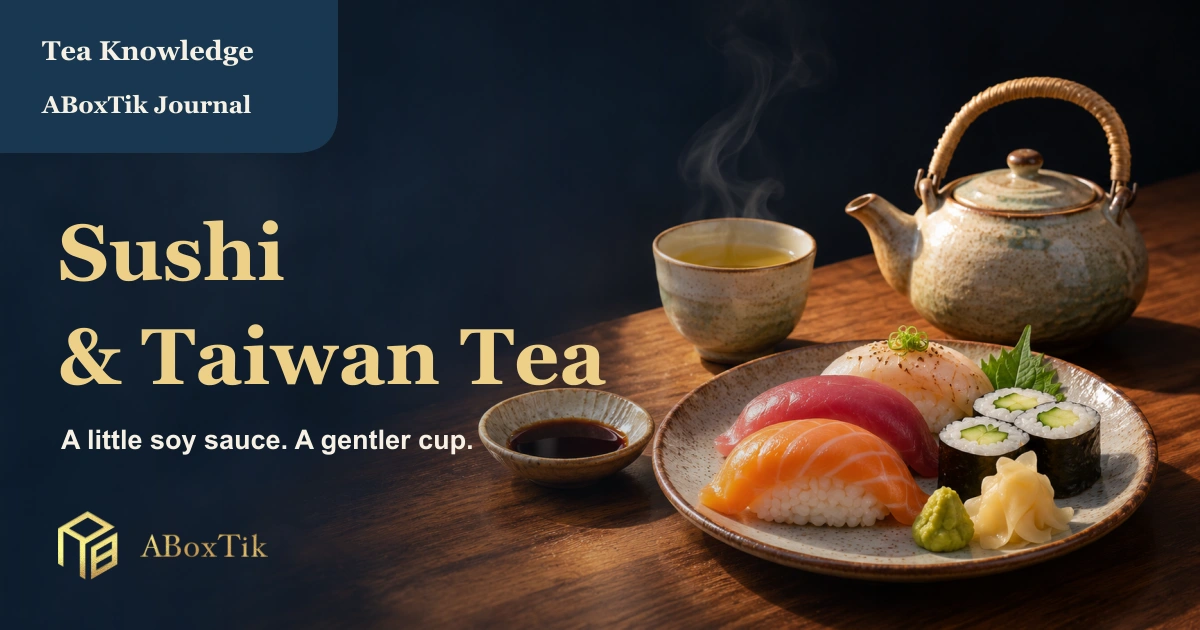
Taiwan tea with sushi can begin with a fragrant oolong brewed to a comfortable strength, then change with the rice, topping and sauce. Green Jade and Yingxiang are two starting points. Taste a small sip on its own, eat the bite you would normally enjoy, and notice which cup you want to return to.
A sushi dinner does not need a tea examination before the first plate. Separating the food, seasoning and serving order gives the host a useful plan while leaving everyone free to enjoy dinner.
Taiwan tea with sushi starts with the bite, rice and sauce
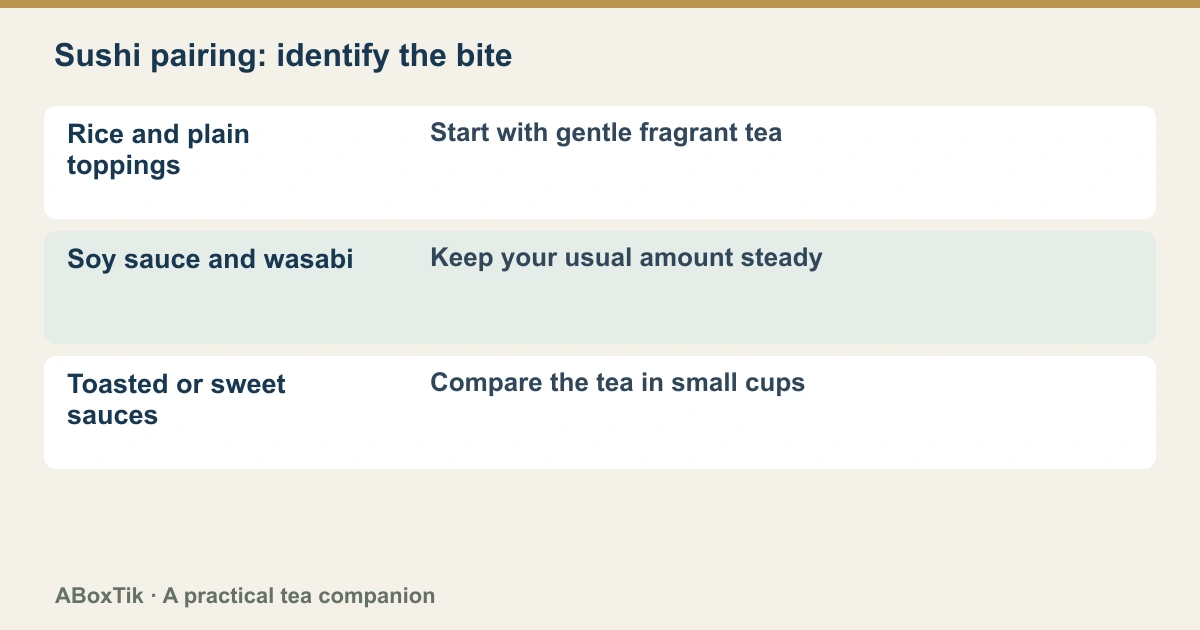
A cucumber roll, a lightly seasoned piece of nigiri and a seared topping with sweet sauce do not ask the same question. Identify the strongest impression first: vinegared rice, a delicate topping, toasted seaweed or a rich dressing. That is a more useful starting point than assigning one strong brew to every item called sushi.
Make tea that is pleasant to drink on its own and pour only a little. If the next sip makes the topping difficult to notice, try a lighter brew next time. If you enjoy a clearer tea presence, compare that preference with another small serving. The point is to find a useful contrast, not to keep increasing strength until the tea wins.
Nigiri and sashimi: let a fragrant oolong stay alongside
For a bite centred on a relatively delicate topping, try fragrant oolong first. Notice its aroma, body and finish before eating; then ask whether you can still distinguish the food and tea afterward. Let the tea reach a comfortable drinking temperature so the comparison can happen at an unhurried pace.
With sashimi, record whether sauce was present rather than treating every bite as identical. The same cup may feel different once the seasoning changes. For a broader choice of styles, use the Taiwan tea flavour and buying guide. Return to this meal with one or two candidates; you do not need the whole tea cupboard on the table.
Soy sauce, wasabi and ginger: keep the comparison consistent
Use the amount of sauce you normally enjoy. A lightly dipped first bite and a second piece soaked with soy sauce tell you little about the difference between two teas. Set aside a small portion of seasoning and choose comparable pieces for each cup. If you add wasabi, note that as well.
Ginger or another side dish between samples is worth a brief note, too. These details make the result easier to understand on another evening. There is no need to claim that tea removes a particular taste; describe what remained noticeable and which pairing felt enjoyable. The soy dish can take the night off from being a swimming pool.
Seaweed, searing and sweet sauce are separate clues
Toasted seaweed, a seared surface and a thick sweet dressing create different emphases. Try the tea already on the table before changing it. If its fragrance still suits the bite, there is no obligation to replace it with a heavier style. If you want more definition, adjust the existing brew slightly and compare the same type of food.
| Main impression | First comparison | Useful note |
|---|---|---|
| Rice and plain topping | Keep seasoning modest | Can I still notice the topping? |
| Seaweed or seared aroma | Try without extra sweet sauce | Do I like the aromas together? |
| Sweet and salty dressing | Use equal sauce with each tea | Which cup would I refill? |
This is an editorial starting point for exploring preferences. The Taiwan tea and cheese pairing guide offers another way to separate richness, salt and tea aroma when building your own vocabulary.
Taiwan tea with sushi: Green Jade and Yingxiang options
To compare two current options, read Green Jade Oolong and Yingxiang Oolong for their stated tea characteristics, pack contents and preparation guidance. Start with one as your reference, then make a small amount of the second. A candidate is a place to begin, not a compulsory winner for every topping.
Write down the tea quantity, water, time and drinking temperature. When the two cups use different preparation conditions, the result reflects those differences as well as the tea itself. Recording them helps you repeat the version you preferred. If one tea already suits the meal, adjusting that cup is a perfectly useful experiment without buying another pack.
A tasting note sheet that does not interrupt dinner
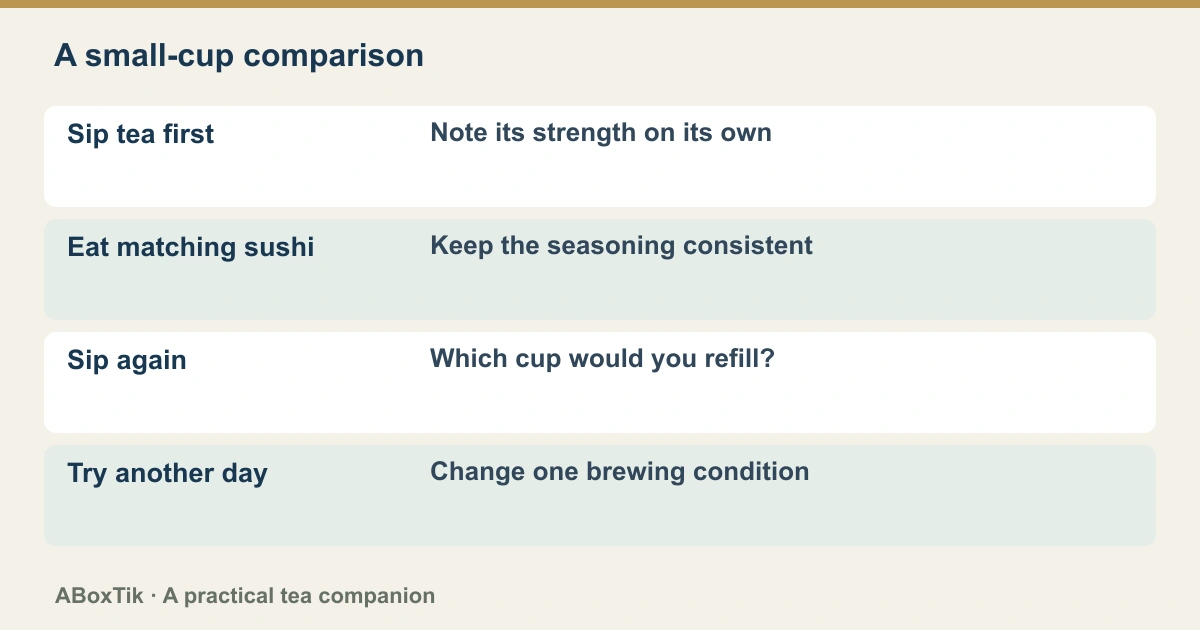
Keep four short fields: the food, seasoning, tea preparation and what you would repeat. “The tea was still easy to notice after the plain topping” is more helpful than a page of scores. “I preferred a lighter cup with more soy sauce” also gives the next dinner a clear starting point.
| Field | What to write |
|---|---|
| Food | Nigiri or roll; topping and other ingredients |
| Seasoning | Soy sauce, wasabi or sweet dressing used |
| Tea | Name, amount, water and steeping time |
| Next time | A pairing to repeat; one condition to change |
Two guests can disagree without either needing correction. Ask for a concrete reason, save the note and return to eating. A useful record should make the next meal simpler, rather than turn this one into a workshop with a reluctant audience.
Serving at home: prepare the cups before the plates arrive
Set out small cups, tea labels and water before dinner. Prepare the tea in portions that fit the meal, separating the liquid from the leaves or bag once brewed. Leave enough room for plates and sauce dishes so pouring does not become a reach across everyone else. Guests can choose water or wait for another cup without explanation.
Offer a small plain sip on arrival, then serve with the first plate. Adjust only if later toppings or sauces suggest a reason. The Taiwan tea hospitality guide covers the wider hosting rhythm. For this evening, remember three practical actions: introduce the tea, pour a little and refill when wanted.
Common questions: one tea is enough to begin
Must there be two teas? No. One cup alongside different seasoning already creates useful observations. Add a second only when you have a question worth comparing. What if the tea feels too strong? Use a smaller tasting portion and adjust brewing time or water on the next round, rather than chasing a louder tea presence.
Is this a comparison of Japanese and Taiwanese tea? This article focuses on one meal. For tea types and processing, read Taiwan tea versus Japanese tea. What about vegetable rolls or cooked toppings? Use the same sequence: notice rice, seasoning and toasted flavours, then try a small cup. A fish name is not the only way into the pairing.
For Taiwan tea with sushi, keep the seasoning steady, start with an enjoyable strength and change one brewing condition at a time. A note about the pairing you would repeat is enough. Different preferences can sit comfortably at the same table.
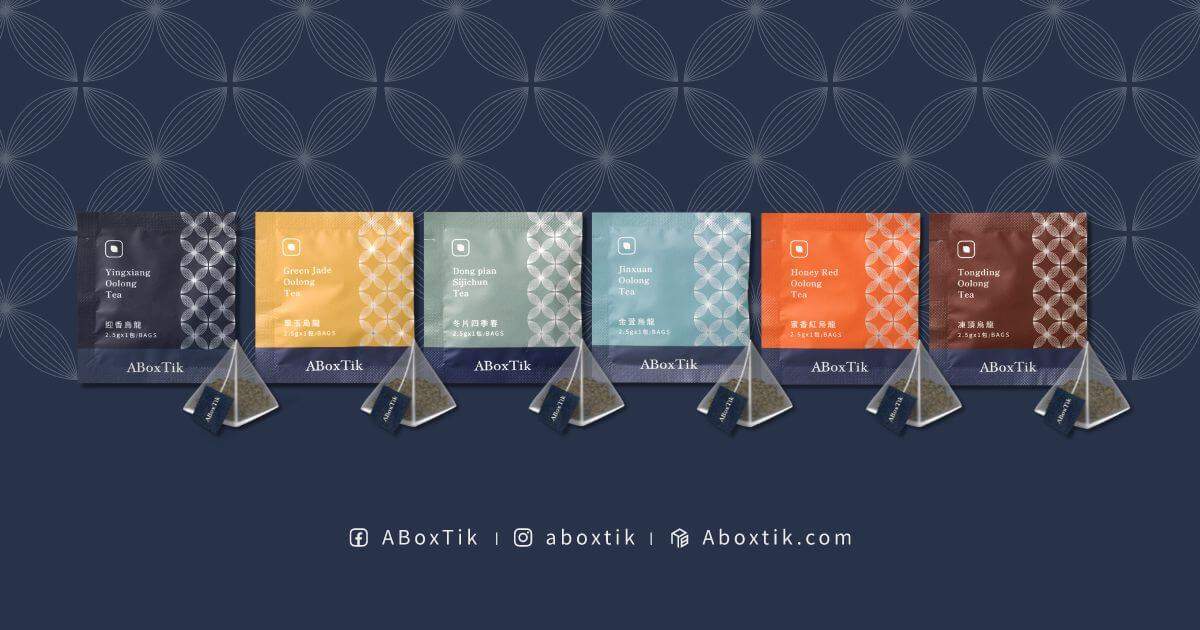
When the sushi plate is almost empty, there is still time for a little browsing: tea gifts, more reading and the latest selections are below. Choosing the next cup need not feel like reaching for the last piece.