
Tea Knowledge
Should You Use a Tea Strainer? Leaves, Flow and Clarity
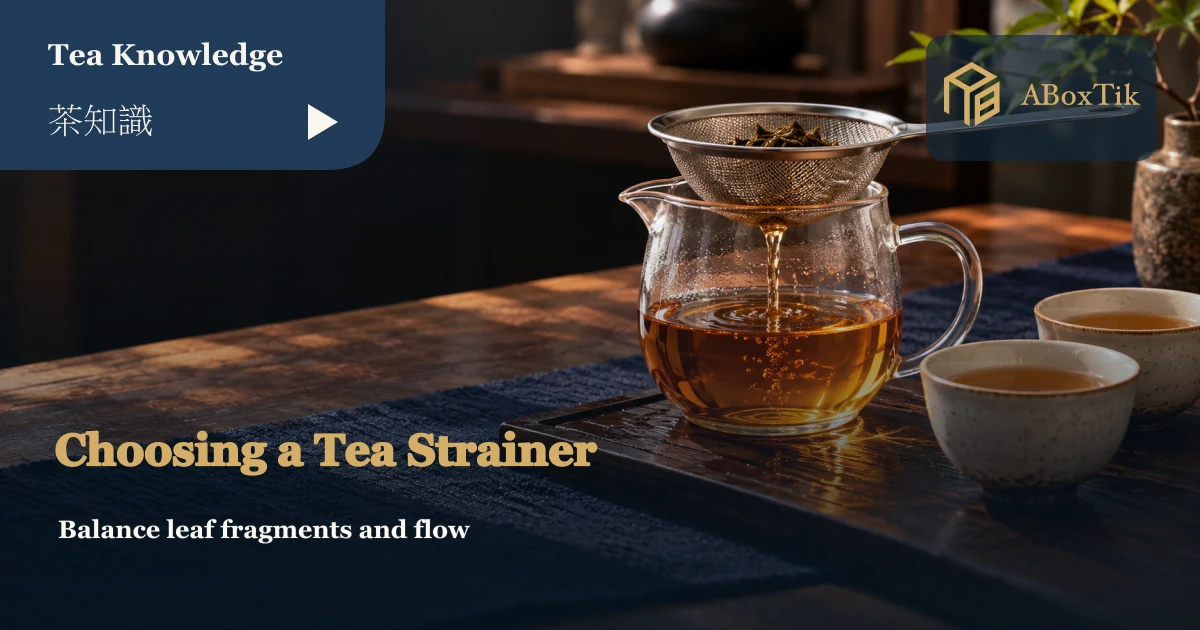
A small strainer can leave the tea in the cup and give wandering leaf fragments somewhere else to go.
A tea strainer catches leaves and fragments during pouring. It is optional: the right choice depends on the brewing vessel, the leaf material and whether a little sediment bothers the people drinking. A stable strainer that drains readily and cleans easily can help; a tea table with one less item to wash can work just as well.
Start by identifying the job. Are you trying to keep leaves inside a mug during steeping, or catch fragments after brewing? Those are different tasks. Once that is clear, choose for fit and flow rather than buying the finest mesh simply because its number sounds impressive.
Strainer, infuser and fairness pitcher: three different jobs
A pouring strainer sits between the brewing vessel and the receiving vessel. An infuser holds dry leaves during steeping and is then removed. Both may be sold as filters, so describe the actual step when choosing one. The distinction matters more than the accessory name on a display card.
A basic brewing and pouring steps receives and shares tea; it does not necessarily filter it. A teapot may already have holes inside its spout, while a gaiwan relies on the opening between lid and bowl. Inspect that existing route before adding a second filter.
Our basic brewing and pouring steps places pouring after steeping; the gaiwan and teapot comparison explains different handling demands. Neither requires buying an entire new set just to catch a few fragments.
Fine mesh or open mesh? Consider the whole pouring route
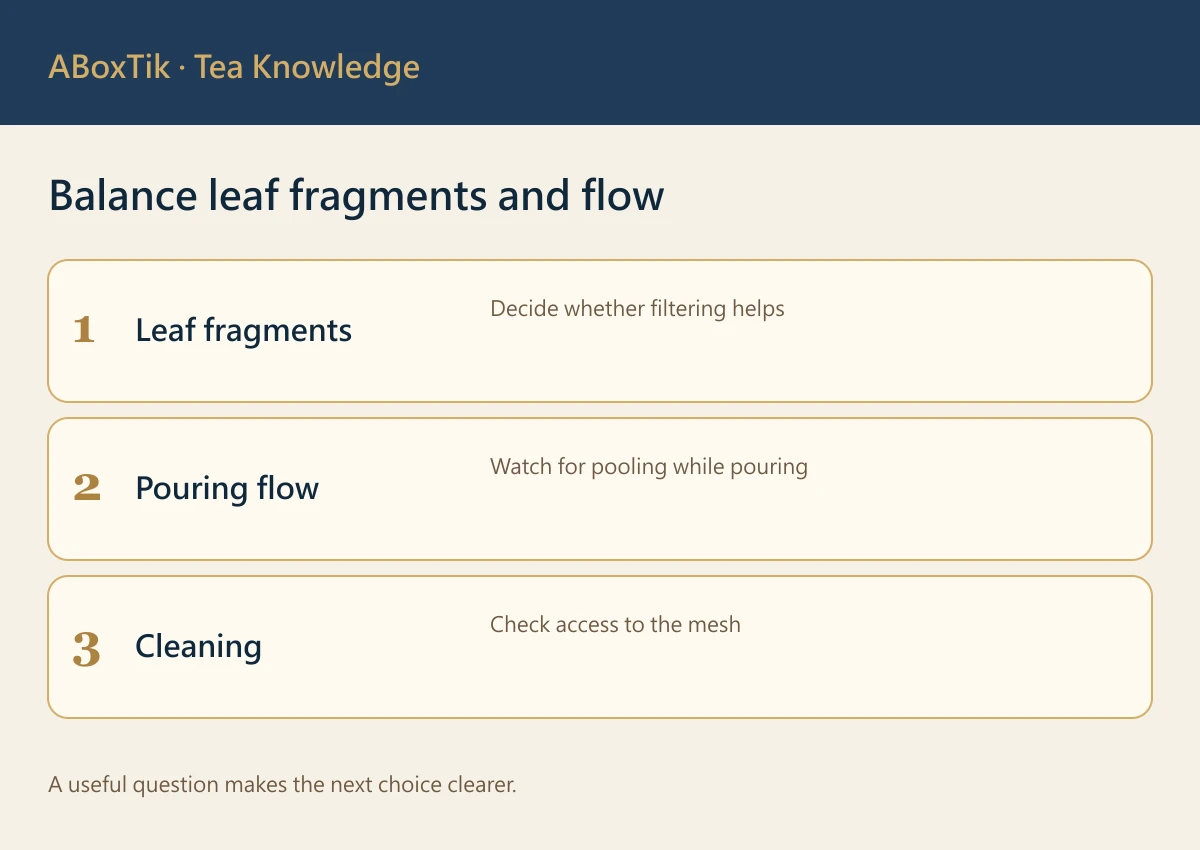
Finer mesh generally catches smaller fragments, but practical drainage also depends on surface area, shape and the amount of leaf material collecting on it. A mesh rating alone cannot tell you which strainer will work better above the pitcher already on the table.
If leaf fragments accumulate and tea pools above the mesh, pause or slow the pour. Let it drain before continuing. Keep the hot stream away from fingers and table edges; continuing to pour into a blocked strainer is a poor way to discover its overflow capacity.
With largely intact leaves and a suitable teapot outlet, an open strainer may be sufficient, or you may prefer none. Whole and broken leaf formats provide useful background. Fragment count by itself does not establish tea quality, and the same accessory need not suit every leaf shape.
Clearer tea is an observation, not a quality certificate
A strainer changes the visible material reaching the cup. It does not perform ingredient or hygiene testing. If an unfamiliar smell or other concern makes a tea unwelcome to drink, stop and ask the supplier rather than expecting a finer mesh to turn that concern into reassurance.
Appearance can involve fine suspended material, leaf hairs, temperature and brewing conditions as well as larger fragments. Visible sediment and comfortable mouthfeel deserve separate notes. The observing bitterness, astringency and strength helps describe what is actually happening in the mouth.
For an informal comparison, divide one prepared infusion into two similar small cups, directing one portion through the strainer and receiving the other by the usual route. Let both reach a comfortable drinking temperature. Compare visible fragments and personal preference without treating one occasion as proof that all strainers improve or diminish aroma.
Check support and clearance before the hot pour
Place the empty strainer above its empty receiving vessel first. Confirm that its supports sit securely, the rim is compatible and the outlet has room to drain. A very narrow rim may be unstable; a shallow receiving vessel may let the bottom of the strainer sit in the collected tea.
A little comfortably warm water can reveal the route before the real pour. Follow the instructions for the actual utensils, keep fingers clear of the stream and leave the receiving level visible. Conversation is welcome at the table; a pitcher quietly becoming a paddling pool is less helpful.
After pouring, move the strainer to a washable saucer or drip stand. Keep the wet utensil away from paper notes, furniture that marks easily and electronics. A small home tea corner works better when dry utensils, wet utensils and used leaves each have a place.
A practical comparison card for everyday use
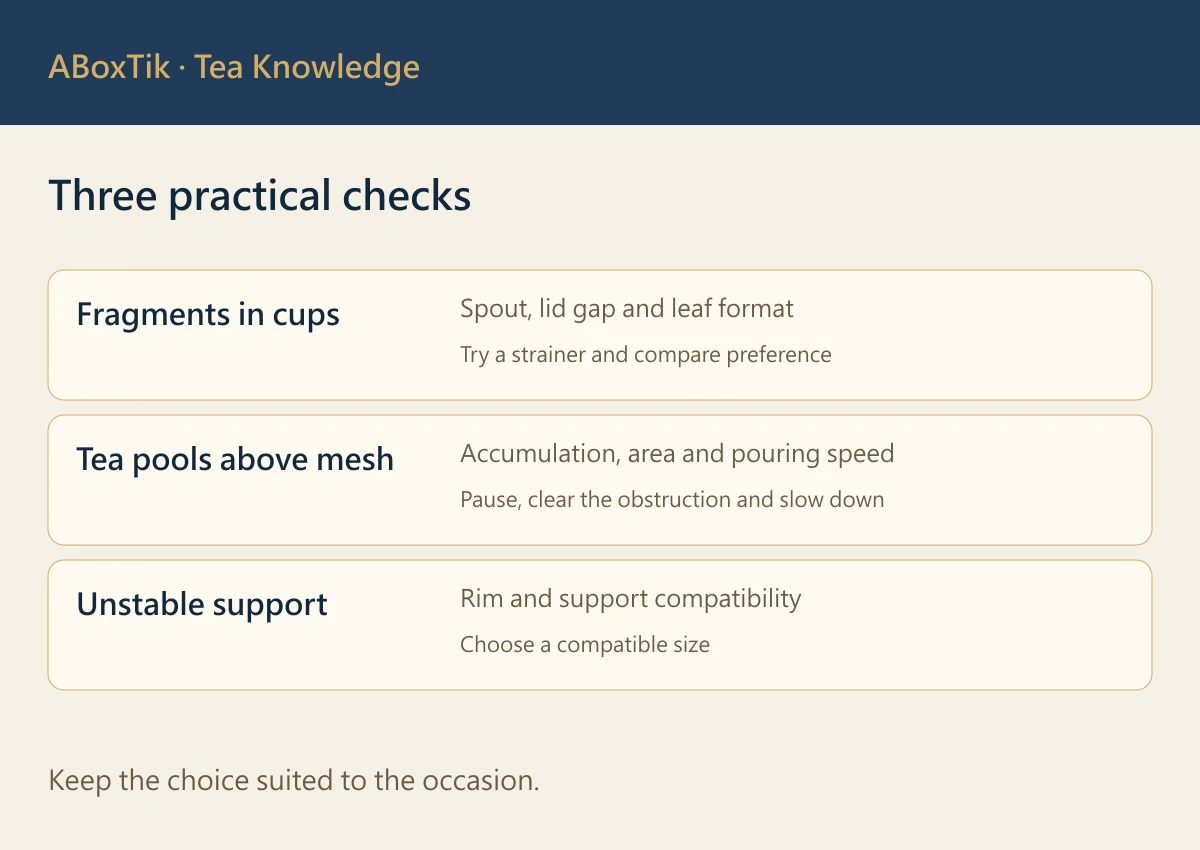
| Situation | Look at | Useful next step |
|---|---|---|
| Fragments in cups | Spout, lid gap and leaf format | Try a strainer and compare preference |
| Tea pools above mesh | Accumulation, area and pouring speed | Pause, clear the obstruction and slow down |
| Unstable support | Rim and support compatibility | Choose a compatible size |
| Smell remains after washing | Mesh, seams and drying | Follow cleaning guidance; stop use if unresolved |
Record the tea, leaf format, brewing vessel, strainer and receiver together. That makes the observation specific enough to repeat. For timing, consult the steeping-time guide; separating tea from leaves remains a different task from deciding whether another infusion would be enjoyable.
Invite each person to choose the thing that matters most: fewer fragments, an easier pour, simpler washing or fewer tools. Different answers do not require a winner. On the next round, use the arrangement that meets the actual preference. The strainer has a job, but it has not been appointed judge of the gathering.
Clean, dry and store it as a working utensil
Remove used leaf material and clean the mesh, rim and seams according to the manufacturer’s instructions for the material. Avoid poking the mesh with a sharp object that could damage it. Stop using a strainer with damaged mesh, loose supports or a persistent unexplained smell until the problem has been assessed.
Drain thoroughly and allow ventilation before storage. Keep damp utensils separate from dry tea that needs protection from moisture and odours. A strainer drying on a suitable saucer is doing useful work; it need not be hurried back into a sealed box for the sake of a tidier photograph.
For alternative everyday arrangements, compare porcelain brewing and utensil choices, whole-leaf tea bags and the actual options in the two-box tea bag set. Adding a filter and simplifying the setup can both be thoughtful decisions when they answer a real need.

Tea, one box at a time
Keep the strainer where it is useful
At ABoxTik, we bring utensil questions back to ordinary use: do fragments bother you, does the tea pour comfortably and can the tool be cleaned without fuss? Those answers tell you more than a crowded accessory shelf.
To explore different leaf forms, check the actual teas in the Classic Taiwanese Tea Four-Box Set, then read about Taiwan’s tea landscapes and craft. Once the utensils are settled, leave some room for the tea—and for yourself.
Related reading
- Compare gaiwan and teapot handling
- Explore whole-leaf tea bag formats
- View the Classic Taiwanese Tea Four-Box Set
Sources
- Tea and Beverage Research Station: introduction to tea sensory evaluation
- Tea and Beverage Research Station: Taiwanese tea classification and processing
Sources checked 20 October 2026.