
Tea Knowledge
Gongfu Tea and Brewing in Taiwan: Tools, Pace and Hosting
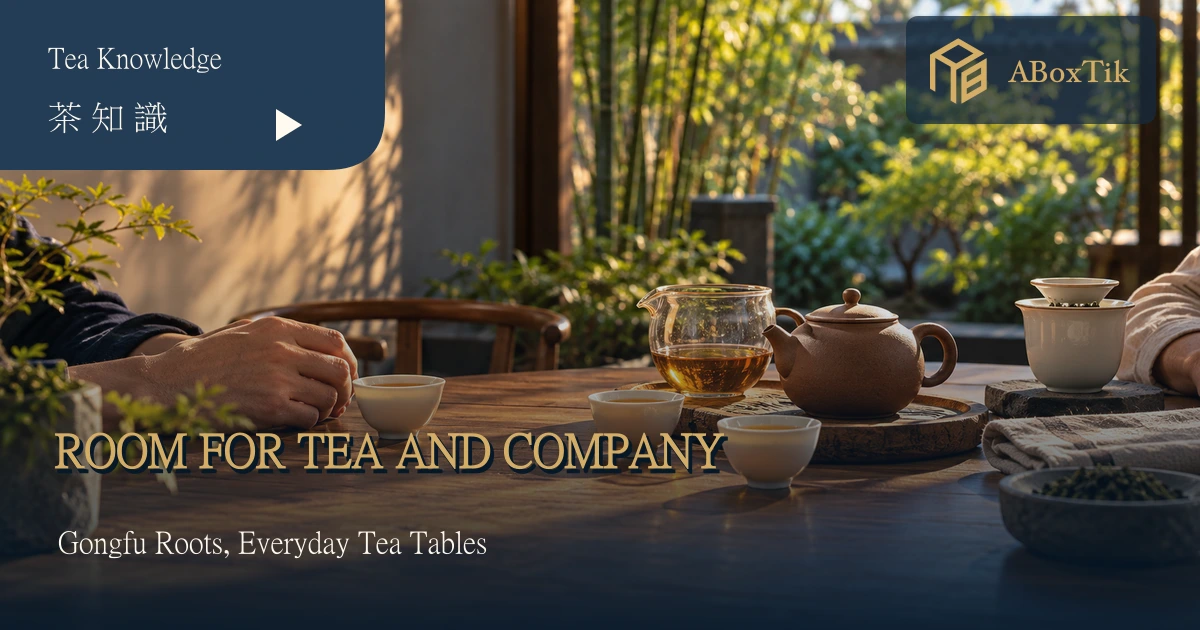
“Are we doing a very formal tea session?”
“Let’s start with comfortable chairs and cups we can hold.”
Leave room in the pot for the leaves, and room at the table for each other. Thoughtful brewing begins with a cup that feels easy to receive.
Gongfu tea in Taiwan is part of a shared tradition, rather than the opposite of Taiwanese brewing. Taiwan’s contemporary tea tables include many approaches. A useful everyday comparison looks at brewing vessels, how the tea is divided, the recipe and the pace of serving. Small rounds suit close observation; a simpler setup can leave more attention for conversation.
A crowded tea tray can make a first gathering look like a small engineering project. Before buying the whole display, ask what each item does. This guide helps plan a usable table; Taiwan’s tea characteristics provides the background on the tea itself.
Gongfu tea in Taiwan: shared roots, varied tea tables
The National Palace Museum’s Southern Branch East Asian tea exhibition describes Taiwan’s early connection with Minnan gongfu tea and the growth of modern tea arts after the 1970s. Continuity matters as much as change.
Here we compare small-vessel, round-by-round serving with a tea table adapted to everyday life in Taiwan. These approaches overlap. A Taiwanese gathering may use a small pot and cups; a gongfu session can be warm and conversational. Neither technique nor hospitality belongs exclusively to one side.
For a wider cultural introduction, see Chinese tea culture. At home, three questions are more immediately useful: how many people, which tea, and how much time? They help arrange the next cup without requiring anyone to settle a debate about authenticity.
Choose tools by their jobs, rather than completing a set
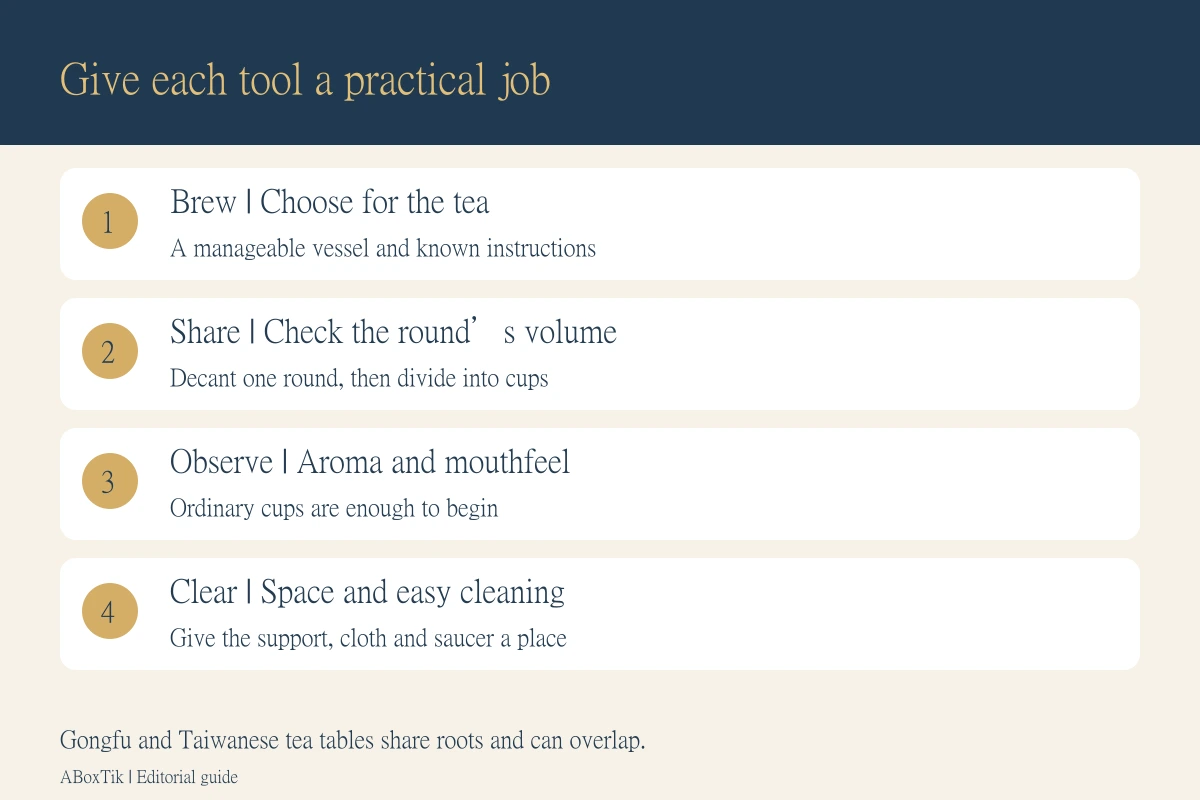
Group the essentials into brewing, serving and clearing up. Brewing needs water-heating equipment, a suitable vessel, tea and a way to measure it. Serving needs drinking cups and, when useful, a pitcher to receive a round. Clearing up needs stable heat-resistant support, a cloth and somewhere to put a strainer or tea bag. Leave a clear path for moving water.
| Job | Small rounds | A simpler everyday setup |
|---|---|---|
| Brew | A manageable small pot or gaiwan that pours steadily | A handled pot or cup with a removable strainer |
| Share | Decant into a pitcher, then divide into cups | One cup for one person; check total volume for a group |
| Observe | Notice each round’s aroma and strength | Enjoy a comfortable cup, taking notes when useful |
| Clear | A steady base, cloth and waste-water position | A few easy-to-clean items with room around them |
A serving pitcher is often called a cha hai or gongdao bei. Its practical job is to hold a round before portioning it out. Tea can be served without one, but direct pouring into several cups requires attention to amounts and sequence. For a first gathering, decanting before dividing can make the task easier to manage.
The gaiwan and teapot comparison helps choose the brewing vessel. If using a gaiwan, begin with the handling and pouring guide. Aroma cups can add another observation tool, but ordinary cups can also support the aroma-observation sequence.
Give pouring and conversation their own space
Small rounds invite attention to a tea’s changing character. Each needs filling, waiting, decanting and serving. A simplified table can reduce the equipment, but the leaves still need to be separated from the water at the appropriate point. Follow the selected tea’s instructions, then give the conversation time to continue.
When the timer sounds during a friend’s story, a gentle “Let me pour this round; I’m still listening” works well. Tea does not need to become stronger just because the story is getting interesting. Equally, the person across the table should not feel they have been replaced by a very demanding pot lid.
A steeping time belongs to a recipe, while a relaxed pace comes from planning. Tea quantity, water volume, temperature, leaf form and pouring speed all matter. Avoid assigning one universal time to gongfu tea and another to Taiwanese tea. See the first-infusion timing guide and oolong water-temperature guide. One tea and a known setup are enough for a first session.
Count people and cup portions before choosing capacity
Measure what the vessel actually pours, rather than relying only on its listed capacity. Leaves occupy space and water need not reach the rim. Practise filling, pouring and dividing with cool water; then account for the space used by tea. The goal is a comfortable portion, not the largest possible pot.
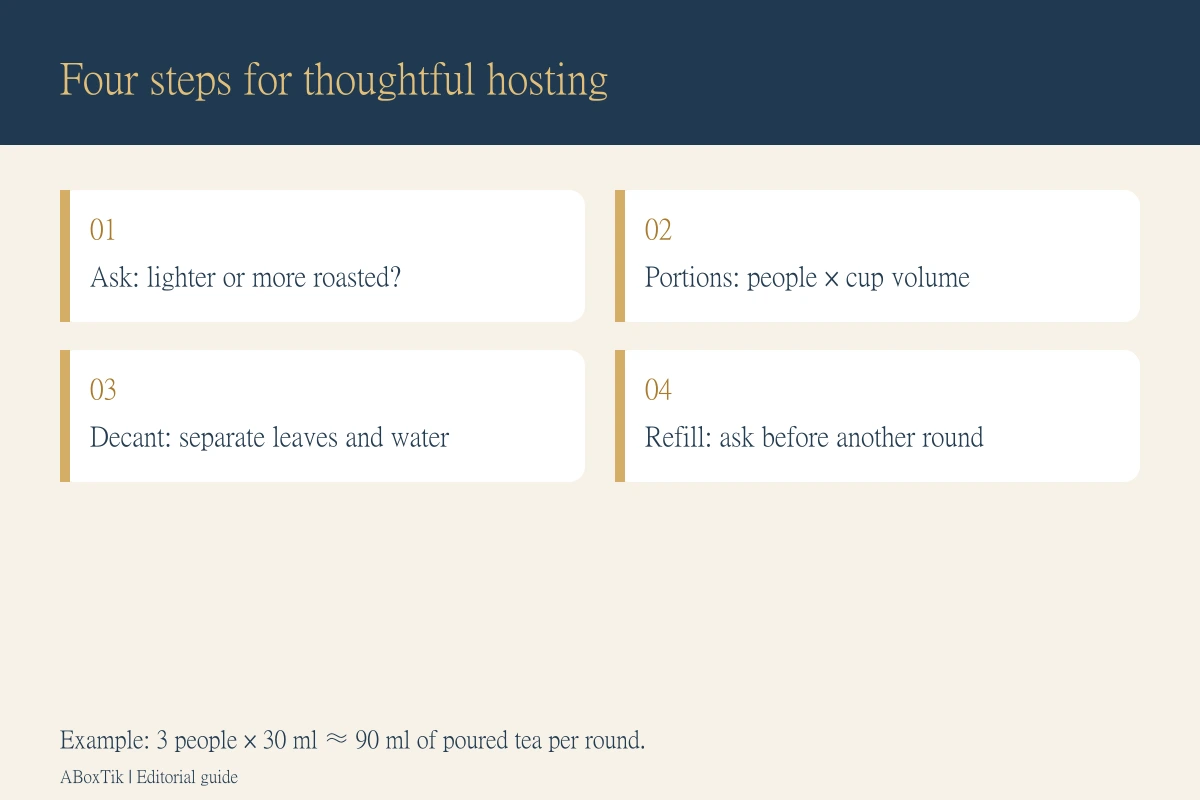
Three people receiving about 30 ml each need around 90 ml of poured tea. Four people receiving 40 ml each need around 160 ml. This is serving arithmetic, with the cup portion chosen by the group. A small pot may require two rounds, or a different vessel may suit the occasion better. No need to turn everyone’s cup into a decorative puddle.
- A short solo break: use a vessel that allows the leaves or tea bag to be removed.
- Two or three people exploring: share small rounds and ask before making more.
- A larger conversation: check the round’s volume, pitcher capacity and pouring space; explain if serving takes two rounds.
Set vessels down securely before moving other items. Leave cups easy to hold, and keep hot water and cords away from the route to snacks. The teaware materials guide offers further considerations; compare individual pieces by their capacity and use instructions.
Hosting starts with a question, rather than a performance
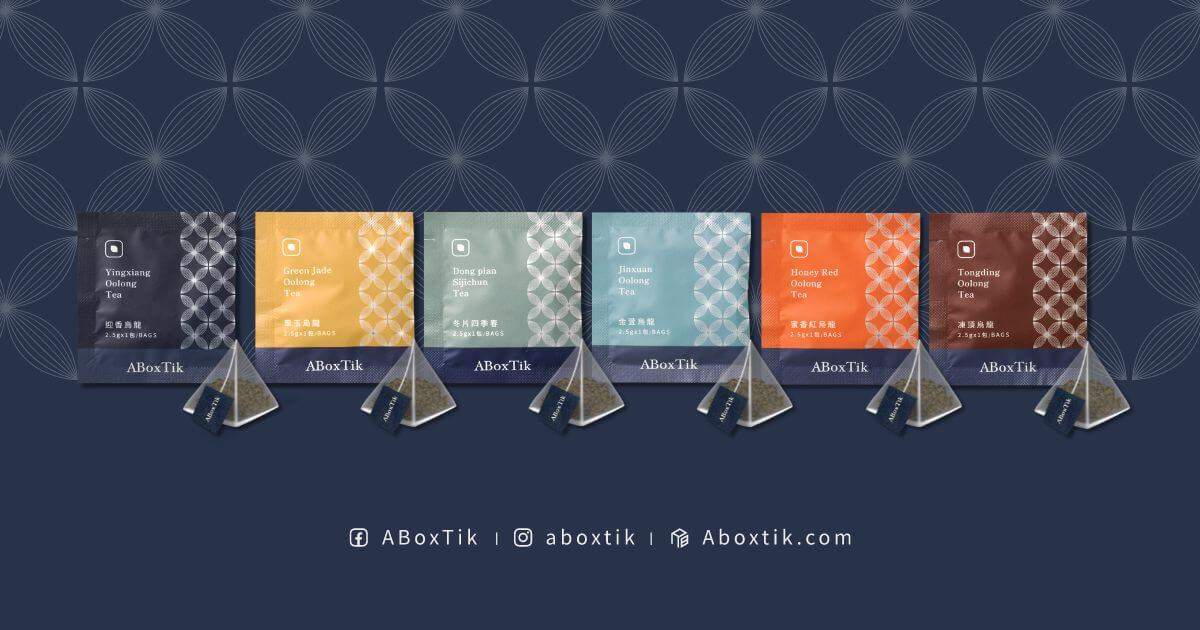
“Would you prefer something lighter, or more noticeably roasted?” is an approachable opening. Introduce two flavour cues when tea names are unfamiliar. ABoxTik’s Dong Ding Oolong description offers brown-sugar and chestnut-sugar notes; its Jinxuan Oolong points towards toasted sugar and cane sweetness. Check whether the selected product is a tea bag or loose leaf before choosing the brewing instructions.
For other directions, explore the four-flavour starter set guide or learn about oolong processing and oxidation. Strength need not become a test of taste. “I’d enjoy it a little lighter.” “Of course—less work for the tea next round.” A relaxed reply makes honest preferences easier to share.
The Tea and Beverage Research Station’s flavour-wheel introduction explains how vocabulary helps describe impressions. Everyday words such as “toasted sugar” or “a fuller sip” can start that conversation. Asking whether someone wants another cup is equally useful. Hospitality can include stopping.
Separate the setup you enjoy from the cause of a difference
To compare small rounds with cup brewing, follow a suitable recipe for each and record convenience and enjoyment. You are comparing two complete arrangements, potentially with different water amounts, tea quantities and vessels. That helps choose an everyday method; it does not isolate the effect of the vessel.
To investigate the vessel, make a separate comparison with fresh equal portions of the same tea, similar actual water volumes, the same water source and temperature, and one timing definition. Record pouring duration. Previously brewed leaves are not equivalent to a new first infusion, and a stronger cup does not automatically demonstrate greater skill.
Two note columns are sufficient: the conditions used, and one thing to keep or change next time. A photo of the vessel and a measured amount can be more helpful than an elaborate aroma name. Clear out the leaves, wash and dry the equipment, and reseal the remaining tea; the tea-storage guide covers the next steps.
Follow ABoxTik: take care of the details, and leave the conversation to the people.
Bring the tradition into a table you want to return to
Gongfu tea in Taiwan is a useful starting point for thinking about both tea and company. A small pot, gaiwan or strainer cup can begin with clear instructions and comfortable portions. Let the first round work well, then add equipment when it answers a real need.
ABoxTik brings Taiwanese tea and local craft into everyday gatherings. Explore our brand story, or choose tea bags by flavour in the Classic Taiwanese Tea four-selection gift box. For help matching a particular tea to a vessel, talk with ABoxTik about the tea, group size and cups. A good beginning can be as simple as “Take a seat; let’s make one cup first.”
Related recommendations
- Gaiwan versus teapot: compare control and handling.
- Classic Taiwanese Tea gift box: choose tea bags around someone’s preferences.
- First-infusion timing: give each round a clear starting point.