
Tea Knowledge
Tea Sweet Aftertaste: How to Notice Hui Gan in Your Cup
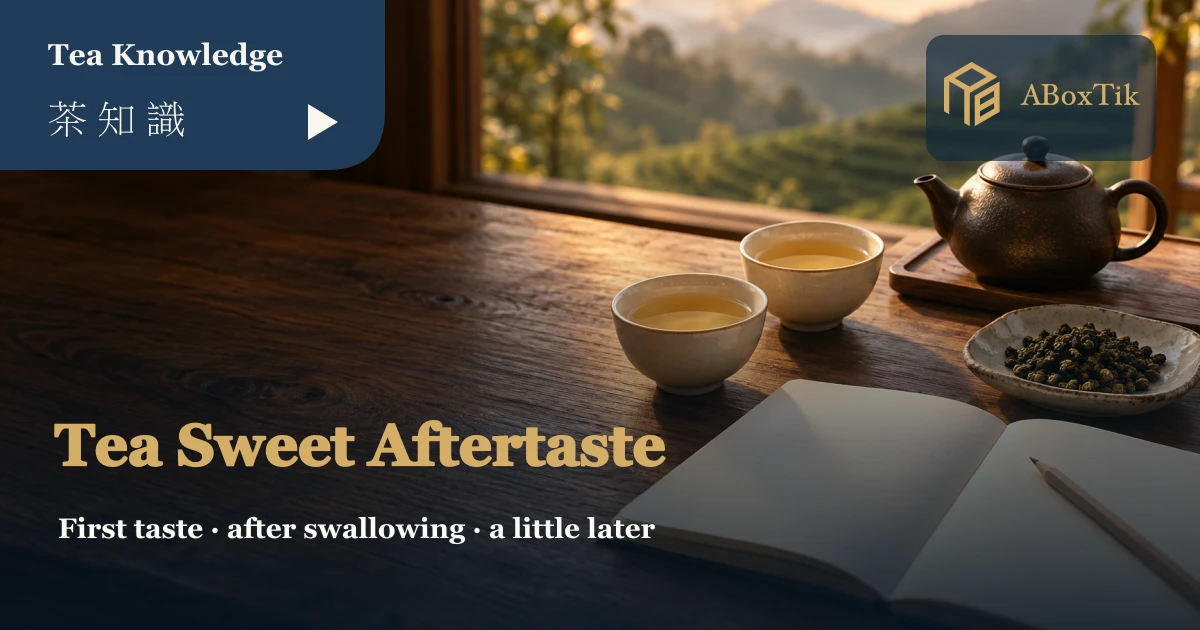
Set the cup down before giving the tea a score. Let that last sip move on a little, then notice what has stayed.
Tea sweet aftertaste, often discussed as hui gan, describes a sweet or gently sweet impression noticed after drinking tea. It differs from sweetness that is obvious while the liquor is still in the mouth. It also helps to record aroma, a moist feeling and the finish separately. Begin with three moments: the first taste, just after swallowing, and a little later. Clear notes are more useful than searching for a perfect adjective.
People praise a tea’s returning sweetness, yet your own cup seems mostly astringent? There is no need to put your tongue through a resit. The tea, brewing strength, recent food and the circumstances of drinking can change what you notice. Start with the practical distinctions in our guide to tea taste and texture, then give this cup a little room to speak.
Look at when the sweetness appears
Initial sweetness belongs to the moment when the tea is still in the mouth. Sweet aftertaste directs attention to what is noticed after the sip has been swallowed. A cup may offer both, or one may be easier to identify than the other. Recording the two moments separately prevents every pleasant cup becoming the same note: “sweet and good.” That is a sincere compliment, but it gives the next purchase very little to work with.
There is no need to prescribe a number of seconds, or insist that a cup must first taste bitter. If the finish seems fresh, fragrant, dry or faintly astringent, write that instead. Tea does not owe every visitor a sweet souvenir. For more precise language, read about noticing bitterness in tea and adjusting bitterness and astringency.
Separate sweetness, aroma, moisture and finish
Taiwan’s Tea and Beverage Research Station separates taste, mouthfeel and aroma in its tea flavor-wheel framework. Its vocabulary also considers whether an aftertaste is persistent or brief. Borrow the organizing idea rather than trying to memorize an entire wheel. Sweetness is one observation; a floral or roasted aroma is another. A moist feeling or a lingering sensation after swallowing deserves its own line too.
| Observation | A useful question | A possible note |
|---|---|---|
| Initial taste | Is sweetness noticeable while sipping? | Faintly sweet at first; little sweetness noticed |
| After swallowing | Do I notice sweetness after setting the cup down? | A gentle sweet impression; fades quickly |
| Aroma and moisture | Am I describing a smell or a feeling? | Floral aroma remains; mouth feels moist |
| Continuing finish | What stays, and is it pleasant? | Brief freshness; a little astringency remains |
These boxes keep different experiences from being filed in the same drawer. They need not turn a quiet cup into administrative work. Our tea aroma guide provides a few words when useful; “a familiar floral scent” is already enough to start a conversation.
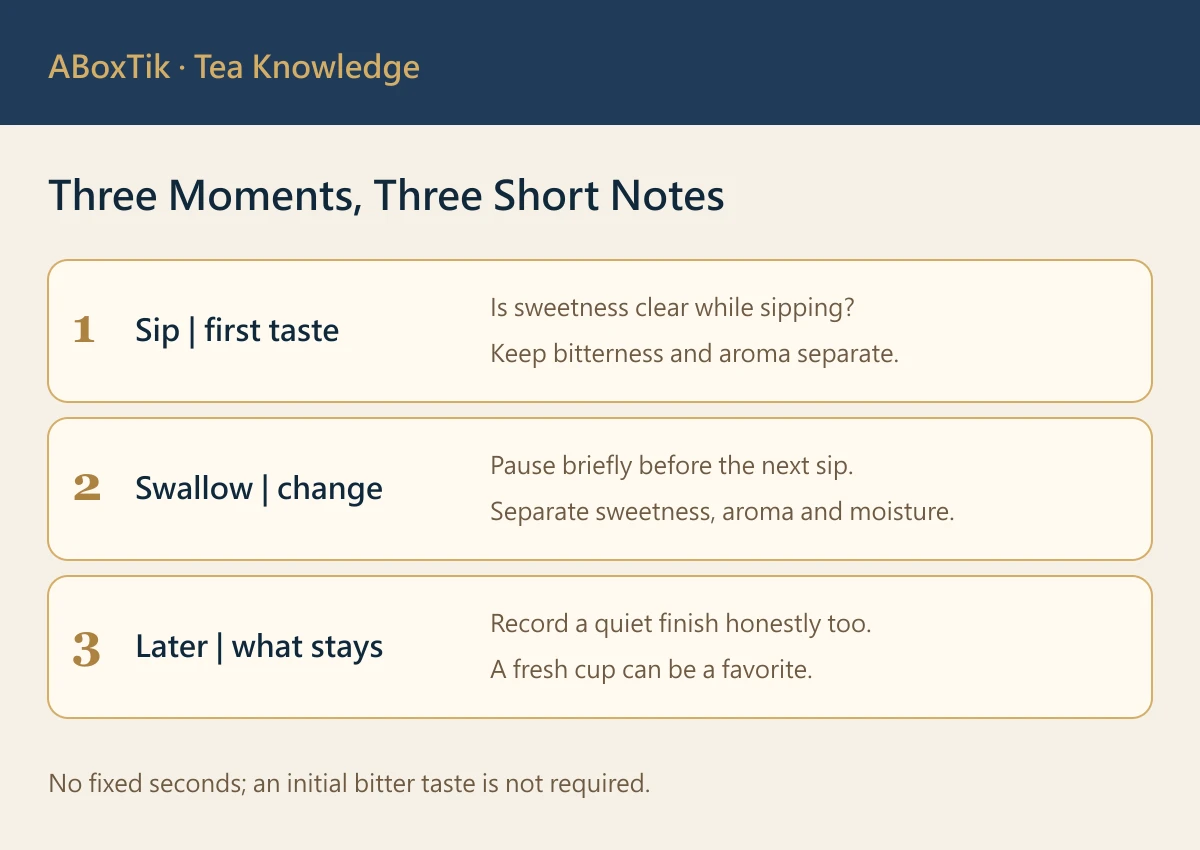
Try a three-line note with one familiar tea
Choose a tea you already know and follow its package instructions. Use a clean cup without a noticeable lingering smell, and let the tea reach a comfortable sipping temperature. If you have just eaten strongly flavored food, try the comparison later so there is less to untangle. The everyday brewing guide can help establish a first water quantity and time.
- Take a small sip and name the first thing you notice.
- After swallowing, pause before the next sip and notice any change.
- A little later, record what remains, then decide whether you enjoy it.
Keep the note short: “First taste: ___. After swallowing: ___. Later: ___.” Leave a blank when nothing distinct appears. There is no compulsory waiting time and no prize for keeping your hands off the cup longest. If you want another sip, have one. A useful exercise should fit around drinking tea, rather than making tea wait patiently for the exercise to finish.
If returning sweetness is unclear, check the brew first
The first question is whether the cup’s strength feels comfortable. A very concentrated or astringent brew may make other impressions harder to separate. On the next infusion, try shortening the time while keeping leaf quantity, water volume and equipment steady. If the tea seems light, make one modest adjustment instead of doubling everything. Our Taiwanese tea steeping-time guide explains that approach.
Next, ask whether the word “sweet” is standing in for an aroma. A cup can smell floral without tasting distinctly sweet; that is a perfectly usable description. Finally, ask whether you like the finish. A fresh, comfortable cup does not need a dramatic sweet aftertaste to deserve another pour. When comparing fresh and roasted styles, keep the aroma direction separate from what you notice after swallowing.
Compare two teas with fewer moving parts
For a familiar tea and a new one, use cups of similar size and prepare each according to its own guidance. Record actual leaf amount, water volume, temperature and time. Two different teas may have different suggested conditions. If you deliberately use identical brewing settings, label the note as a comparison under those settings; it cannot describe every way either tea might be brewed.
Write about cup A before cup B, and compare preference afterwards. Instead of asking which has the strongest returning sweetness, try: “After that sip, which cup do I want to return to?” The answer connects the observation to daily enjoyment. With a companion, write independently before exchanging notes. Different descriptions give the conversation somewhere to go; they do not mean somebody has failed to taste correctly.
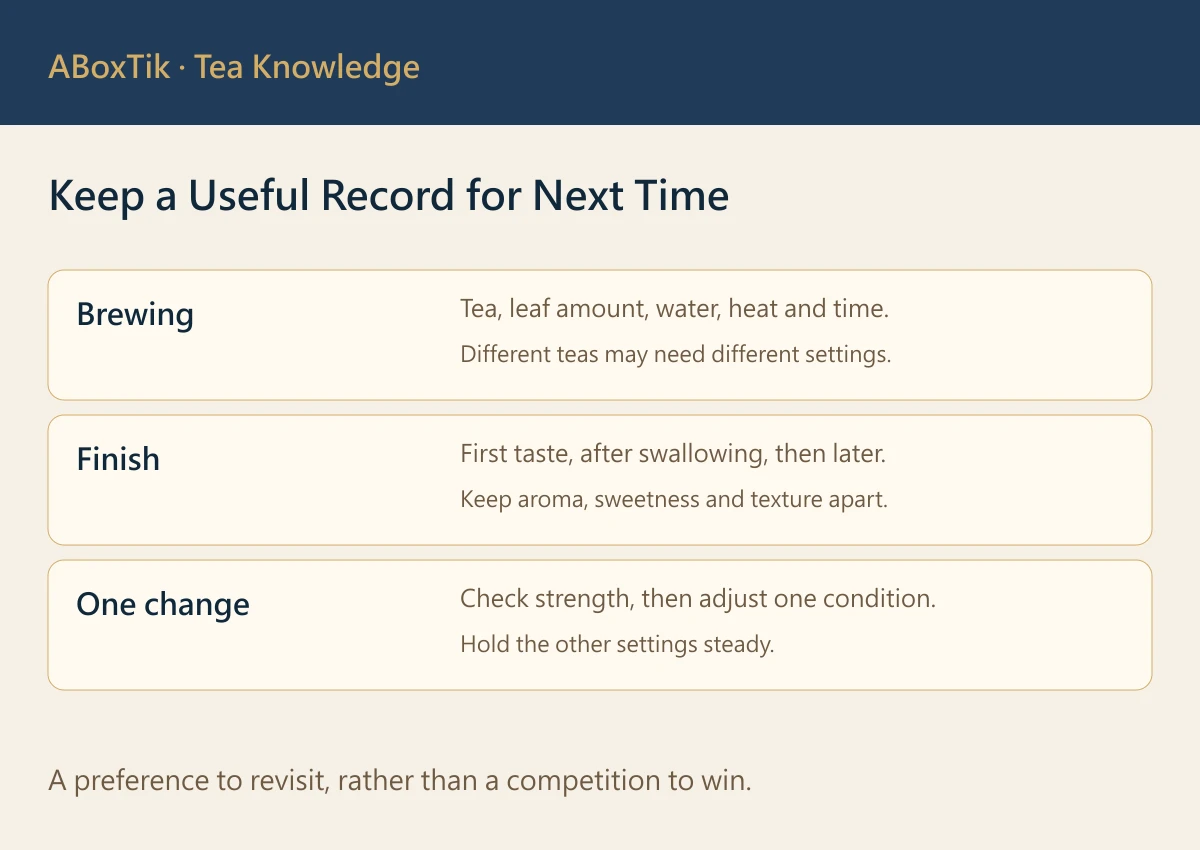
Turn a shop description into practical questions
Ask whether a tea’s sweetness is most noticeable on the first sip or afterwards, how much water to begin with, and which adjustment to try if the cup seems astringent. A pleasant adjective becomes more useful when accompanied by a brewing suggestion. Descriptions such as floral, roasted sugar or honeyed can guide a choice, but they should not all be read as the same kind of returning sweetness.
A cultivar name, growing area or price cannot predict your response by itself. Keep the actual tea and its preparation in view. For background that helps put those names in context, explore Taiwanese tea landscapes and craft.
Let the next cup answer the next question
Today, simply distinguish the first taste from what follows. Next time, try naming the aroma or texture that remains. To begin a small comparison, use the current choices in the Classic Taiwanese Tea collection, or browse the ABoxTik tea collection. Choose a familiar direction and one difference worth exploring.
Invite a friend to choose the second cup, and agree to keep the supposed answer hidden. Once both cups are set down, exchange those three lines. One person may remember flowers, another a little sweetness, while both want a refill. That is a useful tea memory: a real preference you can revisit, without anyone needing to announce the same impressive adjective.
Related reading
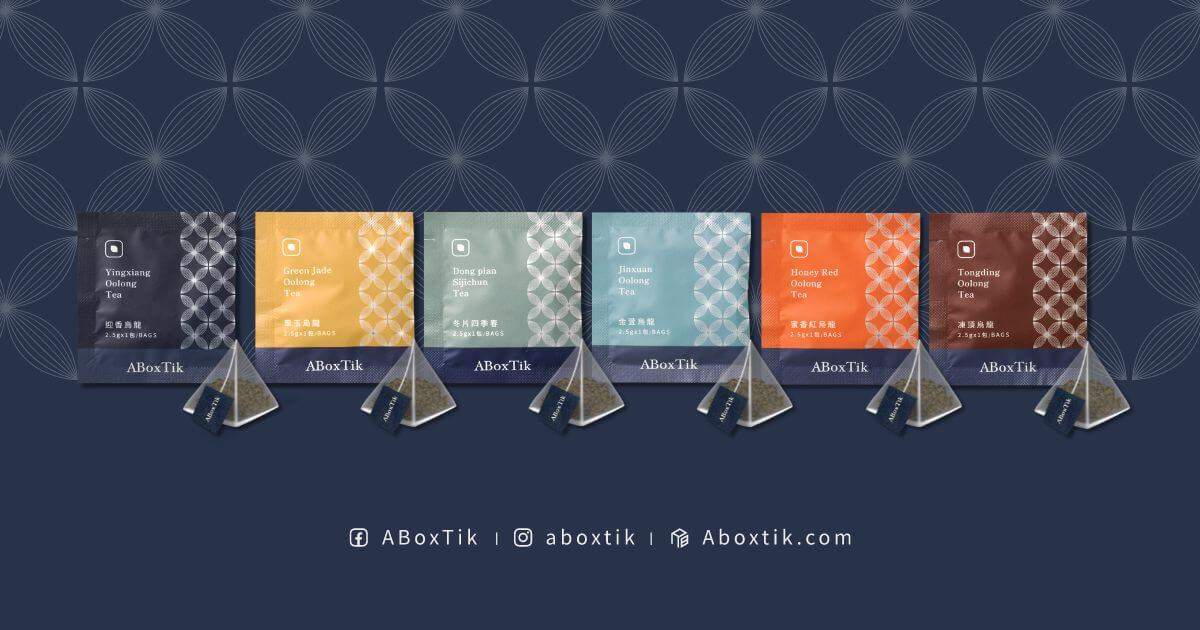
Roasted tea aroma helps separate a warm scent from a sweet taste; the two-box tea set offers a smaller selection for a comparison.
Sources
- Tea and Beverage Research Station: Taiwan specialty tea flavor wheel and TAGs presentation, page 10 (checked 2026-10-14; sensory categories inform the article’s own observation exercises)