
Tea Knowledge
Why Pinglin Suits Baozhong Tea: Place, Leaf and Craft
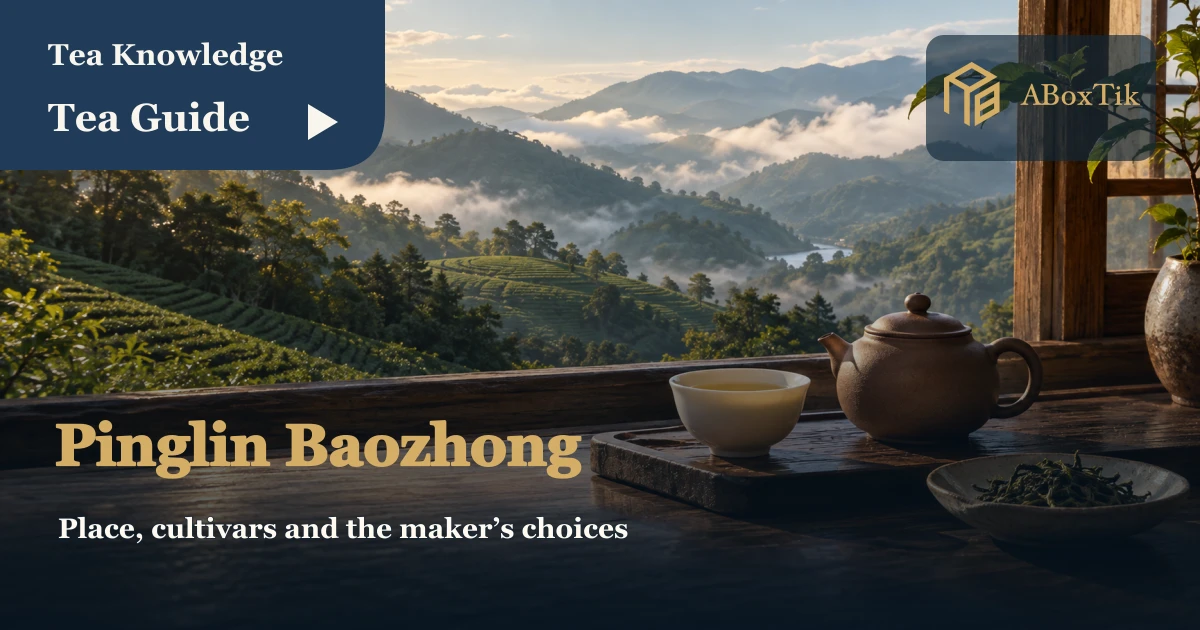
A Pinglin Baozhong tea is a conversation between a valley, a leaf, and a patient maker.
Pinglin Baozhong tea is best understood through the way a warm, humid valley setting, tea cultivars, and light-oxidation processing work together. A place name is useful context, but it is not a flavour guarantee in a very handsome label.
At the next purchase, ask where the tea was actually grown or made, then connect the answer with its cultivar and the maker’s intended style. A specific question about the packet opens a more useful conversation than asking which regional tea is the most impressive.
Pinglin Baozhong tea: read the growing setting
Pinglin sits within New Taipei’s Wenshan tea region and belongs to the history of Baozhong tea. Official local and Tea and Beverage Research Station material describes the area’s place in that landscape. A warm, humid setting can shape growing rhythm and the condition of leaves arriving at the factory; it does not independently create a finished cup. Harvest decisions, garden management and weather on a particular day all remain part of the story.
When a cup feels fresh or finely floral, treat the impression as a clue rather than proof of a single cause. Compare teas under the same conditions and record what changes between the first and second infusion. For wider context, read Taiwan tea regions and flavour clues.
For a useful side-by-side session, label the cups only after making your first notes. This prevents a familiar place name from deciding the answer before the aroma arrives. When you reveal the labels, compare what held up: floral lift, sweetness, texture, or a quieter finish. The exercise makes origin information more useful because it is connected to a repeatable sensory observation.
When choosing a Pinglin tea as a gift, include the practical details that let the recipient begin confidently: the tea name, a simple first brewing suggestion, and an invitation to adjust from there. This is more helpful than promising a fixed floral note. A thoughtful origin story gives someone a way to explore the cup, while leaving their own palate room to participate.
For the category itself, use the Baozhong introduction; keep this page beside the packet for place-specific questions.
Ask about cultivar before declaring a style
Tea Research and Extension Station material names Qingxin Oolong and TTES No. 12, also known as Jinxuan, among common raw materials for Wenshan Baozhong. Pinglin Baozhong therefore should not be reduced to a claim that it uses only Qingxin Oolong. Cultivar contributes leaf character and aromatic potential; place and processing still decide how that potential is expressed.
Ask a seller which cultivar leads the batch and whether the intended cup is lifted, sweet, or more rounded. Then describe aroma by family—floral, green, sweet, roasted—before trying to name a particular flower. A practical aroma notebook makes that much easier, and no one loses marks for not identifying an imaginary orchid.
A cultivar name is also a starting point for a follow-up question, not a shortcut to a promised flavour. Ask whether the lot is single-cultivar or a practical blend, and whether the maker has adjusted the style for the leaf condition. The clearest answer may be modest: a particular batch, a particular season, and a particular intention.
If a comparison is important, brew the teas on the same afternoon with the same water and vessels. Write the observations before consulting price, producer notes, or place names. Later, those details can enrich the experience rather than steering it. The result is a modest but reliable tasting method that can travel with you to any future tea region.
The Jade oolong introduction offers another cultivar reference; compare documented material before comparing cups.
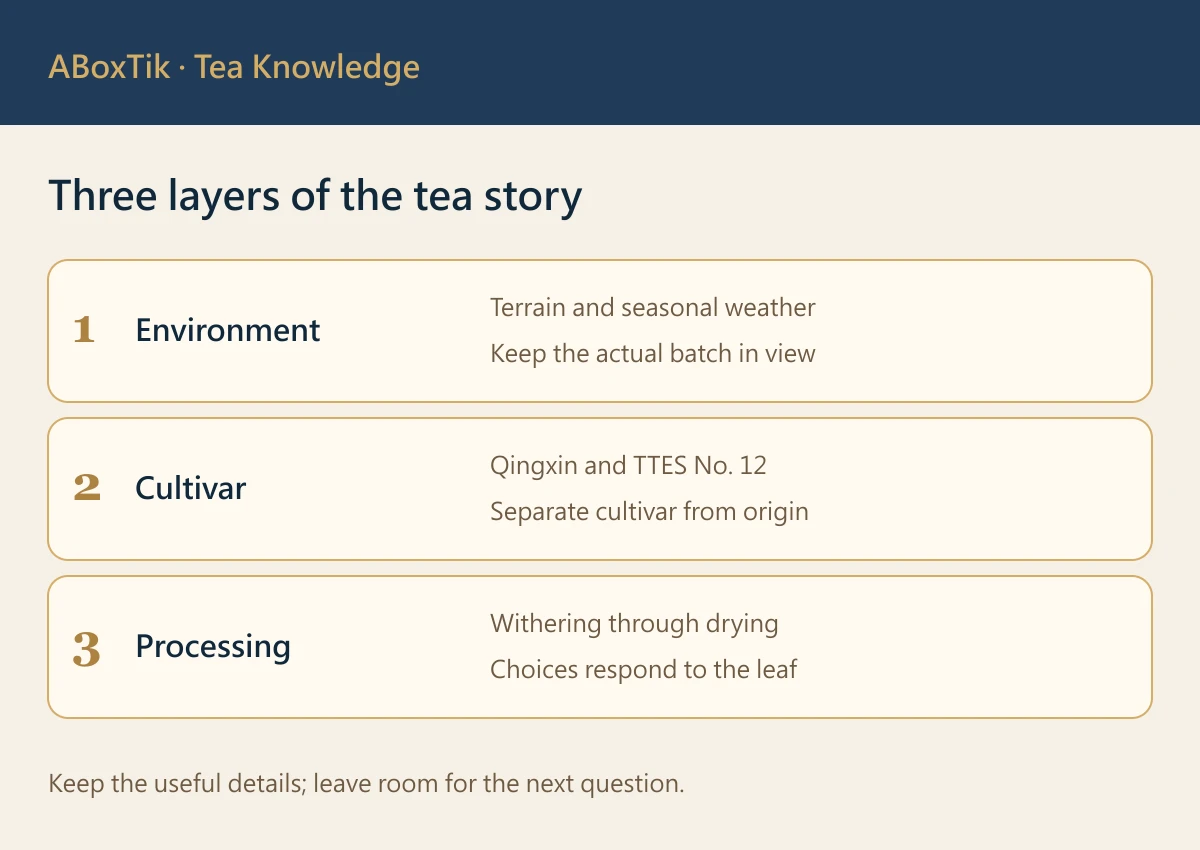
Processing gives the leaf a direction
Baozhong is not a leaf dropped directly into hot water with a wish for the best. Withering, agitation, heat fixing, rolling and drying are adjusted to the condition of each lot. A lightly oxidised direction can keep aroma and taste bright, but balance depends on a maker’s judgments through every stage.
Its twisted-strip appearance is one result of processing, not a stand-alone quality grade. Notice instead whether aroma and taste connect, whether the liquor is clean, and how the leaf opens after brewing. Oolong oxidation and making supplies the broader process vocabulary.
In a light-oxidation style, timing matters because leaf condition changes through the day. That is why two makers can begin with similar material and make cups with different balance. Rather than looking for a mythical fixed recipe, notice whether the finished tea feels coherent from aroma to aftertaste. Coherence is a more useful home criterion than dramatic volume.
Pinglin does not need to carry every expectation placed on Baozhong tea. Its value here is a practical lens: local setting, leaf material and craft decisions in relationship. Once those three are visible, a buyer can ask clearer questions, a host can make a calmer recommendation, and a cup can be enjoyed without turning it into a geography exam.
Use the Shanlinxi introduction for another regional context, without turning the two places into a quality ranking.
Carry a three-question origin card
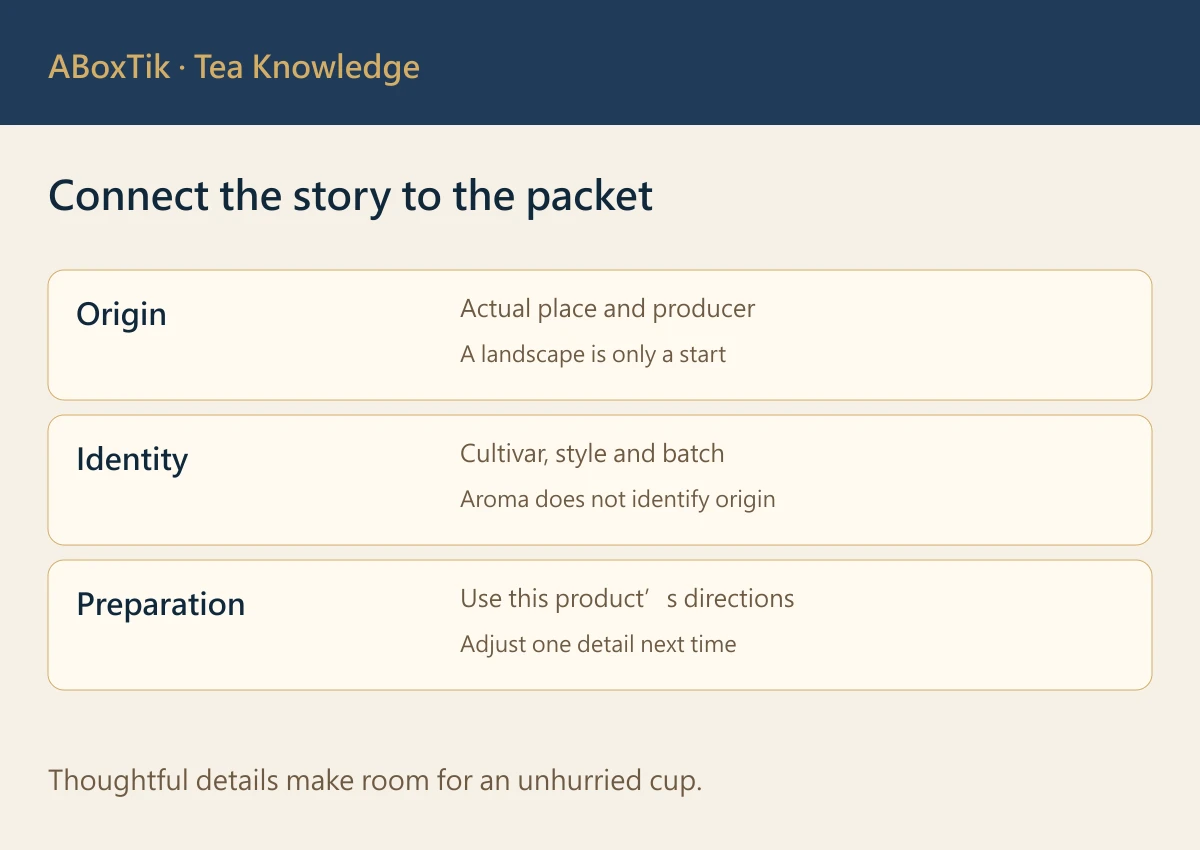
Begin with “Where was this tea grown, and who made it?” Continue with the main cultivar and whether this batch is intended to feel lifted, rounded or somewhere between. Finally, ask for an initial temperature and steeping suggestion. These three groups connect a regional story to an actual packet and give the first brew a practical starting point.
Keep package details and preparation notes together. To adjust the same tea, change one brewing variable at a time. When comparing another product, retain differences in material and manufacture too; changes in the cup cannot all be assigned to the person holding the kettle.
If the person selling the tea cannot answer every question, record what is available without treating the gap as a defect. Country, region, cultivar, date and brewing suggestion each add a different kind of context. Over several purchases, those notes make a personal map of which combinations you actually enjoy, and which descriptions were merely attractive words.
For an accessible sharing format, check the actual contents of the tea-bag gift set and include its brewing directions.
Use two infusions for a calm comparison
In the first infusion, record the broad aroma family near the cup. In the second, ask whether the liquor becomes clearer, sweeter, more vegetal, or more settled. Two infusions are enough to start; the goal is a useful record, not a one-person tea Olympics.
For a fair comparison, keep leaf quantity, water volume, vessel and time consistent. If one cup is simply much stronger, pause before calling it more expressive. Notes on sweetness and finish can help turn “nice” into a more repeatable observation.
A small notebook can have four lines: dry leaf, first infusion, second infusion, and what you would change next time. This turns a vague impression into an experiment with a next step. It also leaves room for preference: a tea can be delicate without being weak, and a stronger aroma can be delightful without automatically being better.
For a small shared session, the home tea corner guide helps arrange tea, water and the eventual clean-up.
Place Pinglin within Taiwan’s wider tea map
Pinglin Baozhong becomes interesting when location, more than one possible cultivar, and many making decisions are allowed to meet. Origin offers a framework, not a prewritten flavour script. Seasons, leaf material and individual processing choices can all shift the result.
Pair this guide with a basic introduction to Wenshan Baozhong for category and brewing context. For a small comparison set, the classic Taiwan tea four-set lets you make notes under the same conditions. The useful outcome is not a fast ranking, but a better next question.
A regional name is most generous when it invites curiosity about the people and choices behind it. Let Pinglin point you toward questions about leaf material and making, then let your own careful brewing complete the picture. That approach respects both the producer’s work and the fact that a cup is finally experienced one sip at a time.
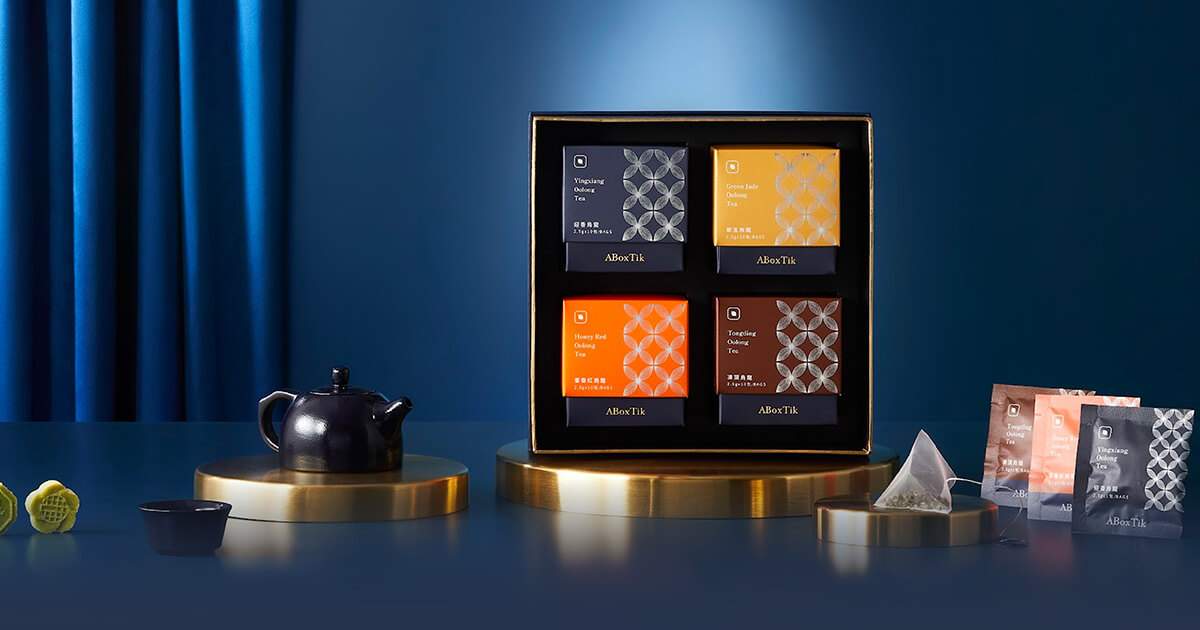
ABoxTik invites a slower look at place, leaf and craft.
Ask Pinglin Baozhong better questions
Keep the packet and your original notes together. At the next purchase, ask which piece of information genuinely helped: the cultivar, the producer’s intention, or a brewing recommendation. This gives the origin story a practical role instead of letting it remain a pleasant landscape description.
Invite a friend to compare one observation from the same cup. Agreement is welcome, but different preferences are useful too. Pinglin can introduce a conversation about place and making while leaving each person enough room to enjoy what they actually notice.
Related reading
Sources
- Tea and Beverage Research Station: Wenshan Baozhong
- Pinglin District Office: 2023 Statistical Yearbook, natural landscape, printed page12 (PDF page19)
- Pinglin District Office: local geography
Sources checked 17 October 2026.