
Tea Knowledge
Taiwan Tea Aroma Vocabulary: Chinese-English Descriptors
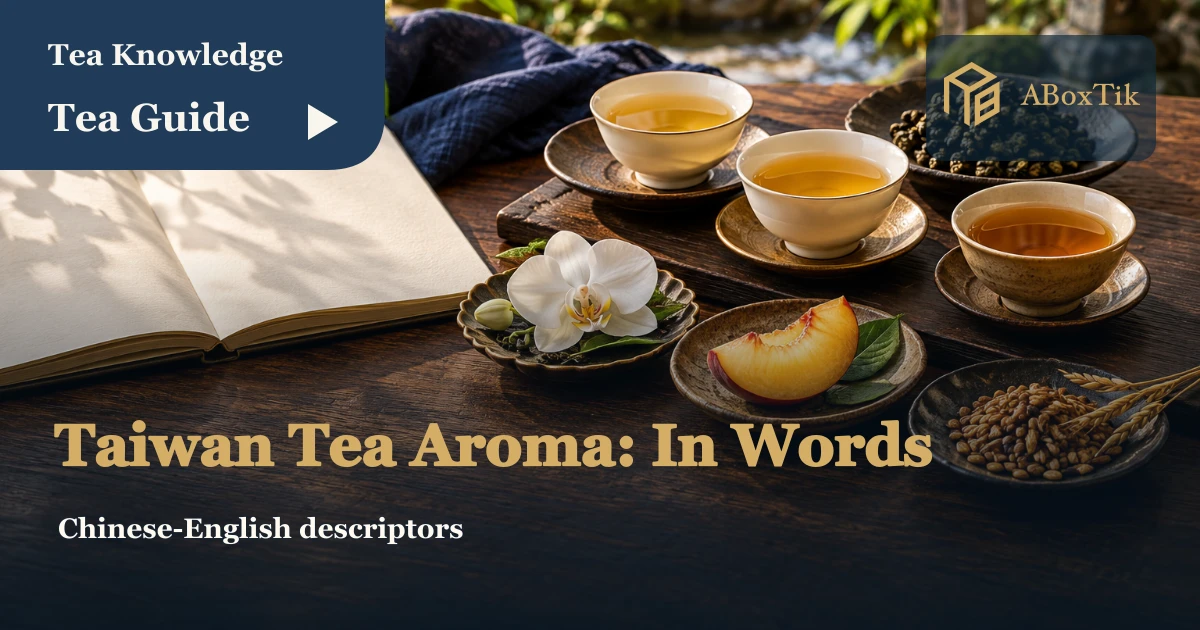
An aroma may arrive as a memory before it finds a name. Begin with an honest direction, place it in this cup and moment, and leave the next infusion something useful to continue.
Taiwan tea aroma vocabulary becomes easier to share when Chinese descriptors are paired with clear English associations. Begin with floral, fruity, green, toasty, honey-like or woody directions, then retain the same meaning when translating. Honey-like does not mean added honey. This guide provides a practical Chinese-English word card for notes, tea gifts and conversations.
Taiwan tea aroma vocabulary: identify the reader first
A tea description may be used on a gift card, in a message to a friend or on a shopping shortlist. Someone looking for an overall style may only need floral or toasty. Someone comparing products also needs the actual tea names and specifications, kept separate from aroma language. Decide what the reader needs to do with the sentence before collecting technical terms. A small card does not need to become a textbook.
This is a translation and communication tool. The aroma-smelling guide owns the observation procedure, while tea flavour provides a broader background. Roasted aromas and floral vocabulary explore individual directions. Keeping those jobs on their existing pages lets this guide focus on whether the Chinese and English express the same idea.
Taiwan’s tea research agency presents flavour wheels as indexes for description and communication, including multilingual work. The simplified word card here is an editorial aid, not a reproduction of an official wheel or a scoring sheet. Start with everyday language the recipient understands. A message intended to share tea should not accidentally become an invitation to sit a vocabulary examination.
Six Chinese-English aroma families for a usable word card
Floral language may begin with an impression of orchid, gardenia or wild flowers, without pretending every flower can be identified. Fruit may first be citrus, stone fruit or ripe fruit. Fresh notes can recall green leaves or grass. Roasted direction often moves toward toasted grain, nuts, caramel-like warmth or wood.
One cup may show several families, or only one clearly. Leave an empty box when it does not fit. Tea does not lose flavor because a notebook is quiet. honey and fruit aromas tea withering oolong oxidation brewing methods
| Descriptor family | English starting point | Useful clarification |
|---|---|---|
| Floral | floral / white-floral | An association; not automatically flower-scented tea |
| Fruity | fruity / citrus-like / ripe-fruit-like | Describe the fruit direction without implying added juice |
| Green and vegetal | green / leafy / grassy | Name the impression without automatically calling it a fault |
| Roasted | toasty / roasted-grain-like | An aroma description does not establish firing temperature |
| Honey-like sweetness | honey-like aroma | Keep the comparison separate from an ingredient claim |
| Woody | woody aroma | The descriptor alone does not establish ageing |
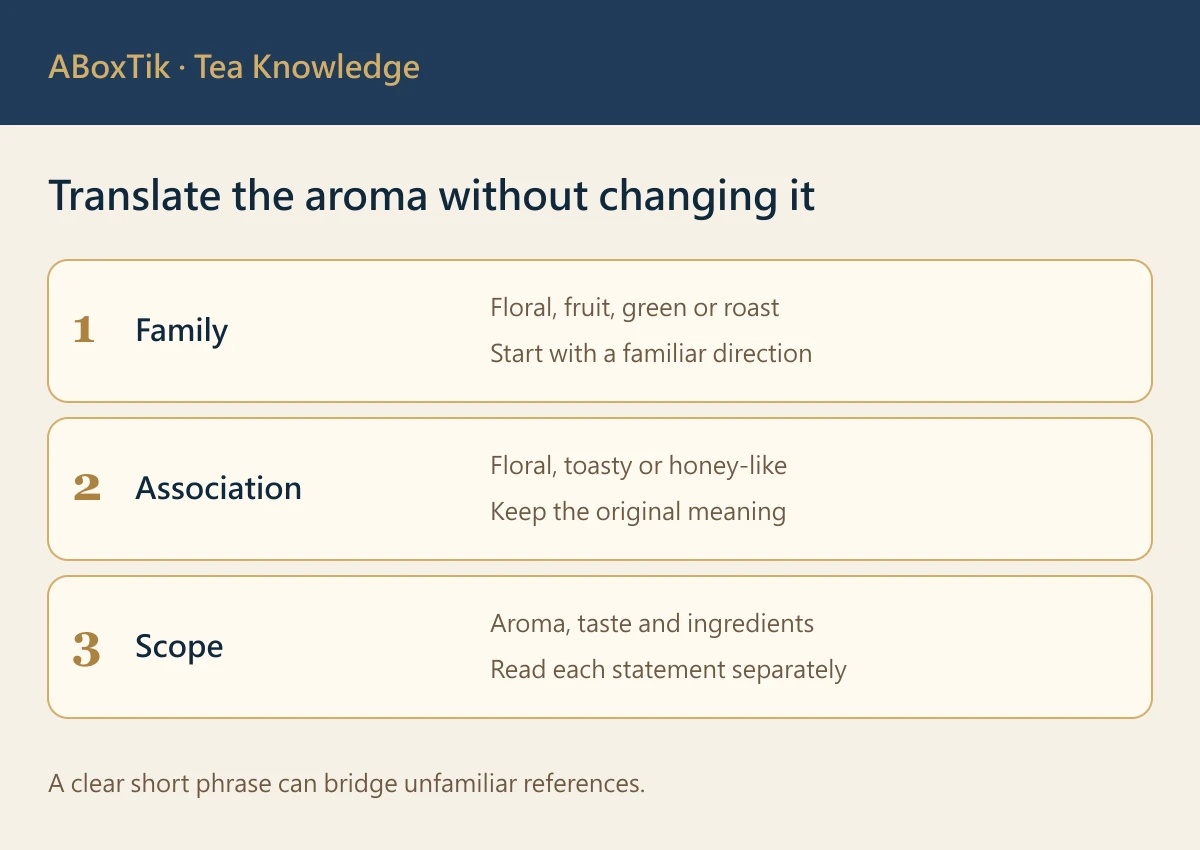
Three translation traps: sweet, honey-like and floral
Sweet-smelling is not the same as sweet-tasting. Honey-like does not establish honey as an ingredient; toasted-rice-like does not establish added grain. Aroma is a sensory impression, while ingredients and processing information belong on a label or reliable product description. Record bitterness, astringency, body and finish separately so you can tell whether the nose or the palate is speaking.
Try separating “sweet, fragrant and thick” into distinct observations. A sweet-smelling impression belongs under aroma, sweetness on the palate under taste, and thickness under texture. A honey-like association can be written that way without becoming “contains honey.” Keep the ingredient list in another field. This also tells a friend what kind of statement is being made: an association rather than an ingredient finding. Giving each word a smaller job often makes the whole sentence clearer.
Before sending a description, check whether its English changes the apparent nature of the product. Floral describes an impression; flower-scented suggests a scenting process. Honey-like retains a comparison, while with honey can be read as an ingredient statement. If a product really is scented or blended, explain that from its actual ingredient and processing information. Translation should not make a labelling decision on its behalf.
Turn one precise note into a Chinese-English sentence
Begin with a simple Chinese observation and retain the same information in English: a light floral aroma in the warm cup, possibly white-floral. Preserve location, intensity and uncertainty rather than inserting an impressive flower name during translation. This is a model sentence, not a tasting result for a particular product. When adapting it to a real observation, retain the original note and save the revision separately.
For sweet aroma, ask whether the writer means a sweet-smelling impression or a sweet taste on the palate. For a roasted direction, toasty or roasted-grain-like may convey the intended association more clearly than burnt. Translation should reduce misunderstanding rather than assign one English word to every Chinese character. A short clarification is often more useful than a grand adjective.
A gift card can contain one readable association, the actual tea name and clear brewing directions. Avoid turning a descriptor into a claim about origin, vintage, ingredients or health. If the reference object is unfamiliar, return to the broad family and allow the conversation to find a shared memory. Clear language makes room for the recipient’s own response, rather than asking them to reproduce the writer’s exact experience.
When the reader does not know the reference, rephrase clearly
A flower name familiar in one language may mean little to another reader. Someone may recognise citrus peel yet have no reason to distinguish several white flowers. Ask whether a reference is familiar; if not, return to floral or citrus-like. Avoid assuming knowledge from nationality or language. Food memories are personal, and a useful translation leaves room for the recipient’s own experience.
For a roasted-rice association, begin with toasted-grain-like and explain the rice reference if useful. Do not replace it with popcorn or coffee merely to make it sound familiar unless that was the actual association. Translation can add an explanation without exchanging the sensory content. Where no single word fits both languages, a short phrase often communicates more accurately than an impressive technical term.
Read English product descriptions in the same way: separate a broad family, a specific association and any ingredient or processing information. An unfamiliar term can become a question rather than a quality grade. For tea differences, return to honey and fruit aromas, oolong processing or withering. Each background question has its own place and source.
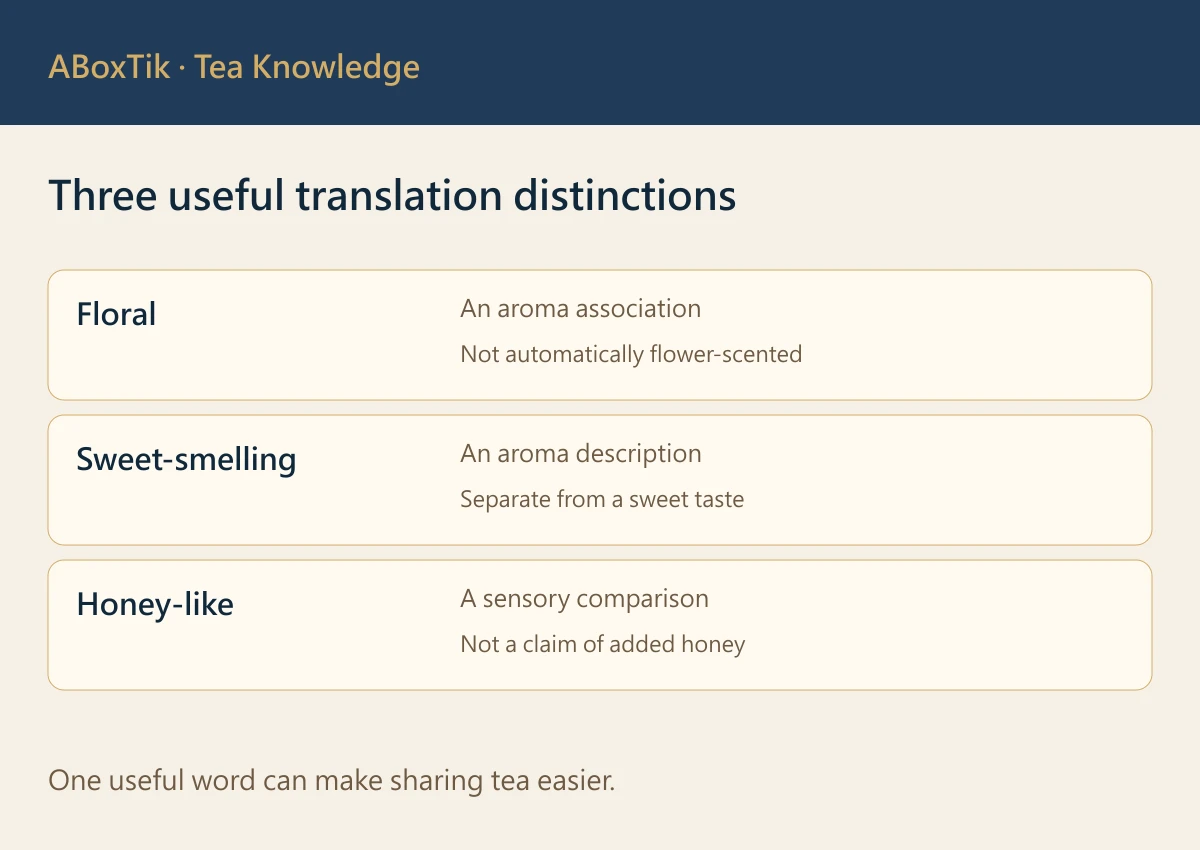
Write a thoughtful gift card or shopping message
A small card can answer three questions: what is the actual tea, what flavour direction is being shared, and where are the brewing instructions? Name the product, use a clear phrase such as floral or toasted-grain-like, and point to its directions. The description invites someone to explore; it does not prescribe what they must recognise. Consideration need not be measured by the number of aroma adjectives.
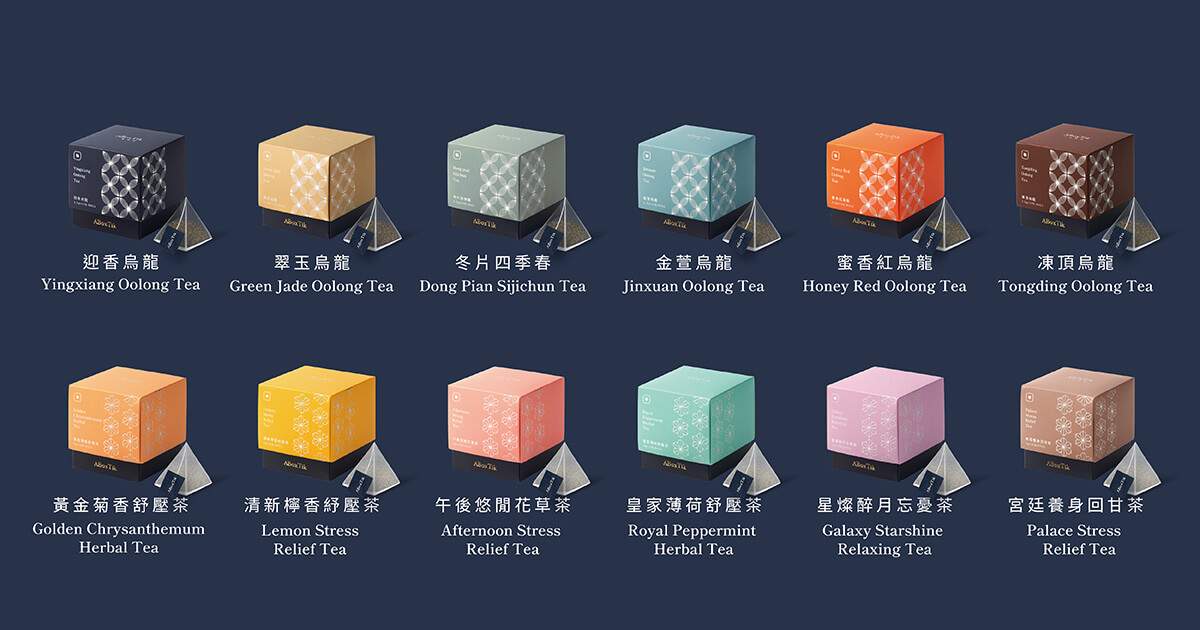
For shopping, use descriptors as a direction and check the name, ingredients and specification separately. Compare the actual information for Dong Ding oolong, Cuiyu oolong or the classic four-box tea selection. If a description comes from the supplier, retain that attribution rather than recasting it as a personal tasting experience. A good recommendation can be clear about where its information comes from.
Before sending, read the English backwards as a check on meaning. Could it imply added honey, flowers or juice? Has an association become a claim about origin or grade? Adjust the connecting words where necessary. Aroma language has already done useful work when the recipient understands what is being shared. It need not also award the tea a certificate. One precise and generous sentence is often the most welcoming introduction.
Fresh, ripe or dried: another layer of fruit-aroma vocabulary
Describe both the fruit association and its state. Fresh pear may suggest a crisp direction, ripe peach a fuller one, and dried apricot a concentrated impression. These everyday references help people find shared language. They are not three compulsory stages in every tea and do not establish ingredients from aroma alone.
| Reference direction | A possible phrase | What to retain |
|---|---|---|
| Fresh fruit | fresh-pear-like aroma | The particular fresh-fruit association |
| Ripe fruit | ripe-peach-like aroma | The ripe-fruit impression, not added peach |
| Dried fruit | dried-apricot-like aroma | The dried-fruit association, not an ingredient claim |
If using actual fruit as a smelling reference, keep it separately on clean dishes rather than adding it to the tea. Smell and note the tea first, then ask whether the reference fits. If dried apricot is unfamiliar, dried-fruit-like remains a useful description. Familiarity with a reference is not a measure of tea expertise, and a reference plate is not an ingredient list.
A note might distinguish an impression in a warm cup from another impression as the cup cools. Record strength and stage, without presenting a fresh-to-ripe-to-dried progression as universal. A sweet-smelling association also belongs apart from sweetness tasted in the mouth. Nose and tongue are neighbours, but they can still submit separate notes.
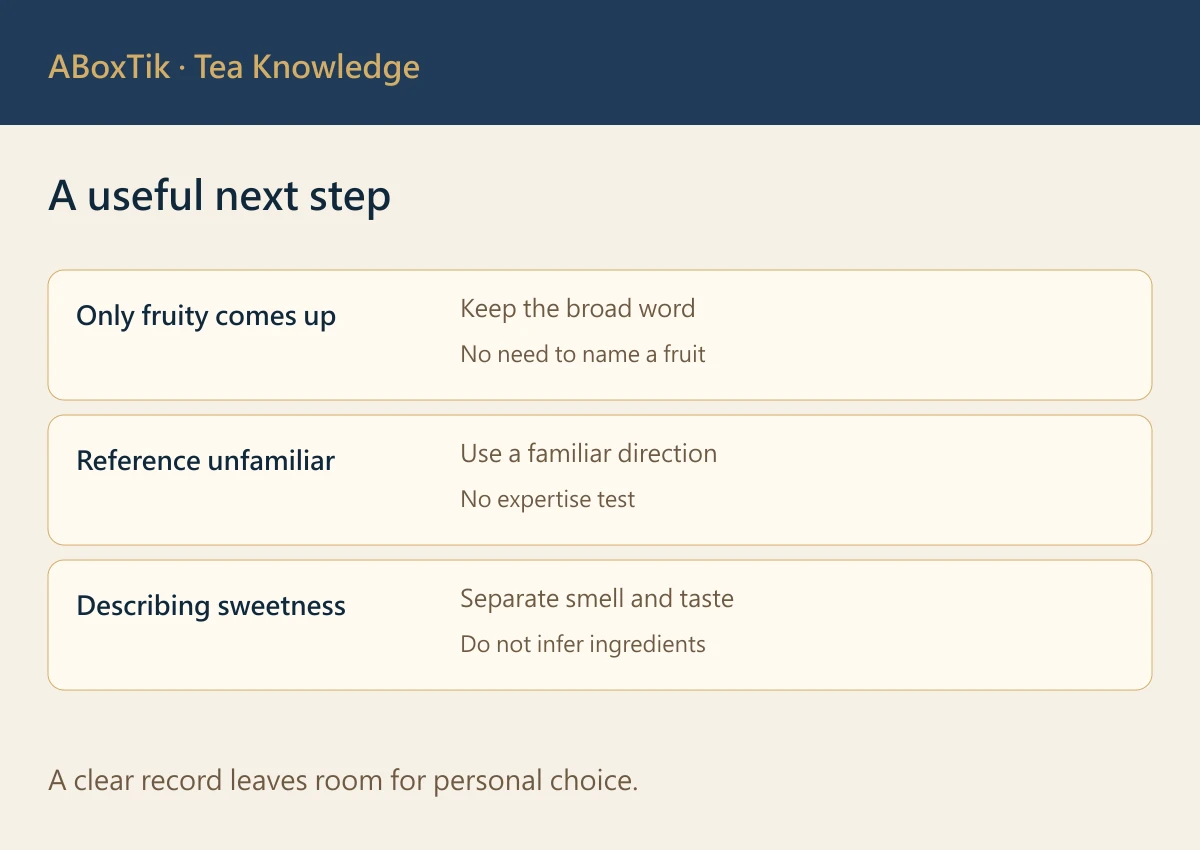
For a gift card, one clear direction and its observation point are often enough. If the only honest word today is fruity, use it. If no fruit comes to mind, choose another direction or leave the space empty. A description that fits the cup is easier to share than a whole fruit market squeezed onto a card.
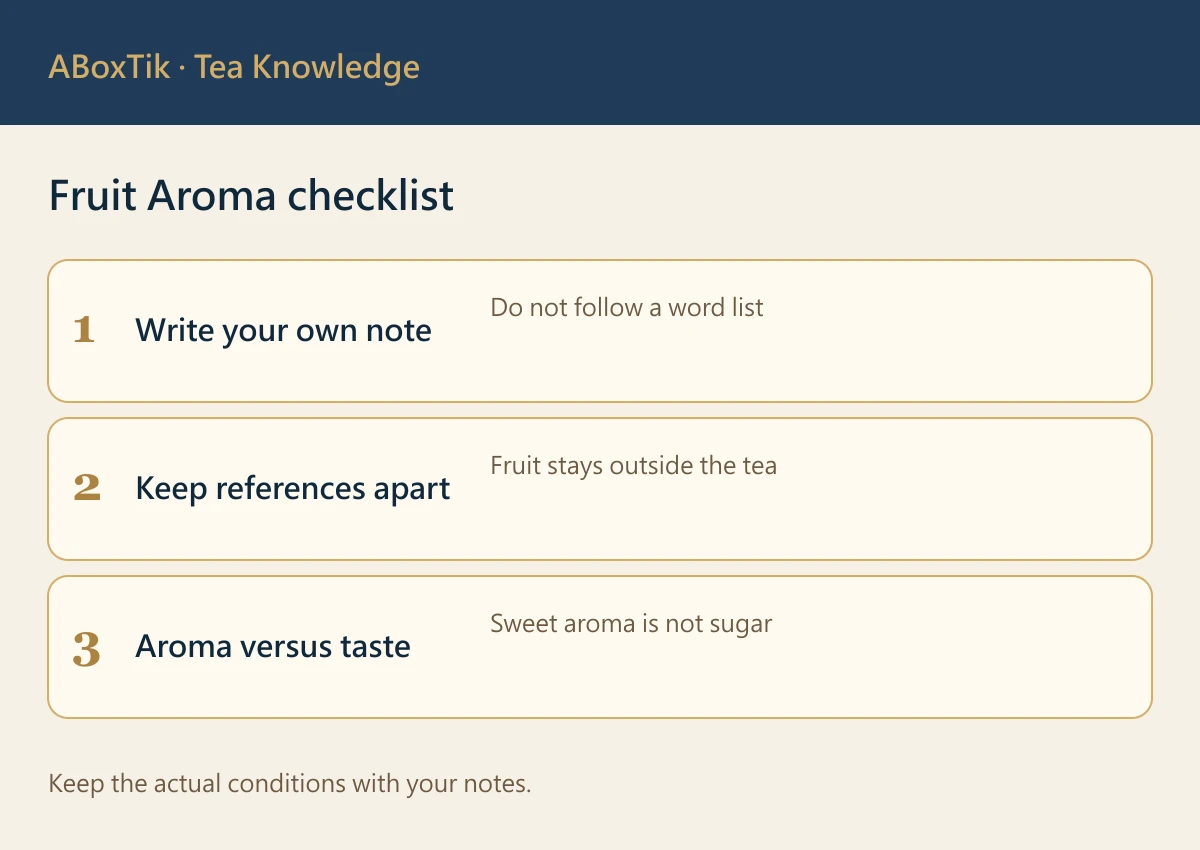
Follow a box of tea: a small clear question for the next cup.
Follow a box of tea into everyday life
A Chinese-English aroma card keeps the same association clear across languages. Begin with six broad families, distinguish sweet aroma from sweet taste and honey-like from added honey, then write one useful sentence. For the physical observation process, return to the aroma-smelling guide.
ABoxTik hopes Taiwanese tea can be understood and shared comfortably. Clarify one word, then explore Taiwanese tea’s origins and craft at leisure. An overseas friend receives more than an attractive adjective: they receive a welcoming, understandable place to begin.
Related reading
- aroma observation: the physical sequence.
- honey and fruit aromas: distinguish associations.
- roasted aromas: grain and nut directions.
Use familiar things as tea aroma references at home
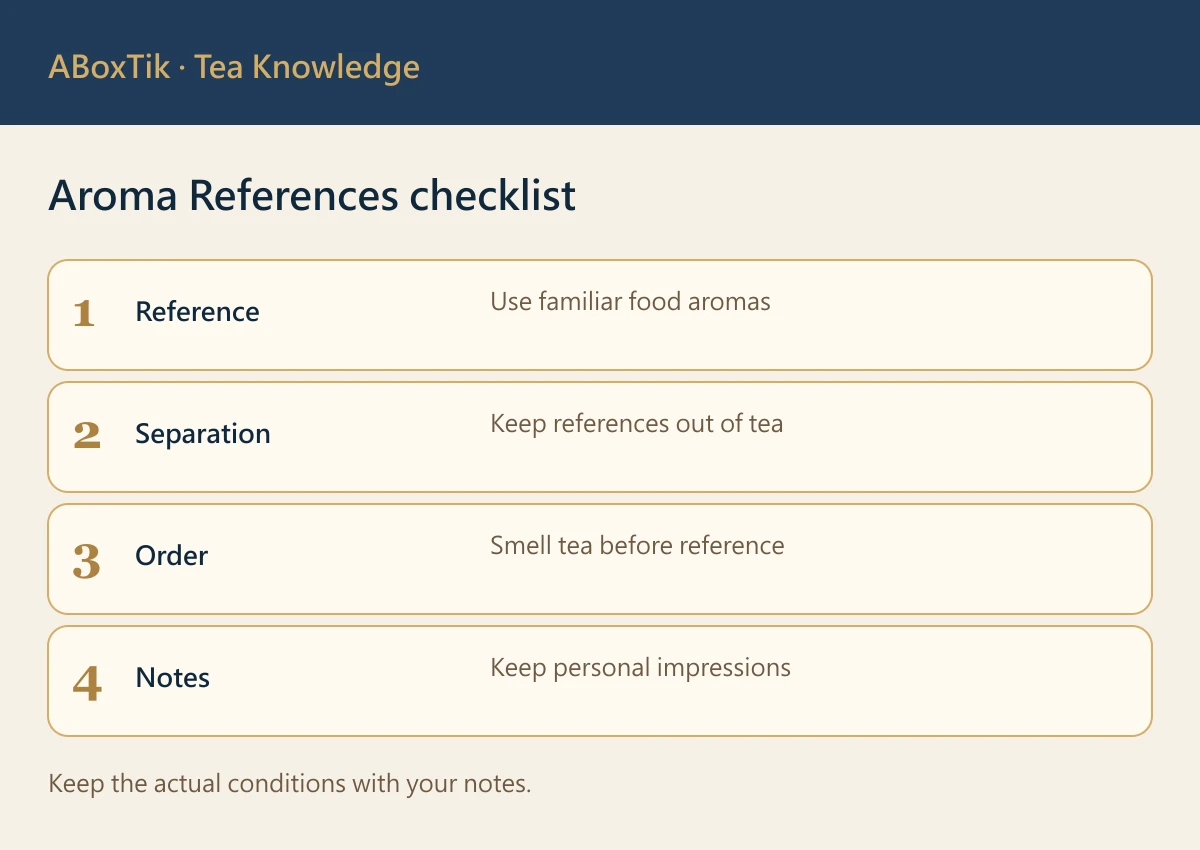
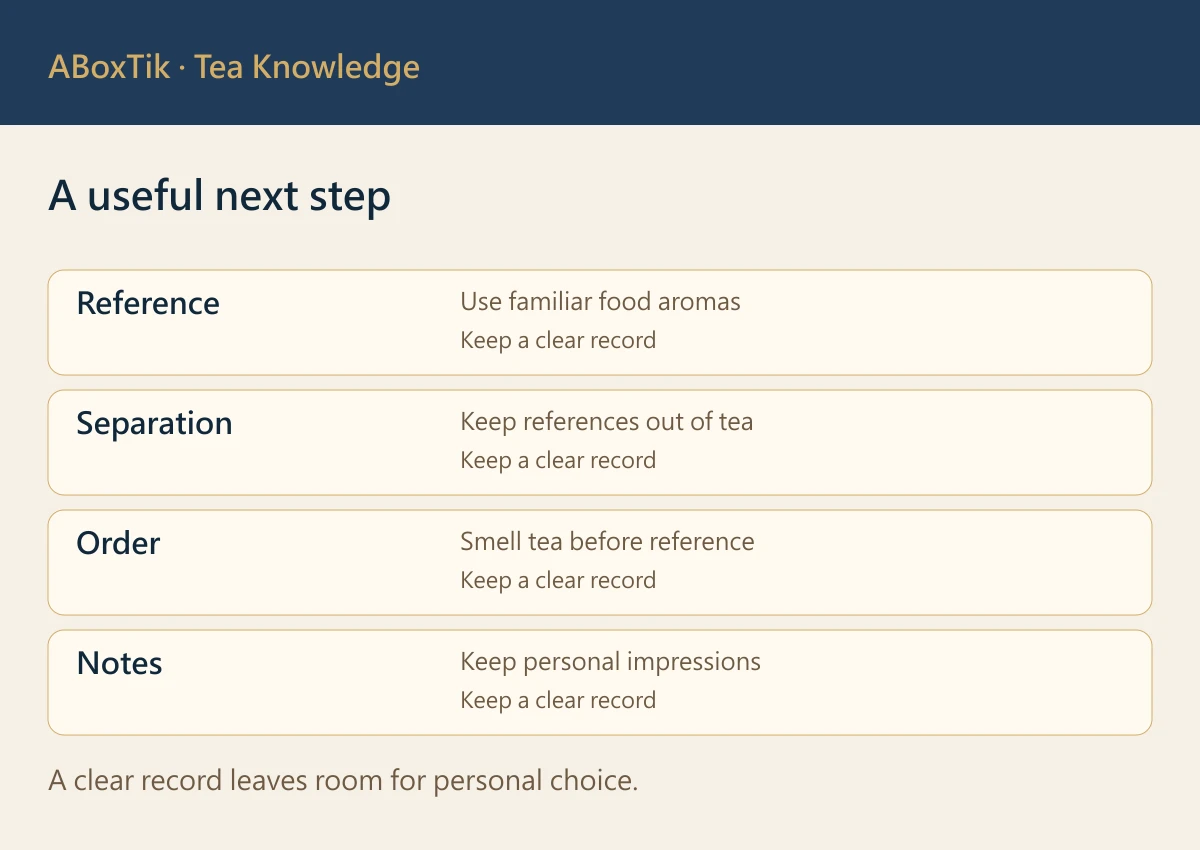
Smell the tea first and write down a broad impression. Then choose one familiar scent, smell it separately, and return to the tea to see whether the association still fits. A reference helps you find words; it is not an ingredient to add to the tea and cannot establish the tea’s composition or quality. “Not sure today” is a useful note too.
| Direction | A familiar reference | What to note |
|---|---|---|
| Fruit | Washed fruit peel or a cut surface | Fresh, ripe or dried-fruit association |
| Floral | A familiar fresh flower with a noticeable scent | Start with the broad family |
| Toasted | Plain toasted grain or bread | Toasted, nutty or burnt impression |
Choose clean, familiar items suitable for smelling, and place each on a separate clean dish away from the tea. Avoid essential oils, perfume, strong cleaners and unidentified materials. Skip anything that causes discomfort or to which someone is allergic. Allow hot tea to reach a comfortable temperature before smelling it; there is no need to put your nose directly over hot liquid.
Prepare one familiar tea and note the tea name, brewing conditions and time. Smell it, write one word, then smell a reference and return to the tea. You might record “the warm cup suggests fresh peel, and fruit still feels right after comparison,” or change your mind to “more like toasted grain, detail uncertain.” Do not read a long product description and make every term a target. Your kitchen does not have to become a fruit market to supply one useful word.
Try one reference at a time and keep surrounding food and fragrances from overpowering the cup. When practising with a friend, write separately before comparing; one person may think of pear while the other can only identify a general fruit direction. Both notes belong on the page. Keep aroma, taste and mouthfeel in separate fields, then repeat under similar conditions on another day. The flavour wheel notes guide offers a blank record to make that next comparison easier.
Keep the reference session short enough for everyone to stay comfortable, and pause when a scent becomes difficult to distinguish. Use ordinary clean dishes and follow the usual handling instructions for the items chosen. The goal is not to reproduce a laboratory sample at home; it is to see whether a familiar word communicates an impression more clearly.
A simple record might have five fields: tea and preparation, temperature stage, first impression, reference used and the word you would use afterwards. Leave uncertain fields empty. For example, a person can write “warm cup: floral; reference: familiar white flower; still floral, exact flower uncertain.” Another person may use a different flower association or none at all. Neither note establishes an objective ingredient.
On a later day, prepare the same tea in a comparable way and look at the earlier note only after your first independent impression. Mark what seems similar and what has changed, without assuming that a change proves a particular processing or storage cause. Use the result to choose a useful next question, such as whether a shorter steep changes the impression.
Sources
- Tea and Beverage Research Station: Taiwan specialty tea flavour wheels
- Tea and Beverage Research Station: flavour wheel 2.0 and sensory vocabulary
Sources checked 16 October 2026.