
Tea Mixology
New Year Oolong Cocktails: Two Design Guides and Trial Sheets
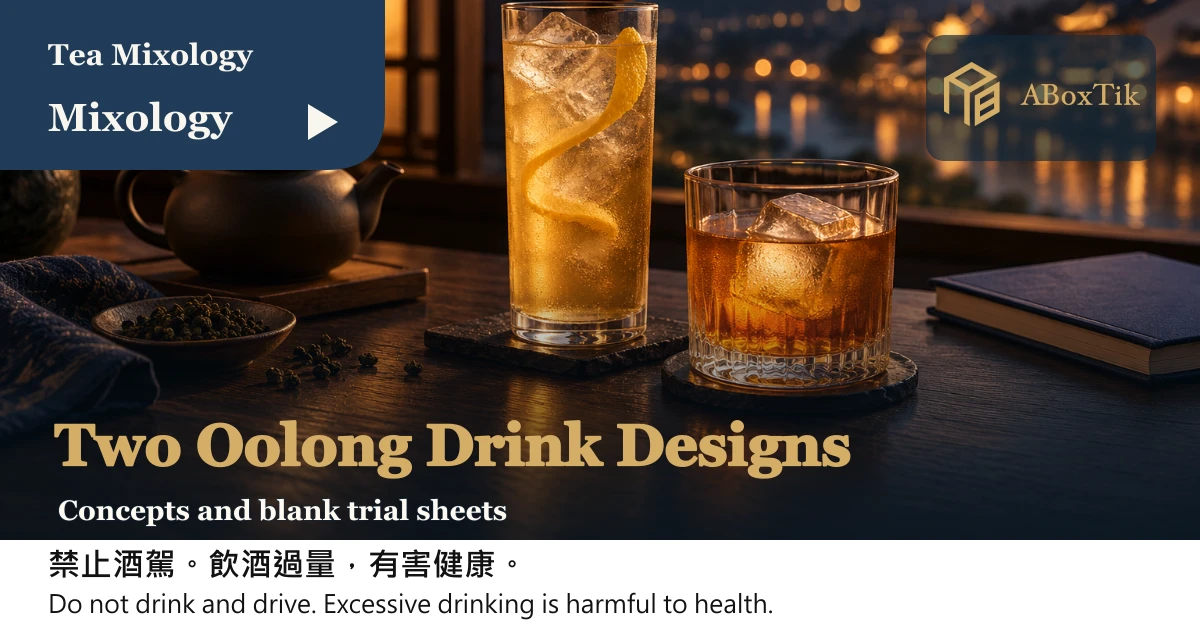
Before the countdown, leave time to notice the tea. Two design directions and a blank notebook can make room for different tastes, including the simple pleasure of choosing a cup without alcohol.
Design New Year tea cocktails around two separate ideas: citrus sparkling oolong and a roasted-oolong short drink. Test the tea, spirit, acidity, sweetness, ice and glass capacity in small batches. These are design guides with blank trial records, not tested, ready-to-use recipes. Quantities and tasting results remain to be established with the actual ingredients.
For adults only. Do not drink and drive. Excessive drinking is harmful to health. Alcohol must not be consumed by anyone under 18. Offer alcohol-free tea drinks or plain tea as equally welcome choices. The introductory tea-cocktail guide covers the basic structure; this article focuses on two designs and a considerate serving plan.
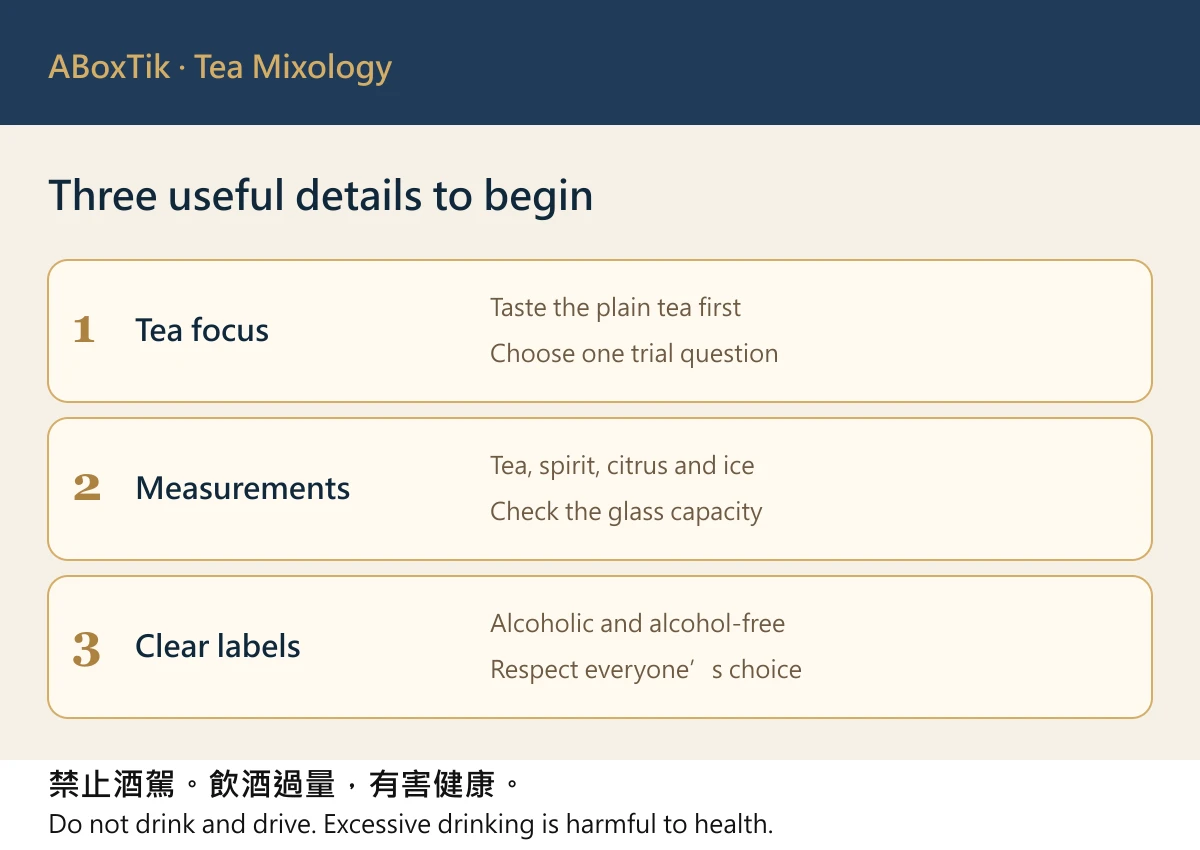
New Year tea cocktails: choose one tea feature and one question
Taste the plain tea first and describe one feature worth retaining: a light floral impression, a roasted-grain note or a fuller tea character. This describes the current ingredient, rather than a guarantee attached to its name. Then set one trial question, such as how citrus affects recognition of the tea, or what remains after ice dilution. The first version only needs a useful question; the whole drinks cupboard need not attend the countdown.
Both designs here use tea brewed in water, strained and cooled before mixing. This keeps tea and spirit in separate measurement fields. Follow the tea’s product instructions to establish a starting brew and record dose, water, temperature, duration and strained yield. The oolong temperature guide and steeping-time guide help organise the details. Sugar should not be assigned the job of hiding an over-extracted base.
Use clean measuring equipment and suitable food-contact containers. Cool and refrigerate prepared tea according to appropriate food-handling practice, recording preparation time. This design does not establish a validated storage life. Prepare manageable quantities and close the remaining dry tea according to storage instructions. A little spare room on the worktop is as helpful as another ingredient.
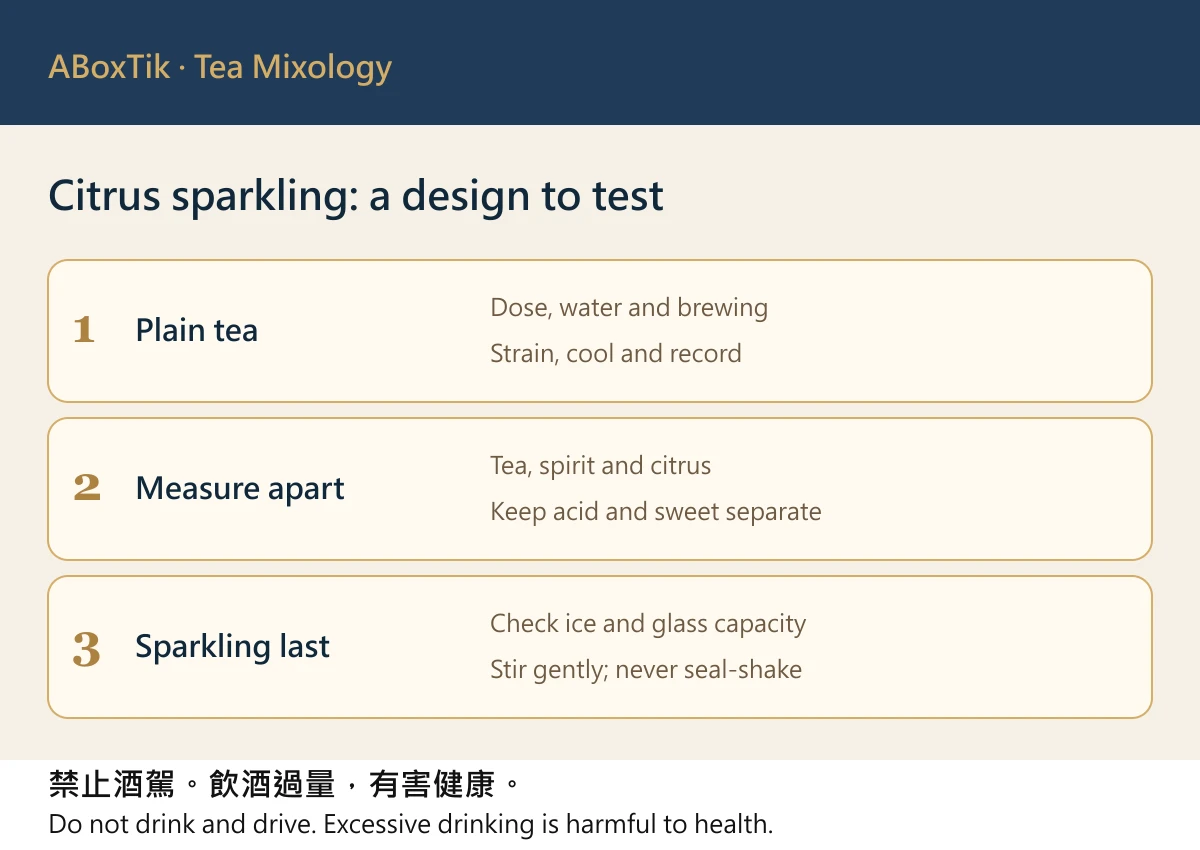
Design one: give citrus, sparkling water and oolong separate jobs
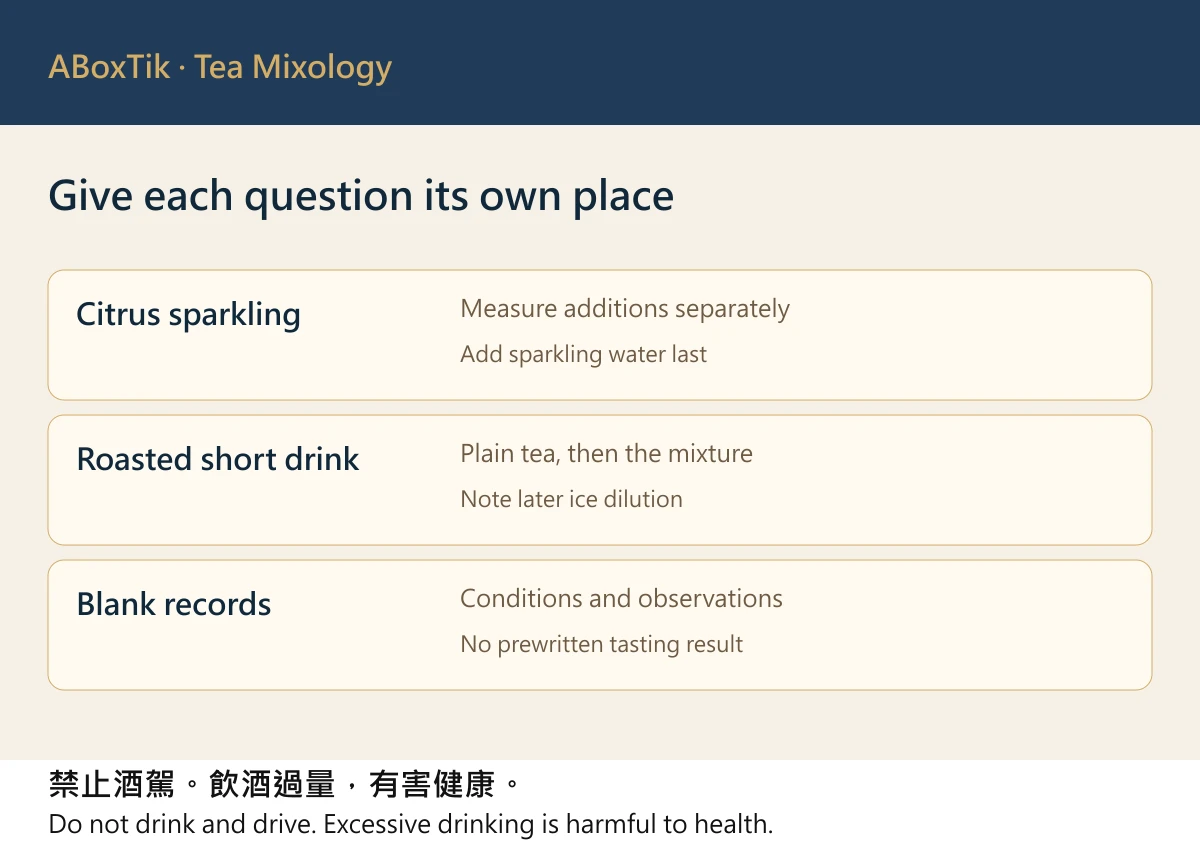
The question is whether the chosen oolong remains recognisable after citrus and sparkling water are added. Begin with a familiar lighter-aroma tea and a spirit whose label and flavour information are clear. A botanical spirit can be a candidate rather than a promised match. Yingxiang, Cuiyu and Jinxuan offers background on different plain teas, before any mixing decision is made.
Record citrus juice, peel and sweetening ingredients separately. Juice contributes water, acidity, sweetness and aroma; it is more than decoration. Wash peel appropriately and start with a restrained amount. Read the sparkling-water ingredient list and decide separately whether sweetness is wanted. Leave quantities to the trial sheet. Without a measured trial, an appealing design remains a question rather than a finished recipe.
Measure cooled tea and the non-carbonated ingredients first, checking room for ice and mixing. Add sparkling water last and stir gently. Do not seal and shake a carbonated mixture. If citrus overwhelms the tea, reduce citrus in the next version rather than changing tea, spirit and syrup simultaneously. The design diagram shows a sequence; the actual ingredients and observations must supply the eventual result.
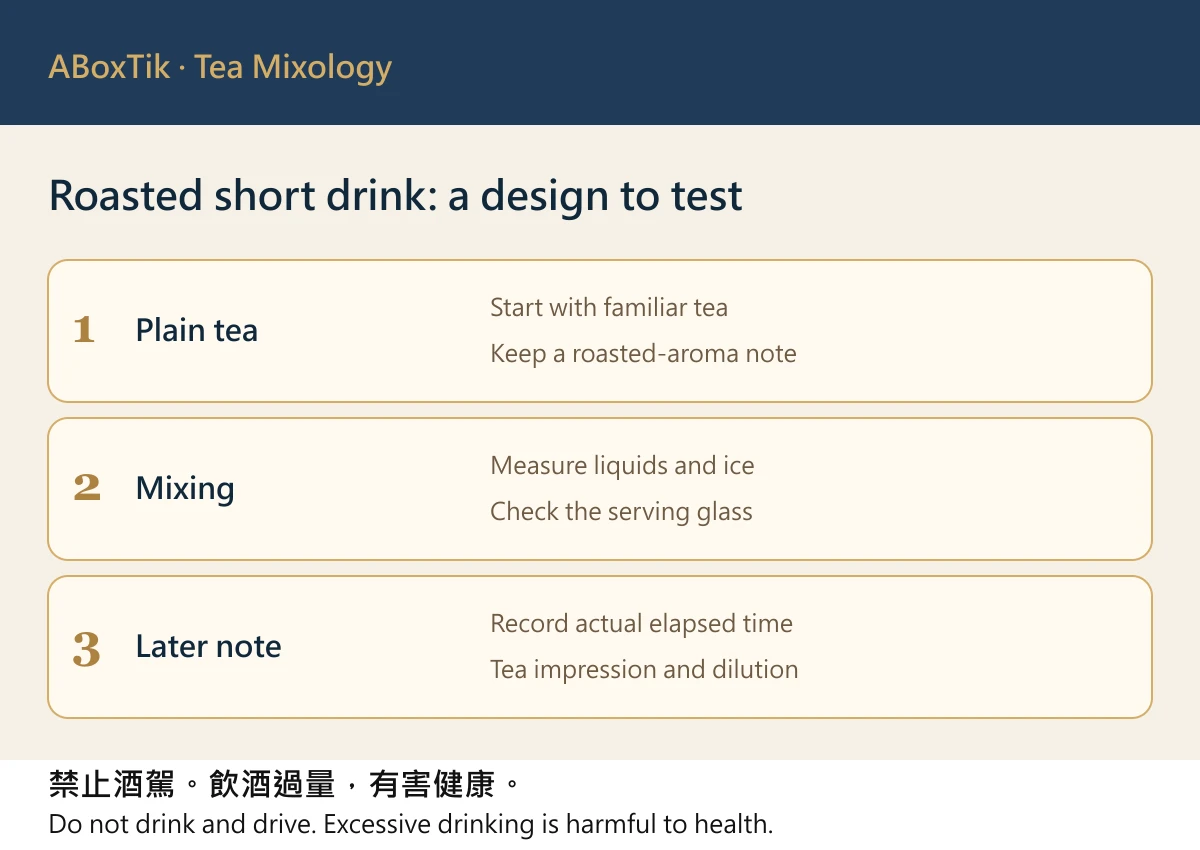
Design two: include dilution in a roasted-oolong short drink
This design asks whether a roasted tea’s character remains comfortable in a more concentrated serving as the ice changes it. Choose a familiar roasted oolong, consult roasted-aroma vocabulary and the light versus roasted tea comparison, then consider the actual spirit. A woody style may be worth comparing, but there is no fixed marriage chart for tea and alcohol.
Short drink describes the direction here, not an established serving size, alcohol strength or final volume. Measure tea, spirit and other liquids, then check the space displaced by ice and the room needed to stir. Record ice mass and shape instead of treating “two cubes” as a universal measure across different glasses. Acid can remain absent from an initial trial if it is not needed for the question. Fewer variables make the record easier to interpret.
Note tea aroma, sweetness, alcohol impression and dilution immediately after mixing and at a recorded later time. If the plain tea is too bitter, return to bitterness and brewing first. If a later sample seems thin, inspect added water and tea preparation before changing everything. A softer taste does not establish lower alcohol content. Avoid presenting the drink as restorative, sobering or warming the body.
Keep separate, genuinely blank trial records
For each version, record tea name and batch, leaf or bag amount, brewing water, temperature, time, strained yield and cooling method. Record the actual spirit name and labelled alcohol strength, with separate amounts for juice, syrup and sparkling water. Consistent units make the next attempt easier to reconstruct. “A little more” is a perfectly normal thought, but a difficult measurement to hand over.
Leave the observations blank until a real trial takes place. Keep the same ingredients while changing one item, then write the reason for the next adjustment. Check glass capacity and handling with a manageable small trial. Before serving several people, verify mixing, holding and serving arrangements too. Multiplying a hypothetical single serving does not validate a party batch.
| Trial field | Citrus sparkling | Roasted short drink |
|---|---|---|
| Version, date, tea and batch | ________ | ________ |
| Tea g / water ml / °C / time / strained ml | ________ | ________ |
| Spirit name / labelled ABV / ml used | ________ | ________ |
| Citrus, acid, sweetener, sparkling and other liquid ml | ________ | ________ |
| Ice g, shape, glass ml and mixing method | ________ | ________ |
| Immediate / later time / actual observations | ________ | ________ |
| One change / reason for the next trial | ________ | ________ |
Make alcoholic and alcohol-free choices easy to identify
Ask preferences before setting out glasses, measures and labels. Prepare and identify alcoholic and alcohol-free drinks separately, rather than relying on glass colour. Check the labels of syrups, bitters and other additions as well as the base spirit; simply omitting the spirit does not settle the status of every other ingredient. Sparkling oolong or plain hot tea can provide a familiar alternative.
A host can ask, “Plain tea, alcohol-free, or an adult alcoholic version?” Accept the reply without requiring an explanation or suggesting that a mild-tasting drink hardly counts. Arrange a safe journey for anyone drinking alcohol; they must not drive. Tea hospitality offers another route into respecting preferences. Warmth comes from taking care of everyone present, rather than from the number of refills.
A short note about the plain tea can include everyone in the aroma conversation. Choose actual contents from the classic four-box tea selection or two-box tea gift, retaining product information and brewing directions. There is enough to discuss in the tea itself. Alcohol need not be assigned responsibility for keeping the conversation moving.
Before serving, make a small but clear handover
Check whether the version being served has a real record, whether tea bases and ingredients are identified, whether the glass accommodates liquid and ice, and whether alcohol-free tools remain separate. If a design has not been tried, serve familiar tea or an established alcohol-free drink instead and schedule the trial for another occasion. Guests arriving is not an ideal signal to open a research department on the kitchen counter.
Save a new version when ingredients change. Different juices, syrups and spirits can change sweetness, acidity and alcohol input even when the drink’s name stays the same. Do not copy an earlier conclusion into a new materials list. Aroma observation helps separate what is smelled from what is tasted; sweet-aftertaste observation also encourages keeping sensations in distinct fields.
Finish with one next question: does reducing citrus make the tea easier to recognise, or what changes with a different ice shape? One question is sufficient. A promising idea can develop slowly instead of becoming perfect before midnight. Clear labels, practical preparation and respect for each person’s choice already give the gathering a thoughtful foundation.
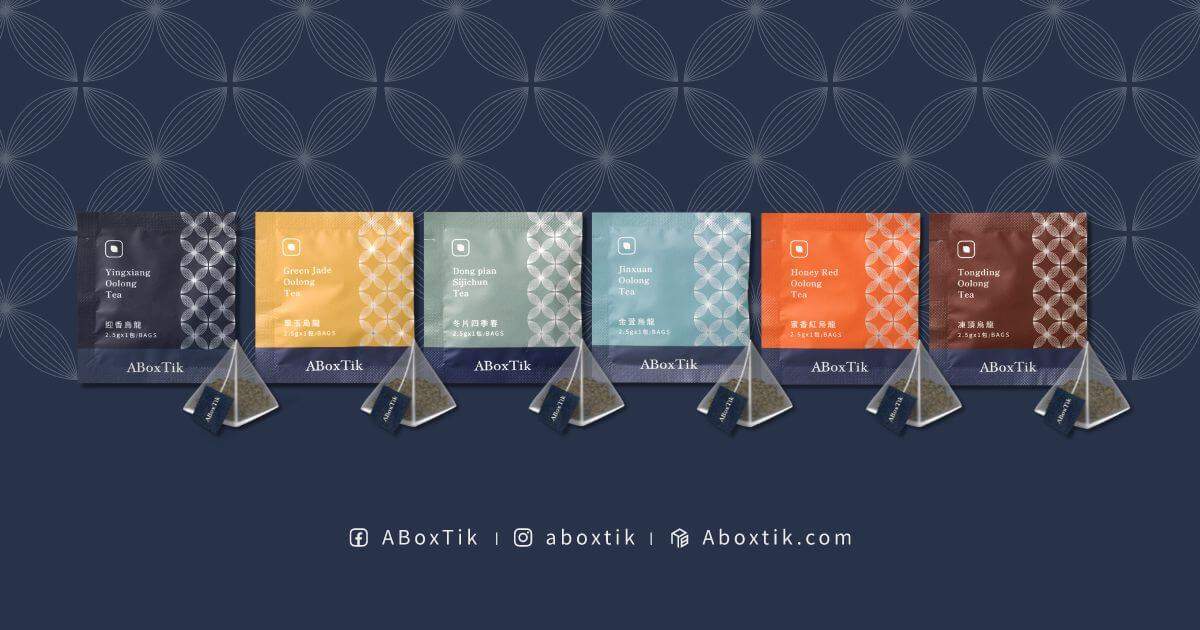
Follow a box of tea: leave each guest a choice and each trial a clear record.
Leave every friend a comfortable choice before the countdown
Begin with familiar tea, then measure, observe and change one variable at a time. These design guides do not prescribe a successful taste. The blank records belong to the actual materials, methods and observations that will shape a later version.
Plain tea is also a complete choice. Share Taiwanese tea’s origins and craft, identify drinks clearly and arrange safe journeys. Do not drink and drive. Excessive drinking is harmful to health. Alcohol must not be consumed by anyone under 18.
Related reading
- Introductory tea cocktail guide: materials and dilution.
- Alcohol-free tea mixology: a complete alternative.
- Sparkling oolong: an alcohol-free table drink.
Sources
- Taiwan National Treasury Administration: alcohol management and warning requirements
- American Chemical Society: gases dissolving in water and temperature
Sources checked 16 October 2026.