
Tea Knowledge
Tea Bags vs Ready-to-Drink Tea: Cost per Cup and Convenience
Tea bags vs ready-to-drink tea is best compared using the same consumed volume, followed by the water, vessels and schedule available that day. Bags offer a preparation routine; bottled tea offers a ready-made drink. The useful choice should fit the person as well as the price.
Use the formulas, hypothetical example and note below to make the next purchase clearer. An afternoon cup need not become a final mathematics exam.
Tea bags vs ready-to-drink tea: define the serving first
A tea bag and a bottle are different purchase units. Choose a serving you normally finish, such as 300mL, before comparing their prices. The figure is a calculation example, not a universal brewing recommendation. Follow the pack for preparation and decide whether the resulting strength suits you.
Separate money paid at checkout from the cost allocated to a serving. A box requires paying for the box; a bottle requires paying for the bottle. Normalising a price does not make the till charge for half a bottle. A marked everyday cup is enough to establish a repeatable reference; this comparison does not require a small laboratory on the kitchen counter.
Keep three cost formulas beside the shopping list
Cost per bag = actual box price divided by the bag count. Multiply by the number of bags actually used for a serving. If one bag produces more than a cup, first establish that you enjoy that strength. The spreadsheet should not be more enthusiastic about diluted tea than the person drinking it.
Brewed tea cost per 300mL = bag cost used for this preparation divided by the volume actually consumed, multiplied by 300. Ready-to-drink cost per 300mL = bottle price divided by its labelled volume, multiplied by 300. Use one currency and comparable purchase dates, stating whether delivery charges, discounts or multipack offers are included.
The tea weight and packaging guide helps with net contents. Weight answers how much dry tea was purchased; drinking volume answers how much prepared tea was consumed. They are useful measures for different questions, rather than interchangeable shortcuts.
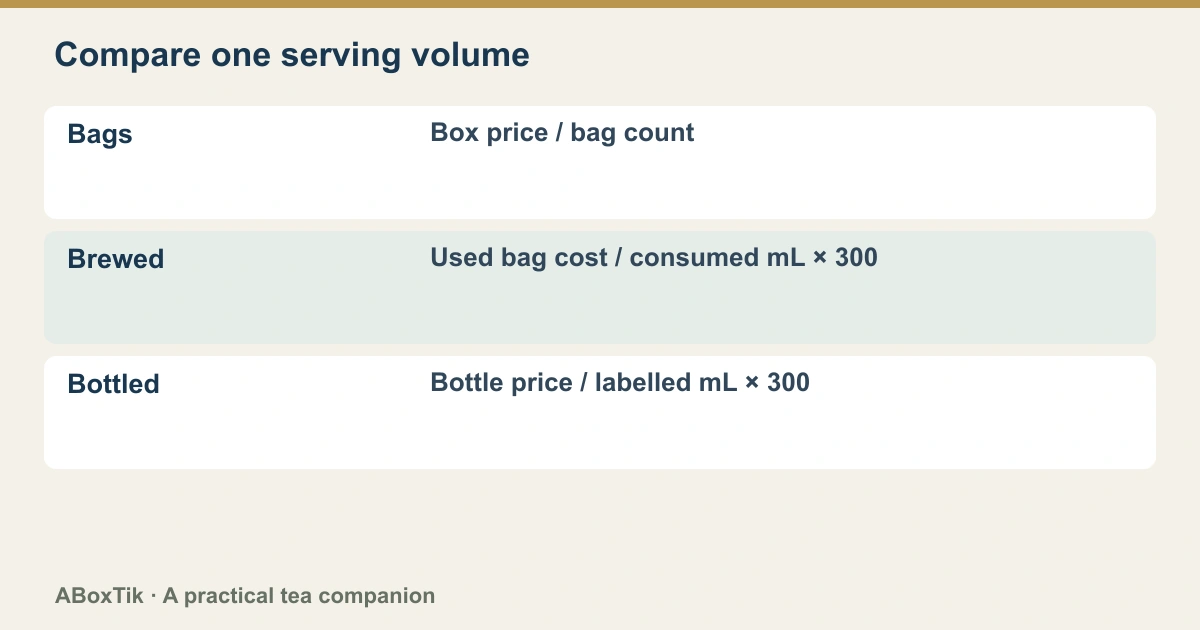
A like-for-like 300mL calculation, with hypothetical prices
All numbers here are hypothetical New Taiwan dollar examples, with no named product assigned to either option. Box A costs NT$400 for twenty bags: NT$20 per bag. Use one bag and consume 300mL, and that preparation costs NT$20. Bottle B costs NT$36 for 600mL: NT$18 per 300mL, while buying it still requires NT$36 at checkout.
| Measure | Tea bags A | Bottled tea B |
|---|---|---|
| Purchase example | NT$400 / 20 bags | NT$36 / 600mL |
| Cost per 300mL | NT$20 | NT$18 |
| Checkout payment | NT$400 per box | NT$36 per bottle |
| Unused portion after this serving | 19 bags | 300mL if half is consumed |
If the same bag later yields another 300mL that you enjoy and finish, its total 600mL allocation becomes NT$10 per 300mL. That is a second scenario with changed conditions, not a promise that every bag produces two equivalent cups. If half a bottle is left and never consumed, record the unused portion separately rather than treating it as an enjoyed saving.
Convenience has three stages: prepare, carry and clear away
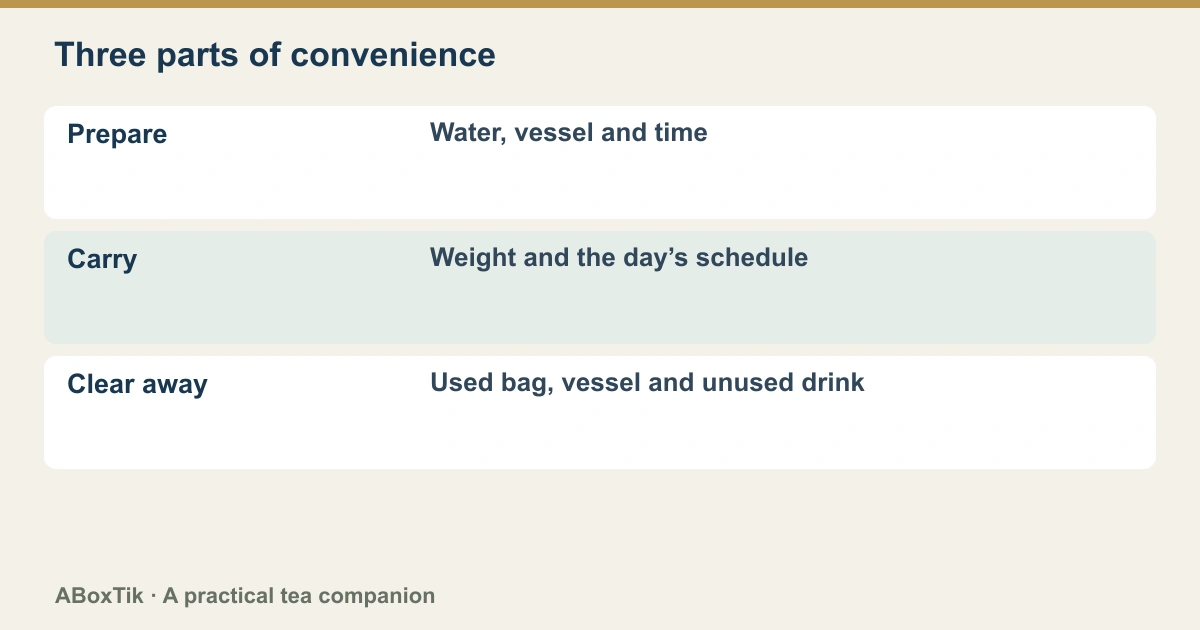
Bags need appropriate water, a vessel, brewing time and somewhere to put the used bag. Bottled tea removes the need to brew at the point of drinking, while adding the weight of the filled bottle and the need to follow its instructions after opening. Convenience depends on the setting, rather than belonging permanently to one format.
At a desk with drinking water and a cup, preparing a bag may fit easily into the day. On a journey without somewhere to wash a vessel, a ready-made drink may fit better. If tea is brewed before leaving home, include the container and the preparation and cleaning time; those jobs do not complete themselves during the morning rush. The tea-bag brewing guide is useful for arranging a cup-side routine. Choose another format when that routine does not fit the day.
Compare the actual tea as well as its format
Tea bags vs ready-to-drink tea also involves flavour choice and the amount of adjustment you want. With bags, water and steeping can be adjusted within the product directions. With ready-made tea, the useful question is whether you like the drink already in the bottle. Unsweetened is one selection condition; read the complete ingredient list rather than asking one large word on the label to introduce the entire recipe.
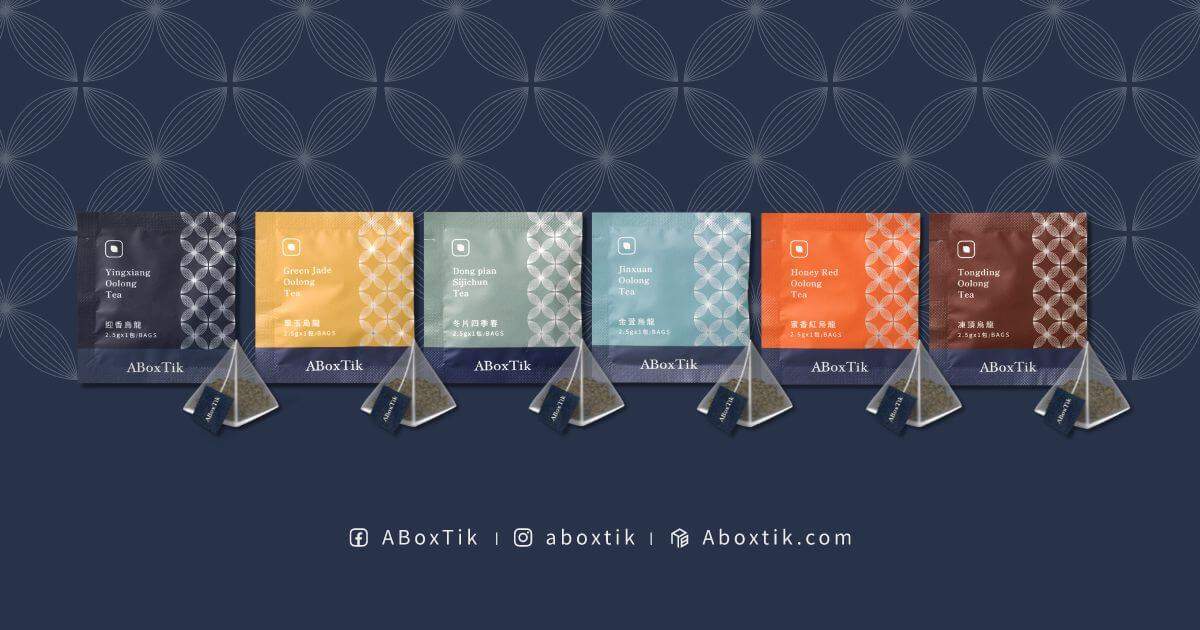
For current ABoxTik examples, Jinxuan Oolong is described through toasted-rice and sugar-like aroma notes, while Tongding Oolong offers brown-sugar and chestnut-sugar notes. Aroma language does not establish added sugar, and a cultivar name does not guarantee the same flavour across every product.
For the fuller selection task, use the six ABoxTik Taiwanese tea flavour comparison. This article compares purchase formats and actual expenditure; the main comparison page helps select among the six teas. Each can answer its own question without repeating the other guide.
Use a three-day note before buying more
Choose three real situations: desk work, travelling, and a quiet day at home. Record the money spent, the amount prepared or opened, the amount finished, whether preparation was convenient, and whether you would choose the same format again. That little record is more useful than dividing every tea drinker into opposing teams.
| Situation | Cost and consumed volume | Preparation or clearing | Next choice |
|---|---|---|---|
| Desk work | Actual price and mL | Water, cup, bag removal | Keep or adjust |
| Travelling | Actual price and mL | Carrying and opening | Keep or adjust |
| At home | Actual price and mL | Preferred brewing routine | Keep or adjust |
If water, energy or equipment are included, keep the calculation boundary consistent. It is also reasonable to record drink expenditure first and preparation minutes separately. Every minute does not need a monetary value; the cup need not take a second job in accounting.
After choosing bags, check the count and actual use
The current Jinxuan specification page and Tongding specification page each list ten bags of 2.5g. Divide the price actually paid by the actual bag count, then consider how many bags are used for your preparation. Do not treat a shipping weight that includes packaging as dry tea net weight.
Review the available choices, preparation directions and storage instructions before ordering. One flavour direction for work and another for quieter days is a useful starting point; there is no need to fill the entire cupboard at once. The Taiwanese tea selection guide offers a wider overview. For a gift, use the tea gift-box questions and include the recipient’s access to water and a suitable cup. Format is part of a thoughtful choice, not a substitute for asking how the tea will be used.
Common questions about re-steeping, labels and value
Does re-steeping make bags automatically cheaper? Count the tea actually enjoyed and consumed. Do not assume a fixed number of further cups or identical strength before trying the preparation yourself.
Is the word unsweetened enough for a comparison? Also read the full ingredients, volume and product instructions. Different recipes do not become the same flavour simply because both are sold without added sweetness.
Which format always offers better value? Tea bags vs ready-to-drink tea has no winner for every situation. Compare the same consumed volume, then consider water, vessels and the day’s travel. Using different formats on different days can be a practical arrangement rather than an indecisive one.
Tea bags vs ready-to-drink tea comes back to a drink you enjoy, finish and can prepare or carry comfortably. Keep the serving calculation clear and let convenience follow the situation. A useful next cup matters more than a permanent ranking of formats.
The calculator can take a break. Browse premium tea gifts, more articles and the latest selections at your own pace; the teacup has no homework due.