
Tea Knowledge
Afternoon Tea and Sleep: Caffeine, Servings and Timing
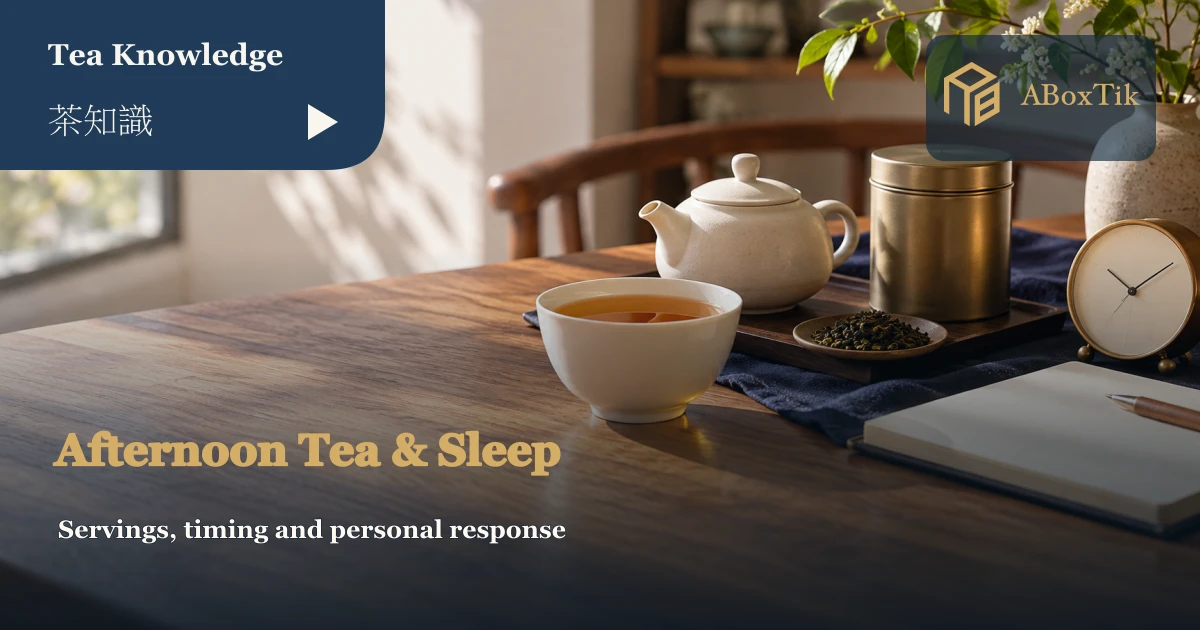
An afternoon cup can offer a pause, while the evening deserves room for rest. Let preference and personal response share the table instead of drawing one universal line on the clock.
Whether afternoon tea affects sleep depends on caffeine exposure, finishing time, usual bedtime and individual sensitivity. No single clock time guarantees an undisturbed night for everyone. A pale liquor, cold preparation or rinsed leaves cannot establish that a drink is caffeine-free.
Begin with the whole day and a record of actual servings. Then make one practical change to amount or timing. This guide offers a simple observation sheet to support that process. A favourite cup can be excellent company without taking a second job as a sleep specialist.
Afternoon tea starts with a personal bedtime
Three in the afternoon sits differently in a day ending at ten than in one ending at two in the morning. Record the intended bedtime alongside the drink, and note when the last sip was finished rather than only when brewing began.
EFSA notes that caffeine can affect sleep in some adults, particularly near bedtime. This supports attention to individual response and timing. It does not supply a universal cutoff, or mean that any quantity can be ignored simply because it was consumed earlier.
List coffee, tea, energy drinks and other relevant sources across the day. The tea categories explain styles, but the names green, black and oolong cannot establish the total exposure from a particular drinking routine. Start with what was actually consumed.
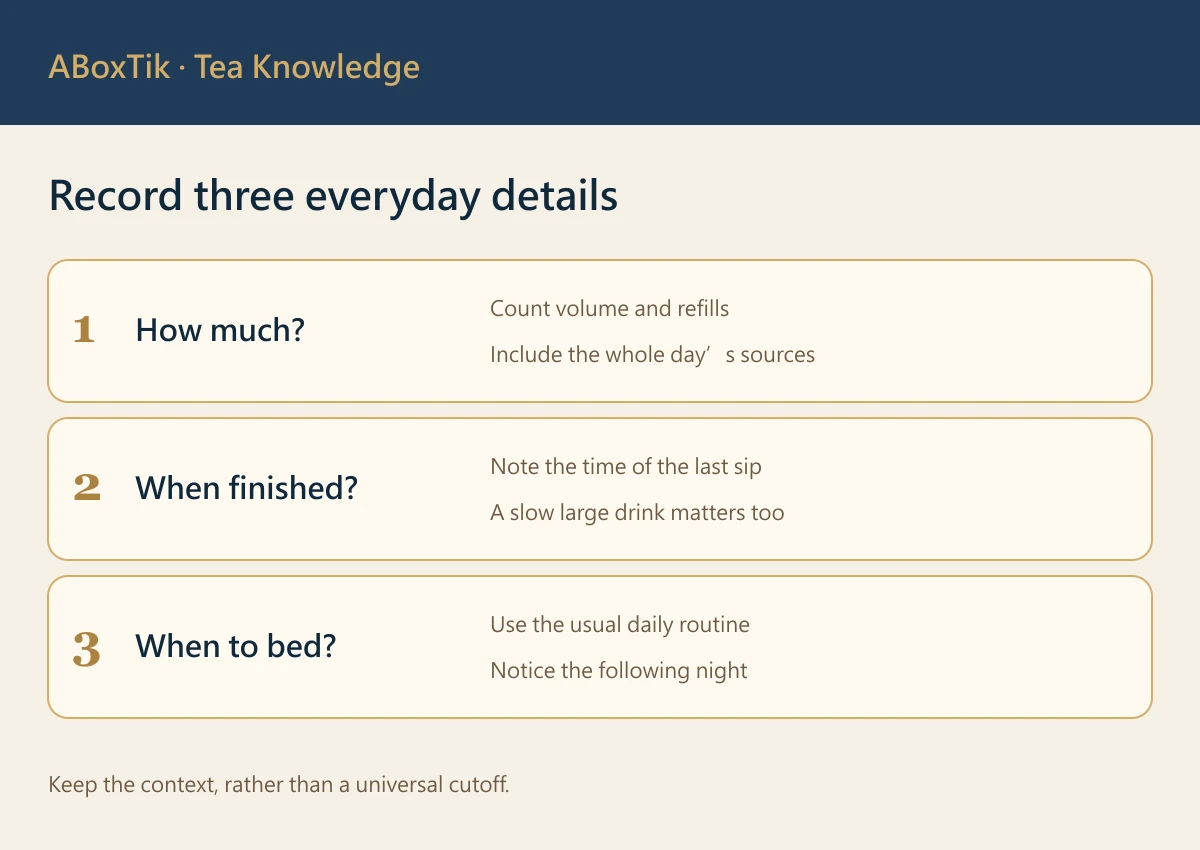
Count the serving, including refills
Cup capacity, leaf quantity, preparation and the amount of liquor consumed belong in the same record. A large mug repeatedly topped up until early evening differs from a small serving finished after lunch. Recording both as “one tea” hides useful information.
Repeated infusions are still part of drinking. Discarding the first infusion does not establish that later ones contain no caffeine. Diluting a drink changes concentration and flavour, but if the entire amount is still consumed it does not by itself show that total exposure fell.
Use a familiar cup and note its capacity. Follow the product instructions and build a repeatable starting point with basic brewing adjustments. Flavour strength is valuable tasting information, but it is not a laboratory measurement.
| A detail easily missed | Record | Why it helps |
|---|---|---|
| Serving and refills | Volume actually consumed | A large pot is not a small cup |
| Finishing time | Approximate last sip | Shows its place before bed |
| Other sources | Drinks across the day | Preserves the wider context |
Do not use flavour as a caffeine test
Cold-brew tea may taste gentler, but gentleness is not the absence of caffeine. A grounded roast aroma, clear liquor or high price likewise cannot prove suitability before bed. Choose flavours for enjoyment, while treating exposure and timing as separate questions.
Explore light and roasted styles or the aroma guide for sensory comparisons. Let those observations do what they do well. A tea that tastes mild can still matter to an individual’s sleep.
When a defined amount matters, ask for information matched to the actual product and preparation. A general online chart, dry-leaf result or guess from colour cannot precisely describe the cup on the desk. Water is also a valid afternoon choice when the relevant information is unavailable.
Research offers context rather than a timetable for everyone
Drake and colleagues’ 2013 placebo-controlled study was completed by 12 healthy adults and tested a fixed 400 mg caffeine dose in pill form at bedtime, 3 hours before bedtime, or 6 hours before bedtime. It highlights the importance of timing and dose. It did not test every Taiwanese tea or establish one interval suitable for all people.
Read who participated, what dose and form were used, and which outcomes were measured. A capsule, a particular beverage and an individual tea sample provide different conditions. A group average also does not predict every individual response.
Someone who feels sensitive need not finish a drink to comply with a schedule found online. If sleep is persistently affected, reducing the relevant intake, reconsidering timing and obtaining professional advice gives a clearer direction than repeatedly buying a tea that merely sounds safer.
The absence of obvious alertness or palpitations is not a complete sleep assessment either. Put personal impressions beside night-time observations, while allowing for the rest of the day. Neither a reassuring taste nor a single difficult night can answer the whole question.
Keep an afternoon tea and sleep observation sheet
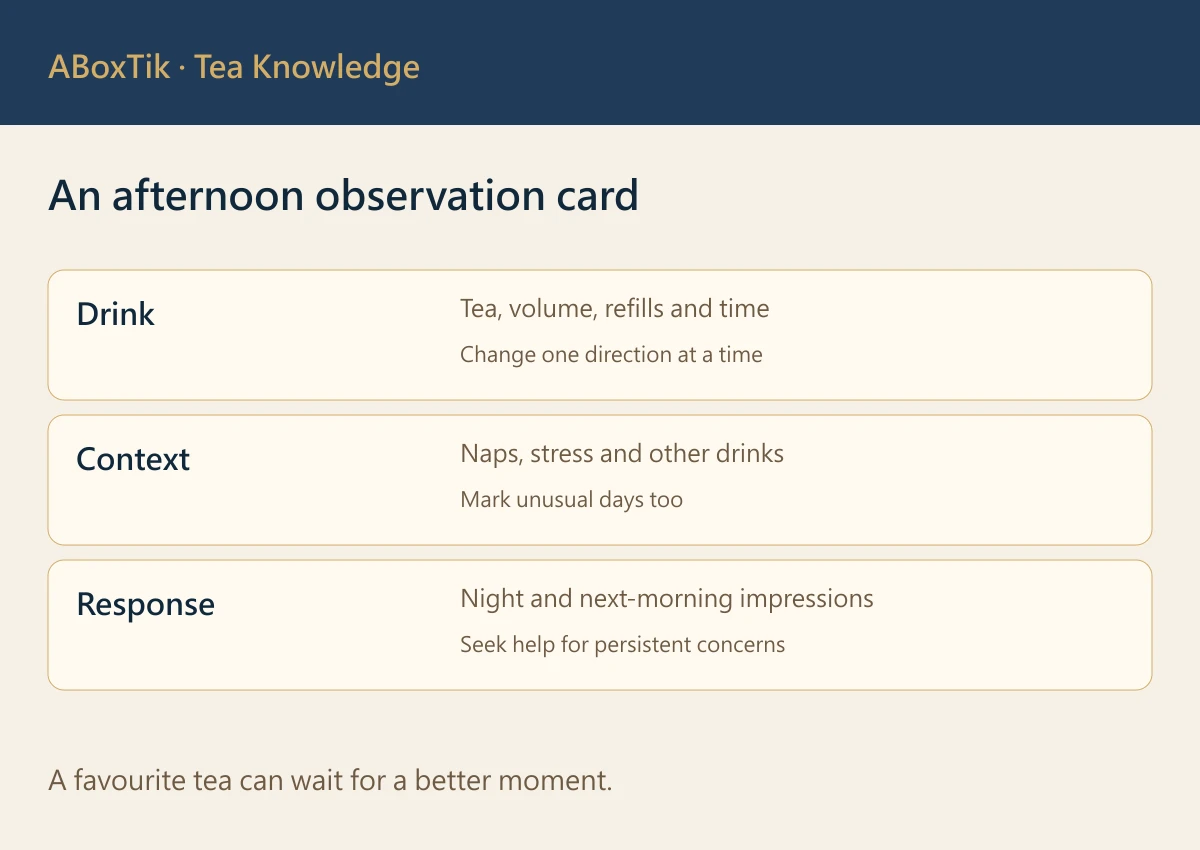
Choose a few days with broadly similar routines and record tea, volume, refills, finishing time, bedtime and the following morning’s impressions. Add unusual stress, travel, naps or late work. The purpose is to find a manageable change, rather than award a score to daily life.
| Field | Include | Next step |
|---|---|---|
| Drinking | Tea, amount, refills and last sip | Reduce changing variables |
| Context | Bedtime, naps, stress, other drinks | Keep unusual days in context |
| Night and morning | Perceived sleep and next-day alertness | Seek help for persistent concerns |
Change one direction at a time, such as moving caffeinated drinks earlier or reducing the afternoon serving. Changing tea, cup, bedtime and several habits together leaves an industrious worksheet with very little clarity.
This record cannot diagnose insomnia or establish its cause. Persistent sleep difficulty, effects on daytime functioning, medical conditions or medication concerns warrant suitable professional assessment. Pregnancy and breastfeeding also require individual guidance rather than a general tea timetable.
Keep the pause and choose the drink deliberately
If the favourite part is a break, every break need not contain caffeine. Water, a moment away from the screen or a clearly labelled drink appropriate to individual needs can preserve the pause. Skipping tea on one occasion does not reduce anyone’s appreciation of it.
When tea remains the choice, give exploration an earlier place in the day if that suits personal responses, and decide on a manageable serving and finishing time. Learn about Red Jade or Jin Xuan without feeling obliged to taste every style in one sitting.
Compare portions and instructions in the tea bag category, or the actual contents of a Taiwanese tea selection. These concern convenience and flavour. Attractive packaging should not quietly acquire a promise about sleep.
Follow the storage guidance and leave the remaining tea for another day. Understanding Taiwanese tea is an ongoing pleasure. Liking a tea can include deciding that today is a good day to let it wait.
Keep the record simple enough to continue for ordinary days: drink name, serving size, time, other caffeine sources and the sleep observation already described above. If a day changes for several reasons, note that rather than forcing the tea to explain everything. Bring the actual product details when discussing persistent concerns with a clinician. A clear record is more useful than a confident guess based on liquor colour, and it leaves room to choose an enjoyable evening routine without asking a cup of tea to deliver a medical result.
Follow ABoxTik
Leave room for tea and for rest
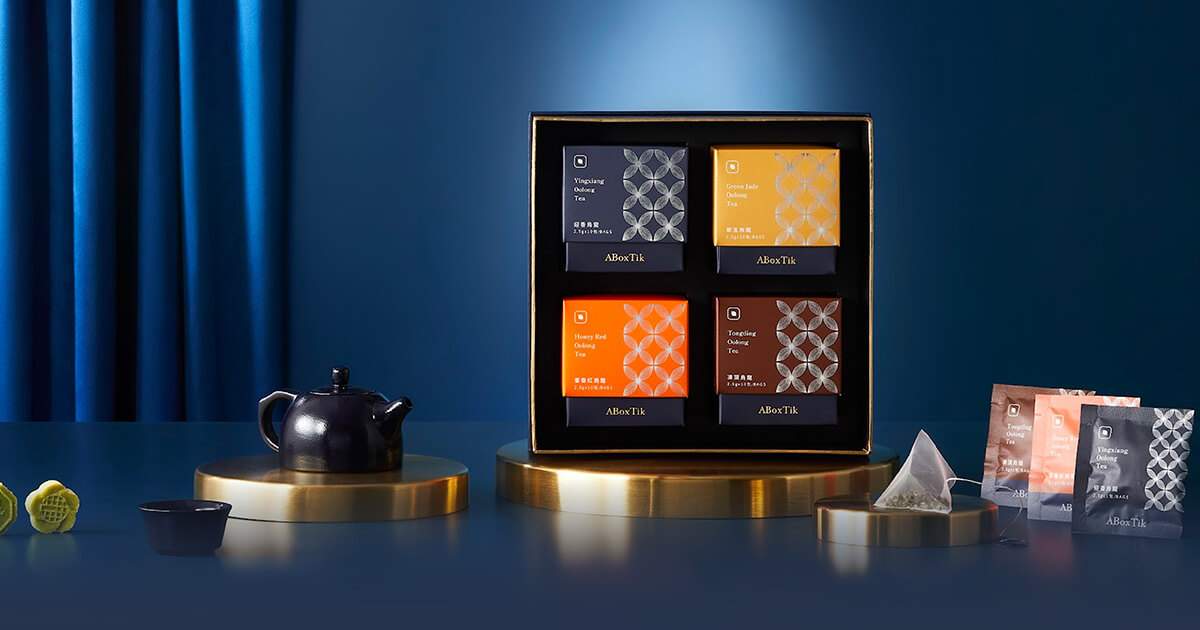
At ABoxTik, thoughtful selection includes the freedom to choose another time. Saving a tea for a more suitable occasion does not diminish its story. A comfortable routine leaves more attention for the next cup.
Explore the styles in our Taiwanese tea gift boxes, or read About ABoxTik to learn how we approach the details of selection.
Related reading
Sources
- EFSA — Caffeine
- FDA — How Much Caffeine Is Too Much?
- Drake et al. (2013) — Caffeine Effects on Sleep Taken 0, 3, or 6 Hours Before Bed
Sources checked 19 October 2026.