
Tea Knowledge
Sanxia Biluochun vs Wenshan Baozhong: Two Fresh Tea Routes
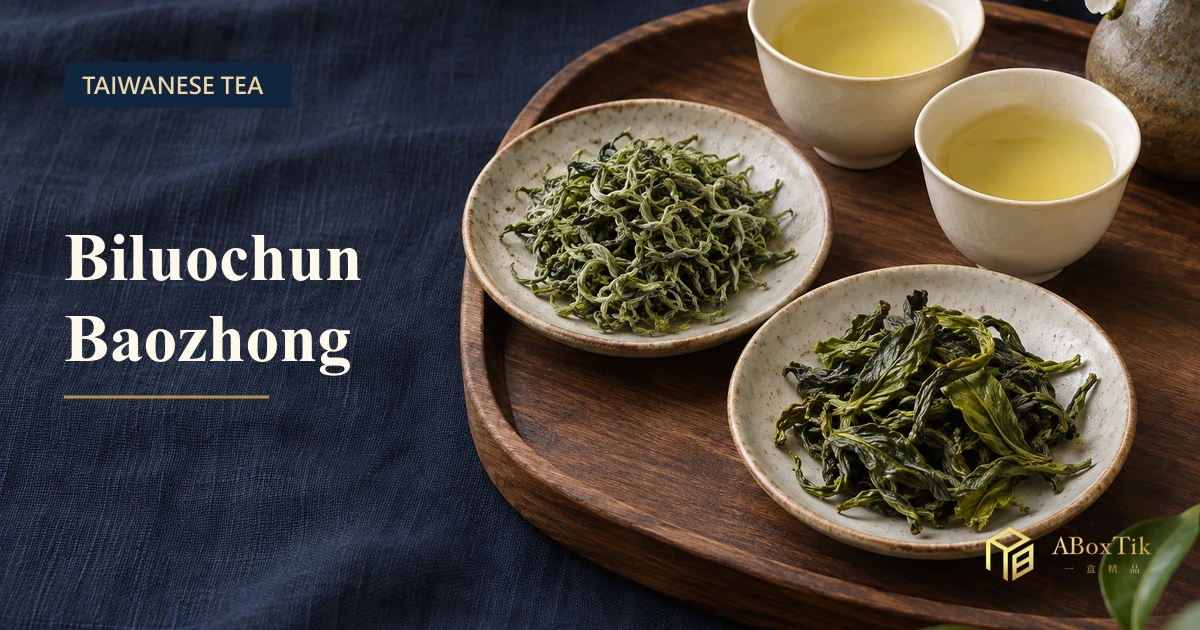
Start the choice between Sanxia Biluochun and Wenshan Baozhong with processing. The former is a representative northern Taiwanese green tea; the latter is a lighter, strip-shaped partially oxidised tea. Both can suggest freshness, but they are not the same category. Consider the actual aromatic direction, cup strength and available vessel before buying.
If both dry teas look green and the decision feels unclear, there is no need to let colour provide the answer. This editorial guide offers a category comparison and a two-cup note, leaving local history and detailed production to the existing specialist articles. The aim is a useful next purchase rather than a new regional ranking.
Separate category from geographical name
Sanxia’s district information presents Biluochun among its local teas. When buying, confirm that the product really concerns Taiwanese Sanxia tea instead of borrowing the story of a similarly named tea elsewhere. Wenshan Baozhong belongs to a northern Taiwanese place-and-processing tradition. A green-looking dry leaf does not erase that partially oxidised processing background.
Category describes a way of making tea; place describes source; cultivar answers another question. Keep all three on the product note. The Taiwanese tea comparison guide gives a wider map, and the Sanxia Biluochun regional guide explores the local background. Here, the focus is deciding which of two concrete teas suits the intended cup.
A table gives the choices different jobs
| Buying question | Sanxia Biluochun | Wenshan Baozhong |
|---|---|---|
| Category | Green-tea processing | Lighter, strip-shaped partially oxidised tea |
| Appearance | The product’s fine, curved leaf format | Twisted strips and their openness |
| Possible exploration | Fresh, green or vegetal descriptions | Lighter floral descriptions |
| Not confirmed by appearance alone | Origin, ingredients and batch identity | |
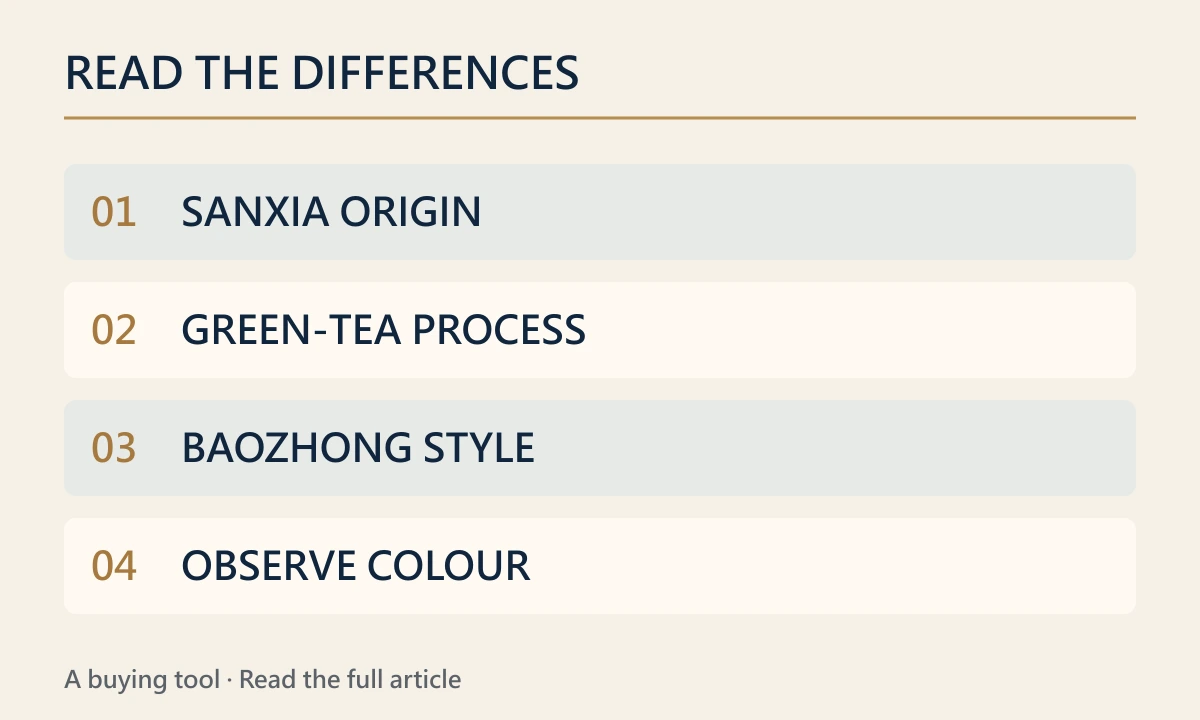
| Starting method | Follow each label, measure and separate the leaves | |
These descriptive directions are invitations to notice, not a demand that every cup contain seaweed-like or orchid-like associations. Actual batches within either category can differ. If one ordinary word feels appealing, use it to ask about a product. There is no need to memorise an aroma chart before making a first purchase.
The same spoon may measure different amounts
Fine curled leaves and more open strips need not occupy a spoon at the same weight. Follow the product’s measuring advice and note actual grams and water volume instead of deciding from how generous the pile looks. A pre-portioned bag also needs its contents and suggested cup size checked; the size of the outer bag is not a tea-weight measurement.
Choose a vessel that provides room and drains comfortably. A mug can work with a removable filter; a small pot should be easy to pour. Do not let one cup continue steeping throughout the comparison while the other has already been separated. Otherwise, an unnoticed timing difference can become a supposed regional characteristic.
Avoid imposing one universal green-tea temperature and another compulsory Baozhong temperature. Begin with the specific instructions and ask the seller when guidance is unclear. If temperature is later tested, hold the other conditions steady and give that experiment a separate note. It answers a brewing question, which should not silently replace the original buying comparison.
Write freshness, aroma and liking separately
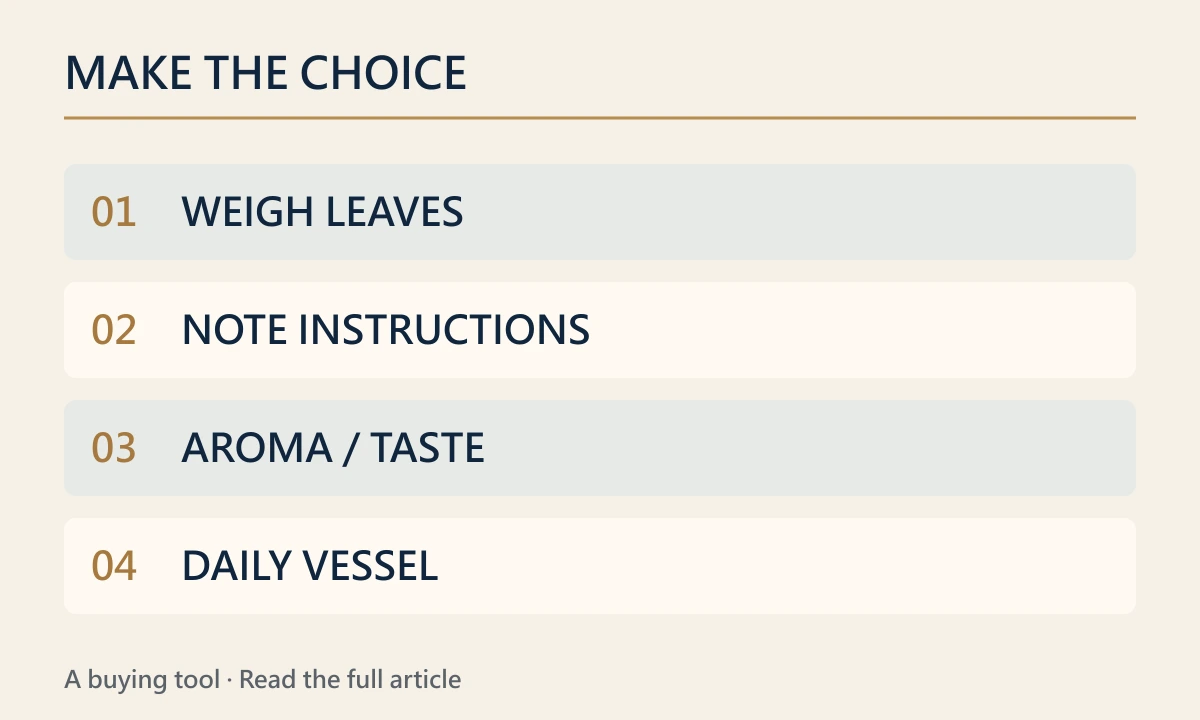
Label the cups A and B, retaining the tea names and preparation nearby. The first line records aroma associations, the second the sip, and only the third whether another cup is wanted. That sequence is more informative than deciding immediately which tea is more premium. A short note such as “fresh, light, welcome today” is already usable.
For more detail, ask where the impression appears. Is freshness noticeable at the first sip or later? Is a floral association clearer above the cup or after swallowing? When two people use different words, check whether they observed the same stage before disagreeing. The cup does not need one official description to provide a shared conversation.
Return after slight cooling and note whether aroma and strength remain comfortable. On another occasion, reverse the first-sip order. If one preparation was unpleasantly astringent, adjust it before deciding that the entire category is unsuitable. One difficult cup does not need to become a final review of all northern Taiwanese green tea or Baozhong.
A regular tea and a shared comparison need different quantities
For daily use, a clearly described tea in a manageable quantity may be enough. For comparison, ask about smaller sizes that allow several observations. If these are not offered, buying both immediately is optional. Keep the second product’s information and return when the current pack is being used comfortably, instead of opening more tea than the routine can support.
A simple introduction works when sharing: “This is Sanxia green tea; the other is Baozhong. Shall we smell them before sipping?” Add the real preparation notes without first listing reasons one should be more valuable. If a friend dislikes a cup, ask whether a lighter preparation, another direction or water would be welcome. Comparison need not become persuasion.
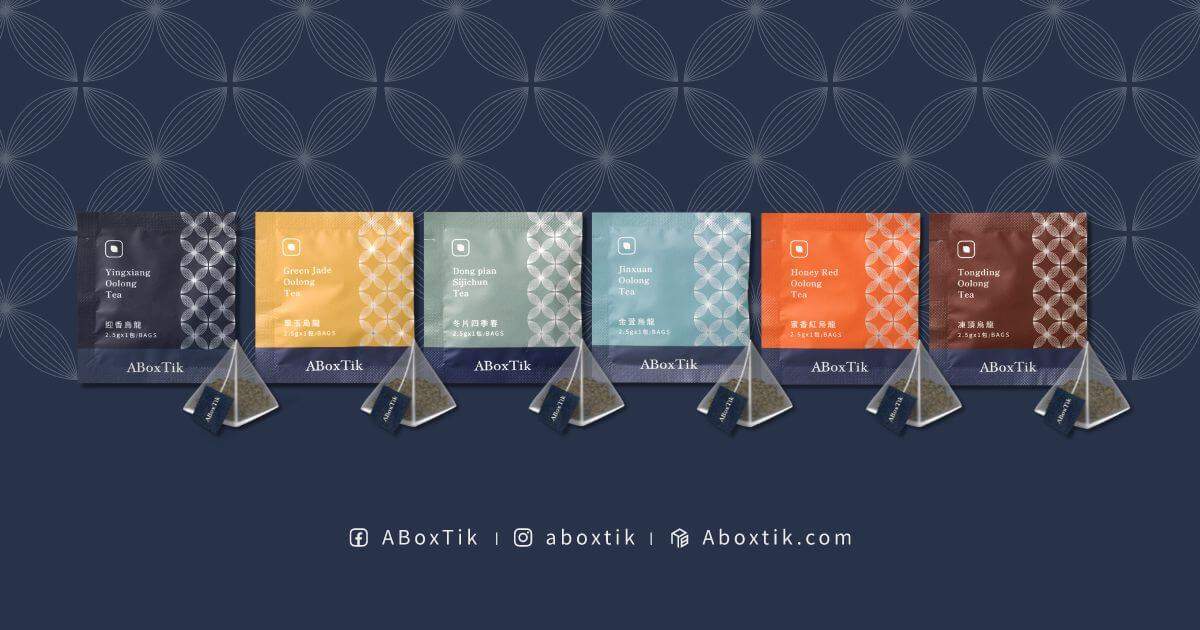
The ABoxTik Taiwanese tea selection helps explore loose tea and convenient formats. Read each set’s actual contents; discussing Sanxia tea here does not imply that a classic oolong gift set contains Biluochun. The five-style introduction to Taiwanese tea offers another route when ready to move beyond these two fresher directions.
Common questions about Biluochun and Baozhong
Does similar yellow-green liquor make them the same category?
No. Processing and product information matter more than colour alone. Concentration and viewing conditions can also change the appearance of a cup.
Must I choose green tea for a refreshing drink?
No. Read the actual product and prepare a small amount. Freshness is a sensory impression, not a word reserved for a single category.
Can I compare them using one set of parameters?
Yes, when both products suit that setting, and with the conditions recorded. For the first round, their individual instructions remain the more useful starting point.
Green tea and Baozhong each have a seat at this little northern Taiwan table. Tea gifts, more articles and the latest selections below leave the rest of the map for another cup.
Sources
- Sanxia District Office: Local Agricultural Products
- Ministry of Agriculture: Distinctive Taiwanese Teas
- Tea and Beverage Research Station: Brewing Water and Temperature
Sources reviewed 17 November 2026. Methods and fictional calculations are editorial tools; product details follow the current listing.