
Tea Knowledge
Muzha Tieguanyin: Origin, Zhengcong and Roasting
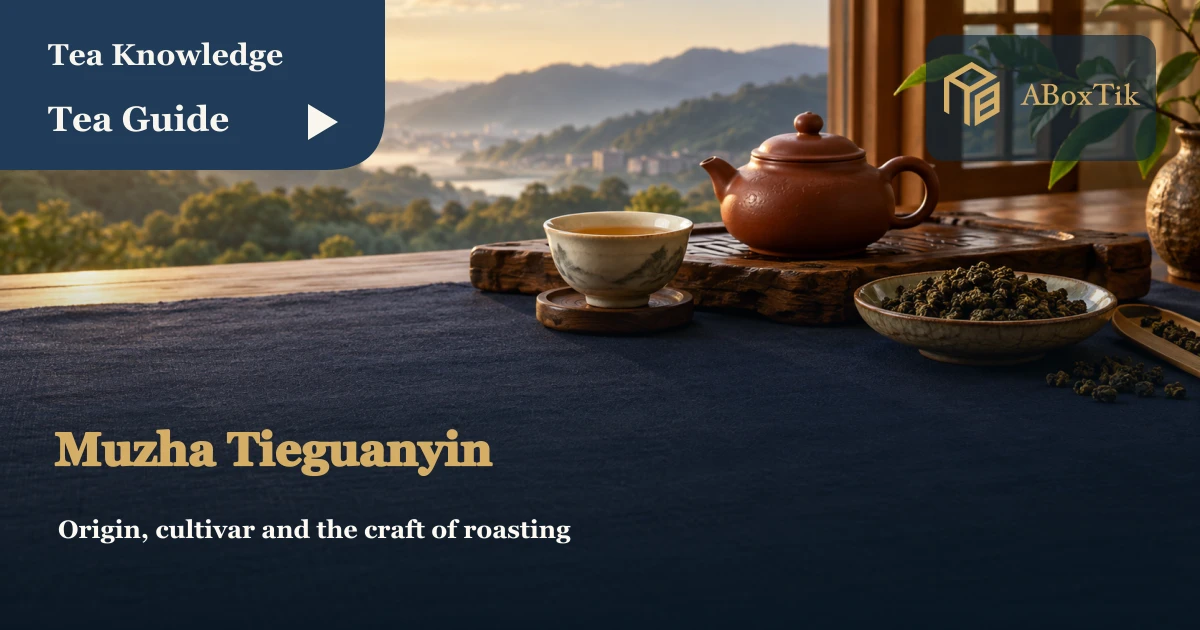
A bend in Taipei’s hillside road gives a roasted tea a place. Learn where the cup begins, then let its name unfold.
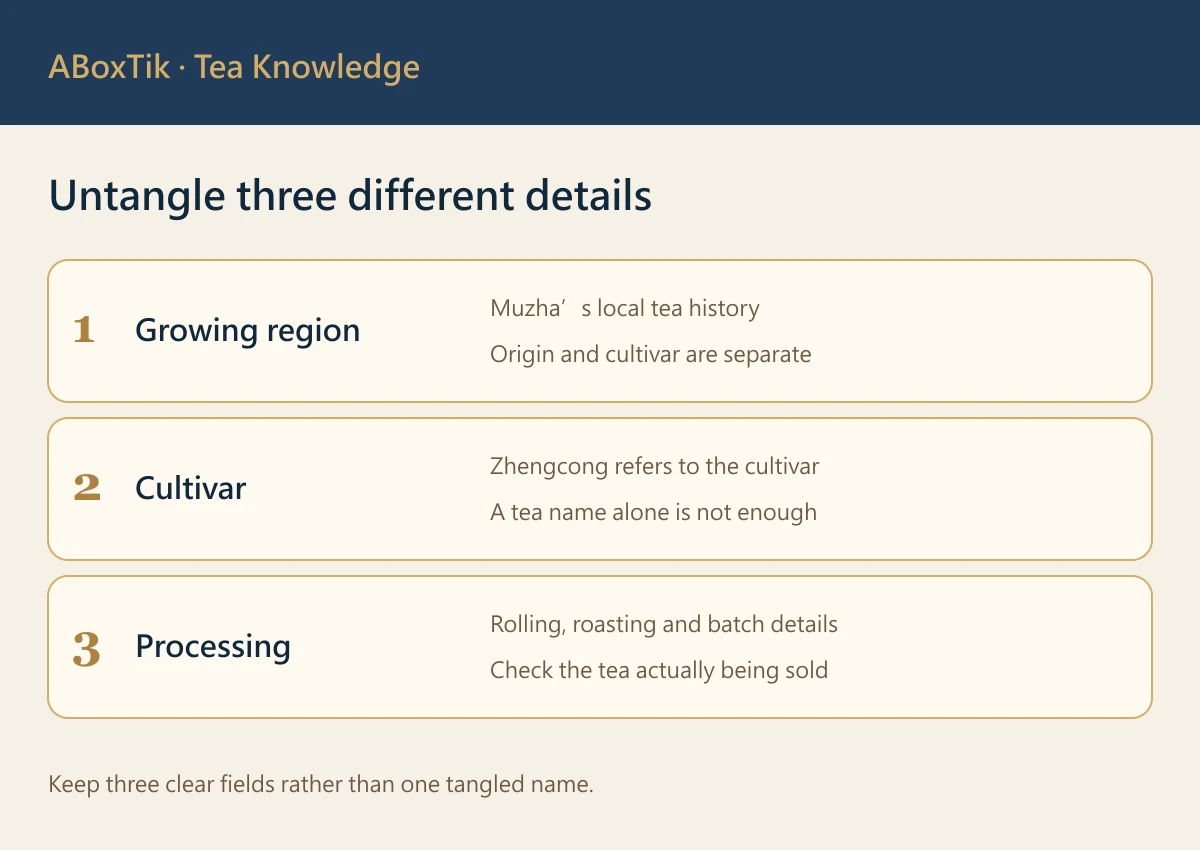
To understand the Muzha Tieguanyin tea region, separate three details: where the tea was grown, which cultivar supplied the leaf, and how it was processed. Zhengcong is used to distinguish tea made from the Tieguanyin cultivar; it does not simply mean a darker roast.
If the label already says Tieguanyin, why ask another question? Because the name can do several jobs. Give origin, plant and process their own spaces on the page. Three clear fields are easier to understand than one overworked name, and more useful when choosing a roast you enjoy.
Locate the tea in Muzha’s living landscape
Taipei’s tea promotion centre connects local tea culture with Zhinan Village, the hills along Zhinan Road, tea gardens and teaching spaces. This gives Muzha a practical context beyond an attractive word on a package. It is a place to learn how growers, tea-making work and visitors meet around the same drink.
Begin with Taiwan’s tea regions and craft, then check the growing origin stated for the tea you are considering. A shop in Muzha can also sell tea from elsewhere. Asking where the leaf grew is more informative than treating the shop address as the tea-garden address.
For a visit, use the centre’s displays as a starting point and ask a tea shop what is available to taste that day. Recheck opening, booking and transport information before travelling. Leave enough time for a conversation rather than turning a tea-hill visit into a cup-collecting sprint. One clearly explained batch can be more memorable than a crowded itinerary.
Zhengcong separates a cultivar from a style of production
Wenshan District’s account of the old tea-carrying trail explains that local tea made from other cultivars using related processing has also been called Tieguanyin. Zhengcong Tieguanyin distinguishes tea made from the Tieguanyin cultivar. That distinction helps decode a name that can otherwise refer to both a plant and a production tradition.
Zhengcong is not a promise of the highest price or everybody’s favourite taste. Nor can dry-leaf colour or a powerful roast establish the cultivar by themselves. Ask the supplier for cultivar, origin and batch information. Our general Tieguanyin introduction supplies broader background; this guide concentrates on Muzha and the questions worth asking.
| Field | A useful question | Avoid assuming |
|---|---|---|
| Origin | Where was the leaf grown? | Sold in Muzha means grown there |
| Cultivar | Was Tieguanyin cultivar used? | A dark roast proves zhengcong |
| Processing | How was this batch rolled and roasted? | One name means one fixed flavour |
Use the Dong Ding and Tieguanyin comparison to practise the same separation. Place names, plants and making methods need not compete for the same box.
Why does repeated rolling and roasting matter?
The city centre’s process account connects withering, leaf agitation, heating, rolling, cloth-ball rolling and roasting, with repeated working and heating as a characteristic feature. The final cup therefore reflects a sequence rather than only the last application of heat. Raw leaf and earlier handling remain part of the story.
Treat rolling and roasting as deliberate stages, rather than equating a dark colour with completed craft. The guide to initial roasting, re-roasting and resting explains the heating side; oolong oxidation describes another part of production. They are related, but one fixed percentage cannot explain every maker’s tea.
Ask which roast direction a batch follows, how it should be stored and where to begin brewing. Those questions often produce more useful answers than a roast score alone. Different sellers may use different scales. A number is most helpful when the person using it explains the reference behind it.
Taste roast character without ranking dark above light
Notice the aroma direction, the weight of the liquor and the impression left after sipping. If toasted food, ripe fruit or another association genuinely comes to mind, write it down. Leave uncertain details open. A local tradition provides context, rather than requiring every cup to deliver an identical aroma list.
Our rice, nut and caramel vocabulary offers familiar comparisons, while fresh and roasted tea styles makes room for different preferences. Darker roasting is not an automatic quality upgrade. Enjoying a gentler cup does not mean you have failed to learn how tea works.
If the brew feels too strong, change the amount of leaf or the infusion time on the next attempt, keeping the vessel and water volume comparable. Consult oolong water temperature and the basic brewing sequence for a framework. Use the batch’s package or supplier advice as the actual starting point. A reference table should help a tea, rather than require every tea to obey it.
Bring the useful details home from a shop tasting
When you enjoy a sample, ask about leaf amount, water volume, vessel and timing. Confirm that the tea you are buying is the batch being demonstrated. Ask before photographing a label or display. A few clear details are easier to use at home than the affectionate but frustrating memory that it tasted wonderful in the shop.
Try the suggested method once before adjusting it to your own cup. Short infusions poured into tasting cups differ from leaving leaf in a large mug; any change should not be assigned entirely to the tea. The gaiwan-versus-teapot comparison and smelling guide can help separate vessel choices from aroma observations.
Keep the package with a note about your preferred infusion and whether you would try the next brew lighter or stronger. That is a coordinate for future buying, not a performance review for the tea. For a gift, ask how the recipient normally brews and which aromas they enjoy before choosing the deepest roast on their behalf.
Choose with a short, answerable checklist
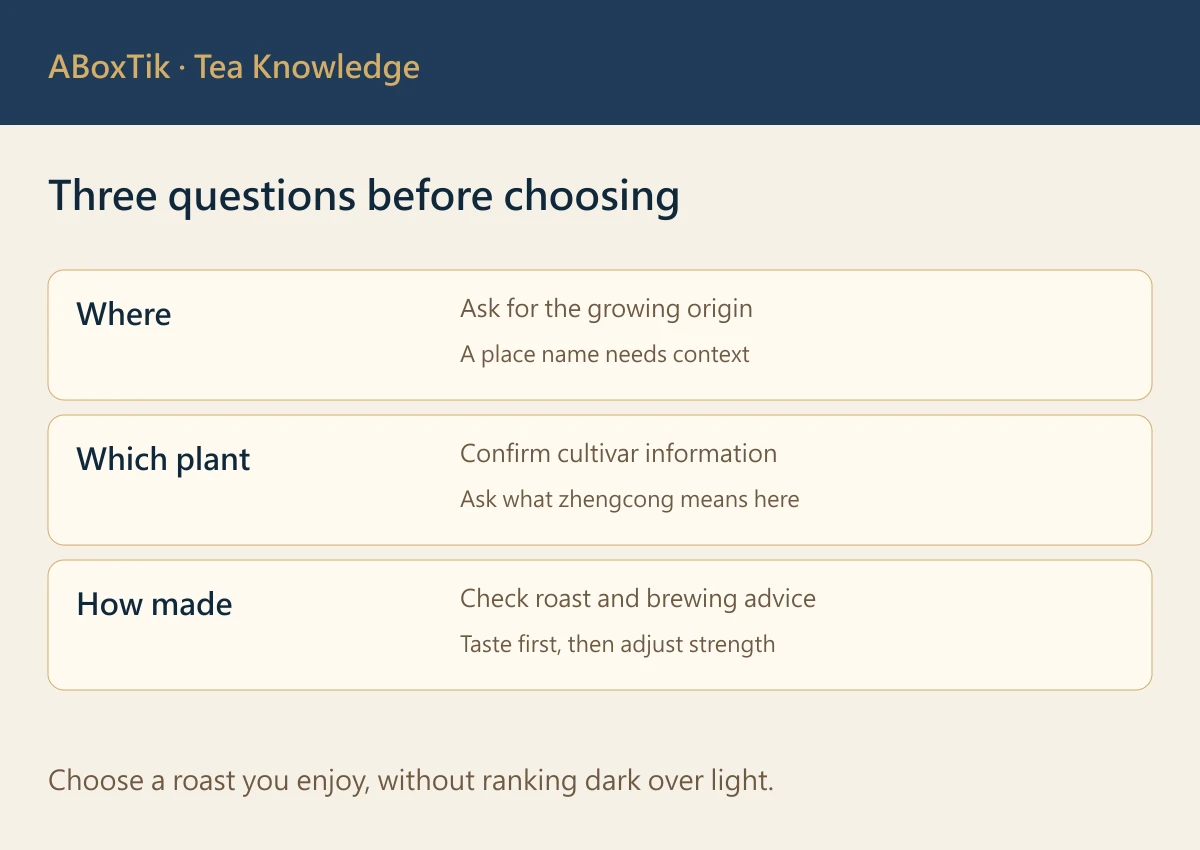
Before ordering, collect the growing origin, cultivar explanation, tea style or roast direction, and quantity and storage information. If zhengcong appears on the label, ask how that statement relates to the cultivar. If an award or grade is part of the offer, read tea-grade information separately so each claim has its own basis.
The same questions help when exploring other Taiwanese oolongs. A four-oolong gift set allows choices among the listed styles, while a two-tea set can suit everyday cup brewing. Check the current product options. Exploring roasted oolong does not require describing every tea as Muzha Tieguanyin.
A satisfying cup often comes from several modest details: a comfortable vessel, a strength you enjoy, and someone willing to explain the source. Distinguishing cultivar from processing is already a useful step. Once the three fields are clear, close the notebook for a while. There is still tea to drink.
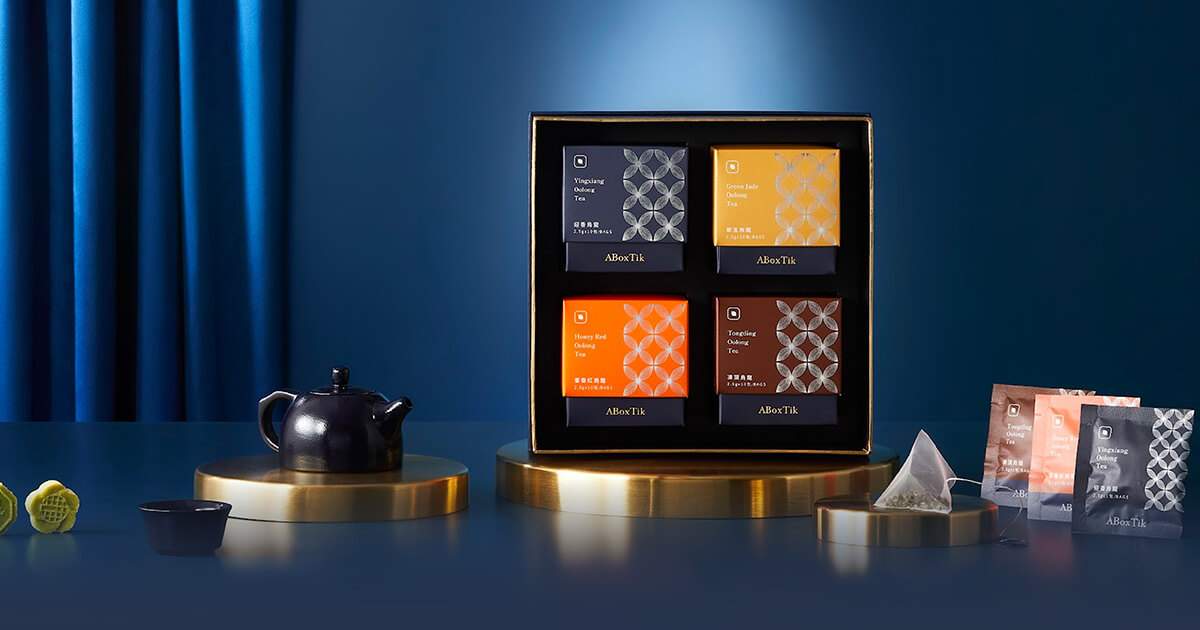
Follow ABoxTik: clear origins, thoughtful choices and time for a cup.
Give the tea a story that is easy to share
A tea gift can carry a three-line note: which tea it is, where it comes from and how to begin brewing. A small card need not become a local-history volume. Make the first cup easy to approach.
To explore roast character further, return to a familiar brew and keep your own preference visible. Clear source and process information makes the next conversation more relaxed.
Related reading
- Read the general Tieguanyin guide
- Understand roasting and resting
- Choose among Taiwanese oolong styles
Sources
- Wenshan District Office: old tea trail and zhengcong terminology
- Taipei Agriculture: Tieguanyin and Baozhong Tea Promotion Center
Sources checked 18 October 2026.