
Tea Knowledge
Thank-You Tea Gifts: Card Messages and Tea Pairings

Thanks do not always need a grand speech. Remember one small kindness, then leave a cup of tea for a quieter moment.
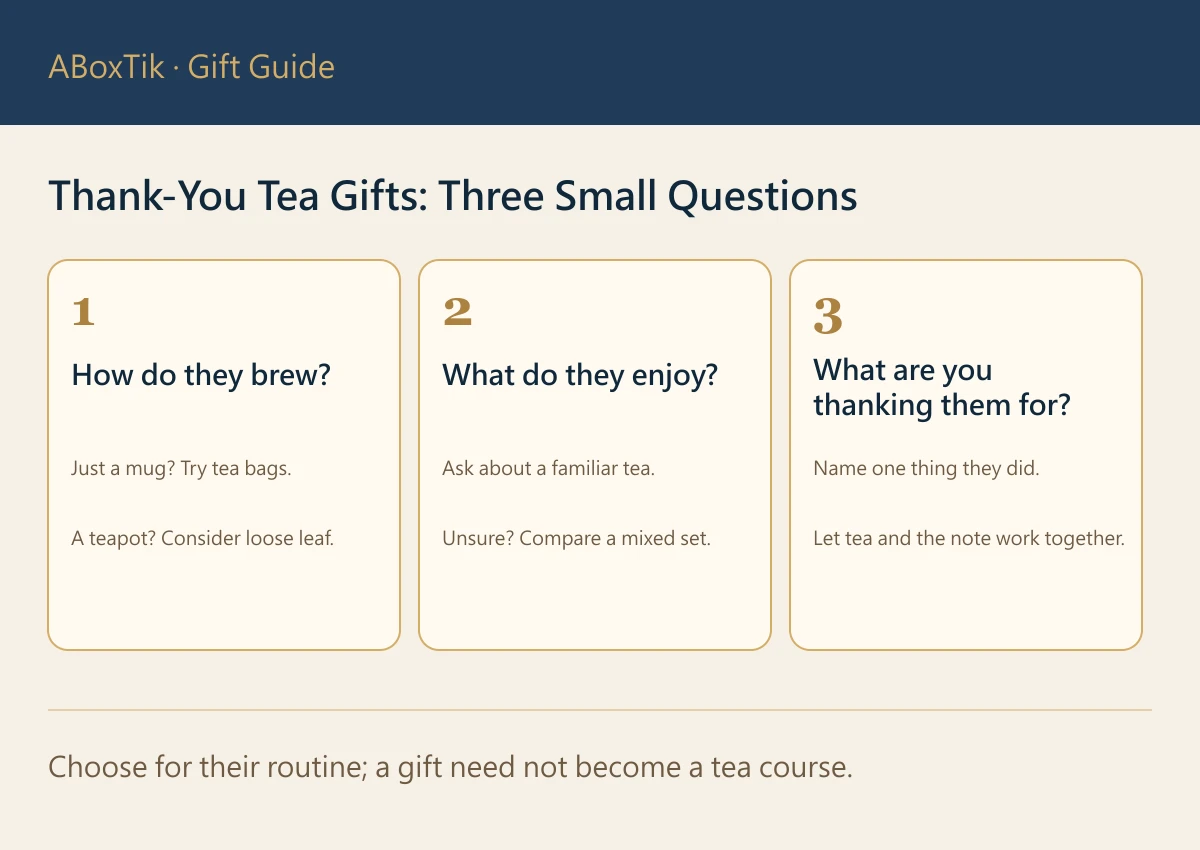
Thank-you tea gifts do not have to start with the most elaborate box. Start with three smaller questions: how does this person usually make tea, which flavour direction already feels familiar, and what exact thing are you thanking them for? Those answers can lead to an easy tea bag, a tasting set, or a loose-leaf tea they already enjoy. One honest card line is enough. The gift does not need a prompt reply, a ceremonial first brew, or a return gift.
For a fuller comparison of quantity, storage and delivery, see our tea gift box selection guide. This article has a narrower job: make a thank-you specific enough to feel true, while leaving the recipient room to receive it comfortably.
Choose a thank-you tea gift with three gentle questions
| Ask first | What it tells you | A useful direction |
|---|---|---|
| How do they brew? | Mug, office hot water, teapot, or gaiwan | Choose portioned tea bags for a mug; consider loose leaf for an established teapot routine. |
| What tastes familiar? | Floral, roasted, honeyed, or open to comparison | Include a known direction first, then one clearly different choice. |
| What are you thanking them for? | Help, company, collaboration, or care | Put that small event on the card, so the tea has a reason to be there. |
If you only know that their desk has a mug and a kettle, tea bags are already an informed choice. If you know they always order roasted tea, there is no need to turn the gift into an unfamiliar tasting syllabus. Our guide to pyramid tea bags can help explain why the format is convenient for a first cup.
Tea bags, loose leaf, or a mixed set?
A quick choice: is their usual tea moment A, a mug between meetings, or B, an unhurried pot with room to watch the leaves open? For A, consider portioned bags. For B, ask which pot and tea they already enjoy. If both sound right, a modest pair of contrasting teas gives them room to choose. The present need not arrive with a syllabus.
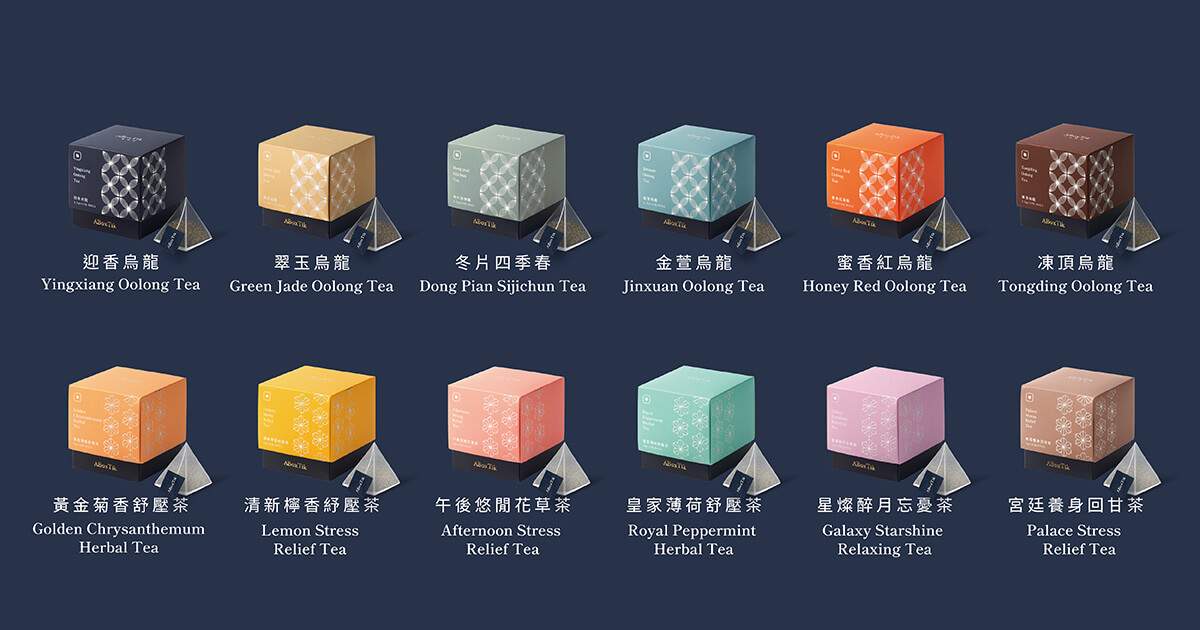
Tea bags work well when equipment is unknown and the recipient should be able to begin straight away. Loose leaf suits someone who already enjoys a pot, origin details, and adjusting a brew. A mixed set can work for a household, a team, or a person who likes comparing tea. Format describes how tea is used; it does not settle the question of quality. For a first thank-you gift, reducing the friction of the first cup is often kinder than adding a new piece of teaware.
| Receiving situation | Starting point | Check before sending |
|---|---|---|
| Colleague, teacher, or helpful neighbour | A small, portioned tea bag selection | Will it be used in a mug, and is the amount easy to store? |
| Friend who knows Taiwanese oolong | Two to four clearly different teas | Ask about floral, roasted, or a familiar tea. |
| Family or a sharing team | Two tea and two herbal selections | Confirm that the selected ingredients and flavours work for the intended drinkers. |
| Established tea table | Taiwanese loose-leaf tea collection | Choose from the person’s real origin, cultivar, and storage preferences. |
Check the current product page for flavours, sizes and availability. The Taiwan Tea and Beverage Research Station’s TAGs system combines traceability, grading and flavour descriptions, offering a useful example of clear tea information. Its storage guidance identifies moisture, light, temperature, oxygen, time and odours as factors in tea quality. Keeping unused packets sealed and adding one easy-to-find storage reminder is a useful part of the gift, too.
Let a familiar flavour carry the thank-you
When tea names are not a shared language, start with everyday preferences. Bright floral notes, a warmer roasted direction, or honeyed ripe-fruit cues can each become a useful first conversation. Use the flavour wording on the current product page as a selection cue; a cup will still vary with the tea and the brew.
When preferences are completely unknown, two distinctly different teas are easier to approach than four near-identical names: perhaps one floral and one warmer, roasted or honeyed option. The guide to recognising roasted tea aromas offers language for that difference. A thank-you is not an examination, and the card does not need to read like an acceptance speech.
What to write: four cards that begin with one small thing
A good card does not need to define the relationship in oversized terms. It simply lets the recipient know that their action was noticed. Name one event, then leave a little room around the wish. These may be copied, shortened, or rewritten in your own voice.
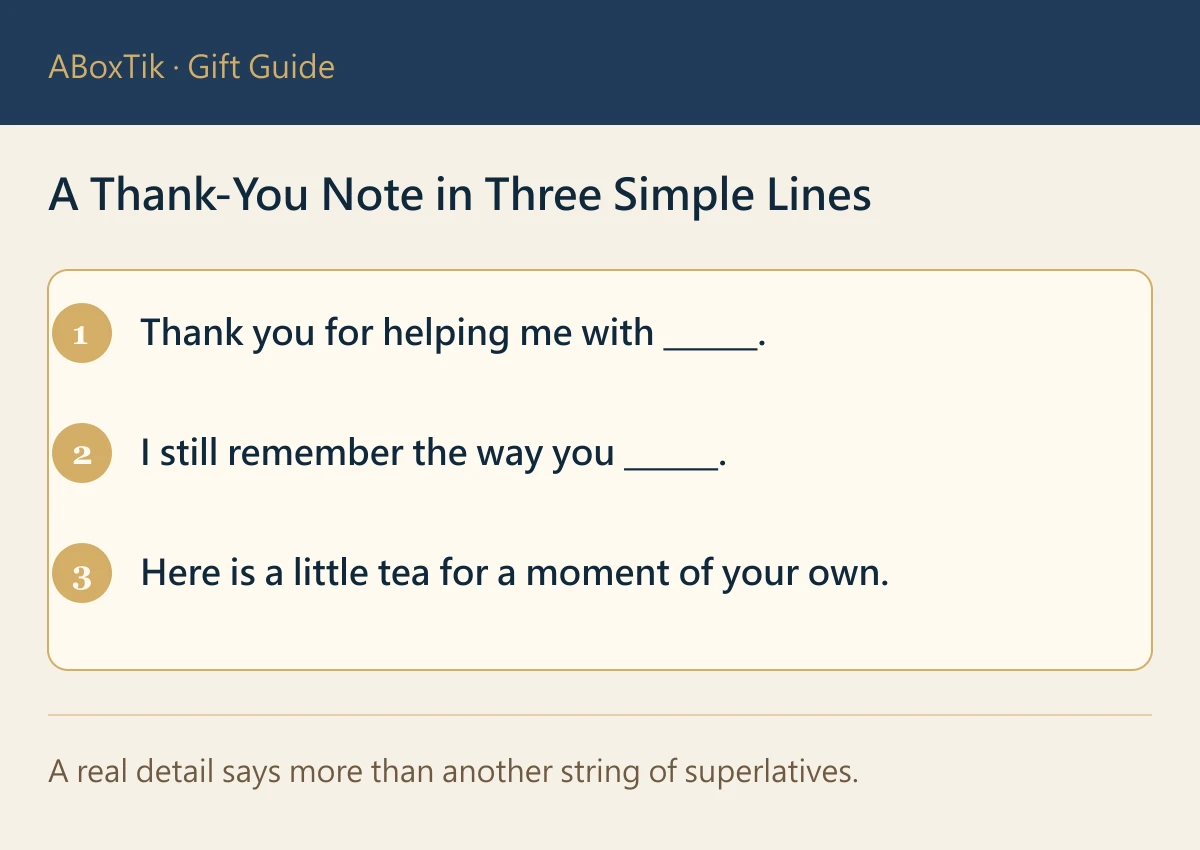
- For a colleague or collaborator: “Thank you for helping with ___. I still remember how you handled ___. A box of tea for a quieter moment after the busy part.”
- For a teacher, mentor, or neighbour: “Thank you for the reminder you gave me when ___. I hope this tea waits patiently for a day you feel like making a cup.”
- For a friend: “Thank you for listening while I worked through ___. It was not a small thing to me. This time, let the tea keep you company.”
- For family or a caregiver: “I still remember ___. Thank you for making a small task feel looked after. A box of tea for a moment with nowhere else to be.”
There is no need to ask whether the tea was enjoyed or to request a progress report. If the person does not drink tea or prefers to receive it later, accept that answer. A thank-you stays generous when it does not create another task.
Match the handover to the relationship
For a colleague who helped at short notice, a small, easy-to-brew selection and a short card may be plenty. For a family member who has offered ongoing care, choose a tea you know they enjoy and suggest a future cup together. For a group project, choose a shareable format and write to the team rather than making one person speak for everyone. Projects involving lists, budgets, handovers, and contingency quantities belong in the separate corporate gift quantity guide.
If the thank-you happens around a move or a visit, use the more specific practical notes in our housewarming tea gift guide or new-parent tea gift guide. Tea can be a thoughtful medium, but “you really do not need to” is useful information, too.
A 30-second check for thank-you tea gifts
- Where will the tea be brewed: mug, office kettle, or teapot?
- Which flavour is closest to something familiar?
- Does the card name one real small kindness?
- Can one person or a group comfortably use the amount?
- Are the packets, storage note, and receiving plan clear?
If one answer is missing, one small question is usually enough. For Taiwan tea context, read what makes Taiwanese tea distinctive; for a clear first cup, follow the preparation guidance on the chosen tea. A box of tea does not have to represent every feeling. It only needs to give one thank-you a comfortable place to land.
Follow ABoxTik|Let one remembered kindness become a cup of tea that can be enjoyed slowly.
Leave a little ease inside the thank-you tea gift
The strongest thank-you tea gift does not try to say everything about a relationship. It remembers how a person lives: the cup they use, the flavours they welcome, and the freedom to open the box whenever they want. To learn how ABoxTik introduces Taiwanese products and local value, visit About ABoxTik. Product details and availability should always be confirmed on the current page.
Related recommendations
- Two-selection tea bag gift: a practical start when routine is not fully known.
- Classic Taiwan Tea four-set: for friends or family who enjoy comparing Taiwanese teas.
- Tea gift box selection guide: for the next decision on quantity, storage, and delivery.
Sources
- Taiwan Tea and Beverage Research Station: TAGs classification and grading (checked 9 October 2026)
- Taiwan Tea and Beverage Research Station: Tea packaging and storage (checked 9 October 2026)