
Tea Set
Why Wood-Fired Teaware Costs More: Ash, Fire Marks and Individuality

The value of a wood-fired vessel sits in its ash and firing marks, and in how comfortably it joins the next ordinary cup of tea.
Wood-fired teaware prices are best read through forming work, kiln input, the individual piece and the maker’s experience. Ash and firing marks bring variation, so pieces sharing a firing need not share the same appearance. Start with form, rim, balance and the maker’s information before deciding which one belongs on your tea table.
An interest in craft and a wish for an easy daily cup can happily share a purchase. This guide focuses on process, cost questions and useful observations, alongside the broader stoneware teaware guide. There is no need to master the kiln vocabulary before picking up a cup. The vessel has come to tea, not to conduct an interview.
Wood-fired teaware: read the work before the story
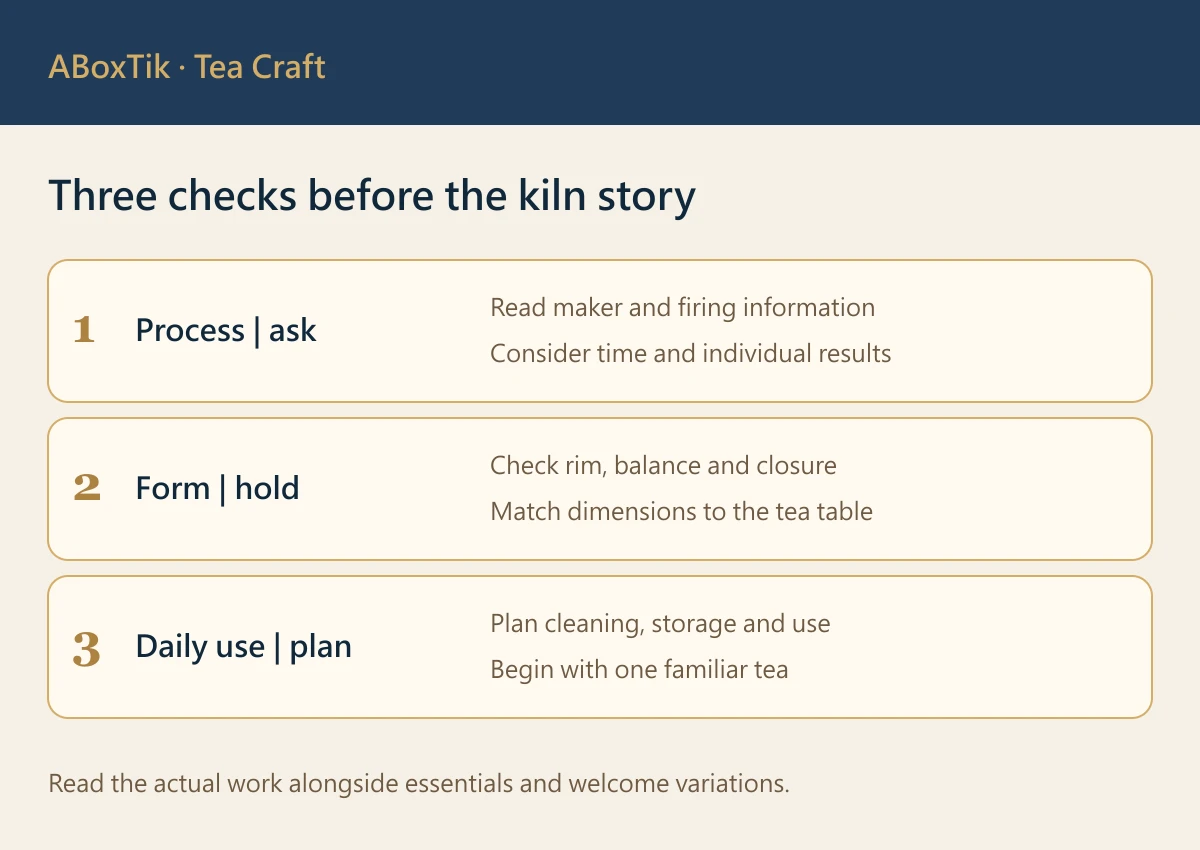
A piece needs clay preparation, forming, finishing and drying before it reaches the kiln. Loading, fuel and operating choices follow. A maker’s time, skill, material and the individual result are useful starting points for a price conversation. Ask how the work was formed and fired, then read size, intended use and condition alongside its appearance.
The National Taiwan Craft Research and Development Institute describes a specific tea caddy formed on the wheel and wood-fired, with firing marks and an ash-glazed surface. Its work description provides a concrete introduction to the process. Taiwan ceramic craft history and Miaoli pottery add regional context without requiring one object to represent every maker.
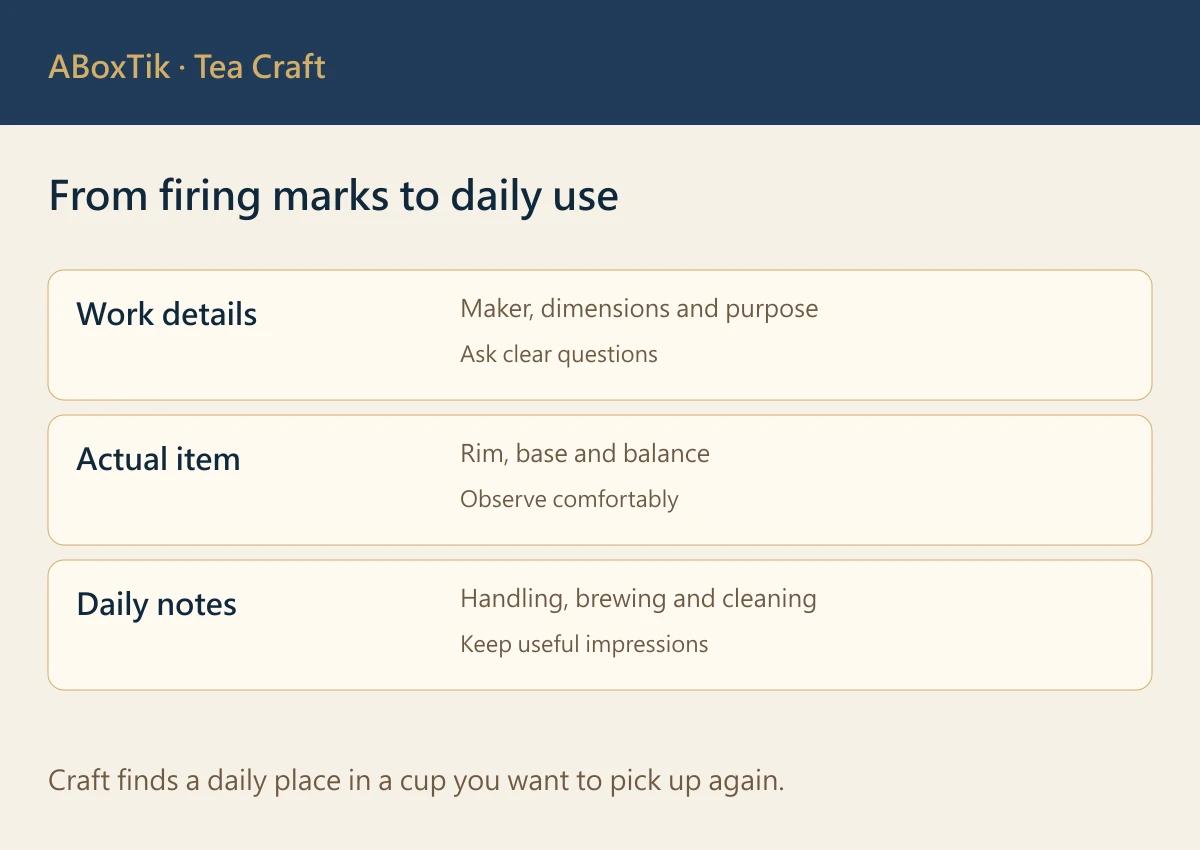
Practical card: write the maker, dimensions and intended use, then one sentence about the feel in the hand. A few weeks later, this will be more helpful than remembering only that the piece felt special in the shop.
Why ash and firing marks resist an exact repeat
In the NTCRI work description, ash from burning wood lands on clay and melts at high temperature into an ash glaze, producing varied colour and surface effects. This gives a useful way to look at a piece: turn it and notice how the surface changes from one side to the next.
Individuality can be considered alongside form and practical detail. One person may prefer quiet ash colour, another a stronger firing mark. Neither preference needs an aesthetic league table. When an unfamiliar term appears in the description, ask the maker what it means for this object rather than filling the gap with a grander story.
Try asking how a particular surface developed and what needs attention on this piece. Match the explanation to the object. Teapot materials helps separate different kinds of information, while clay teapot care returns the conversation to use.
Return the form to an actual brewing routine
A cup, brewing pot and tea caddy have different jobs. A cup needs a steady base, a comfortable rim and an easy lift. A pot invites questions about handle, lid and pour. A caddy needs a closure and storage arrangement suited to the maker’s intended use. A handsome object need not volunteer for every task; the kitchen already has enough multitasking.
Before buying, imagine a complete round: where it will sit, who will wash it, how often it will meet hot water and where it can dry. Compare its dimensions with the tray and cupboard. Brewing in porcelain offers another vessel context, while gongfu brewing helps identify the routine the new piece should support.
Keep any specific use and cleaning directions with the purchase record. Clay, glaze and individual condition deserve attention. Instructions for the actual work are a more comfortable starting point than borrowing a universal care method from an unrelated pot.
Pair irregular beauty with clear information
Write two essentials and two welcome variations before shopping. A stable base and comfortable rim might be essential; ash colour and the position of a firing mark may be open to surprise. This small note helps the practical requirements stay visible when an attractive photograph arrives.
For an individual item, ask for current photographs from several angles, including base, interior and any opening. Confirm dimensions and the intended function. If an in-person visit is convenient, lifting and setting it down can add information a photograph cannot supply. Colour, weight and balance each have their own part in the conversation.
Observing celadon cups offers another surface vocabulary. Describe what is visible before deciding whether it suits your taste. Specific observations make it easier to ask a maker a useful question, rather than leaving everything to the word beautiful.
Let a familiar tea introduce the new vessel
The first brew need not decide the object’s whole future. Use a familiar tea and an easy, repeatable routine, then notice heat in the hand, pouring rhythm, rim feel and cleanup. If comparing cups, keep tea, water and brewing method as consistent as practical so several changes do not compete to explain one impression.
Write concrete observations: easy to hold, a little heavy, a comfortable rim, a clean pour or an extra cleaning step. Record aroma, strength and texture separately. Smelling tea and aftertaste notes provide language for the cup while the handling notes describe the vessel.
A piece may suit slow weekends while another cup serves working mornings. That is a useful outcome. Members of the tea table are allowed different shifts; none has signed a contract to work every day of the year.
Leave space in the budget for everyday life
Read price together with maker information, process, condition and purpose. Decide what attracts you and how the object would be used, then set a budget. Thin information can become the next question. A lovely photograph can wait another afternoon without the cup taking offence.
Check the arrangements after purchase as well: cupboard space, cleaning and whether another lighter cup is still needed for daily use. Before adding tea, review what is already open and follow sensible tea storage practices. A new vessel is easier to explore with a tea whose condition and preparation are familiar.
For sharing Taiwan tea, read the current Classic Taiwanese Tea four-box set and two-box tea-bag gift set. Choose a format for the vessels and drinking frequency already at home. Buying one cup need not require the entire cupboard to report for a reorganisation.

Follow ABoxTik | Notice the kiln’s expression and make room for an ordinary cup.
Choose wood-fired teaware that remains inviting after the first look
Check the actual piece and maker’s guidance, then consider vessel habits, space and budget. The stoneware teaware guide can extend the material and care questions at a comfortable pace.
For a convenient Taiwan tea format, review the current tea-bag gift set. Brew with ease and use the object comfortably, giving craft a quiet opportunity to become part of ordinary life.
Related reading
- Miaoli pottery: meet a local craft setting.
- Clay teapot care: organise daily-use questions.
- Taiwan ceramic craft: add making and cultural context.
Sources
Sources checked 15 October 2026.