
Tea Knowledge
Wedding Tea Ceremony: Tradition, Meaning and Modern Practice
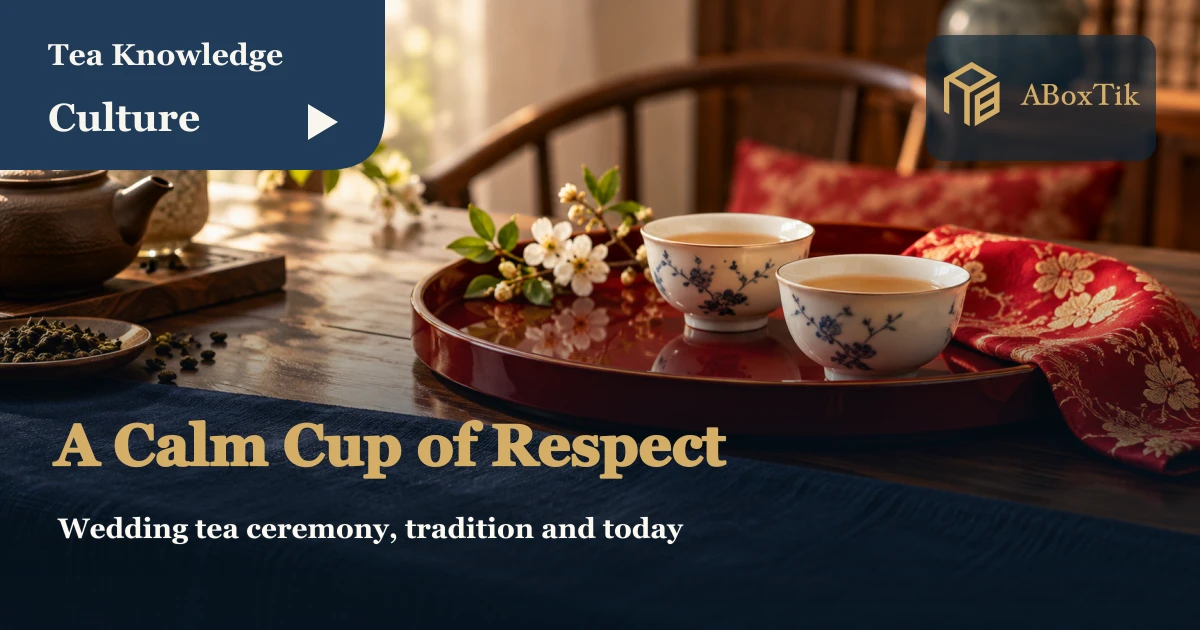
A cup offered to family can say something very simple: thank you. Agree on names, seating and the flow beforehand, so the moment itself has room for a familiar smile.
A wedding tea ceremony can create time to thank family members and bring two families into conversation. Historical records describe different forms and occasions for serving wedding tea. For a contemporary ceremony, begin with the couple and both families, then turn their agreement into a clear list of names, terms of address, sequence and helpers. A checklist cannot replace that shared understanding.
If every relative seems to remember a different version, start by separating the meaning people wish to preserve from the actions they prefer. That is usually a kinder beginning than deciding who remembers the only correct sequence. This article concerns the ceremony itself. For gifts distributed to guests, use the wedding tea-gift guide; the same cup need not take responsibility for every part of the celebration.
Wedding tea ceremony traditions differ by occasion
Taiwan’s National Museum of History records tea serving during betrothal, including relatives placing a red envelope with the cup, as well as a wedding tea occasion involving the bride and senior relatives. A National Museum of Taiwan History folk painting also depicts thanks and return gifts after tea service. These records show tea in wedding exchanges; they do not prescribe one sequence for every wedding today.
Notice which place, period and roles a historical account describes before adapting it. The Chinese tea-culture introduction and tea-giving guide provide wider context for tea as an exchange. The actual arrangement should return to this couple, this gathering and the people participating, rather than borrowing an entire historical ceremony simply because it appears on a planning sheet.
Ask about the intention before memorizing a sequence
Begin with three questions: whom would we like to thank, which elements matter to the family, and which actions would be uncomfortable or impractical? Sort answers into keep, adapt and confirm. The couple might propose serving together, offering thanks separately or introducing family members while seated. Present these as choices for discussion and agree on them with the families who will take part.
If an elder values a particular step, ask what it means before discussing how to include it. If the couple wants a shorter ceremony, explain the gratitude they want to preserve rather than only announcing what will be removed. Try: “We would like to keep the tea, write down the names clearly and work out the seating together.” It gives the discussion a useful next step without asking a teacup to chair a family debate.
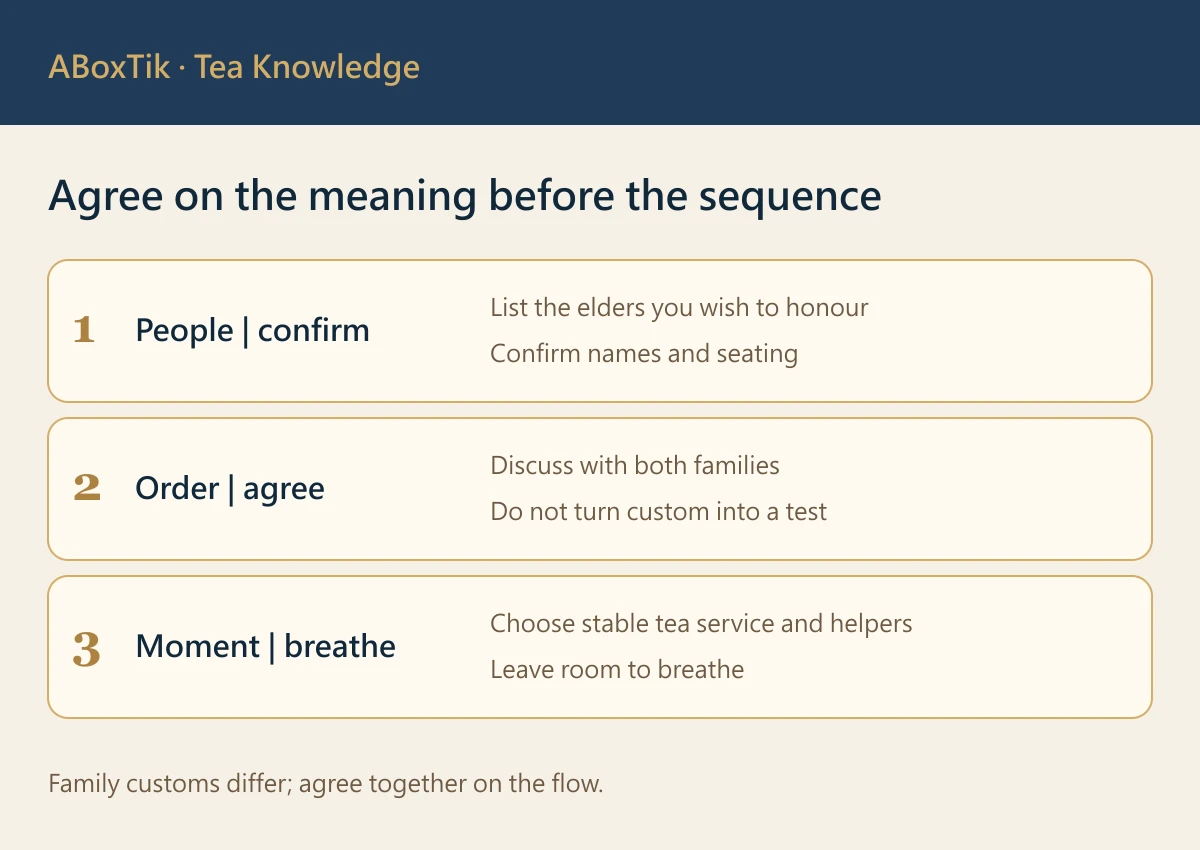
Use one list for names, seating and the flow
Record each participant, the correct form of address, their seat, who introduces them, who offers the tea and any assistance requested. Ask someone familiar with the family to check names and pronunciation. Give the host the same version. Discuss absences, late arrivals and anyone who would prefer not to be called forward, so the event does not depend on guessing in front of an audience.
Arrange the sequence around the agreement and the actual space, rather than treating a sample order as a universal custom. Settle the first seats and distinguish serving from collecting cups before moving to the next group. With a large gathering, discuss a representative list or separate sections. There should be room to acknowledge people without turning the couple into a tea-distribution line that never gets a pause.
Choose familiar tea and manageable equipment
Ask what family members usually drink, then select a tea with clear ingredients and directions that the helpers can follow on the day. The fresh and roasted tea guide can support a flavor discussion, while Jinxuan and Green Jade provide actual tea introductions. Do not assign flavors by age or status, and do not require every participant to finish a cup.
Choose vessels for a stable grip and a tray that can be carried comfortably. Leave suitable space in each cup. Assign hot-water preparation to a named helper, try the tea beforehand and let it reach a comfortable drinking temperature before offering it. Agree on another way to participate for anyone who cannot or does not want to drink. The steeping guide, product directions and further-infusion guide can help establish a repeatable plan.
Give the host a short cue and the couple a pause
A simple introduction might be: “The couple would now like to offer a cup of tea to thank the family members who have supported them.” Name the person clearly, allow the cup to settle and leave time for the couple’s own words. “Thank you for caring for us; we look forward to sharing what comes next” is a starting point to rewrite, rather than a line everyone must memorize.
Coordinate photography with the flow. Let the photographer know where a pause is welcome and when the passage needs to remain clear. If someone becomes emotional, allow a few moments rather than trying to recover every second on the schedule. A helper card can list five actions: confirm the name, offer tea, leave room to speak, collect the cup and invite the next group. Helpers can manage those details while the couple stays present.
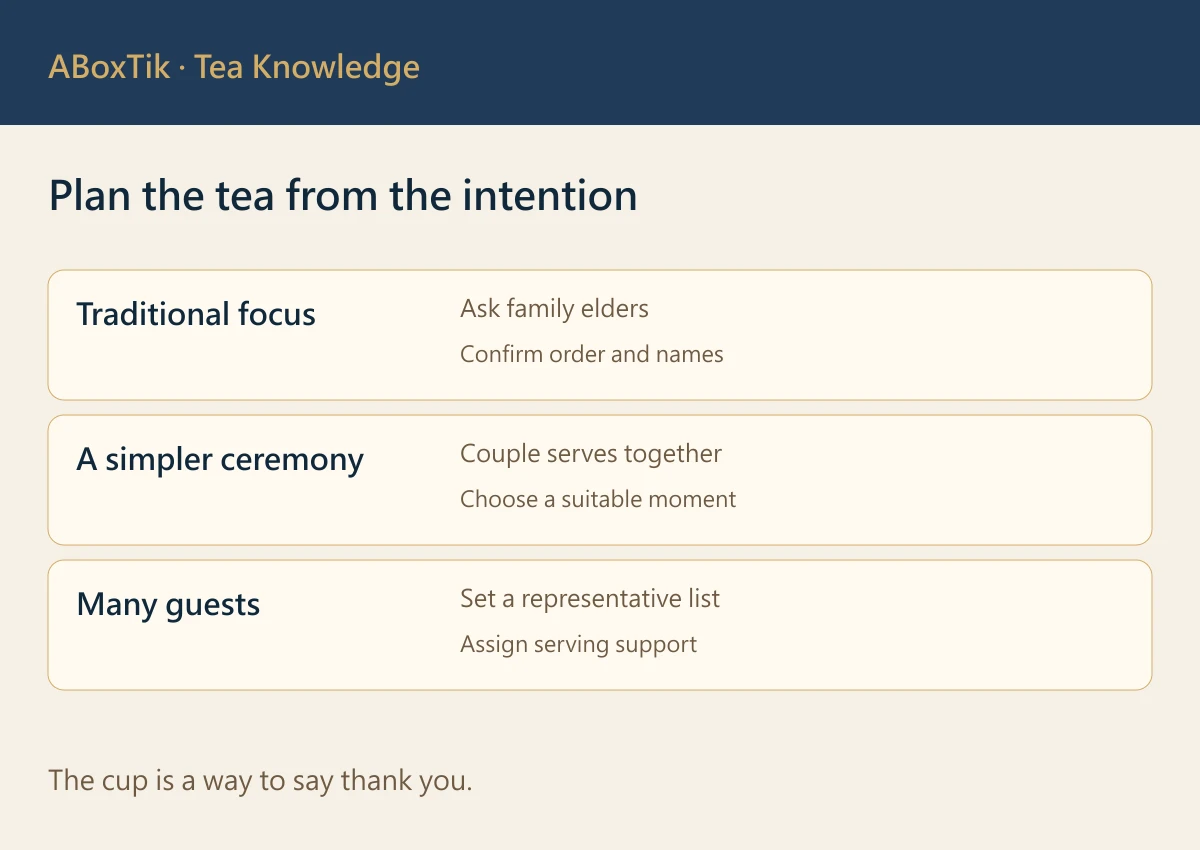
Agree on small contingencies before they happen
If tea spills, steady the service and let a helper clear it; the moment needs practical attention rather than an interpretation. If someone declines a drink, continue with the words of thanks. If a name is mistaken, correct it briefly and move on. Discussing these possibilities beforehand gives helpers permission to act without requiring the couple to direct every detail in the middle of the ceremony.
Afterward, account for cups, unused dry tea and other equipment. Follow the tea-storage guide and product label for the remaining dry tea, and assign the used service to a helper for cleanup. A later family cup can begin with a topic from the Taiwanese tea introduction or ABoxTik story. Respect can continue in daily life without making every subsequent cup another formal occasion.

Follow ABoxTik | Let preparation hold the details and people hold the meaning.
Give a simple thank you a comfortable place
Begin with a shared list, a clear agreement and one walk through the space. Familiar preparation and manageable cups can serve the occasion without adding unfamiliar steps for the sake of grandeur. For later family sharing, explore the current two-box tea-bag set or Classic Taiwanese Tea four-box set, choosing around the people who will drink it.
A useful first question tonight is: “Whom do we most want to thank in this moment?” Build the plan from that answer. It is a warmer starting point than memorizing every version of the ceremony before knowing what this family wishes to say.
Related reading
- Wedding tea gifts: separate guest favors from the ceremony.
- Steeping times: prepare a practical baseline.
- Two-box tea-bag set: share tea in daily life afterward.
Sources
- National Museum of History: marriage customs past and present
- National Museum of Taiwan History: folk painting of thanks after wedding tea
Sources checked 15 October 2026.