
Tea Knowledge
Taiwan Tea Flavor Wheel: How to Write Tasting Notes
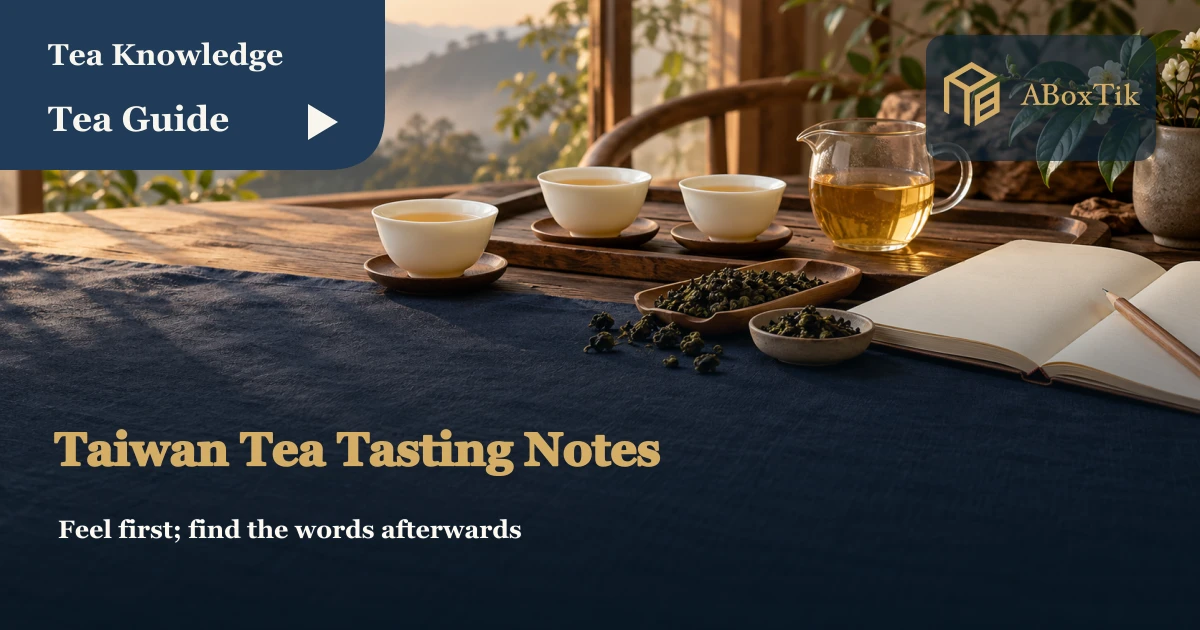
A flavour does not need its final name at the first sip. Keep one clear impression, and leave the next cup room to answer.
A Taiwan tea flavor wheel helps organise the words used to describe a tea. Start by recording how the tea was brewed, then look for a broad aroma direction before choosing a more specific term. Keep aroma, taste and mouthfeel in separate fields. Completing a wheel is neither a goal nor a tea-quality certification.
If all that comes to mind is “something toasted”, that is a perfectly useful beginning. There is no need to invite an entire flower shop into the cup. This guide turns the wheel into a practical tasting note, with a blank record and an example sentence you can adapt to what you actually notice.
Use the wheel to find language, and the note to preserve context
Taiwan’s Tea and Beverage Research Station describes its flavour wheel as an index that combines a visual structure with an agreed vocabulary. It supports associations with flavours a drinker has noticed, rather than asking the drinker to invent them. Its practical value is communication: two people can start with “floral” and gradually find out whether they mean something similarly fresh, sweet or difficult to name.
The official image page offers version 2.0 alongside the earlier wheels for six tea families. Check which version and tea style you are using. The worksheet here is a simple recording aid, rather than a reproduction of the official classification. If smelling tea still feels unfamiliar, begin with our guide to smelling tea and use the wheel afterwards.
A tasting note and a quality assessment answer different questions. A clear note helps you brew again or ask a seller a better question. It does not establish an award, grade or production standard. Read Taiwan tea grades and labels separately, keeping package information beside your impressions instead of merging the two.
First, give the flavour an address
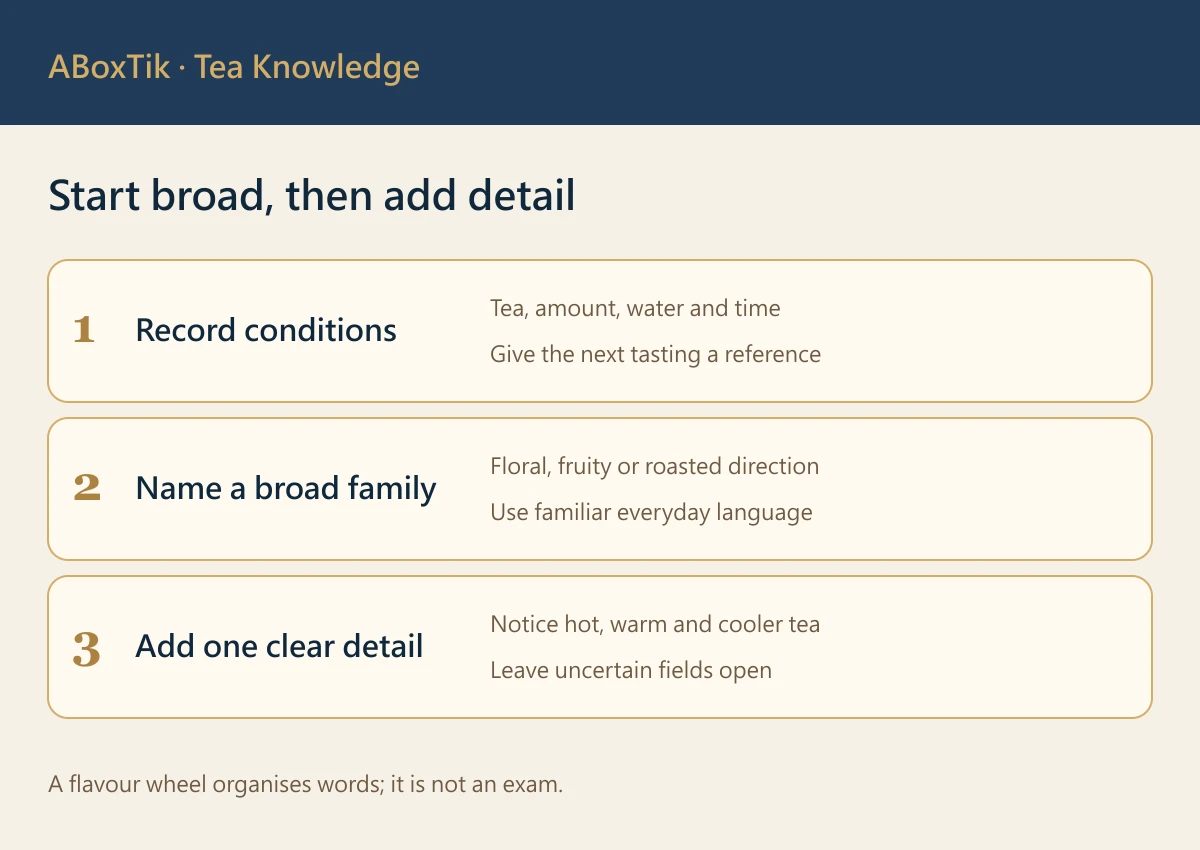
At the top of the page, write the tea name, any stated cultivar or origin, the opening date and today’s date. Add the leaf amount, water volume, temperature, infusion time, water used and vessel. Leave a field blank if you did not measure it. A confident-looking number is less helpful than an honest gap when you want to repeat the brew.
Choose a familiar tea and your normal method for the first attempt. Opening three teas and changing the water at the same time creates a busy table rather than a useful comparison. Our basic brewing guide offers a starting sequence; the oolong water-temperature guide can help frame a later adjustment. Change one condition at a time so the next result has a meaningful reference.
For tea bags, record the number of bags, cup volume and whether you removed the bag. For loose leaf, note the amount and whether the tea was fully decanted. A two-tea gift set can offer a later comparison, but there is no obligation to taste both on day one. The notebook is allowed a gentle start.
Name a broad impression before a specific flower
Smell the dry leaf or freshly brewed tea, allowing hot tea to reach a comfortable temperature before approaching or sipping. Ask whether the impression suggests flowers, fruit, plants or toasted food. These everyday directions are a starting point, rather than a claim that each word is an official category. Then consult the wheel for a term that feels more accurate.
Writing “roasted” is more useful than guessing three nuts. If toasted rice genuinely comes to mind, add when it was noticeable: “rice-like toast, clearer while warm”. If the detail remains uncertain, leave it broad. Our roasted-aroma vocabulary and floral-aroma guide offer ways to organise familiar sensory memories without prescribing a result.
Try making three independent notes before reading the full aroma description on the package. Afterwards, compare the two lists and keep both agreements and differences. The honey-versus-fruit aroma comparison is useful for this exercise. Words can point the way; your own observation still deserves a seat at the table.
Separate aroma, taste, texture and liking
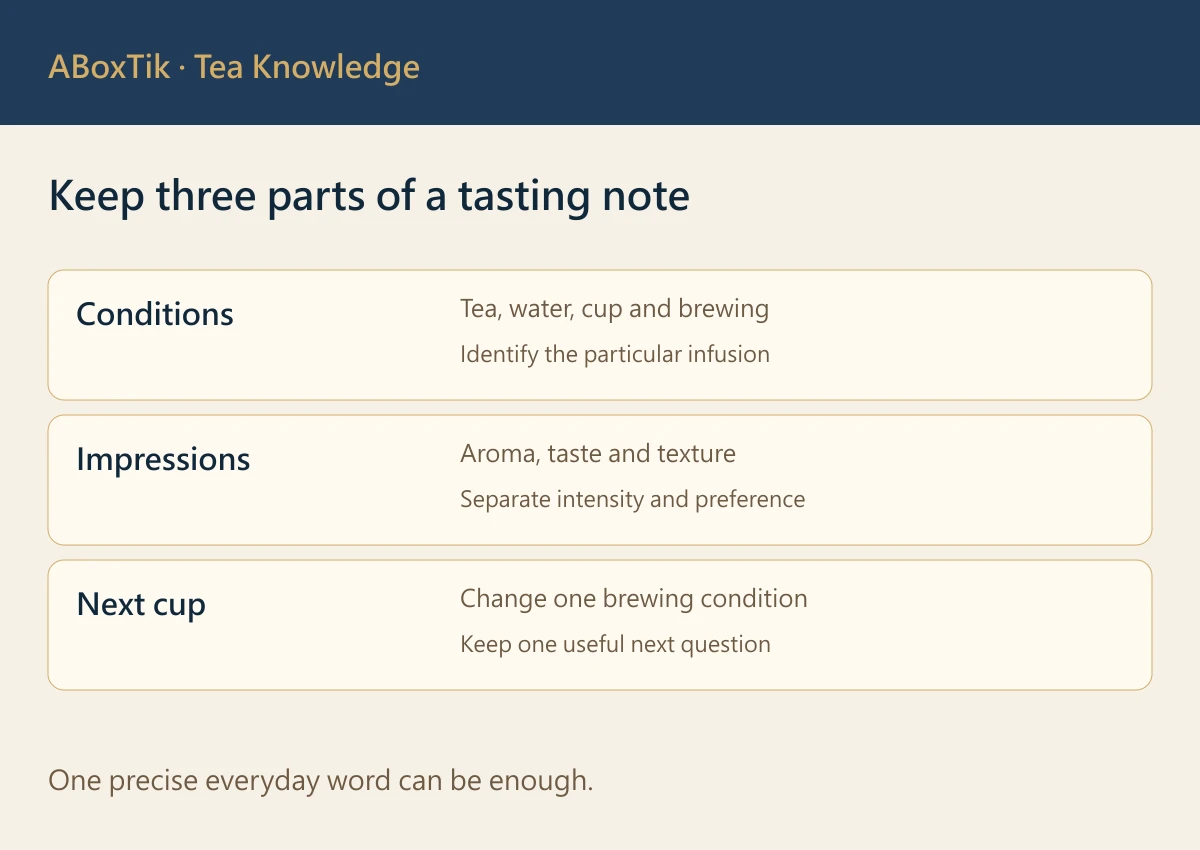
Use the aroma field for smell associations, including those noticed after sipping. Use the taste field for qualities such as sweetness, bitterness or acidity that you actually identify. Use mouthfeel for impressions such as smoothness, thickness or a drying sensation. Several may occur together, but “very fragrant and nice” gives your future self little help in reconstructing them.
Add a simple preference field: liked it, neutral, or would try again. Intensity and liking are different. A stronger brew is not automatically a better tea, and a concentrated infusion does not establish that a whole region produces heavy tea. The fresh-versus-roasted tea comparison can help keep style differences connected to the particular tea.
| Conditions | Impressions | Preference / next step |
|---|---|---|
| Tea, leaf amount, water volume | One aroma you recognise | What you liked |
| Temperature, time, vessel | Warm / cooler impressions | One condition to change |
| Water, infusion number, date | Uncertain impression | One question for the seller |
This card has no answer key. Write uncertainties down rather than editing them into a confident memory later. With a friend, complete notes independently before comparing. That makes room for two observations instead of sending everybody after the first person’s favourite adjective.
Turn a handful of words into a useful sentence
Here is an editorial sentence model: “In the same white porcelain cup, using the brewing conditions recorded above, I noticed a toasted-rice-like aroma while warm. The infusion tasted slightly bitter and felt smooth; the aroma became less clear as it cooled. I preferred the warm stage and would try a shorter infusion next time.” Replace every impression with your own. This is a writing example, not a reported tasting result.
The sentence includes conditions, an observation and a next step, while leaving preference personal. “Luxurious, complex and wonderful” may convey enthusiasm but is harder to use for the next brew. A message to a friend can be shorter still: “Toasty, a little strong this time; I will try a shorter steep.” Everyday language can be precise without becoming formal.
Give the second infusion its own row rather than combining several infusions into one result. When looking back, compare brewing conditions before comparing adjectives. If you later choose Cuiyu oolong or Jinxuan, keep your impressions alongside the cultivar introduction. The description supplies context, not a list of sensations you must reproduce.
What if the advertised aroma never appears?
Check for perfume, detergent or food smells around the cup, then let the tea reach a comfortable temperature. A short break or another brew on another day may help you make a clearer observation. Do not lean close to scalding tea in pursuit of one missing word. “Not identified this time” is a complete and useful entry.
Keep added milk, spices and fruit out of a plain-tea record. If you want to make a mixed drink, start a separate recipe note so the source of each impression stays clear. Guides to tea types and processing and Taiwanese tea characteristics explain the background, while the current cup supplies the observation.
Before putting the notebook away, choose one manageable next action: shorten the infusion, measure the water, or compare a familiar aroma again. “Toasted rice; other details uncertain” is already worth keeping. Your vocabulary can grow at its own pace. The tea need not wait until the page sounds impressive.
Follow ABoxTik: simple notes, thoughtful cups and room to explore.
Make the note an invitation to share another cup
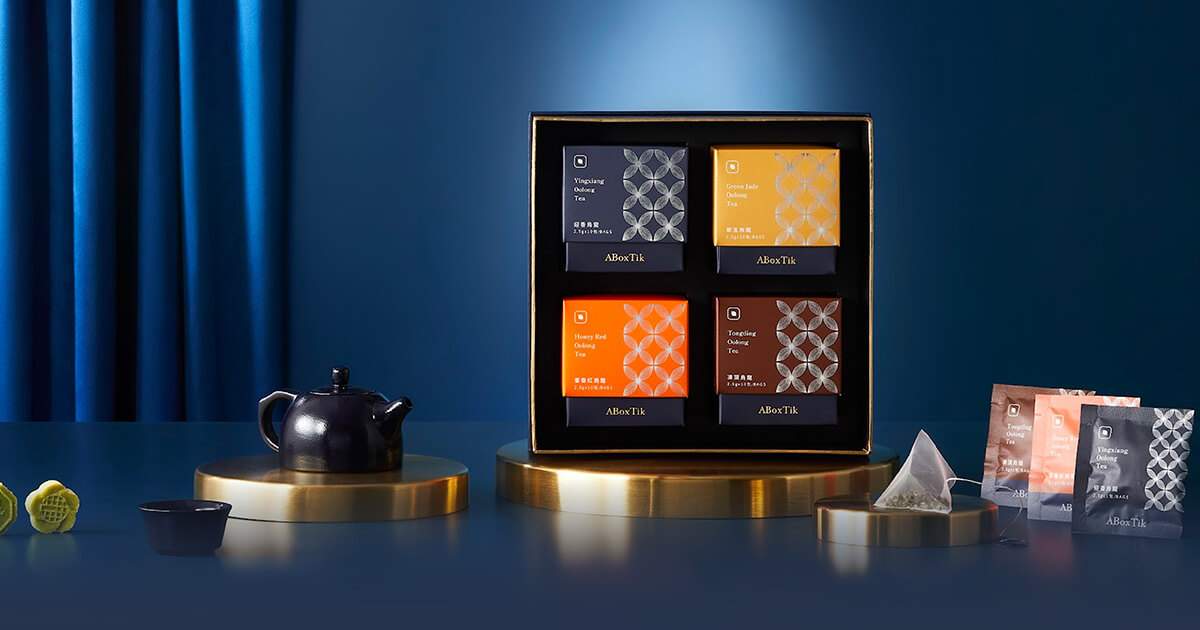
A tea gift can include one concrete impression and the brewing method you used, without asking the recipient to find the same flower. A four-oolong gift set can provide several separate practice sessions; check the current product choices before selecting.
Start with a familiar tea at home. Keep the part you enjoyed, leave the uncertain fields open, and let the next person at the table bring a different word.
Related reading
Sources
- Tea and Beverage Research Station: Taiwan Specialty Tea Flavor Wheel introduction
- Tea and Beverage Research Station: official flavour-wheel images
Sources checked 18 October 2026.