
Tea Mixology
Black Tea Whisky: Red Jade, Citrus and Ice Pairing Guide
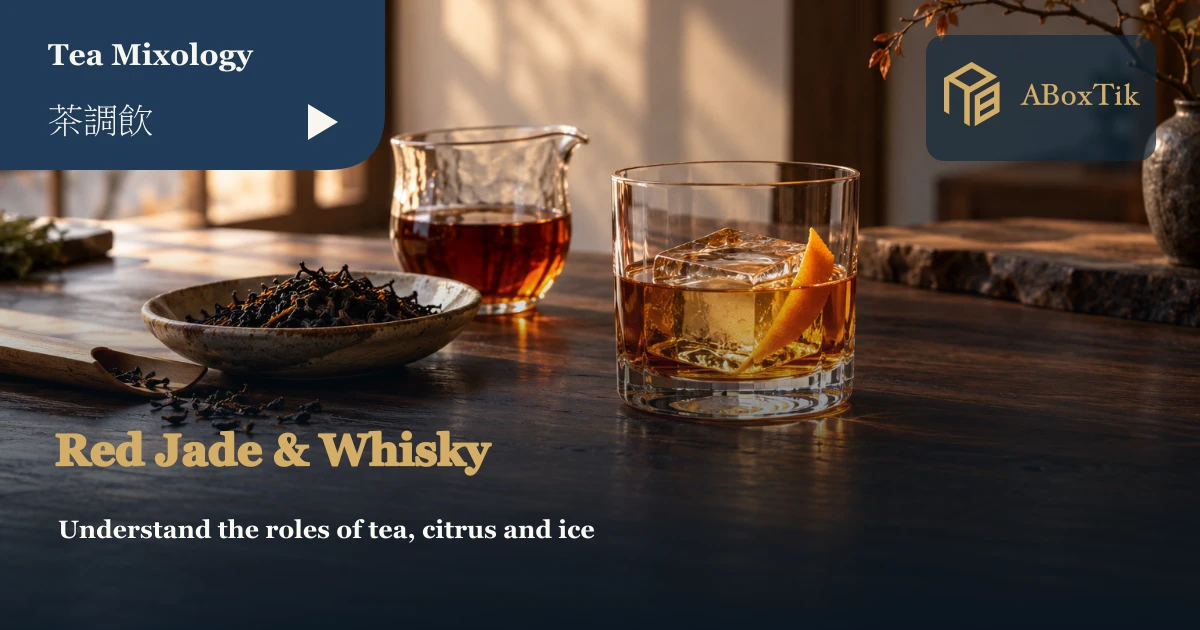
Let the tea arrive first, the citrus next, and the measure keep the conversation clear. A winter tea table can be thoughtful without becoming complicated.
Black tea whisky pairing is easier to understand when four roles are kept clear: the Red Jade tea’s aroma and texture, the whisky’s flavour and strength, the citrus contribution, and the water added as ice melts. These ideas help explain a menu description and support a choice between plain tea, an alcoholic drink and a separately prepared alcohol-free option.
This is a pairing knowledge guide, without recipe ratios or serving instructions. There is no need to turn curiosity into an impromptu bartending class. It is for adults only, and choosing tea instead of alcohol needs no social justification. A useful question about an ingredient is more helpful than an impressive guess about a formula.
Why start with Red Jade black tea?
TTES No. 18, or Red Jade, is a tea cultivar. Taiwan’s Tea and Beverage Research Station describes its black tea with cinnamon-like and mint-like aromatic notes. These are sensory comparisons, rather than ingredients added to the tea, and a particular batch may express them differently. Origin, processing and brewing still matter when choosing the tea in front of you.
Citrus is not a compulsory partner for Red Jade. When a menu mentions orange, ask whether it means peel, juice or another flavouring. Peel suggests the outer fruit’s aroma, while thick white pith can contribute a different bitterness. Knowing which part is used is clearer than guessing a formula from the photograph, and helps separate the tea’s own aroma from added ingredients.
For context, explore black tea, the main tea categories and what makes Taiwanese tea distinctive. The aim is to select a workable base for this particular drink, rather than declare one black tea the universal winner.
Black tea whisky: understand the tea base first
The tea base does more than deepen the colour. Red Jade’s aroma, strength, sweetness and astringency participate in the overall impression. When reading a recipe or speaking to a server, ask which tea is used, how it is prepared and what the plain tea tastes like. That separates the tea’s contribution from the whisky rather than assigning every sensation to the spirit.
A stronger infusion is not automatically a clearer aroma. Changing leaf quantity or infusion time can alter the cup, but does not make every aromatic note rise in the same proportion. Actual preparation belongs with the tea’s instructions and a practical trial. The brewing guide explains the separate roles of amount, temperature and time for someone who wants to understand the plain tea first.
Dry-leaf storage and prepared-liquid handling are different topics. Keep dry tea in suitable packaging and conditions; brewed liquids need handling appropriate to their actual preparation and storage arrangements. A pairing article does not establish a batch storage life. The tea storage guide concerns dry tea, which should not be confused with a finished drink.
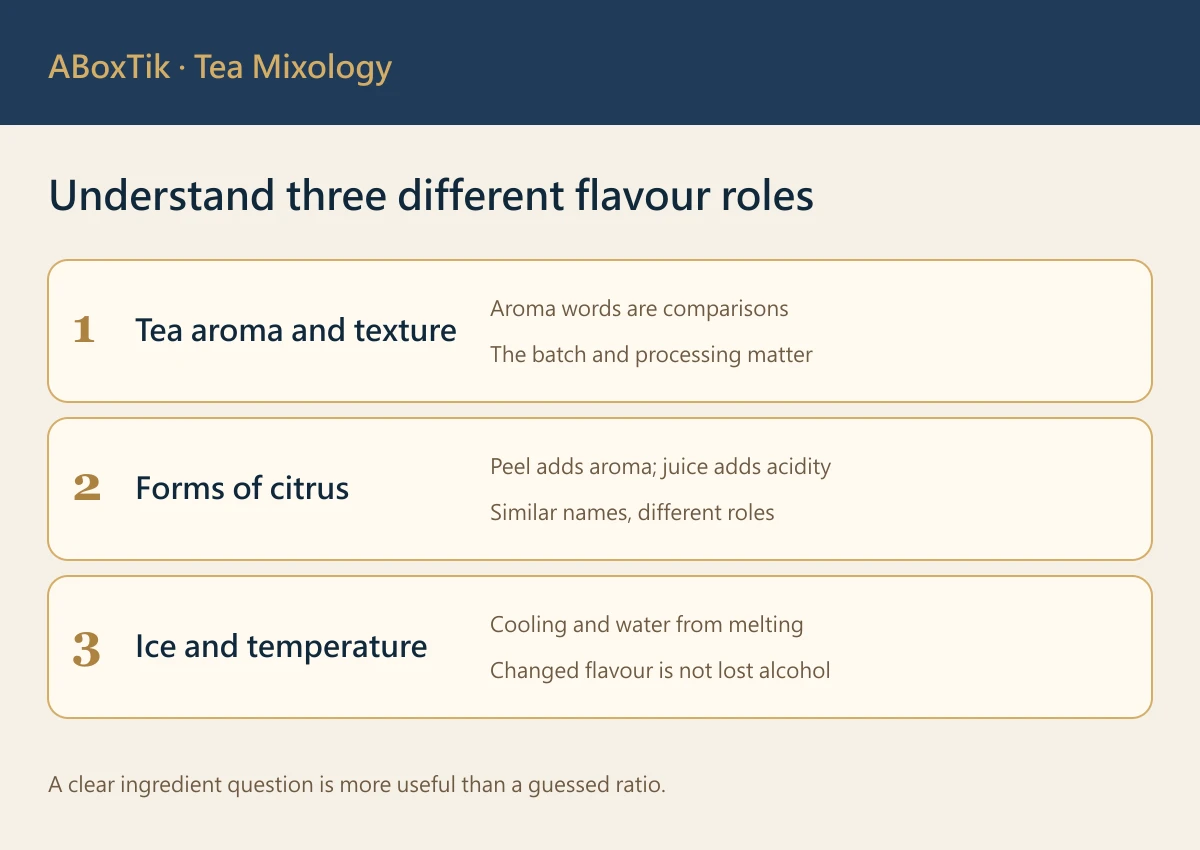
Four ingredient roles, without a formula
| Role | What to notice | A useful question |
|---|---|---|
| Red Jade tea | Aroma, strength and texture | What does the plain tea contribute? |
| Whisky | Flavour, strength and stated alcohol content | Is the alcoholic content clear? |
| Citrus and sweetness | Aroma, acidity and sweet taste | Peel, juice or syrup? |
| Ice and water | Temperature and changing dilution | Has the drink been standing? |
Two drinks described as Red Jade and whisky can differ because the tea, whisky, other ingredients and preparation are different. A menu’s aroma words are a conversation starter, not a guaranteed experience for every drinker. If you want the tea to remain noticeable, ask which ingredient leads the overall flavour rather than assuming a particular name promises a particular balance.
Sweetness, aroma and alcohol content answer different questions. A drink without an obvious alcohol flavour is not necessarily alcohol-free, and greater sweetness does not mean less alcohol. Understanding what is being offered matters more than guessing the formula. Someone interested in tea and citrus can choose a separately prepared drink without alcoholic beverages or alcoholic flavourings.
What do peel, juice and sweetness contribute?
Citrus peel primarily changes the aromatic direction; juice also changes acidity and total liquid volume. They are not interchangeable additions. When a description says “citrus”, look for information about its form. Aroma, acidity and sweetness can be described separately instead of being compressed into one general flavour label.
Sweetness is another piece of information and may come from syrup or other ingredients. A sweeter drink does not contain less alcohol simply because it tastes sweeter, and a mild alcohol impression does not make it alcohol-free. If avoiding alcohol is the priority, confirm the full contents and choose plain tea or a separately prepared alcohol-free drink.
Red Jade’s mint-like or cinnamon-like notes are aroma comparisons, not requirements for every cup or instructions to add spices. The aroma notebook helps organise impressions, while the light and roasted tea guide provides context for different styles. Clear categories keep one cup from being asked to perform the whole aroma dictionary.
Ice, temperature and dilution change the impression
Ice changes temperature and adds water as it melts. Cube size, starting temperatures, the vessel and waiting time all affect the impression. A drink may taste different shortly after it arrives and later on without containing a different tea. Noticing temperature and time is a useful way to interpret that change before attaching an elaborate explanation.
A lighter taste, a colder drink or less obvious alcohol flavour does not show that alcohol has disappeared. Pairing knowledge helps describe flavour; the actual ingredients and alcohol information answer a separate question. A softer impression is not a reason to drink more. Anyone driving should choose plain tea or a separately prepared alcohol-free option.
| Description | Read it as | Avoid assuming |
|---|---|---|
| Refreshing | A flavour or texture description | Not proof of no alcohol |
| Rich | An impression of aroma or taste | Not a universal quality rank |
| Citrus-like | A possible aromatic direction | Not necessarily fruit juice |
| Over ice | Temperature and dilution change | Not removal of alcohol |
The same habit is useful when exploring whole-leaf tea-bag formats. Ask what is actually present rather than making one appealing adjective do all the explaining. Clear language can make a choice comfortable without requiring a specialist vocabulary.
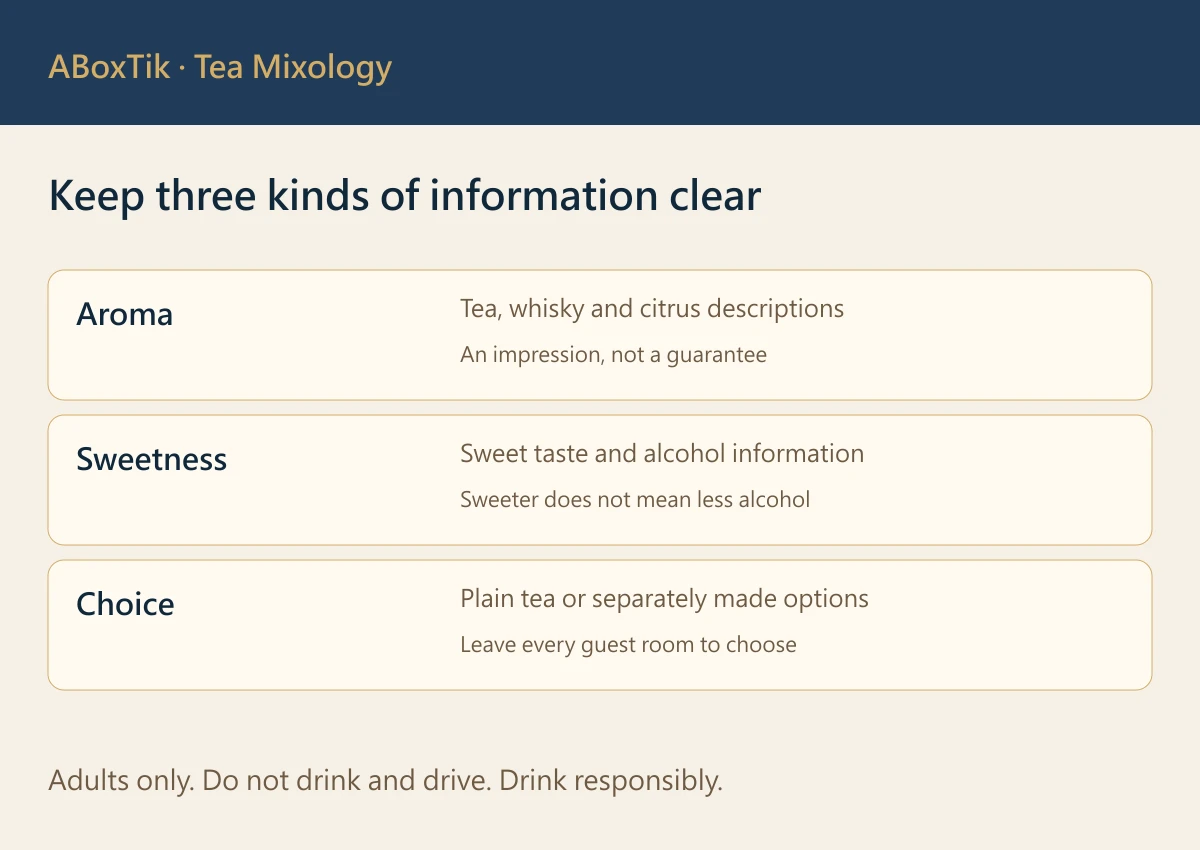
An alcohol-free tea direction has its own place
An alcohol-free Red Jade and citrus drink can focus on tea aroma, citrus, sweetness or acidity and serving temperature, with alcoholic beverages and alcoholic flavourings omitted entirely. It is a different tea-drink direction, rather than a promise to reproduce every part of whisky’s flavour. There is no need to introduce it as an incomplete version of another drink.
Use separate clean equipment for someone avoiding alcohol. Do not include an alcoholic flavouring, or add a splash of whisky for aroma and still call the result alcohol-free. Asking “plain tea or citrus tea?” is a kinder approach than guessing someone’s drinking habits. Their preference does not need an explanation attached.
A two-tea bag set or multi-tea gift box can support a separate plain-tea selection, based on its actual contents. Do not describe every tea in a gift assortment as Red Jade. The Tea Mixology journal offers further ideas, while an unchanged cup of tea remains a complete choice.
Useful questions for a menu or a shared table
Ask about the tea, whisky, citrus form, additional flavourings and available plain-tea or alcohol-free choices. If a guest avoids an ingredient, clarify the actual contents rather than inferring them from a name or photograph. A clear explanation is often more helpful than a quick recital of specialist terms, particularly for someone meeting Red Jade for the first time.
If the next step is designing an actual recipe, make a separate small trial using the intended tea, equipment and ingredients, then record measurements and observations. Pairing concepts do not verify a serving formula. When hosting, identify alcoholic and alcohol-free options clearly, provide water and respect each guest’s choice. Avoid drinking games, pressure or linking alcohol with confidence, work performance or social success.
Do not drink and drive. Excessive drinking is harmful to health. People under 18 must not drink alcohol. Tea, syrup and melting ice do not remove alcohol already added to a drink. Anyone who will drive should choose plain tea or a separately prepared alcohol-free option, with the journey home decided before pouring begins.
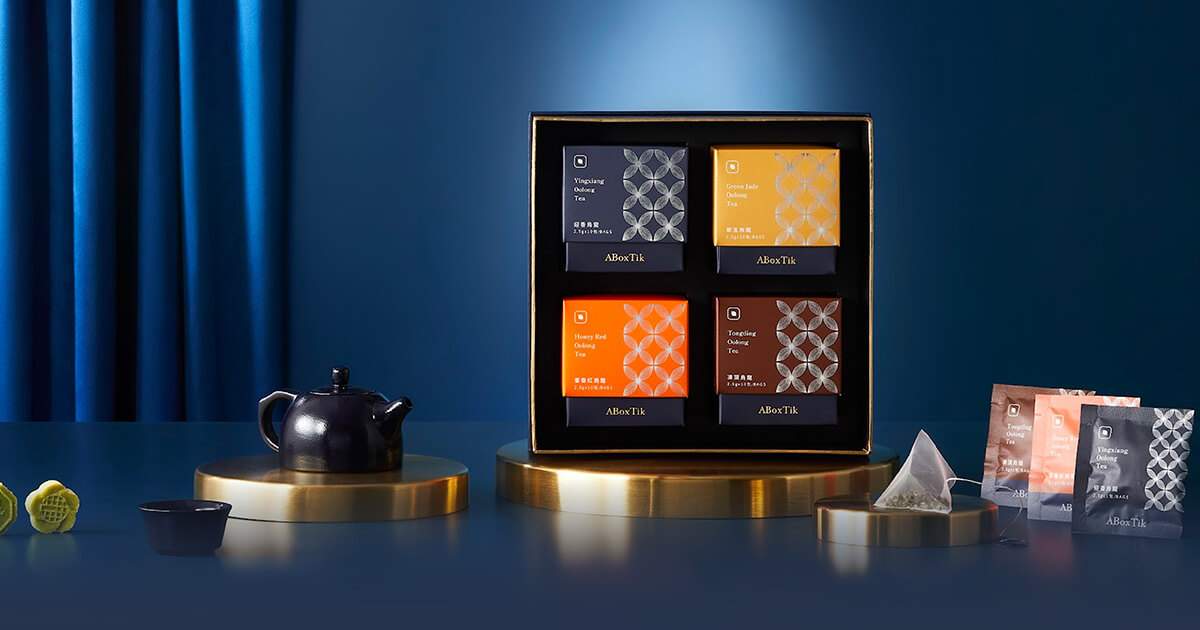
Follow ABoxTik: leave every guest room to choose a cup.
Keep the tea on the table and the choice with each guest
Explore Taiwanese tea and the relationship between ingredients and descriptive words. For Red Jade, the plain infusion is a good starting point for learning. Curiosity about tea, citrus and ice can remain a conversation about flavour before it becomes a recipe project.
A thoughtful table does not require everyone to drink the same thing. Plain tea and alcohol-free citrus tea belong beside each other without fuss. Hospitality begins with respecting a simple “this is what I would like today.”
Related reading
- Get to know TTES No. 18 Red Jade
- Explore a tea drink for the occasion
- Prepare tea bags for sharing plain tea
Sources
- Taiwan Tea and Beverage Research Station: Black Tea
- Taiwan National Treasury Administration: Tobacco and Alcohol FAQs
Sources checked 18 October 2026.