
Tea Knowledge
Tea Bag Giveaways: A Thoughtful Exhibition Gift Guide
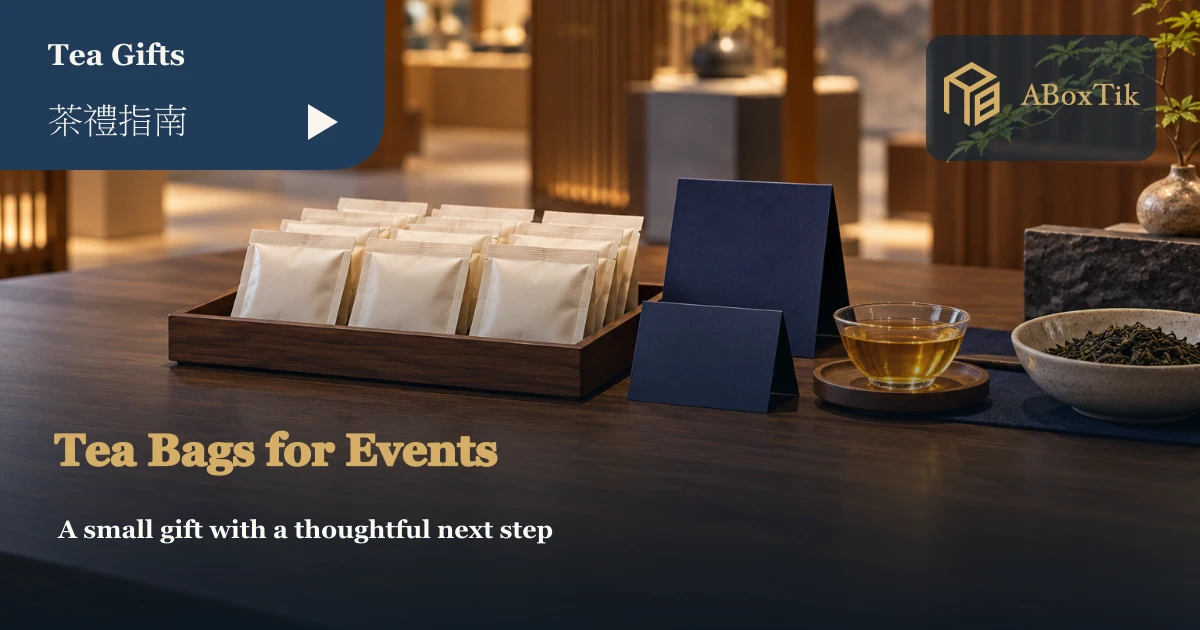
A small tea gift can leave one clear invitation behind: easy to carry, easy to understand and ready for a cup after the event.
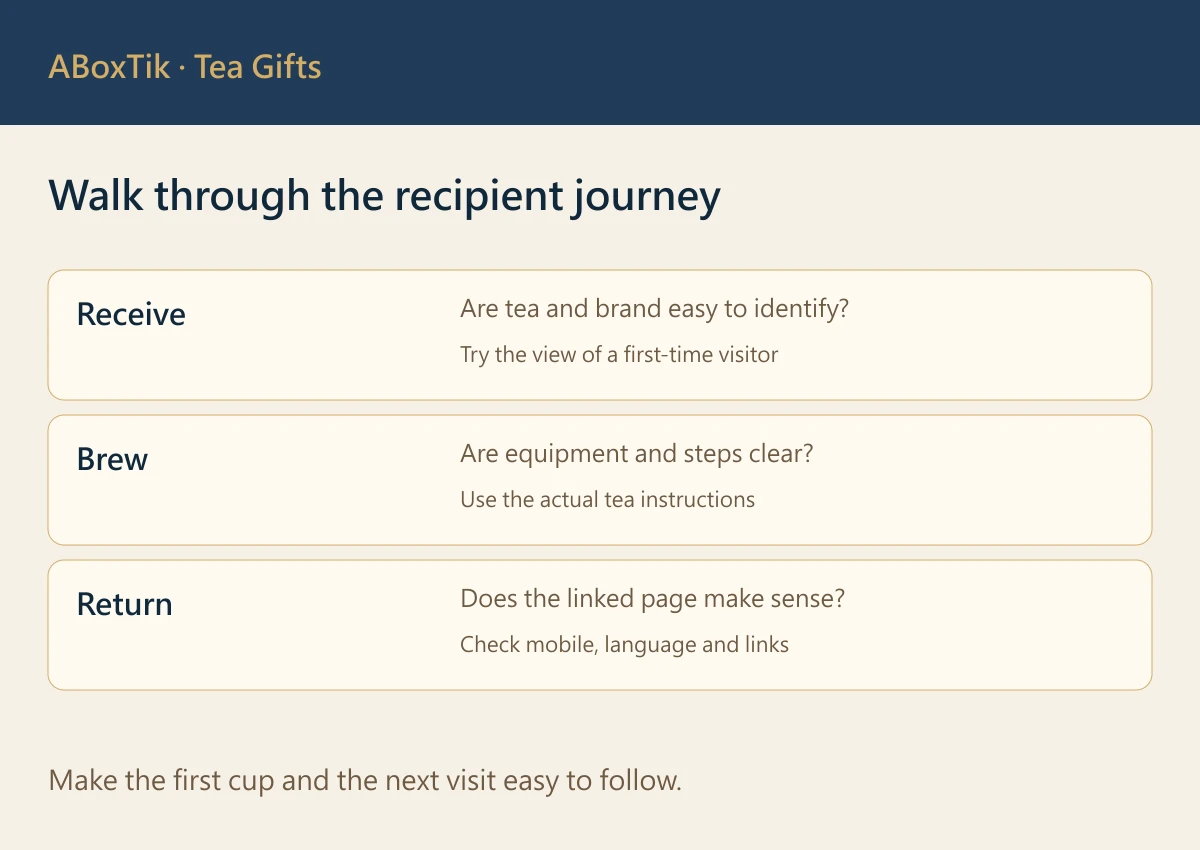
Tea bag giveaways can work well at exhibitions when the recipient can carry them comfortably, identify the tea and brew it with familiar equipment. Design the experience from the moment of handover to the next cup, rather than treating the sachet as a miniature catalogue. A clear brewing note and one useful return link often give the small format a more focused job.
Begin with the event moment: an entrance welcome, a thank-you after a conversation or a gift on departure. Each needs a different handover. Planning that moment first helps the tea do something useful after it has completed its brief journey to the bottom of a visitor’s bag.
Tea bag giveaways: choose the handover moment
At an entrance, the message needs to be understood quickly. After a conversation, it can connect with something just discussed. At departure, it should still make sense when opened later at home or at work. These are different situations; using the same long speech for all three can slow a busy stand.
Sketch the route visitors take and note what they already carry. Decide who hands over the tea, where spare stock sits and how the tray will be replenished. A bulky packet that needs two hands or a lengthy explanation may be awkward precisely when the queue is longest.
Count entrance distribution and conversation gifts separately. The gift quantity planning guide provides useful background, while this article concentrates on the smaller event interaction. The mixed tea-bag guide helps compare formats without assuming every visitor needs a full gift box.
Give a small card a clear information hierarchy
Prioritise the tea name, a readable brewing instruction, the brand and one useful place to return. Keep the tea’s original packaging and product information intact. An added card can organise the experience without covering instructions or opening sealed portions simply to make them look more decorative.
A brief flavour direction may help someone choose when to brew it. The light and roasted tea guide supplies ordinary descriptive language, and tea categories can support a clear introduction. Avoid claiming that every guest will like the tea or that a giveaway guarantees a business outcome.
Print size and contrast deserve a physical check. View a sample at arm’s length and under lighting similar to the venue. If the message needs a magnifier, the card has become ambitious in the wrong direction. Remove secondary copy before shrinking the one instruction people actually need.
Make the first cup possible with ordinary equipment
A visitor may have only a mug and hot water. Choose a format that fits that situation and use the actual tea’s portion, water and time instructions. The brewing guide can help prepare the copy, while whole-leaf tea bags explain one accessible format. Do not assume everyone owns scales, a thermometer and a dedicated pot.
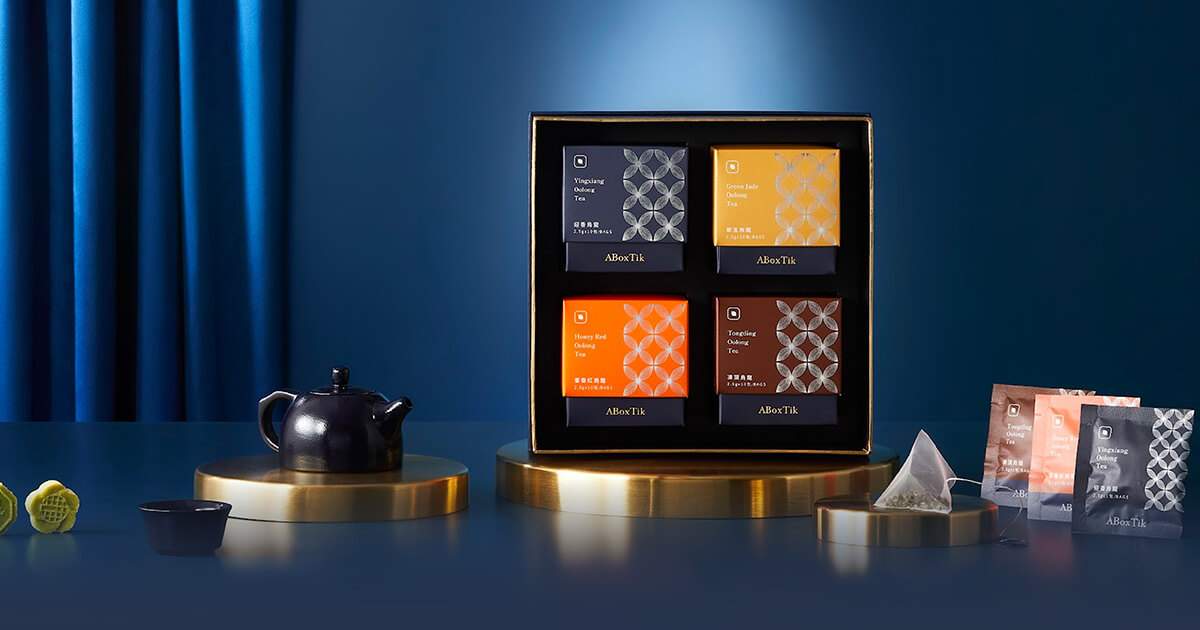
Inspect the two-tea bag set or multi-tea gift box for the current contents and packaging format. These are references for choosing suitable tea, not a promise of custom single-sachet event production. Ask about the specific project before printing quantities or a delivery date.
If serving a tasting at the stand, distinguish it from the take-home preparation. A large iced batch or a drink with added ingredients may taste different from one tea bag in a mug. Explain the home method clearly rather than allowing the sample to imply an identical result under entirely different conditions.
Give the return link one useful job
A QR code might lead to brewing instructions, a tea introduction or a brand story. Pick the main task before designing the card. A destination asking for a purchase, a form, a follow and a video all at once can make a modest invitation feel surprisingly demanding.
Check the destination on a phone, including the page language, readable text and working links. Scan the printed sample with more than one device and in realistic lighting. Test the finished size, rather than assuming a large code on a monitor proves the small printed version will work.
Provide a short readable address where space permits. A visitor who does not scan codes still has a route back. The Taiwanese tea story is an example of informative reading, while a product-specific brewing page may be more useful when the card promises preparation help. Let the destination match the invitation.
Count stock for each real use
Separate take-home distribution, tasting preparation, staff use, display pieces and a small project-specific reserve. For example, 240 intended take-home portions plus 20 reserved portions would require 260 intact portions for that purpose. Add any tasting allocation separately. These are planning inputs, not an attendance forecast or a required spare-stock percentage.
Compare the requirement with the supplier’s confirmed units per package. If a box contains a stated number of tea bags, calculate how many unopened units the project actually needs, including any package-size rounding. Do not count a box used for display or a staff tasting twice.
| Stock field | Question to answer | Keep separate |
|---|---|---|
| Take-home gifts | How many planned handovers? | Entrance and conversations |
| Tasting | How much for actual serving? | Different brewing setup |
| Reserve | What uncertainty is realistic? | A project choice, not a rule |
| Delivery | What arrives and when? | Confirmed units and condition |
When lead time or supply changes, simplify the format or revise distribution rather than quietly substituting something the card no longer describes. Consistency between the actual tea and the printed information matters more than preserving an elaborate plan.
Protect the tea before and during the event
The Tea and Beverage Research Station explains that tea readily absorbs moisture and odours and is sensitive to storage conditions. Keep sealed stock in a suitable dry place, away from heat and strongly scented materials, and follow the actual package instructions. The tea storage guide offers further context for the event team.
Check delivered quantities, package condition and dates before the venue becomes busy. Keep reserve stock organised so staff replenish from a known location rather than discovering an open carton behind cleaning supplies. If a package is damaged or its condition is uncertain, set it aside for checking instead of placing it on the giveaway tray.
After the event, record how many portions were distributed, left over or used for tasting. Website visits and enquiries can offer additional observations, but avoid treating one metric as proof of brand memory or sales caused by the tea. A later enquiry can be useful information without becoming a conversion claim.
Walk through the experience as a first-time guest
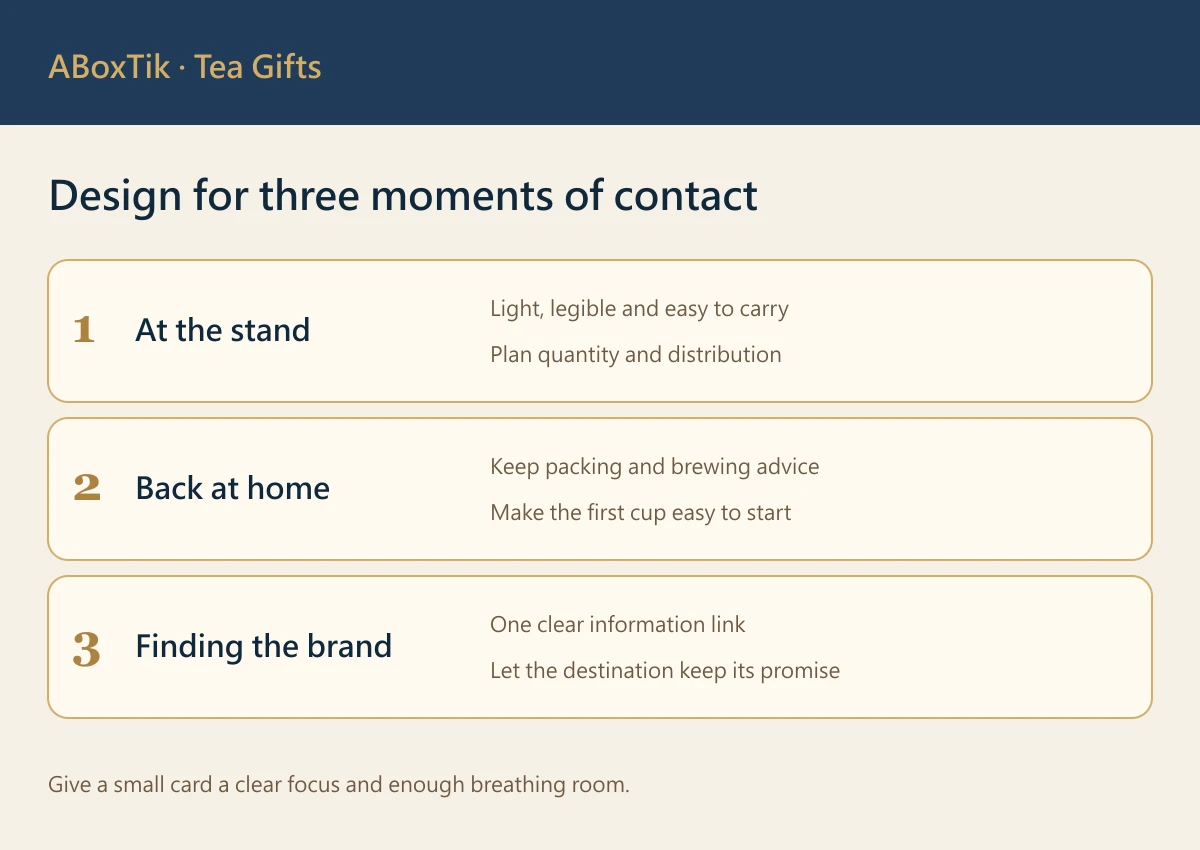
Before ordering the full project, have someone unfamiliar with the plan read a sample. Can they identify the tea, find the brewing instruction and reach the promised page? Watch where they hesitate and simplify that point. This checks a real sequence rather than asking whether the design looks attractive in isolation.
Prepare a short staff handover sentence and an equally simple answer about brewing. If a visitor declines, let the interaction remain easy. A giveaway does not need to become an obligation to buy, leave personal details or listen to a longer presentation.
The final check is practical: a smooth handover, intact packaging, legible instructions and a destination that works on a phone. Those details give the small gift a clear purpose. The rest of the brand conversation can continue when the recipient is ready for it.
Follow ABoxTik: make a small invitation easy to take home.
Let the tea carry one clear next step
A small tea gift does not have to close the whole conversation at the stand. Give it clear information, a manageable format and a useful brewing route, then leave the recipient room to enjoy it later.
Explore tea formats for sharing and confirm the actual project details before committing to an event quantity. ABoxTik invites thoughtful preparation for the cup after the exhibition, when the visitor finally has both hands free.
Related reading
Sources
Sources checked 18 October 2026.