
Tea Knowledge
Hotel Welcome Tea: Flavor, Service Flow and Taiwan Stories
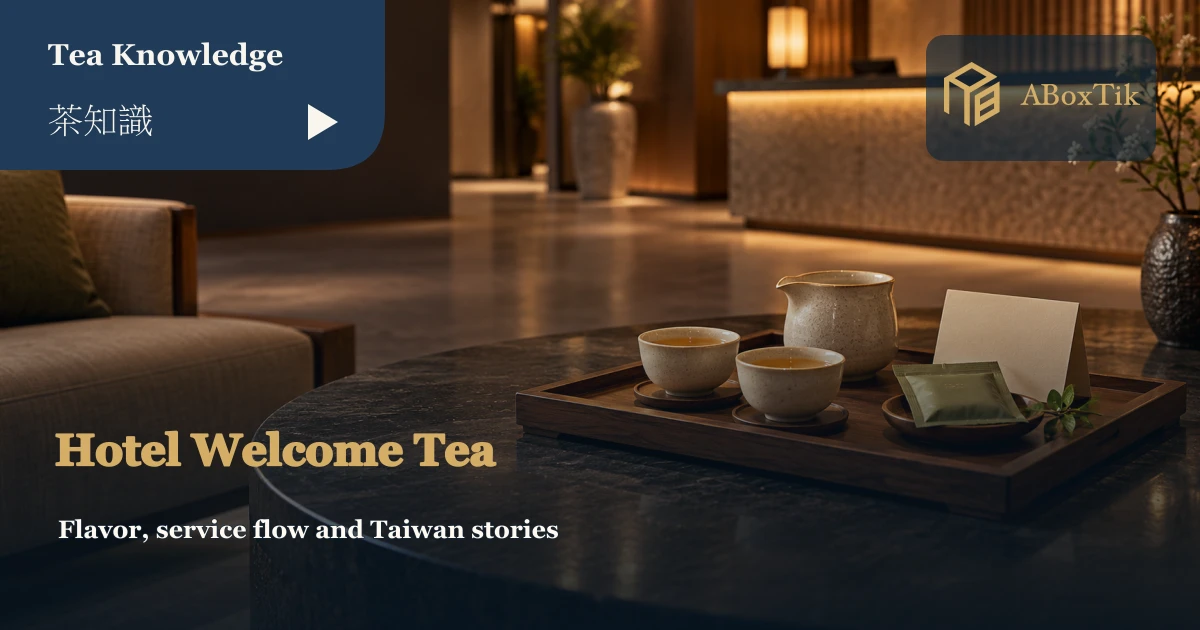
Welcome tea is a service pause, not a memorized story.
Choose hotel welcome tea from the service floor outward: who brews it, when it is offered, how many cups may be needed, and whether guests who do not want tea have an equally easy option. Tea and Taiwan stories matter most when they fit a dependable service rhythm.
Plan capacity, movement and alternatives first, then let tea accompany the arrival. Use the service sheet as a proposed rehearsal tool for the team to test and adjust.
Map the first minute of arrival
Where will welcome tea happen: beside reception, in a lounge, in-room or at a scheduled event? Will guests serve themselves, be offered a cup, or simply be given a choice? Location changes cups, movement and how long brewed tea waits.
Note peak periods, available staff and washing or return flow before choosing the tea. These details protect the calm of the welcome rather than reducing it.
Choose tea by service capacity
Compare aromatic direction, liquor shape and repeatability under the proposed brewing method. Light oolong, roasted oolong and black tea can each create different impressions, but none should be presented as universally right for every guest.
Tea categories, light and roasted tea and Taiwanese tea styles provide language for the choice. The venue still needs to test its own equipment, water, batches and staffing.
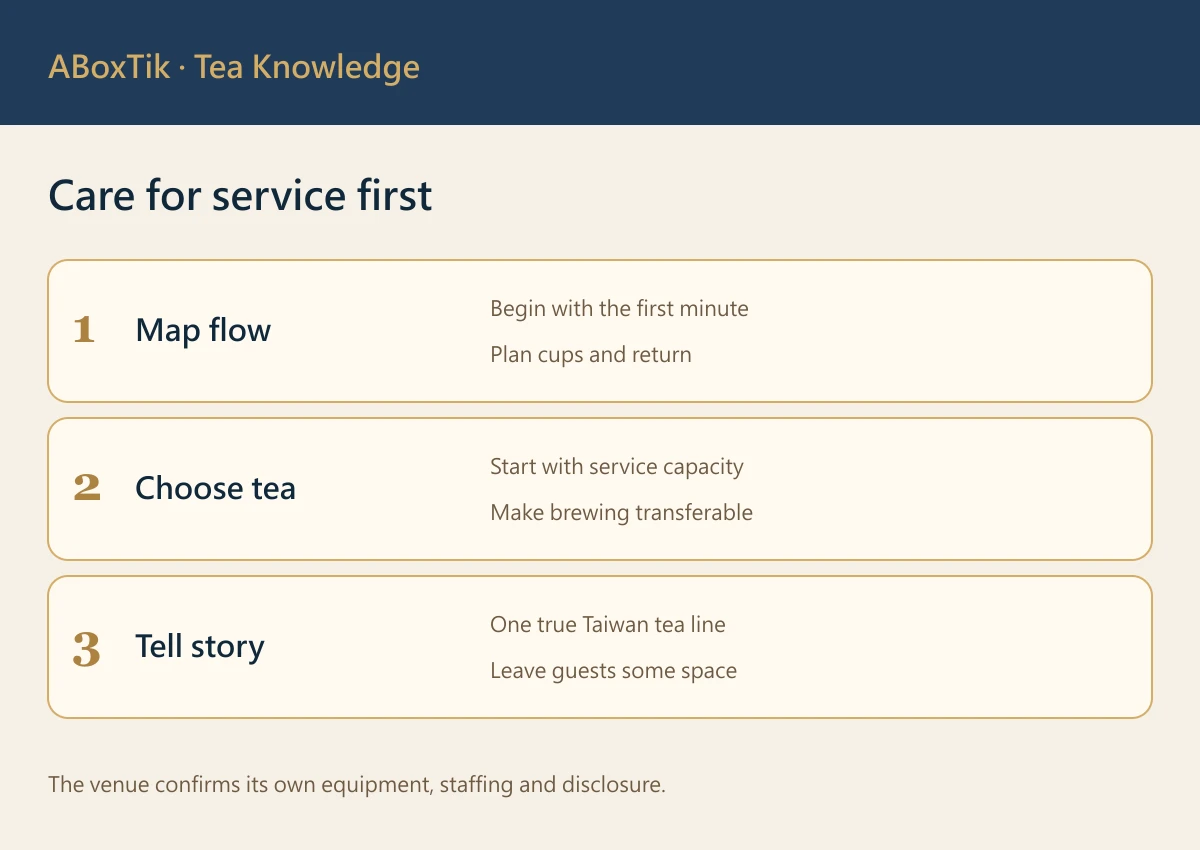
Make brewing steps transferable
A workable welcome-tea plan says where tea is stored, when brewing begins, who refreshes the batch and how equipment is cleaned and replenished. Transferable steps help different shifts offer a similarly considered cup.
For lower-friction service, consider the use case for whole-leaf tea bags. For loose leaf, steeping time and Serving and brewing flow can create a steadier pouring rhythm.
Keep water and non-tea choices visible
Welcome tea should not make every guest choose the same thing. Put water and non-tea choices in an equally clear place so guests can join the welcome in their own way. Ingredient disclosure and service details remain the venue’s responsibility.
A small card can name the tea and tell one checkable part of its Taiwan story. Avoid adding unconfirmed awards, certifications or partnerships; a plain true line is usually remembered longer.
Tell a Taiwan story that can be explained
Tea hospitality has a cultural context in Taiwan, including traditions of offering tea. In a hotel, keep the story close to what staff can explain: origin, process, aromatic direction and the cup in front of the guest.
Why Taiwanese tea is special, Taiwan tea regions and tea aroma observation can support concise staff language. Leave some silence; it is part of hospitality too.
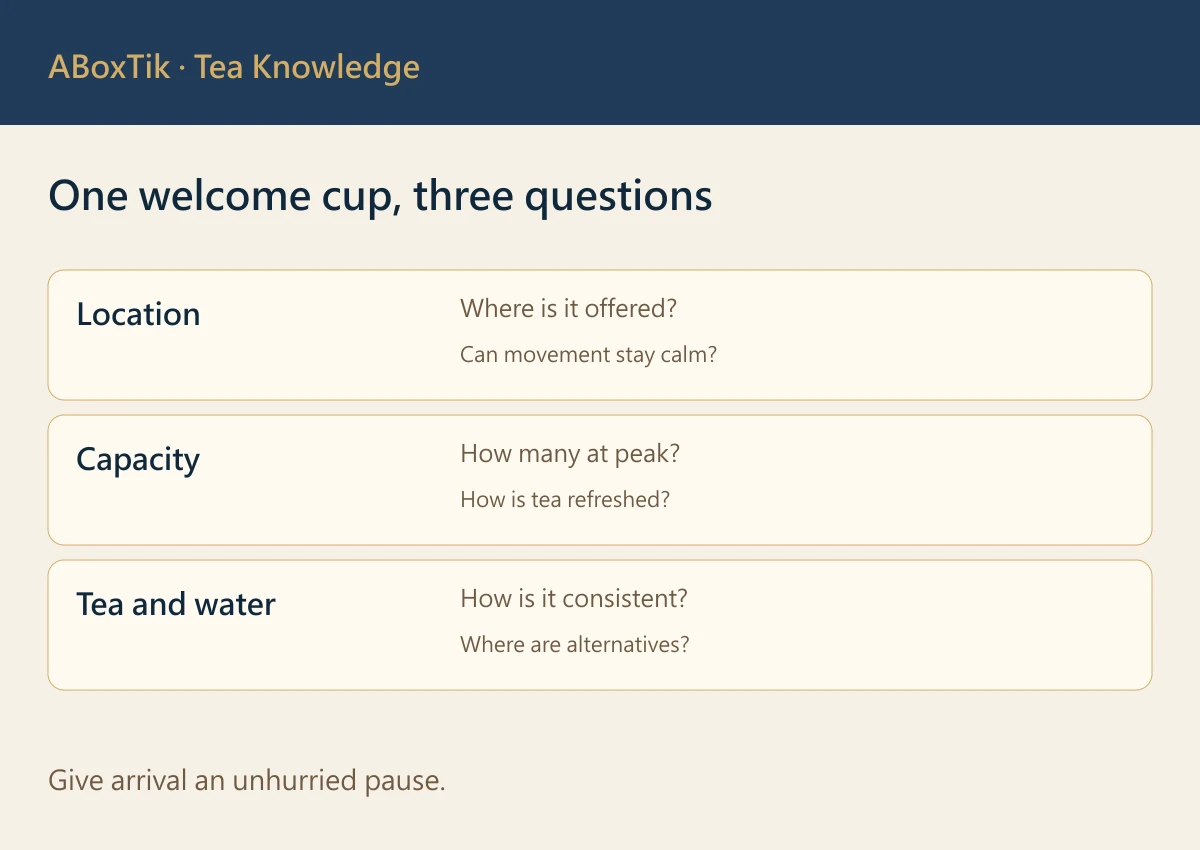
A welcome-tea service checklist
| Confirm | On-site question | Working standard |
|---|---|---|
| Location | Where and when? | Movement and return |
| Capacity | How many cups at peak? | Staffing and refresh rhythm |
| Tea and water | How is it made consistently? | Tea, water and alternatives |
| Story | What can staff explain? | One accurate line |
Run a small internal trial, then adjust from what the venue observes. Tea hospitality and Brewing and leaf-water separation add related perspectives.
Create a pause that can be cared for
Good welcome tea need not be elaborate. It gives a newly arrived guest a choice to slow down and gives staff a sequence they can carry with ease. Care for capacity, alternatives and handover first; tea detail can then be heard.
For the next trial, change one thing only: tea, service location or the length of the card. It is more useful than turning the lobby into a tea debate.
Rehearse a quiet arrival and a busy arrival
Run the proposed service twice in an internal rehearsal: once as a single arrival and once as several arrivals together. Use the actual tray, cups, brewing equipment and handover point. Note where staff stop to find an item and where a guest would need to put down luggage. These observations can reveal more than choosing a tea from a list of attractive names.
Keep the rehearsal record simple: who offers the drink, who prepares it, where the cup is placed and who returns the used items. If the same person is handling check-in, give the tea step an easy pause point. The welcome should remain optional when attention is needed elsewhere. A calm offer of water can be the right service choice during a busy moment.
Ask staff to explain the tea in one sentence, then invite a second question only if the guest is interested. “This is Taiwanese oolong with a floral direction” is useful when it matches the actual tea. A colleague who is uncertain should be able to consult the product information rather than invent a region or a story. The reception desk does not need to become a quiz show.
After the rehearsal, change one practical detail and repeat the relevant step. Move the return tray, shorten the card or adjust who prepares the tea. Record what became easier. This is a proposed planning method for the venue to test, not a report of service outcomes from a named hotel.
Write a short handover card for the next shift
A handover card can name the tea, its source of product information, the current package-based brewing method and the location of equipment. Add who checks the next batch and how the venue records replenishment. Keep local hygiene, ingredient and operating procedures with the venue’s established instructions so the tea card does not become a competing manual.
For batch service, identify each prepared batch in the venue’s own system and record the action actually taken. For individual service, say when the bag or leaves are removed and where used items go. The right method depends on the equipment and staffing. The card should make the chosen method understandable, not claim that one method suits every lobby.
Include a neutral offer for guests who decline tea: water or the available alternative should be equally easy to request. Do not make a guest explain a personal reason for saying no. If a guest asks about ingredients, staff should have the actual product information available and refer unresolved questions to the responsible colleague.
End the card with one accurate line about the tea and one source staff can consult. Origin, processing direction and an everyday aroma description are usually enough for an opening. Extra cultural context can follow when a guest wants a longer conversation. Hospitality often feels most attentive when the information arrives at the guest’s pace.
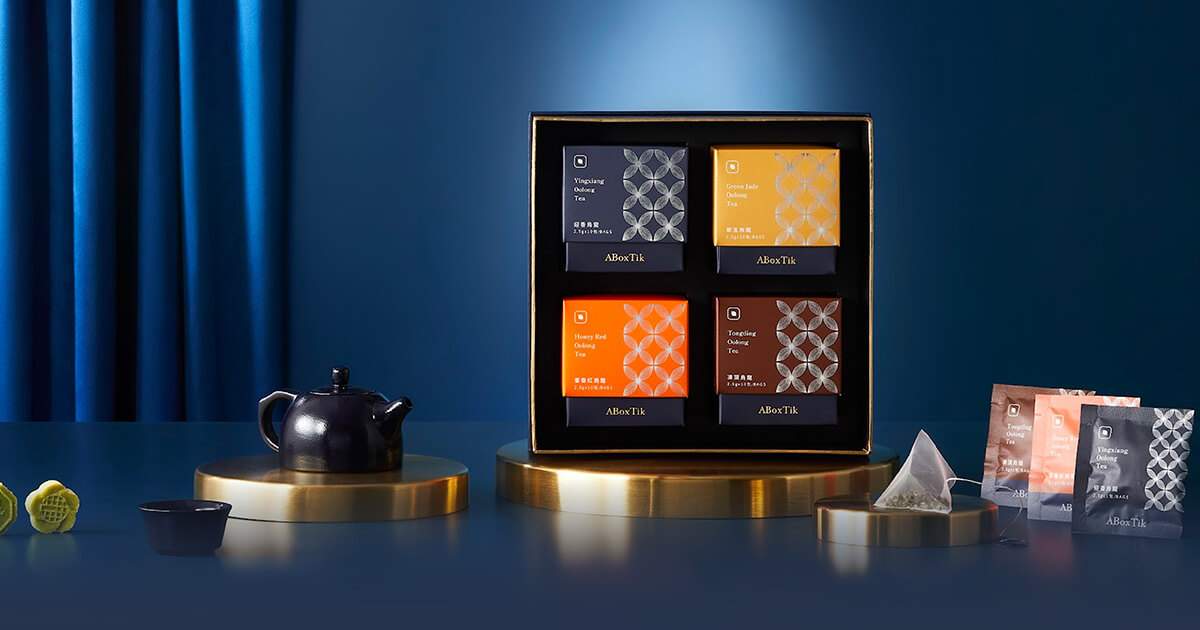
One cup of tea, one gentler arrival
Let story and service arrive together
At ABoxTik, we think welcome tea feels most considered when its details can be cared for consistently. Begin with the first minute of service, then let Taiwanese tea accompany arrival quietly.
Continue with tea hospitality and Taiwan tea stories.
Related reading
Sources
- Taiwan Cultural Memory Bank: Offering tea by the roadside
- National Chengchi University: Tea hospitality teaching material
Sources checked 19 October 2026.