
Tea Knowledge
Taiwan Tea Gifts for International Conferences
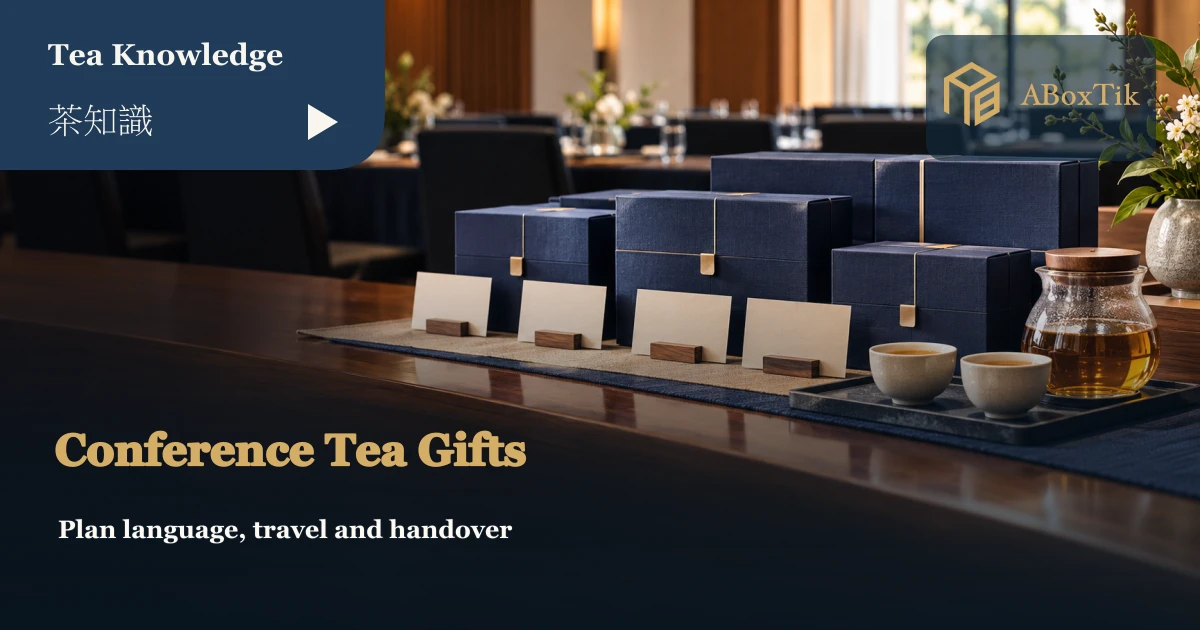
A gift crosses languages more easily when its name, preparation and carrying arrangements are clear.
For international conference tea gifts, confirm who can accept them, the languages actually used, carrying needs and distribution before choosing packaging. Product name, ingredients, origin, portion, storage and simple preparation should be easier to find than the brand story. A first-time recipient needs an understandable route to the first cup.
This guide concerns a complete gift and its multilingual handover. tea gift quantity and handover planning deals with a smaller on-site distribution setting. Here the aim is a gift that can be used after the meeting, without requiring a personal translator to travel inside the box.
Define recipients and the collection setting
Confirm the organiser, recipient groups and actual eligible numbers. Ask whether participating organisations and the event have gift policies, and identify who can handle a declined gift. Neither the tea’s price nor the size of the packaging answers that question on another organisation’s behalf.
Ask about language directly. Conference working language, preferred reading language and the availability of on-site assistance are separate matters. Nationality alone does not establish a tea preference or a language someone will comfortably read.
preparing tea gifts across cultures supports policy questions; tea gift quantity and handover planning follows once eligibility and the list are clear. Define the recipient before counting boxes.
Put useful product information before the story
Make the actual product name, contents and ingredients easy to locate. Follow with leaf format, portion and compatible water volume, then brewing, leaf removal and storage. Match the fields across languages: a loose-leaf item in Chinese must not become a tea bag in English.
The conference working language and Traditional Chinese can sit together, with other languages provided according to need. Taiwanese tea in English, tea categories and regional information help separate cultivar, category and place. An introductory card should support rather than replace original product labelling.
A QR code can open a fuller story, but keep essential use instructions on paper. Test the link on ordinary phones, check the destination language and ensure the product matches. Provide a readable contact route for the moment when someone would rather ask a simple question than scan again.
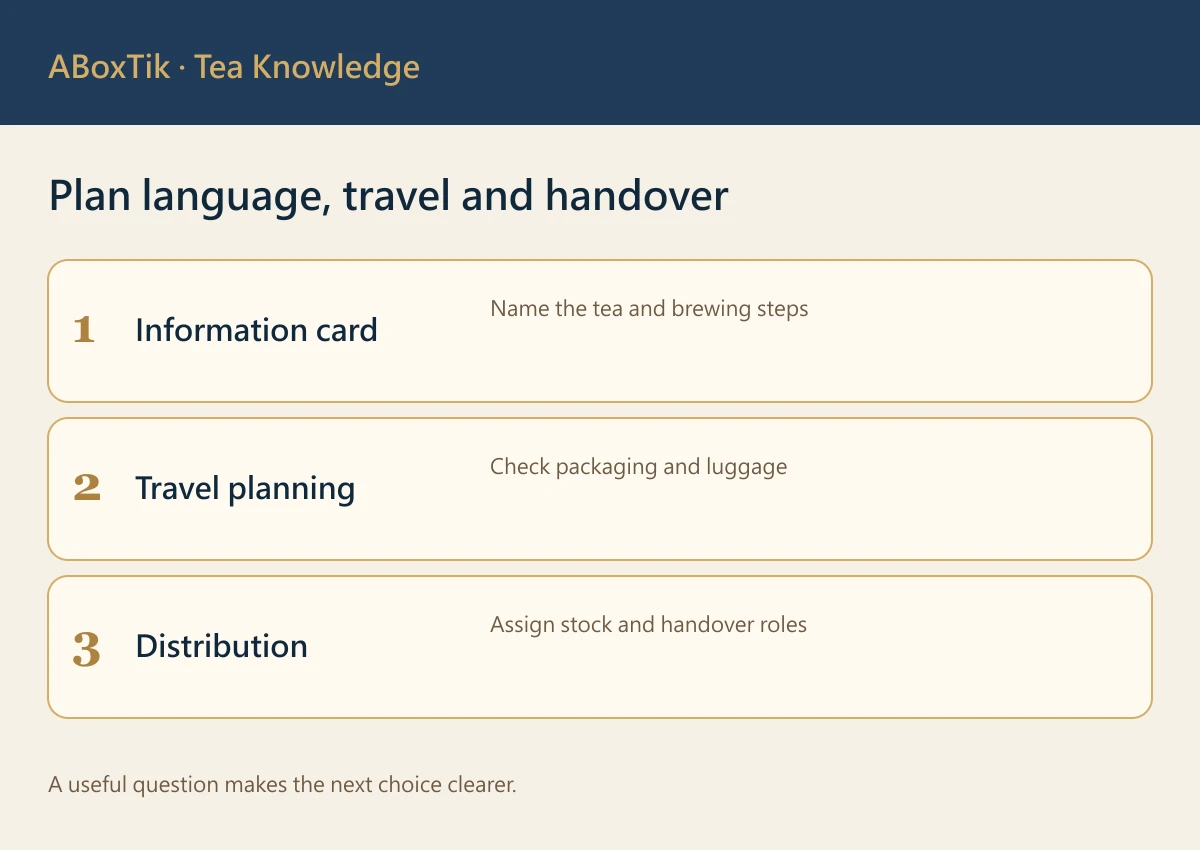
Choose bags, loose leaf or a combination for first use
When the recipient’s equipment is unknown, individually wrapped tea bags are worth comparing. Loose leaf may suit someone with an established pot-brewing routine. Whole-leaf tea bags offer a handling format, rather than a compulsory answer for every guest.
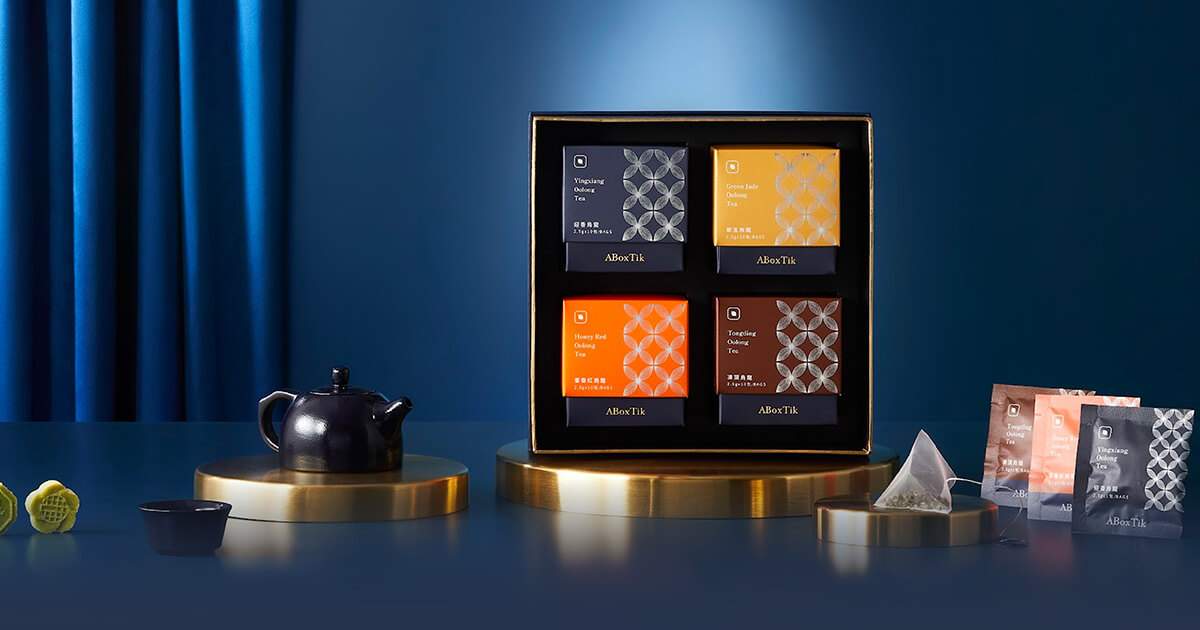
Compare actual contents in the two-box tea bag gift, the four-box tea selection and the mixed tea bag set. If different botanical ingredients are included, identify each item rather than describing every inner pack with one paragraph about tea leaves.
Introduce fresh floral or warm roasted directions alongside the actual tea names. Do not assign a single palate to all participants. Tea style comparisons and the tea gift box guide can help the organiser review a sample before committing to a format.
Separate carrying and shipping checks
Review dimensions, weight, handles, inner seals and transport protection. Ask whether recipients will fly or transfer. Destinations, itineraries and ingredients may differ within the same conference, so one event cannot provide one universal promise about carrying tea across borders.
For cross-border carrying or shipment, organisers and recipients should check the official requirements for the actual destination before deciding on handover, delivery or an alternative. preparing tea gifts across cultures helps organise contacts. This article does not supply fixed entry allowances or make a customs decision for the traveller.
Keep on-site collection, long-distance delivery and later shipment on distinct lists. That avoids sending a second box to someone who collected theirs while overlooking a person waiting for delivery. The greeting can be consistent without forcing every box along the same logistical route.
Give the distribution team one clear sentence
Choose a defined collection point—registration, after the meeting or a dedicated desk—and keep it outside active meeting traffic. The responsible person needs the contents, eligible list, remaining quantity, alternatives and question contact. Guesswork should not become a temporary registration role.
A short introduction is enough: “Taiwanese tea, with ingredients and preparation inside; please let us know if carrying it is inconvenient.” Do not require opening, tasting or photographs. Someone declining should not need to explain private reasons in a queue.
tea gift quantity and handover planning provides another practical setting. If there is a tasting area too, distinguish the tea being served from the complete gifts being collected, with separate stock and cleaning responsibilities.
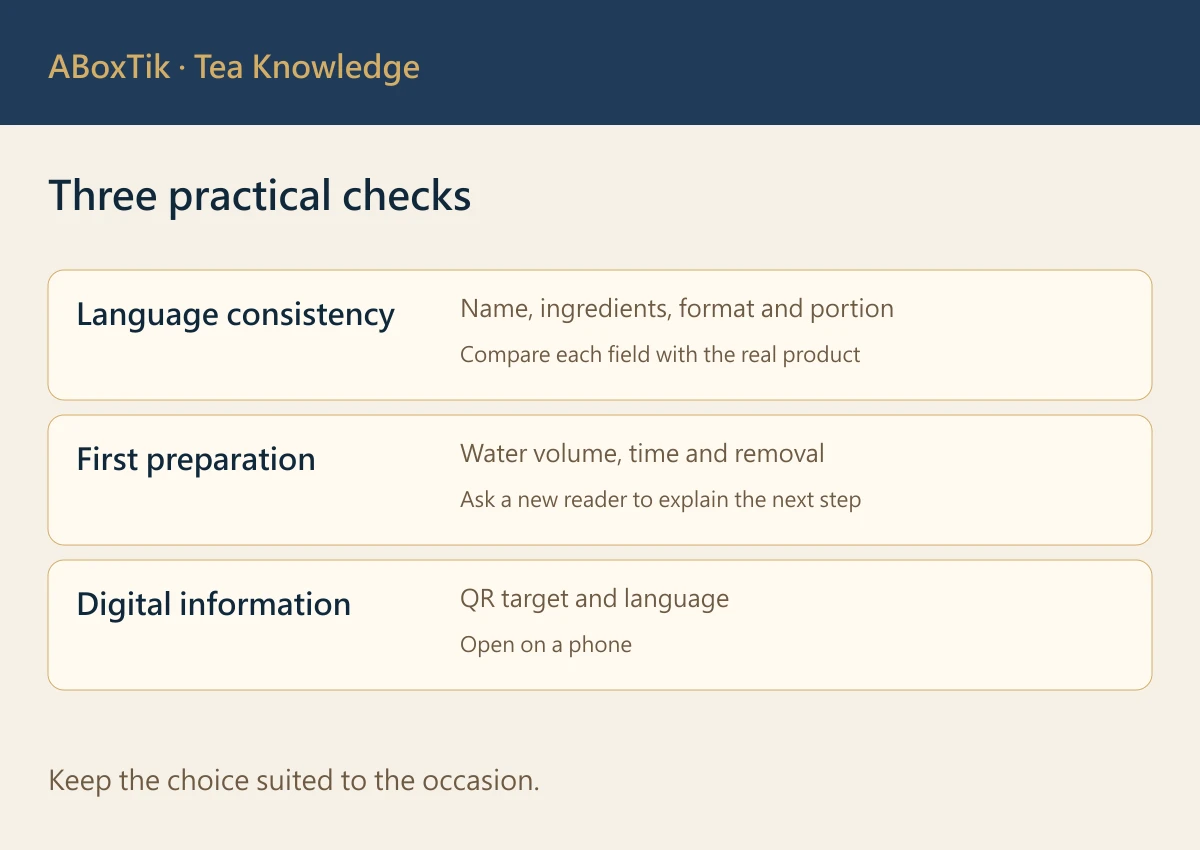
Test the sample with someone outside the design team
| Check | Read for | Verify |
|---|---|---|
| Language consistency | Name, ingredients, format and portion | Compare each field with the real product |
| First preparation | Water volume, time and removal | Ask a new reader to explain the next step |
| Digital information | QR target and language | Open on a phone |
| Collection | Package, carrier and handover | Walk through the distribution route |
| Storage | Seals and readable directions | Inspect the inner pack |
Invite someone who did not design the card to answer one question after reading: “What would you do first at home?” If the answer needs another explanation, improve the card rather than blaming the reader. Clear instructions are part of the welcome.
Keep the final approved text, actual item list and dispatch record afterwards. For questions, pair the product’s own guidance with basic brewing and pouring steps or tea storage. This keeps follow-up information consistent across languages instead of gradually inventing three different products.
Tea, one box at a time
Help the first Taiwanese cup happen after the conference
At ABoxTik, a multilingual gift should carry an understandable next step as well as a thoughtful introduction. Check the real item, its words and its handover together so the invitation remains useful in another city.
Prepare languages, recipient numbers, destination and timing, then compare tea gift formats and ask the ABoxTik contact team about practical options. Clear details are a form of hospitality too.
Related reading
Sources
- Tea and Beverage Research Station: tea packaging and storage
- National Cultural Memory Bank: roadside tea provision
Sources checked 20 October 2026.