
Tea Knowledge
Does Tea Re-steep Well? Quality, Leaves and Brewing
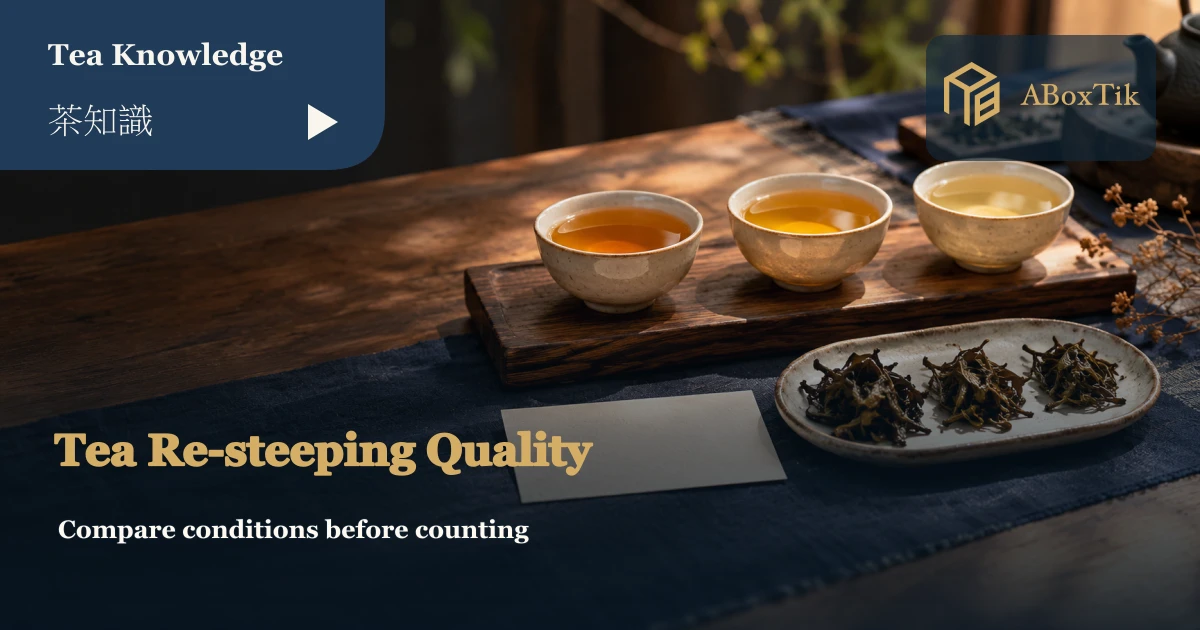
Keep the infusion count in the notebook and the pleasure in the cup. Tea need not work overtime to prove itself.
Re-steeping endurance does not establish tea quality by itself. Leaf format, processing and the release of soluble material matter alongside leaf amount, water volume, temperature and time. For buying, consider aroma, flavour, provenance and the brewing routine that actually fits the day.
When someone says a tea makes ten infusions, ask how large each serving was, how much leaf was used and how long each infusion lasted. Those details make the number understandable. This article reads endurance claims; the re-steeping guide helps decide whether the next infusion is worth making.
What exactly is being counted?
Endurance usually describes a tea retaining enjoyable character across repeated infusions. Everyday brewing has no single counting arrangement that fits every vessel. Ten very short small-pot infusions and two longer large-mug infusions are different routines, so their totals cannot be ranked without context.
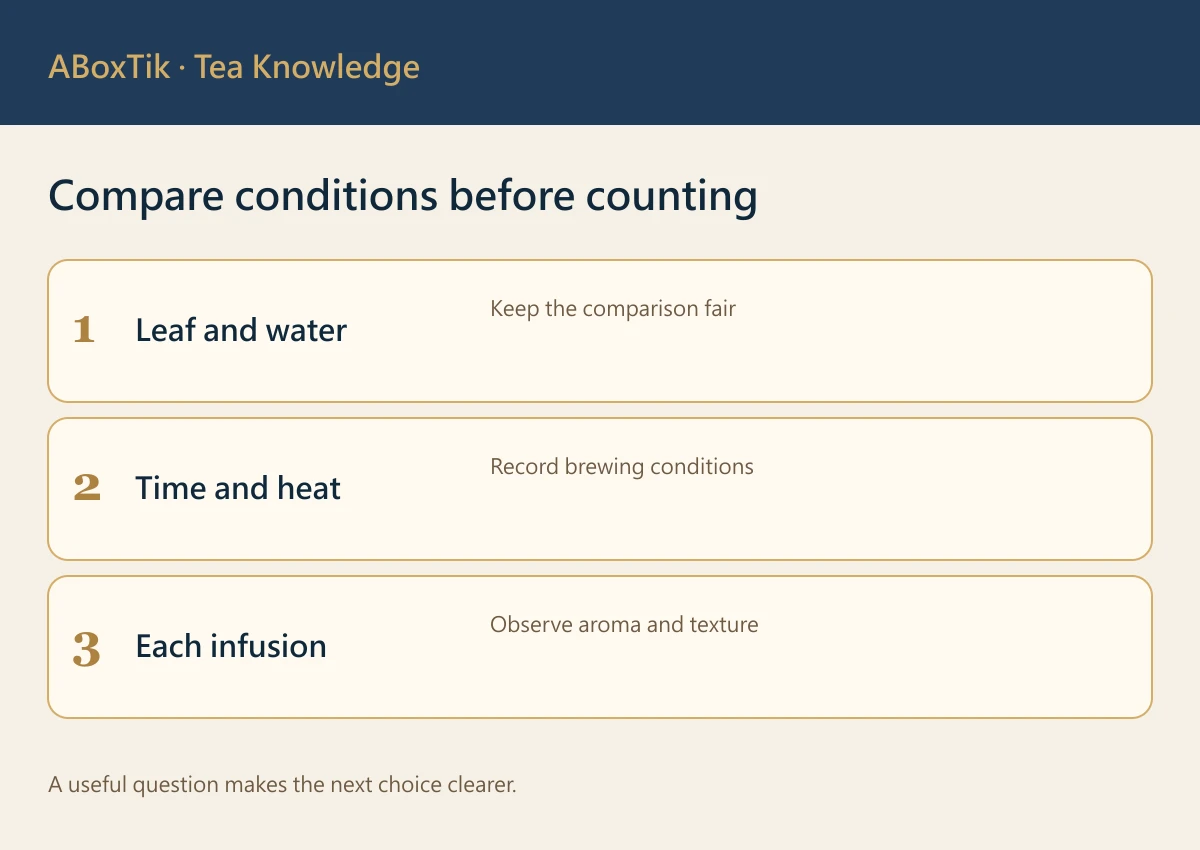
Changing leaf amount, water volume or pouring time can change the result even with the same tea. Record dry-leaf weight, water per infusion, temperature, time and vessel first. Steeping-time notes and gongfu brewing explain relevant preparation choices.
If a seller supplies a number, ask which leaf amount, water volume and times produced the demonstration. The question need not sound confrontational. It simply gives that experience a chance to become something you can understand and repeat at home.
Leaf format and processing are clues, not a quality ladder
Tightly rolled leaves, open twisted leaves and smaller fragments present different conditions for wetting, opening and extraction. Processing also changes tissue and the way material reaches the water. Intact leaves or a tight shape alone cannot establish how every finished tea will perform.
The Ministry of Agriculture’s tea information discusses repeated infusions as involving differences in release, while directing selection back towards aroma and taste. That principle does not assign a guaranteed number of cups to every packet. Particular figures from a study also need their original methods before they can be used meaningfully.
Read whole and broken leaf formats, rolling and tea categories for those separate questions. Keeping them distinct is more useful than trying to turn all three into a single answer to “which tea is best?”
Strength and total serving volume sit behind the count
More leaf with brief small servings produces a different experience from less leaf steeped longer in a large mug. If each pour is tiny, its infusion count cannot directly tell you how many people the tea will serve. That practical detail matters when planning a shared pot.
For a gathering, note how much liquor is actually poured each time, what people drink and whether they still enjoy it. There is little value in diluting a comparison down to a cup nobody wants merely to add another number. The notebook need not win a contest against the kettle.
A thick first cup is not automatically superior; a light final cup need not be worthless. observing bitterness, astringency and strength and observing bitterness, astringency and strength help replace the vague phrase “still has flavour” with observations that explain a preference.
Choose one question before comparing two teas
To observe performance under shared conditions, choose reasonably comparable leaf formats that can use a suitable common setting. Hold leaf amount, water, vessel and starting temperature steady and record the time and result of each infusion. If their guidance differs substantially, first prepare each as directed; that compares their individual everyday expressions.
Adding leaves to one and extending time for the other is a legitimate adjustment if recorded, but it is not an unchanged test of cultivar alone. Distinguish a controlled comparison from the settings you prefer for each tea. Both can be useful; they answer different questions. Oolong temperature guidance offers additional context.
Write an observation before discussing it with others. One person may prefer late lightness, another early body. Those preferences help plan the next pot without requiring everyone to adopt the same scorecard. A shared table can accommodate more than one good answer.
Read four fields beside the infusion claim
| Field | Useful question |
|---|---|
| Conditions | What leaf, water and time supported the count? |
| Preference | Was early aroma, body or late lightness most enjoyable? |
| Use | Is the routine a large mug or several small shared pours? |
| Product | Are origin, weight, format and storage information clear? |
For price, compare net weight, format, packaging and the information provided. Two additional infusions do not automatically make a purchase better value. The premium tea value guide helps with budgeting, while reading provenance puts place names and supply information in context.
Try replacing “most enduring” with “best suited to which moment?” A workday mug, a two-person weekend pot and a group after dinner may call for different choices. An endurance claim becomes useful when it connects to an actual way of drinking.
Keep the last enjoyable cup
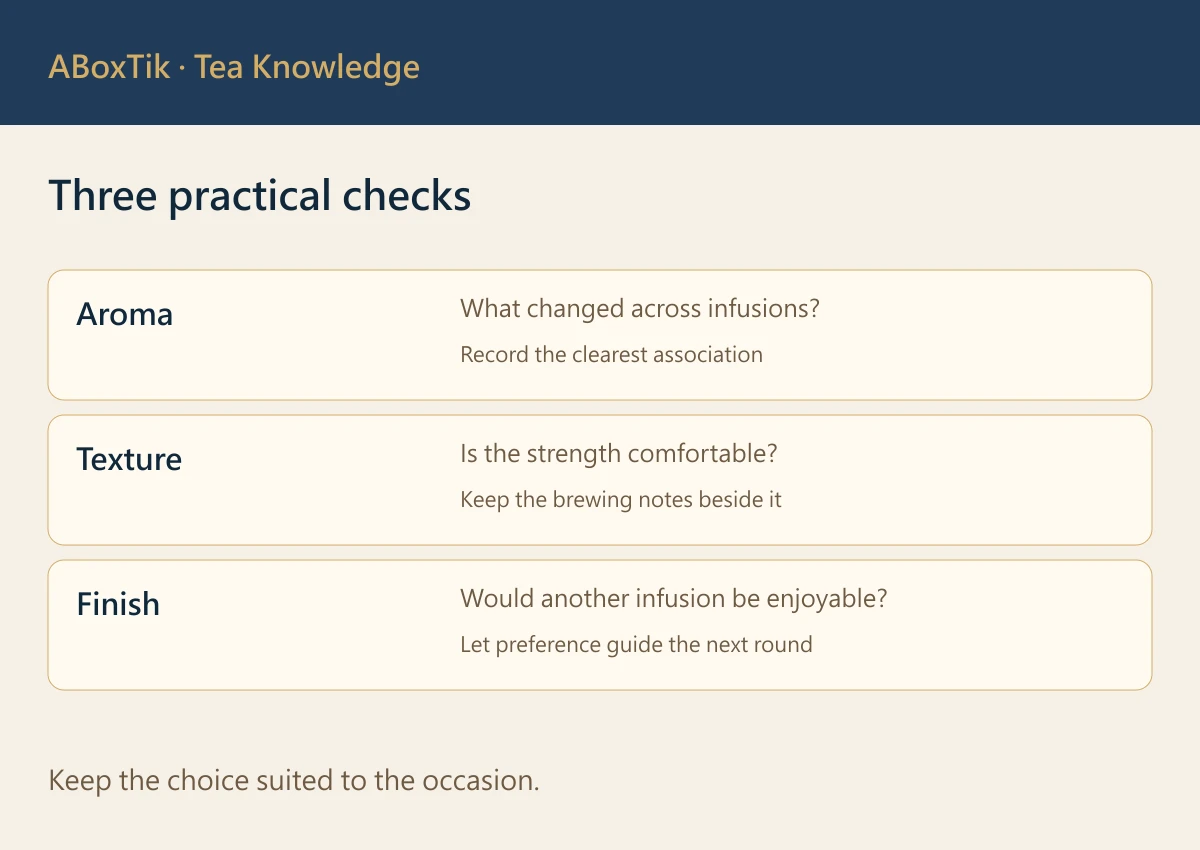
If aroma, mouthfeel or strength no longer suits the people drinking, finish the session comfortably. Stopping is not forfeiting a hypothetical ninth cup. It completes the amount wanted on that occasion. Another day, adjust leaf amount or preparation to match the expected serving.
Record opening date and storage conditions too. Comparing packets with different storage histories by their counts alone may assign a storage difference to the original tea material. The background is part of the observation, even when it is less exciting than the cultivar name.
When there is time, use the aroma sequence and keep one preferred aroma, one mouthfeel description and the last infusion enjoyed. The note need not look impressive. Helping the next choice is a sufficient job for a small piece of paper.

Tea, one box at a time
Choose a tea worth returning to, rather than a number to chase
At ABoxTik, we keep the buying question practical: which flavour appeals, how will it be brewed and who will share it? Endurance can inform that choice without carrying the whole value of the tea by itself.
Explore the actual teas in the Classic Taiwanese Tea Four-Box Set, or compare an everyday format in the two-box tea bag set. Prepare a first cup as directed and let a real preference accumulate gradually.
Related reading
- Decide about another infusion by aroma and taste
- Compare whole and broken leaf formats
- View the Classic Taiwanese Tea Four-Box Set
Sources
- Ministry of Agriculture tea portal: first and second infusions
- Tea and Beverage Research Station: introduction to sensory evaluation
Sources checked 20 October 2026.