
Tea Knowledge
Taking Taiwanese Tea Abroad: A Gift Packing Checklist
A tea gift can travel lightly when its information travels clearly beside it.
Taking Taiwanese tea abroad starts with three checks: what is in the packet, how it is travelling, and the destination’s current entry conditions. Original retail packaging helps identify the contents. It does not replace declaration, inspection or a decision by the destination authority. There is no single worldwide permission covering every tea gift.
This guide is for travellers personally carrying a gift of plain tea in their luggage. It follows official United States, Australian and Japanese information checked on 21 October 2026. Mailing, commercial imports and mixed botanical or animal-origin ingredients need separate checks. Start with the contents and the journey; the ribbon can wait until those questions are settled.
Taking Taiwanese tea abroad: identify the product and the journey
First, read the complete ingredients. Plain tea consists of leaves of Camellia sinensis. A blend may also contain flowers, citrus peel, dried fruit, seeds, herbs or other materials. Everyday language puts many of these under “tea”, while border conditions depend on what the product actually contains. A floral-sounding product name alone does not establish whether the packet is pure tea or a blend.
Next, distinguish a traveller carrying luggage from a parcel, courier consignment or commercial shipment. This article concerns the traveller. Use the overseas tea shipping guide if the plan changes to mailing, or the corporate overseas gift handover guide for a business shipment. The same gift box can enter different procedures when its transport method changes.
Write down the destination, departure date and any transit stop that requires entry or collection of luggage. A gift label, small quantity, vacuum packing, duty-free purchase or checked bag should never be treated as an exemption from relevant conditions. They describe part of the journey; they do not decide whether the contents may enter.
Keep the original information attached to the original tea
Choose a package whose actual contents can be identified: an intact retail pack, its ingredient list, net weight, tea name and origin information. A plain tea can be described as Camellia sinensis only when that accurately reflects the product. For blends, preserve the full list instead of simplifying it to “oolong” for convenience. Information that matches the object is more useful than an impressively decorated explanation.
If the outer presentation box is bulky, consider a compact format while retaining the original individual product packaging and details. Do not turn several different teas into anonymous little bags just to save luggage space. The original pack helps with description and storage; it is not a promise that an official must admit the product.
A separate information card can repeat the tea name, ingredients, net weight, Taiwan origin where applicable, intended personal-use or gift purpose and the maker’s contact details. Keep it consistent with the label. The guide to introducing Taiwanese tea in English offers natural wording. Avoid adding an unconfirmed cultivar, growing region, certification or special property.
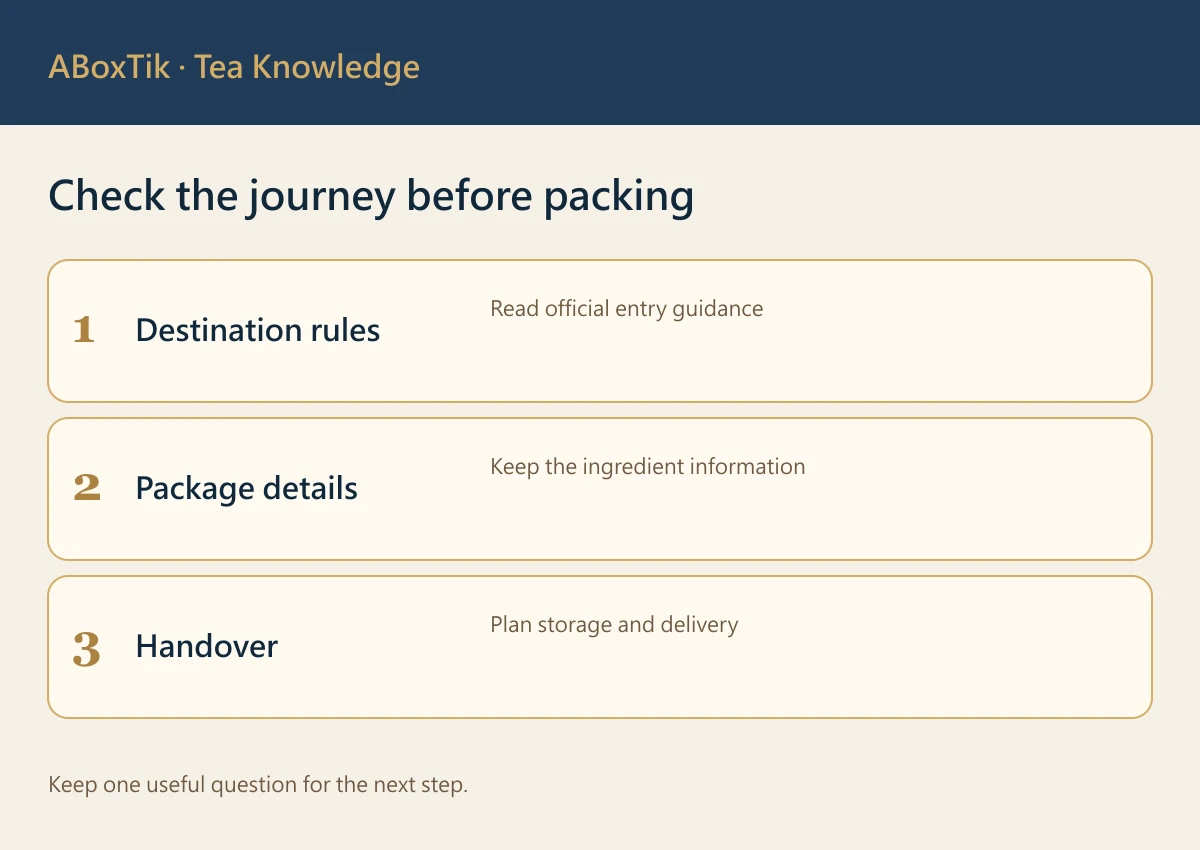
United States: permission for plain tea still comes with declaration
The USDA APHIS traveller guidance currently lists products made only from Camellia sinensis leaves, including green, black and oolong tea, as admissible. It also says agricultural products must be declared. CBP guidance retains declaration and inspection requirements. Read those instructions together: the tea category and the traveller’s declaration are two parts of the same preparation.
Do not extend the plain-tea statement to a blend containing citrus leaves, peel, seeds, fruit, herbs or animal-origin ingredients. Identify every ingredient and follow the relevant current official conditions. A decorative gift box does not make its contents less specific. Keep the package accessible so that the actual product can be shown if requested.
For an uncertain product, send the authority a clear description of the ingredients, processing, weight, origin and travel method. “May I bring tea?” leaves too much work to the person answering. A precise product question is a kind gesture toward both the official and the traveller who would otherwise be guessing at the airport.
Australia and Japan: read the right layer of the rules
Australia’s Department of Agriculture, Fisheries and Forestry public summary specifies clean, new and unopened packaging and freedom from live insects or contamination for its plain black or green tea entry. Do not assume that this short description alone settles every Taiwanese oolong. Search the current BICON “Tea for human consumption” case and read the full conditions for the actual tea, ingredients, packaging and intended use.
Australia also requires travellers to declare relevant food and plant products. Declared goods can still be inspected and may require further action. Declaration is an important step, rather than an assurance of admission. Keep the official page and the applicable case details with the product information, and check them again before departure because conditions can change.
Japan’s Plant Protection Station traveller flow chart gives processed tea or goods sealed in retail containers as examples outside plant quarantine. That statement concerns plant quarantine. It does not mean that all blends, customs declarations, tax questions and other requirements disappear. Read Japan Customs passenger procedures as well, and route raw botanicals or unfamiliar ingredients back to the relevant official query.
A departure card that keeps the three destinations separate
| Destination | Official starting point | Action before departure |
|---|---|---|
| United States | APHIS traveller tea guidance and CBP food guidance | Identify pure tea or blends; follow declaration and inspection instructions |
| Australia | DAFF traveller guidance and the current BICON tea case | Check the exact tea, ingredients, pack and full applicable conditions |
| Japan | Plant Protection Station and Japan Customs | Separate plant-quarantine scope from passenger customs procedures |
| Another destination or entry during transit | Its official customs and agricultural authorities | Check separately instead of borrowing another country’s answer |
Record the official URL, date checked and product details used in the enquiry. If a condition remains unclear, contact the authority with that same set of details. A saved screenshot can help recall what was read, but it is not a substitute for checking current conditions when the journey approaches. The useful habit is matching one real packet to one real trip.
The travel tea packing guide handles a different question: keeping equipment, dry tea and wet items organised during travel. Keep that practical list alongside this entry-check list. One helps the tea arrive in good condition; the other helps the traveller prepare accurate information.
Choose a gift that the recipient can enjoy after the journey
Ask about the friend’s ordinary setup before choosing the format: whether they drink tea, which flavours they enjoy, and whether they have hot water and a suitable cup. Those answers are more helpful than assuming that everyone from a particular country shares a preference. An easy brewing card can be a thoughtful companion to the gift, especially when the recipient is unfamiliar with the tea.
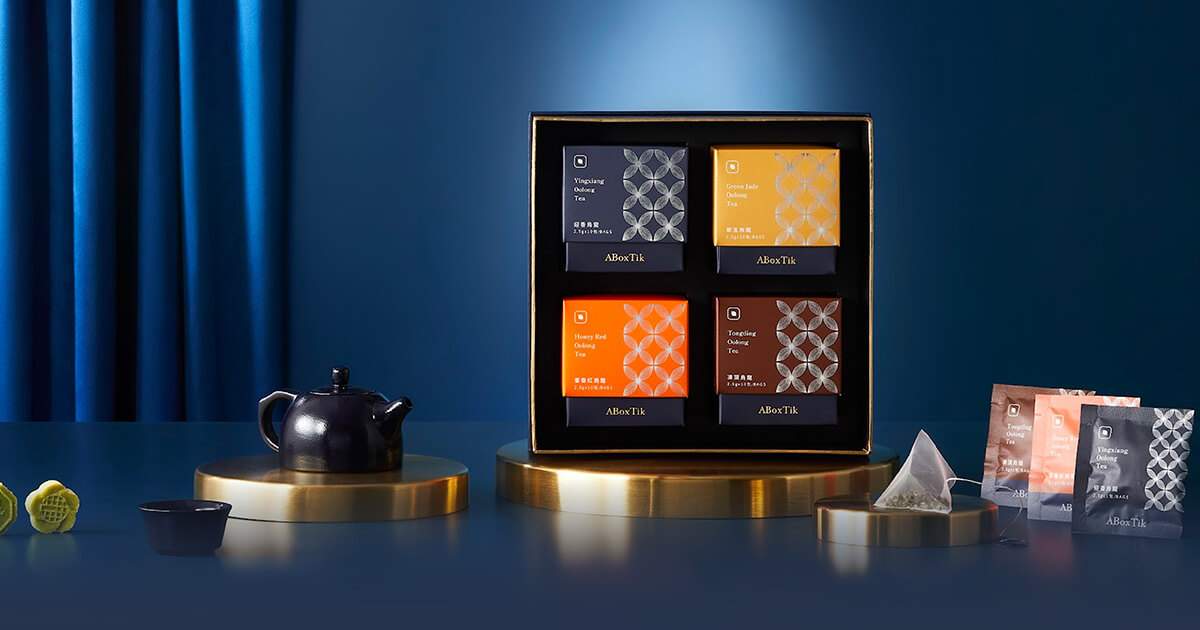
Use the actual product instructions rather than inventing one temperature and infusion time for every tea. Compare whole-leaf tea bags, a two-box tea gift set or a multi-tea gift box by checking the current contents and labels. None of these links establishes a destination-specific admission decision; that comes from matching the selected product to official conditions.
For storage, follow package guidance and protect dry tea from moisture, crushing and strong odours. The tea storage guide can help organise the dry part of the bag. Keep perfume and wet toiletries elsewhere. At handover, leave the recipient free to open the tea later; a gift need not create an immediate tasting appointment. The suitcase can handle transport without being promoted to policy adviser.
Follow ABoxTik
Let a Taiwanese tea gift travel with a clear introduction
At ABoxTik, a thoughtful overseas gift begins with practical care: a suitable journey, accurate product information and a format the recipient can use. That leaves the story of the tea room to be heard once the travel questions are settled.
Explore Taiwanese tea terroir and craft, then add a short, accurate note about the selected tea and its brewing instructions. Leave a little space in the luggage for the stories coming home, too.
Related reading
- Describe tea and brewing in natural English
- Prepare information when mailing instead of carrying
- Check the contents and labels of tea gift formats
Sources
- USDA APHIS: Traveller coffee, teas, honey, nuts and spices
- Australian DAFF: Bringing or mailing goods
- Australian BICON: Import Conditions Search
- Japan Plant Protection Station: Traveller information
- Japan Customs: Passenger clearance procedures
Sources checked 21 October 2026.