
Tea Knowledge
Tea Servings per Box: Estimate How Long Your Tea Will Last
A little preparation leaves more room to enjoy the tea.
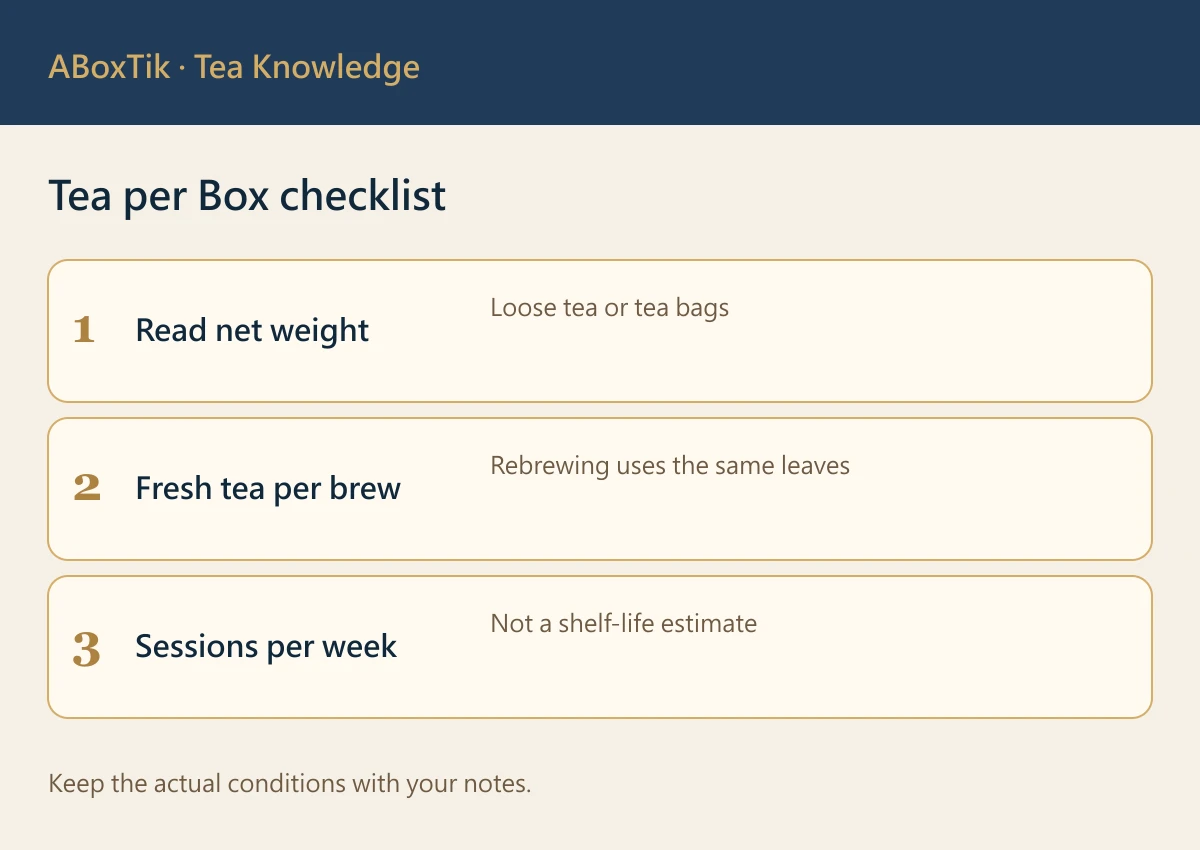
Divide the net weight of dry tea by the amount used for a fresh preparation. Then divide the number of preparations by your weekly frequency. For example, a hypothetical 100 g box used at 5 g per preparation gives 20 preparations. At four per week, it lasts about five weeks. Replace the figures with the actual package and your own routine.
Preparing fresh leaves and pouring cups are different counts. The same leaves may be infused more than once. Estimate box consumption from the dry tea used; estimate cups separately from the amount poured and the infusions you enjoy. A few straightforward numbers are enough to plan a purchase without turning tea time into an exam.
Start with net weight, portion size and frequency
Find the net weight of the tea itself, not the weight of its box or tin. A gift set with several teas needs a separate entry for each. For individually wrapped tea bags, the number of bags may be the more useful starting point. Product configurations can change, so check the current listing and physical label.
Next, note how much dry tea you use when preparing fresh leaves. If you have a comfortable routine, a small scale can help record it. If you are still finding your preference, follow the tea and equipment directions first, then use your actual amount in the calculation. The 5 g in our examples is an illustration, not a universal recommendation for every tea or vessel.
Finally, think about how often you prepare a fresh portion in a typical week. Fresh leaves in the morning and again in the evening count as two preparations. Infusing the same leaves three times in one sitting is still one preparation for the box calculation. Weekdays and weekends may differ; use an average that resembles your life.
Calculate preparations first, then weeks
Preparations = net weight ÷ grams per preparation. Estimated weeks = preparations ÷ preparations per week. This is a planning estimate, not a storage or safety period. When the division leaves a remainder, count complete portions and plan the rest separately.
| Illustrative weight | Per preparation | Preparations | Four per week |
|---|---|---|---|
| 50 g | 5 g | 10 | 2.5 weeks |
| 100 g | 5 g | 20 | 5 weeks |
| 150 g | 5 g | 30 | 7.5 weeks |
The table uses the same illustrative amount to compare weights. It is neither a product specification nor a recipe. Using the 100 g example twice a week gives around ten weeks. At six times a week it gives about 3.3 weeks. If other teas alternate with it, the box may stay on the shelf for more calendar time.
Suppose you use 6 g at a time from a 100 g box. That is approximately 16.7 portions, or 16 complete 6 g portions with about 4 g left. Record the remainder instead of forcing the quantity to fit a tidy number. Choose an amount appropriate to your tea and vessel first; use arithmetic to understand the result.
Count repeat infusions separately
How many rounds a portion yields varies with the tea, quantity, equipment and taste. Reinfusing does not put more dry tea into the box. It changes how much liquor one preparation can provide and how a session can be shared.
Imagine using 5 g and pouring 150 mL in each of two rounds. The session produces about 300 mL while consuming one 5 g portion. When you prepare another 5 g of fresh leaves later, the box loses a second portion. Whether both rounds taste enjoyable depends on the tea and preparation; these numbers are simply an illustration.
For more on reading strength and deciding when to infuse again, see the tea resteeping guide. For a group, estimate each person’s first cup and check the actual pour from the vessel. Stated pot capacity and usable liquor need not be identical with leaves inside.
Tea bags, loose leaves and mixed gifts
For tea bags, count bags rather than converting the box to grams. A hypothetical box of 20 bags, used one at a time on four occasions a week, gives about five weeks. If two people each use a bag, count two. Whether to infuse a bag again is a separate question guided by its instructions and your preference.
Loose tea uses net weight and grams per preparation. Calculate a mixed gift tea by tea. Imagine two 50 g packs: one is prepared twice weekly and the other once. They will not necessarily run out together. Listing weight and frequency for each makes the comparison more useful.
| Format | Starting calculation | Remember |
|---|---|---|
| Loose leaf | Weight divided by grams used | Quantity depends on vessel and preference |
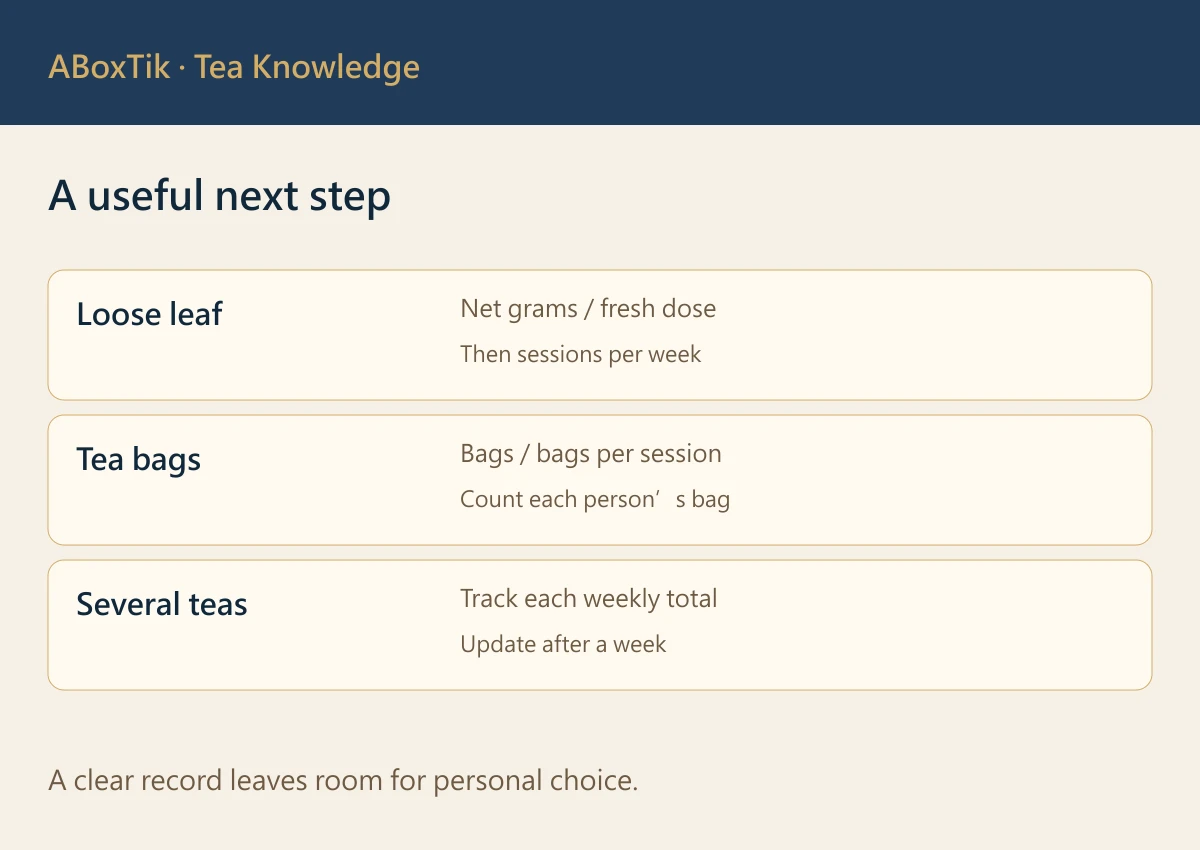
| Tea bags | Bag count divided by bags used | Include each person’s bag |
| Mixed gift | List each tea separately | Frequency can vary |
Check whether a listed count applies to the whole gift or one inner pack. If you usually share, consider how many people drink each tea. A single total can help shopping, while a short item-by-item list helps plan how the tea will be enjoyed.
Choose for the recipient’s routine
For your own cupboard, think back to the past week rather than an ideal week in which every afternoon includes a quiet tea ceremony. If you alternate several teas, assign the new box a realistic share of that routine. Compare current formats and pack sizes before choosing.
For a gift, consider whether the recipient prefers tea bags or loose leaf, has suitable equipment, and drinks alone or with family. An estimate helps compare quantities, but flavour, storage space and format matter too. There is no need to guess that everyone drinks the same number of cups.
Explore the four-tea gift set and two-box tea bag set, checking current contents and specifications when shopping. Calculate each tea from its actual quantity rather than treating boxes as cups.
Revisit the estimate as life changes
Projected weeks are a shopping aid, not a safety deadline or quality guarantee. Follow product storage instructions and use an appropriate dry environment. The tea storage guide offers further context. Once opened, follow the product’s directions and assess its condition.
Write three blanks: net weight, amount per preparation and preparations per week. Calculate an estimate, then revisit it after a week or two. If guests visit, a new favourite joins the shelf or the schedule changes, update the frequency. Let the calculation follow the way you drink tea, leaving room for the cup itself.
Use a week of notes to refine the estimate
For a week, note when fresh tea is prepared, roughly how much is used, and whether it is shared. Record a larger group preparation separately. Adding water to the same leaves does not create another dry-tea portion. The aim is to see the shape of the routine, not to weigh every cup forever.
For example, three weekday preparations at 5 g and one shared preparation at an illustrative 10 g use 25 g in total. A hypothetical 100 g box would last approximately four such weeks. The 10 g is arithmetic, not an instruction for serving a group. If tea quantities differ each day, adding the actual weekly amounts can give a clearer estimate than assuming every preparation is identical.
A busy week, visitors, or a new tea on the shelf can change the pace. Update the note when your routine changes. An estimate is a useful working figure, not a promise about how every week will unfold.
One large pack or several small packs?
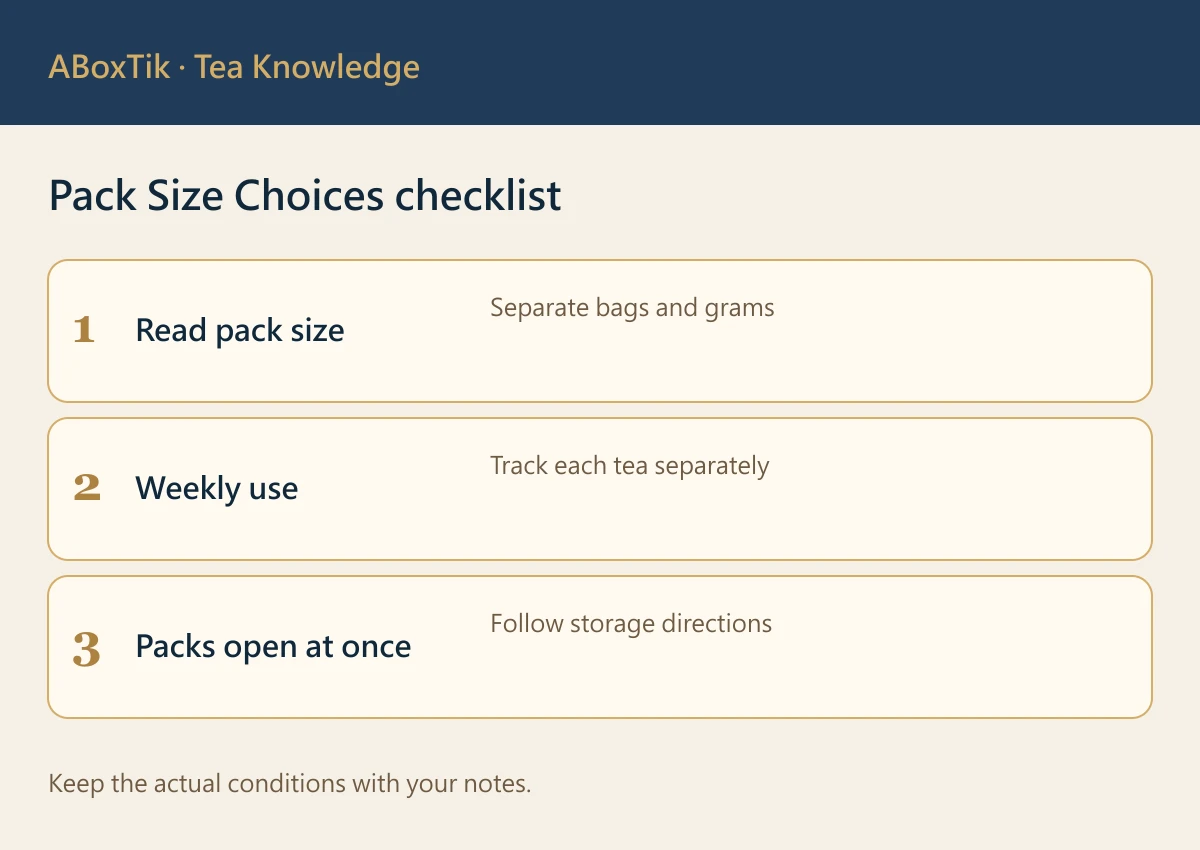
Compare the pack size, expected weekly use and how many packs will be open at once. The last column brings a purchasing decision back to the way tea is actually used.
| Check | One large pack | Several small packs |
|---|---|---|
| Pack size | ___ g | ___ g each; ___ packs |
| Expected weekly use | ___ g | ___ g |
| Open at the same time | ___ | ___ |
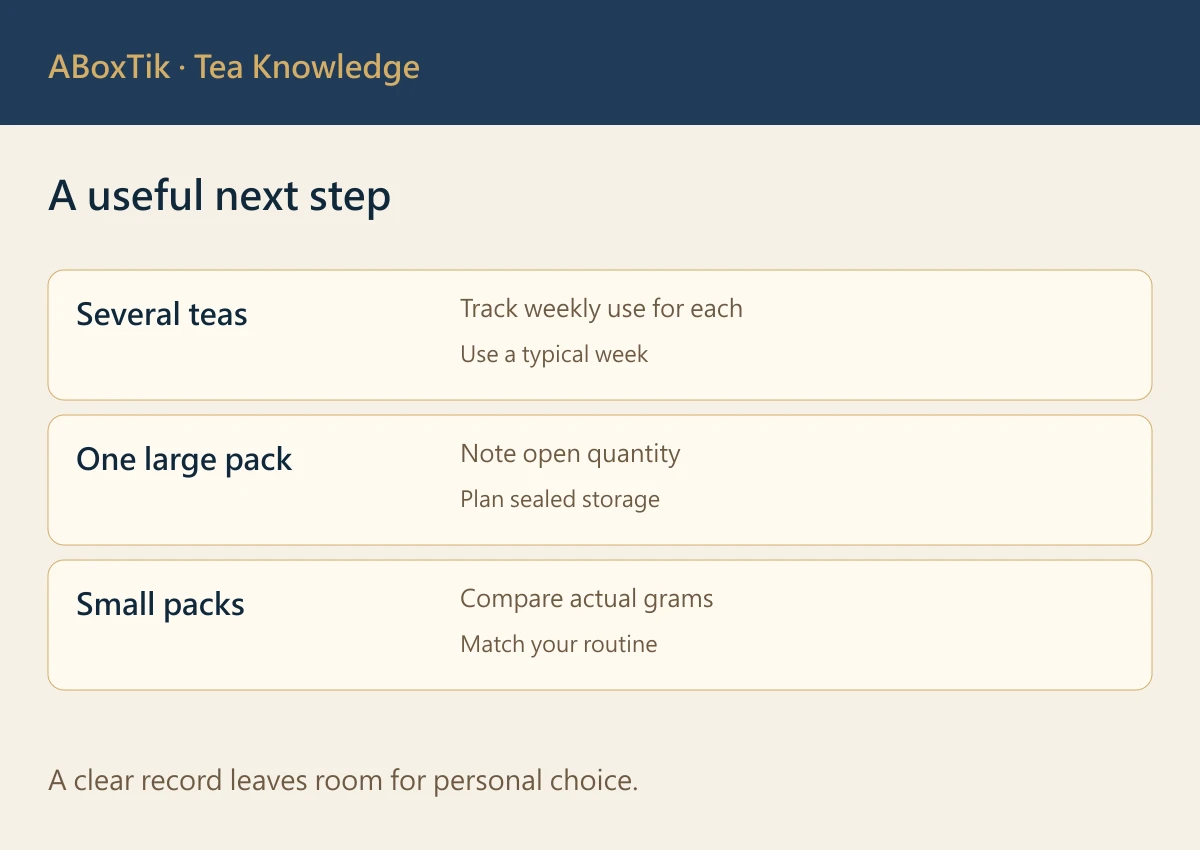
Fill in a normal week first, then check the package instructions and storage arrangements. Record each tea separately when rotating between varieties. Opening one fewer pack while habits become clear may be a useful starting point; the tea cupboard does not need a committee meeting.

Related reading for your tea routine
- Notice flavour between infusions
- Brewing tea in a mug
- An office brewing routine
- Choosing tea bags for the office
- Choosing a mixed tea bag gift
- Adjusting steeping time
- Water for brewing tea
- Tea in a thermos
- Whole-leaf tea bags
Sources
- ABoxTik four-tea gift set: current product details; use the actual package label for quantities and preparation instructions.
- Tea and Beverage Research Station: tea packaging and storage