
Tea Mixology
Butter Cookies and Tea: Compare Floral and Roasted Oolong
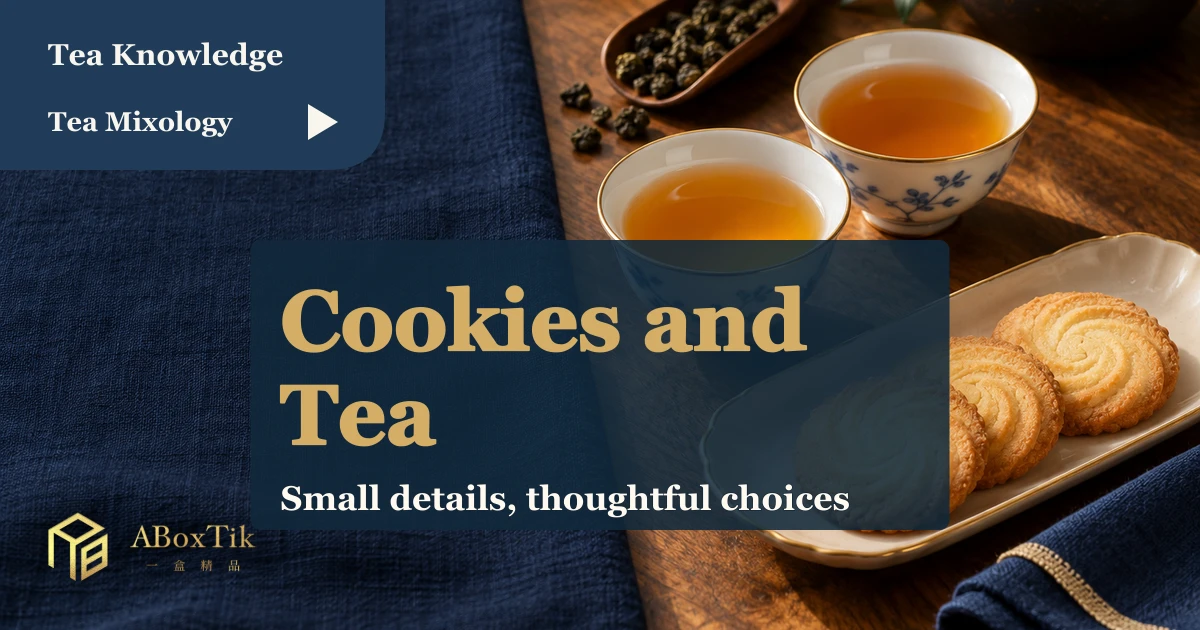
One biscuit, two cups of tea, and enough time to decide what you enjoy.
For butter cookies, begin with a floral oolong and a roasted oolong in two small cups. Notice whether the floral tea remains distinct alongside the sweetness, then consider how the roasted tea sits with the cookie’s baked notes. There is room for either to be your favourite. Sweetness, texture, the tea itself and the way it is brewed all change the encounter.
This is a pairing design, ready for your own table. Choose a familiar plain butter cookie and keep its packaging nearby so everyone can check the ingredients. Brew each tea according to its own directions, pour comparable portions and use the blank card below to record what actually happens. No elaborate equipment is required, and nobody has to appoint a winner before the kettle boils.
Start with the cookie: sweetness, aroma and texture
Butter cookies vary. Some are delicate and crisp; others are thicker or more crumbly. Some taste noticeably sweet, while others leave a stronger baked impression. Take a small bite before drinking any tea. What arrives first: sweetness, a buttery impression or a toasted note? Does the texture disappear quickly, or does a richer feeling linger? One or two ordinary words are enough to make the comparison useful.
Check the ingredient list before sharing, especially where guests need to avoid milk, nuts or another ingredient. A plain cookie without a filling can make the first comparison easier to follow, but it is still important to read that particular product’s label. Follow its storage and serving instructions too. For a group, divide the cookies into small portions and leave people free to take part in whichever way suits them.
Colour alone cannot tell you exactly how sweet a cookie will taste. Its name cannot predict which tea you will prefer with it, either. Use the food in front of you as the starting point and keep the same cookie for the first two cups. That small decision makes it easier to notice what changes when the tea changes.
Give each cup a question of its own
| Tea direction | What to notice | If it feels out of balance |
|---|---|---|
| Floral or light oolong | Can you still recognise the tea’s aroma after the cookie? | Try a smaller bite; on another round, adjust the brew strength. |
| Roasted oolong | Do the tea’s roasted notes and the cookie’s baked character sit comfortably together? | Try a lighter brew and notice the tea’s own sweetness as well as its aroma. |
A floral tea is not limited to light foods, and the darkest roast is not automatically the best choice for a baked snack. Cultivar, processing, storage and brewing all contribute to the cup. Our light and roasted Taiwanese tea guide offers vocabulary for finding two directions to explore; it cannot promise the exact flavour of every tea.
When asking for suggestions, describe the impression you want: “a floral oolong that feels fairly light” or “a gently roasted tea where I can still notice the tea itself.” If two suitable teas are already in your cupboard, start there. They are different complete teas rather than a controlled experiment in roasting. The aim is to understand your table, not isolate every possible cause of flavour.
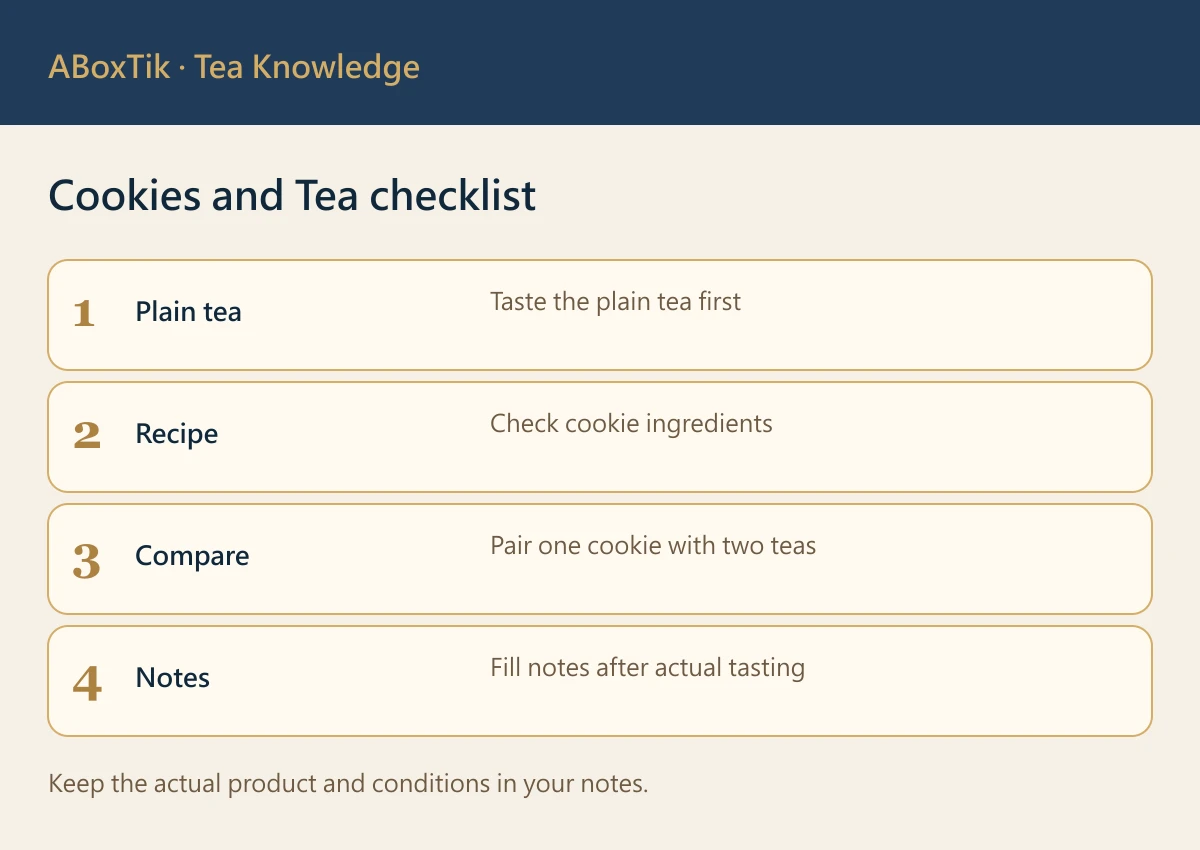
A two-tea, one-cookie tasting card
- Choose one cookie. Cut comparable small pieces from the same product and note your impression of sweetness and texture.
- Prepare both teas. Follow each product’s instructions, serve similar amounts and record the tea, water, temperature and steeping time.
- Taste each tea on its own. Write down the clearest aroma or mouthfeel before adding food. Think of this as a reference photograph made with words.
- Try the cookie with the first tea. Eat a small piece, then take a sip. Notice the tea, the remaining sweetness and what lingers.
- Pause before the second cup. Drink some water and repeat with a comparable piece. On a later round, reverse the order to see whether it changes your impression.
- Record preference and reason. “I could still taste the tea” or “the cookie became more prominent” is more useful than a score alone.
If friends join in, let everyone write a sentence before discussing it. One person may enjoy the tea sitting quietly behind the biscuit; another may prefer its aroma to lead. A difference is not a mistake. It is information about what each person would like to serve next time.
Keep the conditions beside the observations
| Record | Floral tea | Roasted tea |
|---|---|---|
| Tea and actual brewing conditions | _____ | _____ |
| Most noticeable impression on its own | _____ | _____ |
| What remained noticeable after the cookie | _____ | _____ |
| How sweetness and tea felt together | _____ | _____ |
| One thing to change next time | _____ | _____ |
Add the name of the cookie, your impression of its sweetness and whether it has a filling. A different brand, a different batch of tea or a different brewing method belongs on a new line. The card is not trying to produce a universal verdict; it is there so that a lovely combination can be repeated, or a disappointing one adjusted without relying on a hazy memory.
Keep observations and preferences separate when useful. “The tea seemed less aromatic after the cookie” records what you noticed. “I preferred the other cup” records a choice. Both are valuable, and someone at the same table may have a different answer. A tasting note can simply say that no clear difference was noticed.
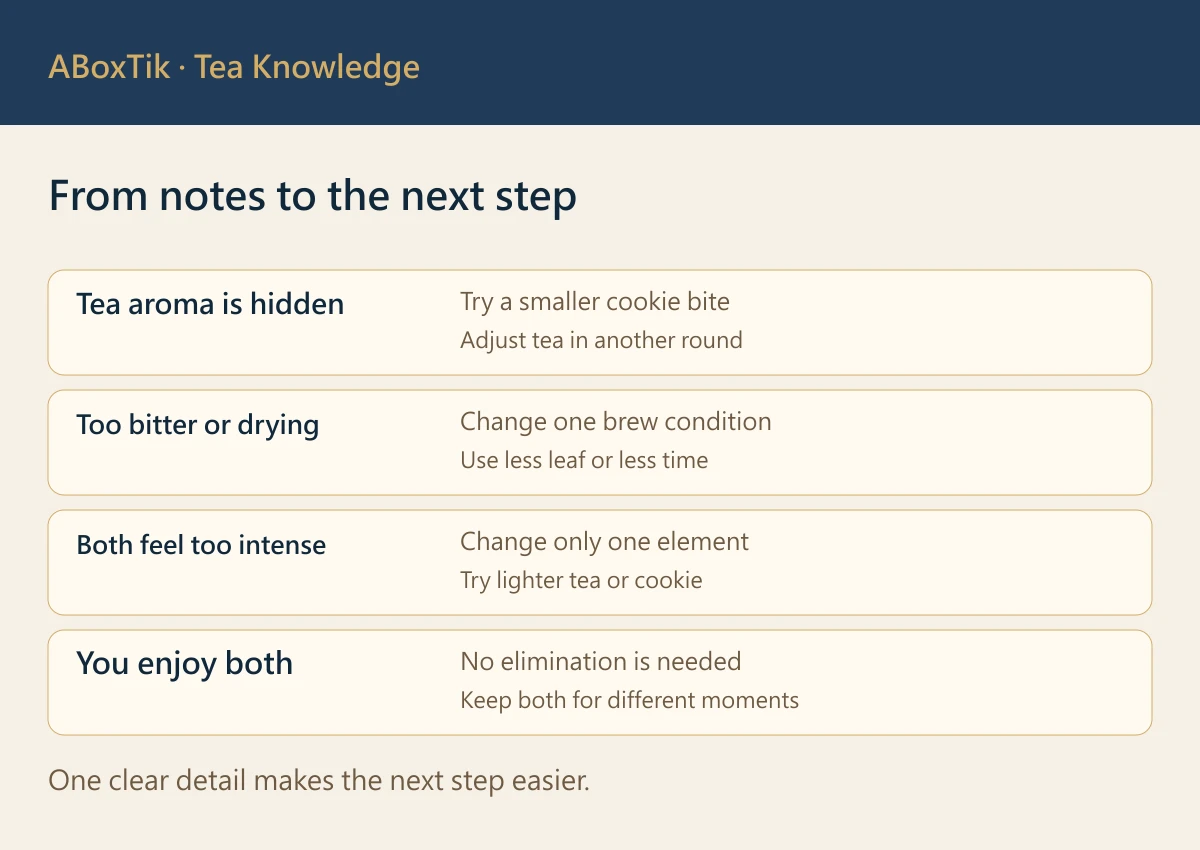
When the combination feels wrong, change one thing
The tea seems hidden by sweetness. Begin with a smaller piece of cookie and leave a little time between bites. In another round, consider adjusting the tea’s strength. Changing tea quantity, steeping time and the tea itself all at once makes it hard to tell which adjustment helped.
The tea tastes too bitter or drying. For the next brew, consult the product directions and try either less tea or a shorter steep, keeping the other conditions as steady as practical. If the result still does not appeal, choose another tea. Our guide to bitterness and astringency can help put the sensation into words.
The roasted notes and cookie both feel too strong. Try brewing the tea a little lighter, or use a cookie with a gentler baked character in a separate round. Change one of those elements at a time. If both cups seem too quiet instead, give the tea a moment to cool to a comfortable drinking temperature and notice it again before reaching for an additional ingredient.
Both pairings are enjoyable. Keep both. A floral cup might suit one afternoon and a warmer roasted cup another. There is no need to eliminate a pleasant option simply because the worksheet has two columns.
Make a shared table easy to use
Before guests arrive, ask about ingredients they need to avoid and keep the cookie packaging available. Separate serving utensils and clear labels help people choose comfortably. Someone who skips the snack can still enjoy a cup and the conversation. Handle hot water and hot tea with care and let the drinks reach a comfortable temperature before tasting.
One teapot can still serve two teas. Prepare each separately, note the actual conditions and use clean cups. Give everyone the names of both teas and allow them to choose their own order. Instead of asking “Which is best?”, try “Which cup lets you notice the cookie more clearly?” A specific question tends to invite a more interesting answer and makes disagreement much less troublesome.
At the end, store unused tea and cookies according to their respective packaging. If you want another way to explore tea with food, the Taiwanese tea and cheese planner provides a separate tasting exercise. The oolong water-temperature guide offers background for adjusting the tea itself.
Leave a note for your next cup
A butter cookie and two small cups make a pleasantly manageable experiment. Record the food, the teas and the brewing conditions, then write one reason for your preference. That small note gives the next tea break a useful starting point while leaving plenty of space for curiosity.
Related recommendations
- Compare light and roasted Taiwanese teas for two aroma directions.
- Plan a tea and cheese tasting for another food comparison.
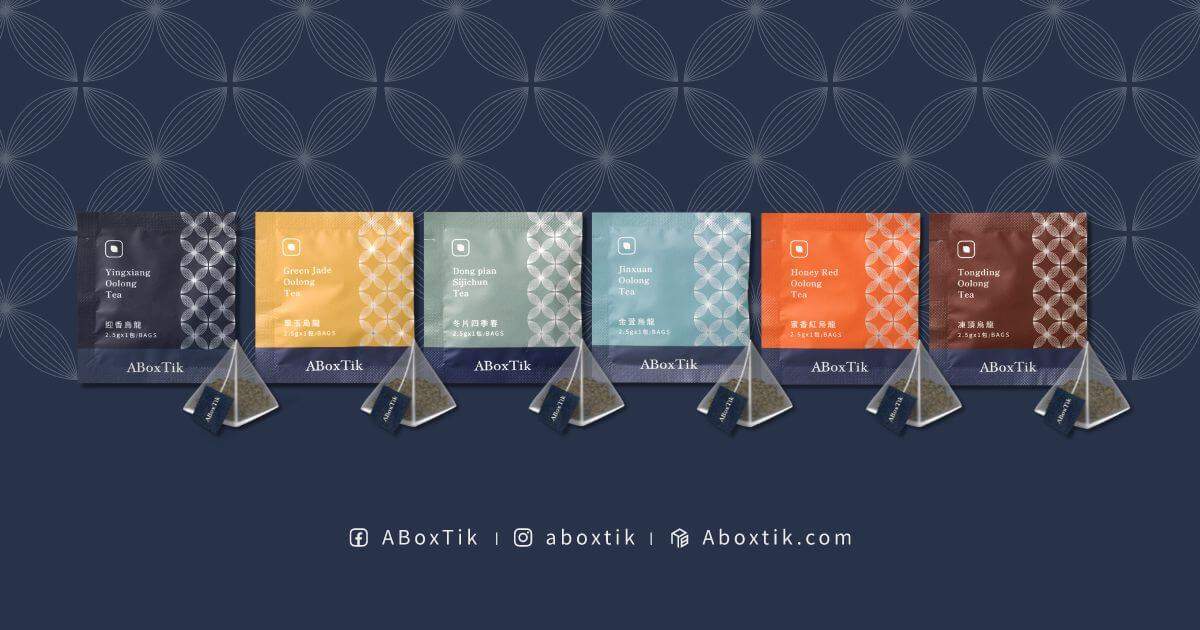
- Explore Taiwanese teas and check current product descriptions.
Sources
- Taiwan Tea and Beverage Research Station: Taiwanese tea flavour wheel, for sensory vocabulary.
- US FDA: food allergies, for checking ingredient information when sharing food.