
Tea Knowledge
Pizza and Tea Pairing: Three Starting Points with Taiwanese Oolong

For pizza and tea pairing, try one roasted Taiwanese oolong beside one with honeyed or ripe-fruit notes. Tongding Oolong and Honey Red Oolong are two starting points: pair each with a small bite of the same pizza, then notice which part of the tomato, cheese or toasted crust feels most enjoyable.
The cheese is still stretching, and dinner has arrived. This is an excellent moment for a small cup of tea; a less excellent moment for a complicated tasting exam. Two cups and one slice are plenty. Friends can prefer different teas and still share the last piece perfectly happily, provided someone remembers to save it.
The three comparisons below make a relaxed place to begin. Only one tea in the cupboard? Try it with two pizza toppings instead. A good evening can start with what is already at home.
Take a small bite and find a favourite flavour
There is no need to find a complete tea list before opening the pizza box. A little more tomato sauce, or a switch to white sauce, can change the leading flavour. Take a small bite without extra condiments and notice the tomato, dairy, herbs and toasted crust. If several seem eager to speak at once, give the one most worth keeping a little attention first.
Next, taste each tea on its own. Everyday descriptions such as toasted grain, brown sugar or ripe fruit are enough; a useful dinner note does not need a formal score. The Taiwanese tea flavour guide can help identify contrasting styles before choosing two for the table.
When in doubt, brew each tea to a strength that feels pleasant on its own. Tea can join the conversation without arriving at full volume. If bitterness or astringency takes over, lighten the cup and try the same bite again. That small adjustment is often a more useful place to begin than buying a stronger or more expensive tea.
Three pizzas, a few promising tea companions
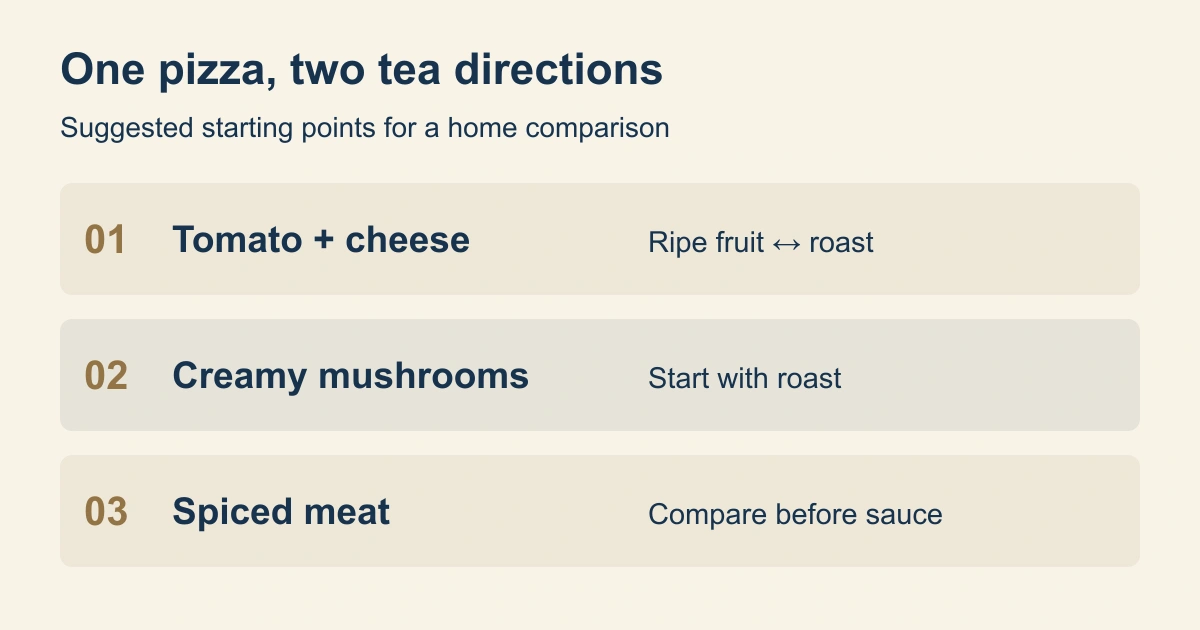
Tomato and cheese: ripe fruit beside roast
With Margherita or a tomato-and-cheese pizza, compare Honey Red Oolong with Tongding Oolong. In one round, notice whether the tea’s fruit character remains clear after the tomato sauce. In the other, pay attention to the connection between toasted crust and roasted tea. If tang or astringency becomes distracting, lighten the infusion before trying the same slice again.
White sauce and mushrooms: begin with roast
Try the roasted direction first with a mushroom, white-sauce or roasted-onion pizza, then use the fruitier tea as a contrast. A simple question is enough: can the mushroom and crust still be recognised after the sip? There is no special vocabulary to get right. If dairy seems to cover the tea, try a smaller bite before making the infusion longer. That helps distinguish a portion-size issue from a brewing decision.
Spiced meat: separate the extra chilli oil
For sausage or peppery meat toppings, compare both tea directions with a small piece before adding table condiments. Give the favourite chilli oil its own round afterwards. It can be an enthusiastic dinner guest, so a little time without it helps the tea be heard. A lighter or cooler cup is another option to explore, but change one thing at a time so the result is easier to interpret.
When the meal is mostly cheese served on its own, the tea and cheese planner offers a more focused approach. Here, the sauce, toppings and baked crust are considered together.
A comfortable cup comes first
Give the tea a comfortable start before asking it to accompany dinner. Roasting and production vary within both Tongding and red oolong styles. Begin with the guidance for the product purchased, noting leaf or bag quantity, water volume, temperature and time. A few practical details now make a favourite cup much easier to find again next week.
Use similar cups and pour small amounts. Allow both teas to reach a comfortable drinking temperature; a freshly poured cup and one that has rested for several minutes may feel quite different. Let them reach similar temperatures, and give anyone who prefers a cooler sip a little extra time. For the first round, leave out milk and sugar. Familiar additions can have their own round once the baseline is clear.
If a tea overwhelms the bite, shorten the next infusion or dilute a portion of the brewed tea with a little hot water. If it seems faint, adjust just one brewing condition next time. The Taiwanese tea steeping-time guide explains that decision in more detail. Consistent water also helps; the brewing-water guide is useful when the same tea varies between kitchens. The aim is a combination worth returning to, rather than a particularly forceful cup.
A few words to keep, while dinner is still warm
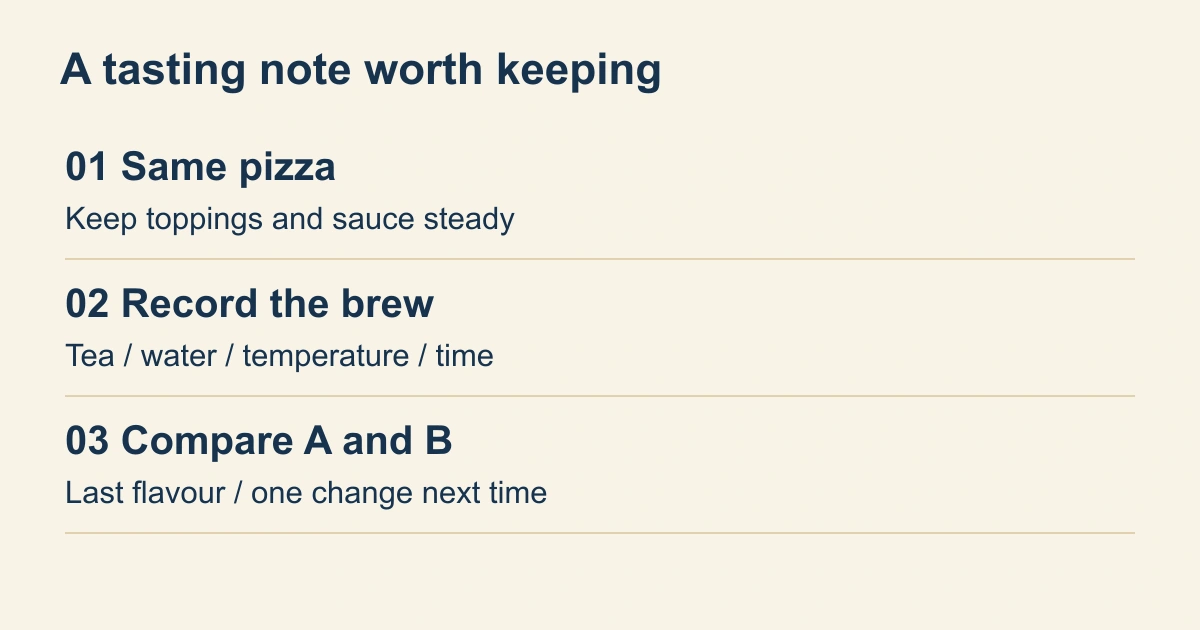
Cut one slice into similar bites and mark the cups A and B. Sip, take a bite, then have another small sip. Two or three everyday words are enough: toasted crust, clearer fruit, or simply a combination worth another try. Blank spaces are welcome too; the pizza is still warm, and the notes can wait.
| What to record | Cup A | Cup B |
|---|---|---|
| Tea and brewing conditions | Fill in | Fill in |
| Pizza and added sauce | Same pizza; note sauce | Same pizza; note sauce |
| Flavour remaining | Fill in | Fill in |
| One change next time | Fill in | Fill in |
If chilli oil makes the tea harder to notice, record that specific observation and change the condiment or tea strength on another occasion. A little plain water and a pause between combinations give the flavours room to settle. With friends, make a note before sharing opinions. Dinner works very well without a unanimous winner, especially when everyone has a cup they enjoy.
Pour ahead so the host gets a warm slice too
The person organising dinner is often the last to get a warm slice. A little preparation can look after them too: label the teas, pour small amounts and separate the remaining infusion from the leaves. Remove tea bags at the intended time, so a lively conversation does not quietly turn the next cup into a much stronger brew.
Two teas provide enough contrast for a relaxed meal. Set out plain water for anyone who prefers it, and leave room in each cup for an easy refill. A comfortable table makes space for different habits. For a fuller dinner, the dinner tea sequence helps organise serving in rounds. For a small plate rather than a pizza meal, turn to the snack and tea guide and scale the setup to the food.
A little help with the usual questions
Does more cheese call for stronger tea?
Start with a tea that is comfortable to drink by itself. Extra cheese does not give the tea extra homework. If bitterness dominates after a sip, lighten it before comparing again. A fondness for generous cheese does not automatically mean a fondness for dark roast or concentrated tea.
Must the tea be hot?
No. Warm or chilled versions can be compared separately. Keep drinking temperature similar within a round. When adding ice, note the amount and treat dilution as another variable rather than attributing every difference to the tea itself.
What if there is only one tea?
Compare that tea with two pizzas instead, keeping the brewing method fixed. The cupboard does not need restocking before a pleasant meal can begin. Try another tea on a later occasion. Changing fewer things makes it easier to recognise a preference and repeat it.
Two teas for tonight, something to look forward to next time
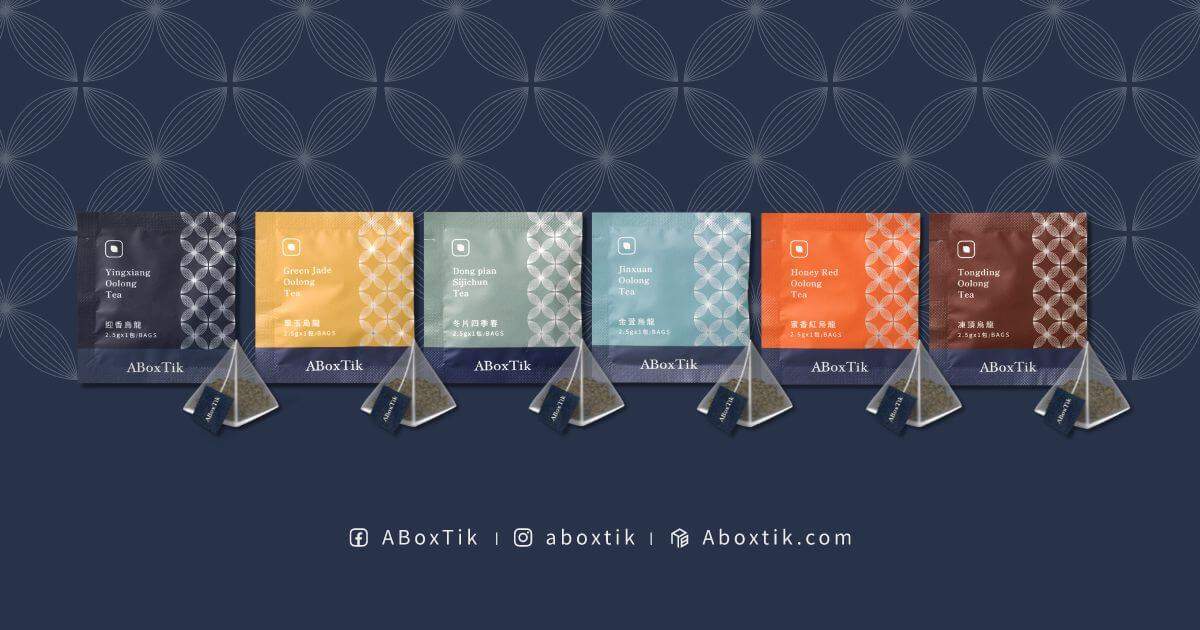
For a roasted starting point, explore ABoxTik Tongding Oolong, whose product description uses roast and brown-sugar notes. For the ripe-fruit and honeyed direction, consider Honey Red Oolong. Brew the selected product according to its guidance before bringing it to the pizza table.
If the choice is still open, the ABoxTik Taiwanese tea comparison can help explore the six classic teas at an easy pace. Choose two directions for tonight, pour a small cup and save a favourite slice for the person doing the pouring. The tea worth returning to may be clear by the time dinner is over.
With the slices shared, there is time to linger over the next cup. Explore premium tea gifts for a future gathering, find a little dinner inspiration in more stories, or browse the latest selections. The next tea companion might be waiting there.