
Tea Knowledge
Taiwan Tea Christmas Gifts That Are Easy to Brew Abroad
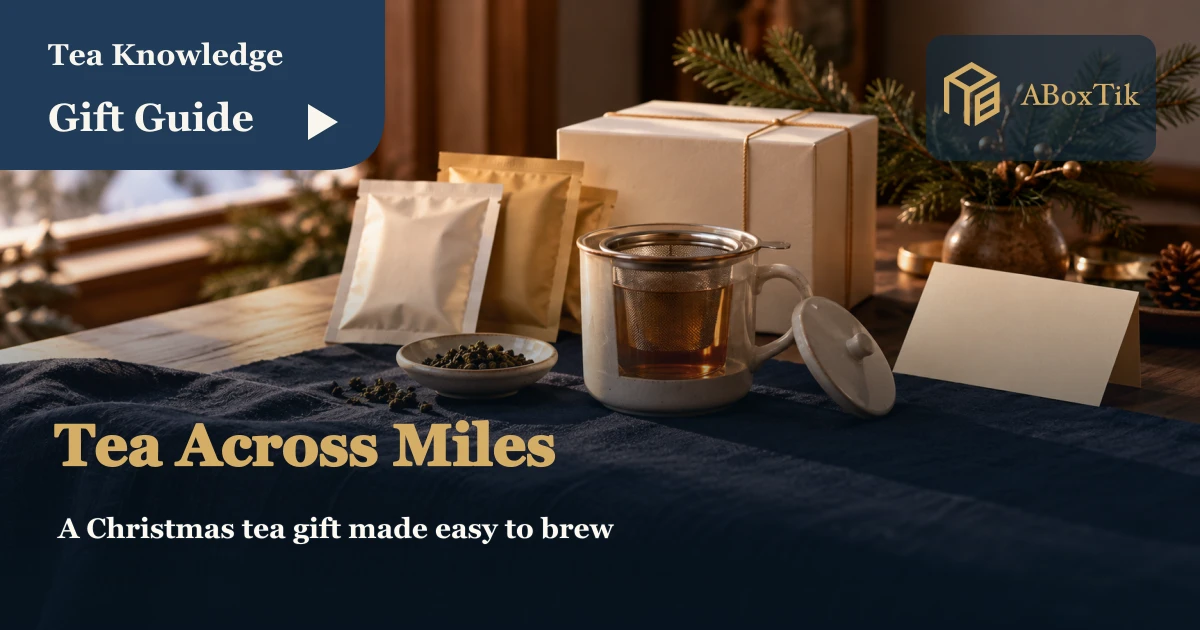
A tea gift can carry a little of Taiwan across a great distance. Make the first cup simple, and the thoughtfulness can last well beyond the wrapping.
Christmas tea gifts for friends abroad work best when they match the way the recipient actually brews. Start with a familiar mug, suitable hot water and a tea bag or infuser that is easy to remove. Add clear directions for the selected tea, then check the destination and delivery route separately. An extra ribbon is lovely; knowing when to take out the tea is often more useful.
If their taste is a mystery, ask about a recent cup and the equipment they use. This is a conversation, not an entrance exam for Taiwanese tea. The broader Christmas gift guide covers seasonal ideas; here, the focus is a comfortable first brew in another country.
Christmas tea gifts: ask three small questions first
Three questions are enough to begin: do they drink tea, what do they brew in, and would they welcome a different flavor? “Do you have an infuser?” is easier to answer than a question about oxidation levels. If they do not want tea, choose something else. A considerate gift should not arrive with a new hobby assigned to its recipient.
A message such as “Would tea bags fit your mornings, or do you enjoy measuring loose leaf?” gives a practical answer without spoiling every detail. Record the format and a flavor preference separately. The guide to giving tea explains the wider gesture, while Taiwanese tea and its craft offers a story to share when your friend is curious.
Count preparation and cleanup as part of convenience
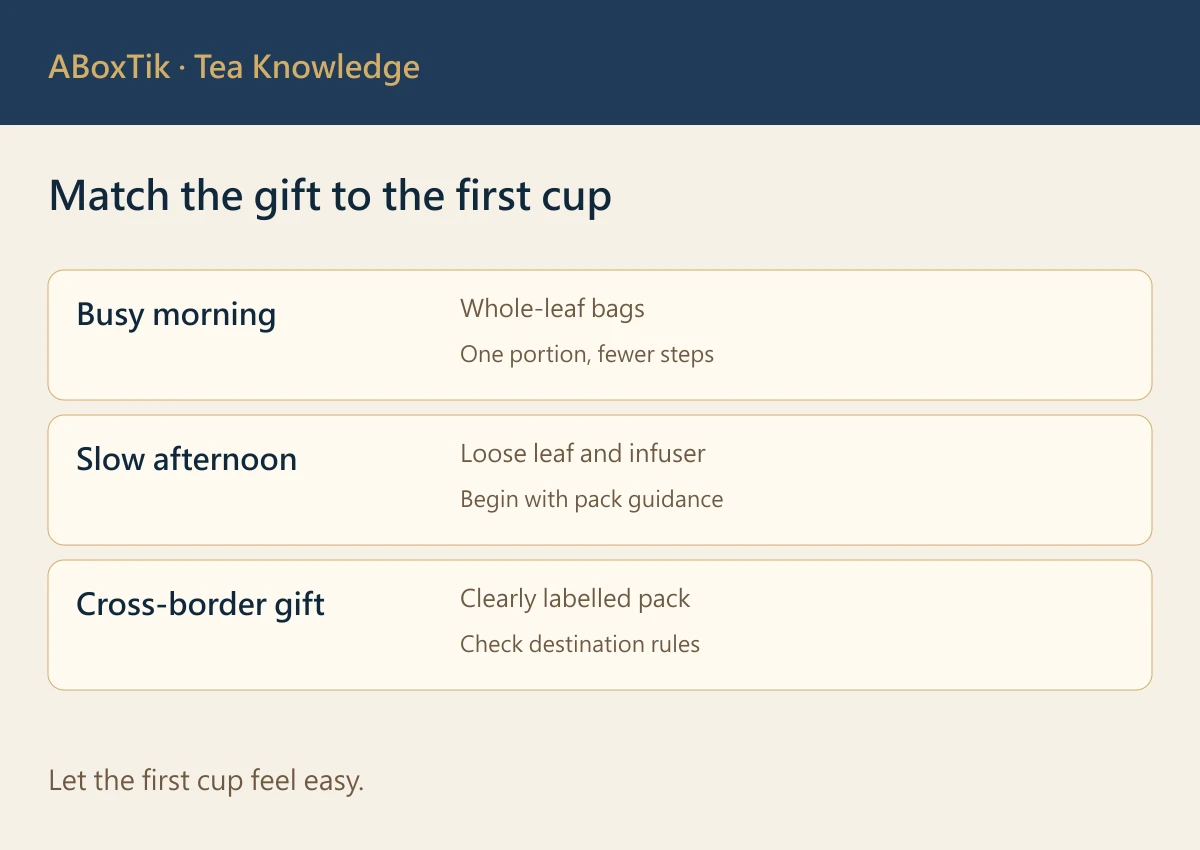
Whole-leaf tea bags reduce the need to measure leaves and filter them afterward. Loose leaf makes sense for someone who already has suitable equipment and enjoys changing the dose. Neither format makes every tea identical to brew. Start with the directions on the actual product rather than copying a single temperature and time onto every gift.
Our whole-leaf tea-bag guide helps explain the format. For loose leaf, check that an infuser fits the mug, can be lifted out easily and is straightforward to empty and rinse. Walk through the whole sequence: find the vessel, add water, brew, remove the leaves and clean up. If one step needs an unfamiliar tool, resolve it before sending an entire tea-table collection across the ocean.
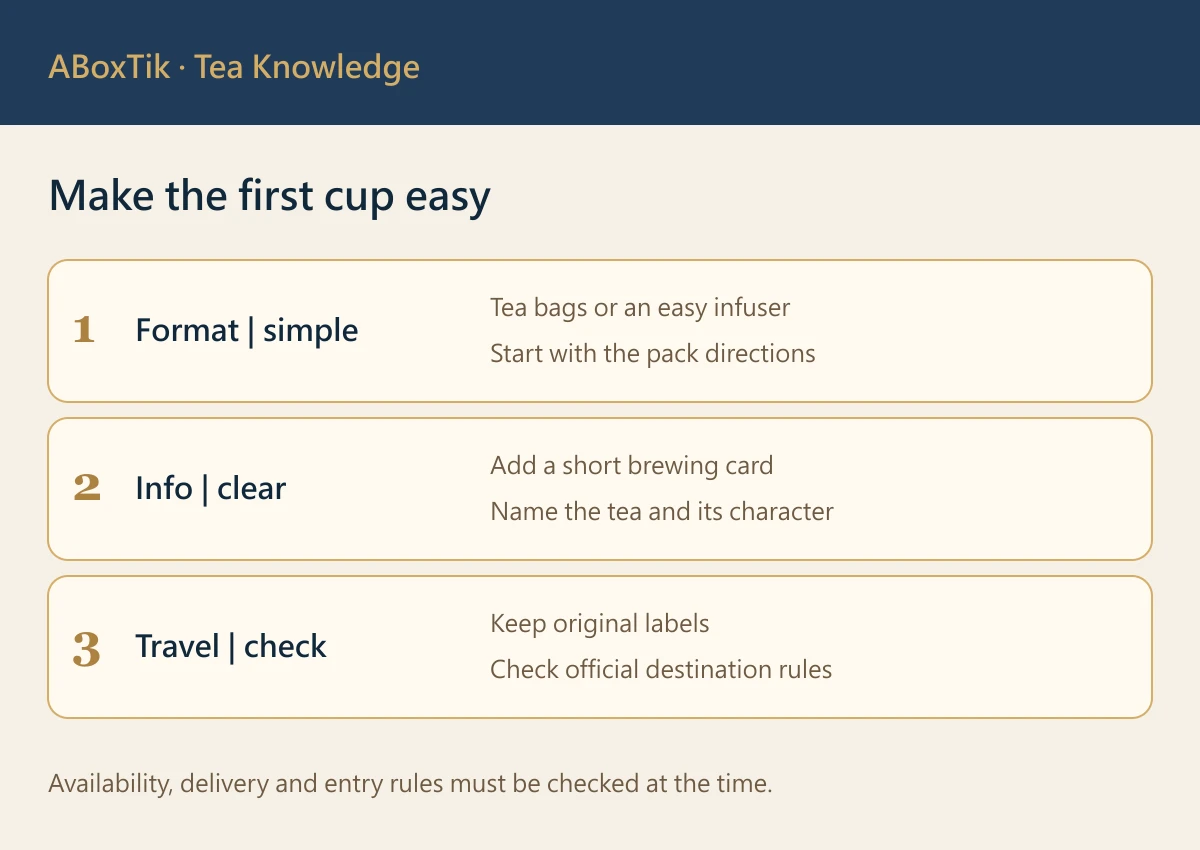
Write a brewing card that can stand on its own
Use the front for the tea name, a brief flavor direction and your greeting. On the back, list the amount of tea, water volume, temperature and first steep time using the selected product’s instructions. Say when to remove the bag or separate the liquor from the leaves. If guidance is missing, ask the supplier before filling in the card; an attractive blank is more honest than an invented universal recipe.
A useful fill-in template reads: “Tea: __. Use __ bag(s) or __ grams. Add __ ml water at __. Steep for __, then remove the tea. If it tastes too strong, shorten the next steep first.” Complete these fields before giving the card. A link to the steeping-time guide or guide to another infusion can offer more detail, but scanning a code should not be a requirement before the first sip.
Keep a copy of the completed card with the exact product name. If a question arrives later, both of you can look at the same directions instead of trying to remember which tea was packed beside which greeting.
Translate the action, then introduce the tea name
Keep the original tea name visible and add a short, natural English explanation. “A Taiwanese oolong tea; follow the enclosed brewing directions” gives the reader a useful starting point. Write grams and milliliters clearly. If you also provide a familiar local measure, check the conversion and specify it; mugs are wonderfully individual objects and rarely agree on what a cup means.
Someone interested in cultivars might enjoy learning about Green Jade oolong or Jinxuan oolong. Pick one relevant detail rather than squeezing a miniature encyclopedia onto the card. Aroma words invite exploration; they should not require a friend to identify the same flower you imagined. Try “Was the first cup stronger than you expected?” as a follow-up. It opens the door to an adjustment instead of asking for a polite review.
Check the contents, route and recipient separately
Decide whether the gift will travel in luggage or by post before checking the destination’s current official guidance. Pure tea and blends with additional ingredients may require different checks, and traveler and postal procedures can differ. Preserve the original ingredient and product labels. Follow the destination and carrier instructions for the actual route, including any relevant transit arrangements, rather than treating one successful journey as a rule for every country.
Timing deserves its own conversation. Confirm the complete address, whether the recipient will be away and who can receive the parcel. Local holidays may affect handling. The overseas tea-gift checklist and guide to English information and recipient handover offer background questions; verify the current route independently. For a particular arrival date, discuss available options and a buffer with the carrier. The greeting card need not sign a delivery guarantee on the courier’s behalf.
Leave a small plan for arrival and the next conversation
After arrival, ask the recipient to check that the packaging is intact and follow its storage instructions. Keep unopened tea sealed in a dry place away from light, heat and strong smells. There is no need to open every individual packet for a photograph. The tea-storage guide can help with the next step, and the mixed gift-box guide explains how variety and format serve different households.
A gentle follow-up can be as simple as “Did the tea fit your mug, and was it easy to remove?” If the box is still unopened, let life take its turn; a Christmas gift does not need a completion dashboard. If a cup was too strong, note the actual water volume and time, then suggest changing one thing. If the flavor was unwelcome, keep that useful answer for next time. Price and prestige should never oblige a friend to enjoy a taste.
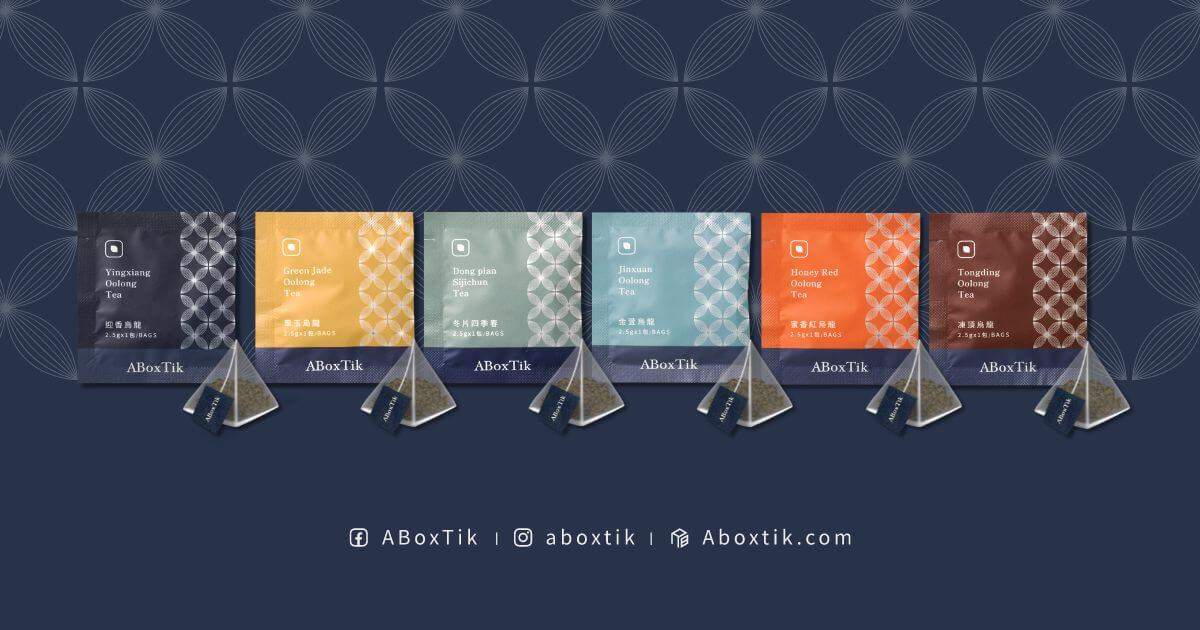
Follow ABoxTik | Let the box make the journey and the cup find its place in daily life.
Prepare the first step and leave room to explore
Before choosing an overseas Christmas tea gift, write down how it will be brewed, how its instructions will be read and how it will reach its recipient. A two-box tea-bag gift set offers a starting point for someone who wants fewer choices. For an established tea drinker interested in several flavors, explore the Classic Taiwanese Tea four-box set. Check the current product page for contents and availability.
Read the little card once more before sending it. A clear name, usable directions and room for honest feedback can make the thoughtfulness continue long after the wrapping has been put away.
Related reading
- Whole-leaf tea bags: understand the everyday format.
- Tea storage: help the gift settle in after arrival.
- Two-box tea-bag gift set: choose around the recipient’s preferences.
Sources
Sources checked 15 October 2026.