
Tea Knowledge
Four Seasons Tea Bags: Moving from Takeaway Tea to Home Brewing
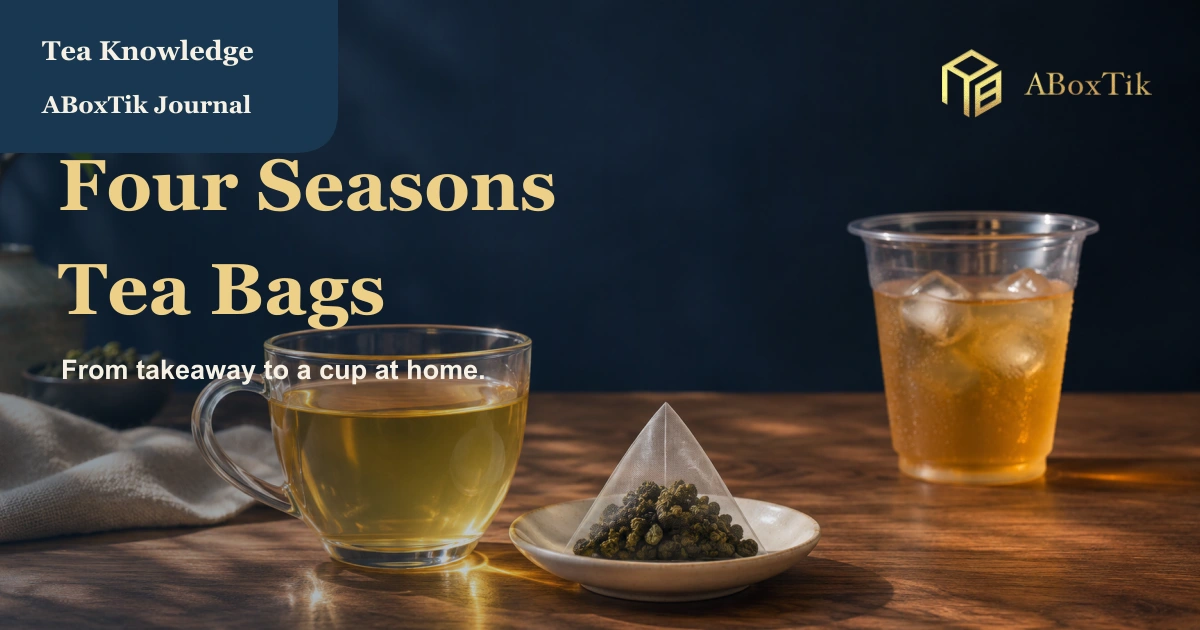
Choose Four Seasons tea bags by checking the tea and bag weight first, then compare plain tea, sugar and ice separately. A familiar tea name does not mean every leaf and brewing method will produce the same drink. Home brewing can follow the direction you enjoy without having to reproduce a shop recipe exactly.
A takeaway order may take two words, while a home brew introduces water quantity and timing to the conversation. Give them a simple starting point: one reference cup, followed by one adjustment at a time.
Four Seasons tea bags and takeaway tea: four moving parts
Takeaway tea is a finished drink; a tea bag puts the preparation choices back in your hands. Separate the tea itself, water and steeping, sugar, and ice. A shop may use a different leaf, vessel or preparation method. Start by choosing an aroma direction rather than asking a new pack to reproduce a remembered cup on the first attempt.
Ask what you liked: floral fragrance, a clear tea presence, or the complete cool and sweet drink. “All of those” is a useful answer, too. Taste the plain tea first and add the other conditions gradually. Changing the water, cup, ice and timing together makes it difficult to know which adjustment mattered.
Separate sugar and ice before blaming the leaves
Hot unsweetened tea and cold lightly sweetened tea differ in more than their leaves. Pour a small plain sample and let it reach a comfortable drinking temperature. Prepare another with a measured amount of the sugar you normally use. If sweetness accounts for much of the preference, keep that observation rather than rejecting the tea immediately.
After adding ice, note the time and the total amount of liquid you actually drink. The first sip and the partly melted final portion may have different strength. If the latter feels too dilute, check total water and ice next time before extending the steep dramatically. There are already several variables in the cup; they do not all need the microphone at once.
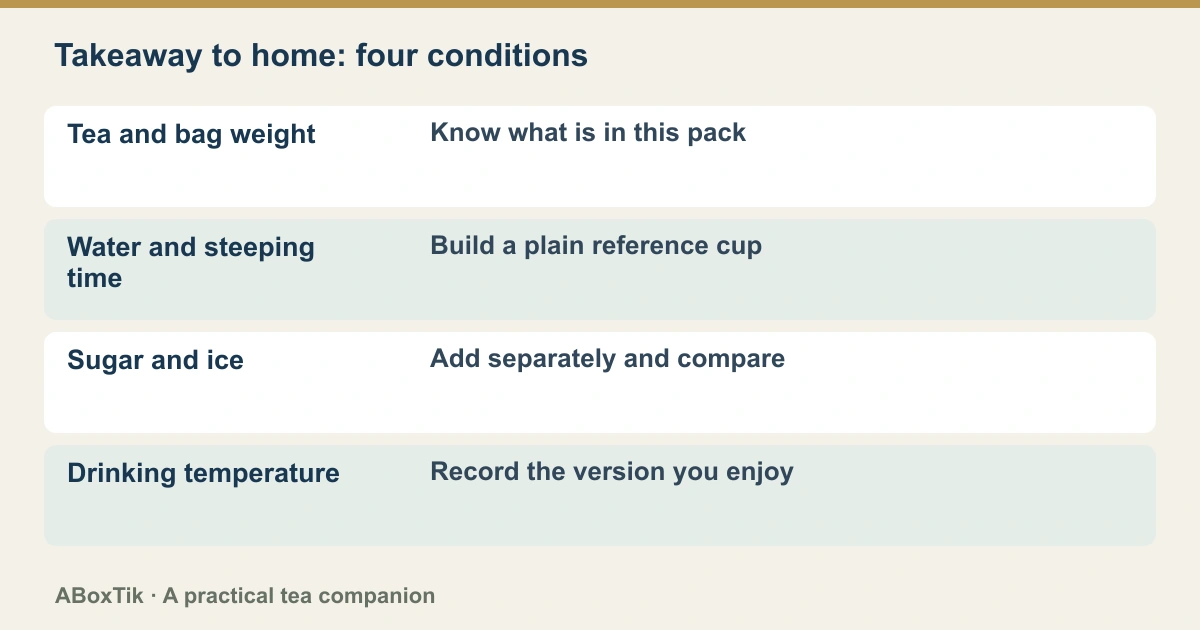
First brew: use the pack to make a plain reference
Choose a cup with a known capacity and begin with the water, temperature and time recommended for that product. Separate the brewed liquid from the bag, then write down the conditions. Only after tasting should you decide which single element to adjust. A very large volume, a long steep and extra ice together offer no clear reference.
For more tea presence, explore the tea-to-water ratio or time within the product guidance. If bitterness or astringency becomes too prominent, compare a shorter steep; bitterness is not the only measure of strength. The mug and tea-bag brewing workflow can help with the equipment. Here the main task is learning to adjust a finished-drink habit at home.
A three-cup comparison for plain tea, sugar and ice
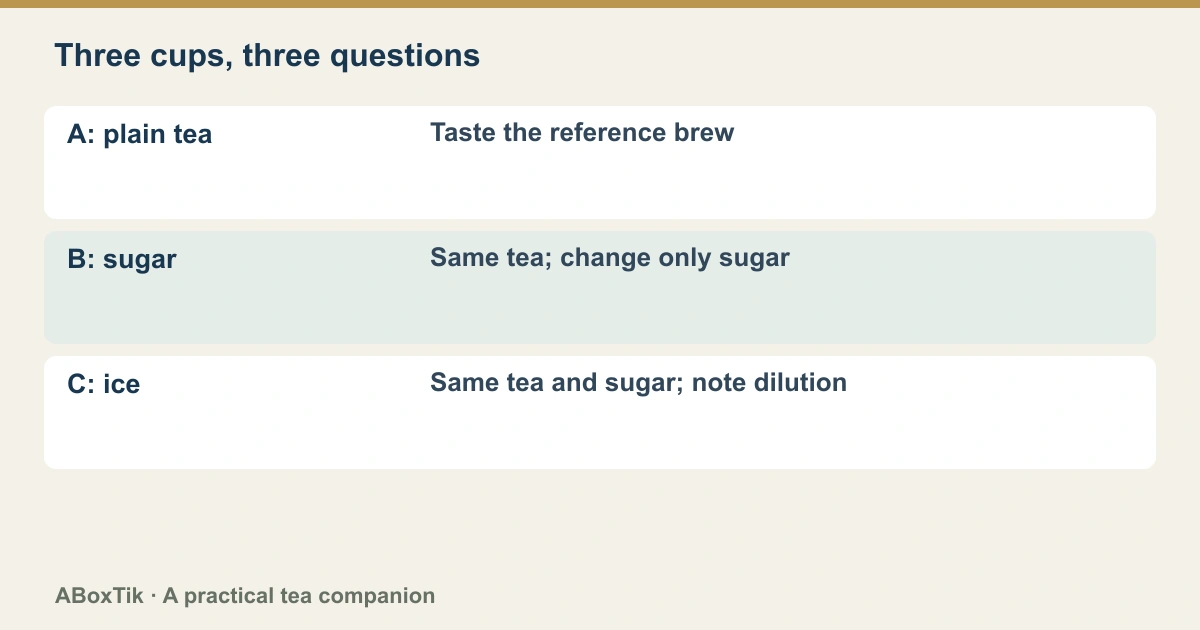
Divide one reference brew into small portions when there is time to taste slowly. Sample A plain; change only sugar in B. For C, keep the tea and sugar amounts consistent and observe what adding ice changes. You can spread the comparison across days if that suits the amount you want to drink.
| Sample | Keep steady | Question |
|---|---|---|
| A: plain | Tea and brewing conditions | What do I enjoy in the tea itself? |
| B: sugar | Same tea and drinking temperature | Which preference changes with sweetness? |
| C: ice | Record tea, sugar and cup volume | Do I like it after the ice melts? |
This is a tool for your own recipe. When a version works, record the cup capacity and measuring spoon as well. Those ordinary details make the next drink easier to repeat than a note that simply says “about right.”
What to check when buying: leaves, weight and pack size
For Four Seasons tea bags, read the contents, tea name or cultivar, weight per bag and bag count, then look at aroma descriptions and preparation guidance. Whole-leaf form describes the tea material; it does not by itself answer whether the particular tea suits your taste. Connect one stated detail with the preference that matters most.
For example, ABoxTik Winter-Picked Four Seasons lists 2.5g × 10 bags and describes a fresh gardenia-like fragrance alongside its other flavour notes. Use those details to choose a starting direction and follow the actual pack for brewing. The familiar words “Four Seasons” should not create an expectation that different harvests and preparation styles taste identical.
Winter-picked tea, cultivars and the wider choice
Treat a tea name, harvest description and cultivar as separate pieces of information. For the background, read the Winter-Picked Four Seasons introduction or the Four Seasons tea guide. This article uses that information to help with one change in drinking routine, rather than retelling the full cultivar story.
If your first trial suggests you would prefer another flavour direction, a familiar name need not limit the choice. The six ABoxTik Taiwan tea comparison offers a wider view. Describe whether you want more floral fragrance, a sweeter mature aroma or a more defined body, then look at the corresponding current product.
Cost and convenience: count what you actually drink
Divide the amount paid by the bag count to find the tea cost you commit to each time. When comparing a takeaway cup, record serving volume, sugar and ice as well as preparation time. Comparing price labels without quantities can confuse a smaller purchase with a lower cost for the same amount.
Do not count every possible later infusion as a serving you will certainly drink. Try the routine for a few days: note the equipment, timing and washing involved at breakfast, work or dinner. The tea bags versus ready-to-drink tea guide focuses on serving costs and convenience. The loose-leaf versus tea-bag value guide answers a separate comparison if you are considering those two formats.
Common questions: a different cup can still become a favourite
Can unsweetened takeaway tea still taste different? Yes: leaf choice, strength, temperature and ice can differ. Begin with the conditions you can control. Does a floral note mean I should add flowers? Read the contents and flavour description first, then taste the plain tea; an aroma description is not an instruction to add another ingredient.
Must I remove sugar completely? Adjust to your preference. This comparison helps identify a drink you enjoy rather than sets a rule for every cup. How do I choose the next pack? Save the tea name, brewing conditions and sugar-and-ice version you would repeat. If a condition is still uncertain, another brew from the current pack may answer more than immediately filling a shopping basket.
Four Seasons tea bags are easier to choose when there is a plain reference cup, a strength you enjoy and a realistic serving size. Sugar or ice can remain part of your own recipe. Record the conditions that worked, and the next cup starts with a useful note rather than a guess.
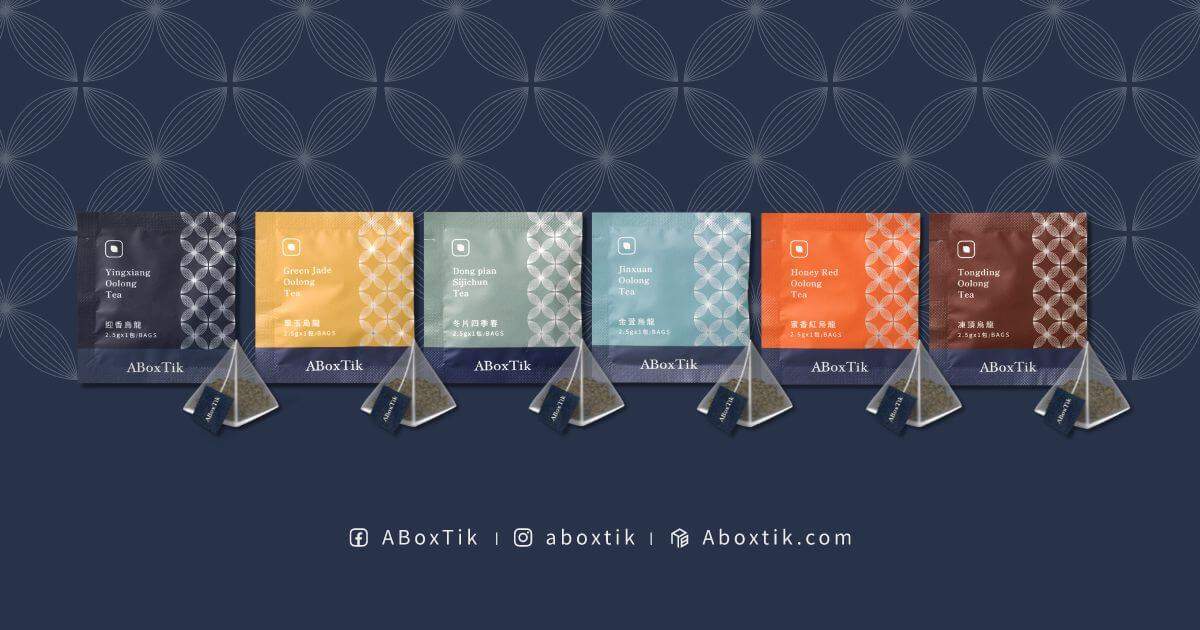
Once “less ice, a little sugar” has become a note in your own brewing book, browse tea gifts, more articles or the latest selections below. There is no queue behind you while you choose the next cup.