
Tea Knowledge
Sun Moon Lake Black Tea: How Yuchi Shapes Ruby and Assam
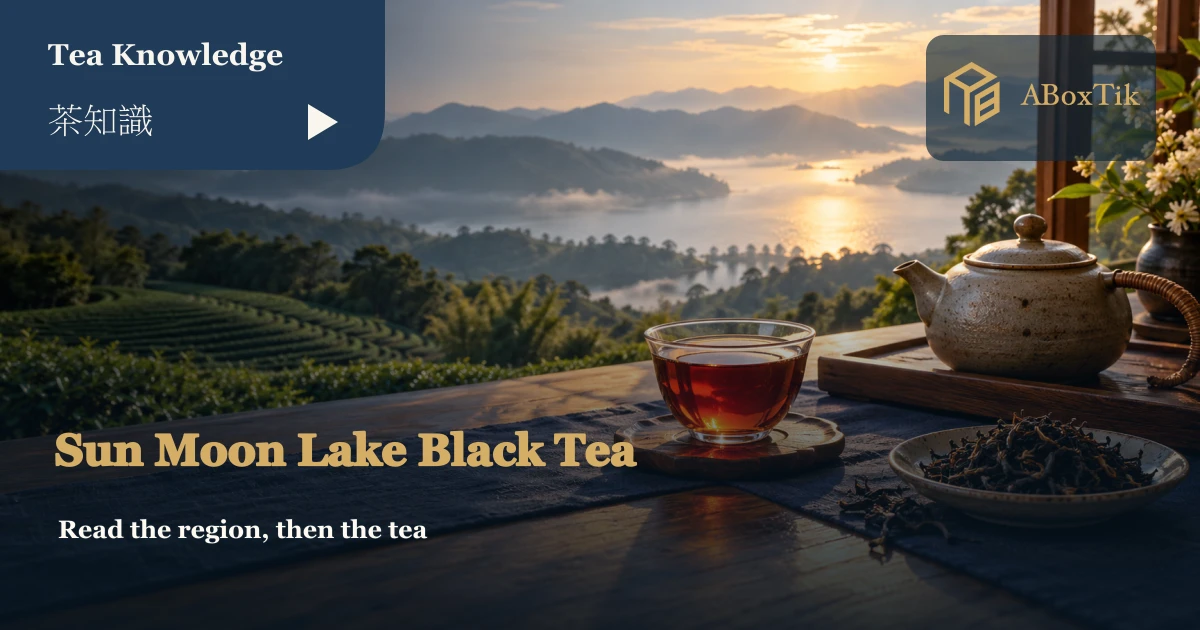
A region begins the story. The particular cup supplies the details.
Sun Moon Lake black tea names a regional tea tradition, not a single cultivar. Around Yuchi in Nantou, that tradition includes TTES No. 8 Assam, No. 18 Ruby and No. 21 Hongyun. Growing conditions matter alongside cultivar, harvest, processing and storage. Read those layers separately and a familiar place name becomes the beginning of a useful question.
If several packets all say Sun Moon Lake, there is no need to memorise the district before making a first choice. Begin with the actual origin and cultivar on the packet, then compare a small serving. The aim is to bring a little more of the place into view without asking a landscape to predict every flavour.
Sun Moon Lake, black tea and cultivar answer different questions
Yuchi is a township in Nantou associated with Sun Moon Lake and a long-established black tea industry. The national scenic area’s introduction to the Old Tea Factory places plantations, machinery and local tea production in the same landscape. It offers regional context, rather than an identity test for an individual bag.
The place name points towards where a tea comes from or the local story used to introduce it. “Black tea” identifies a processing category. A cultivar name identifies the tea plant. Those descriptions can appear together, but none makes the other two unnecessary. Ask the seller how the actual growing location and cultivar are recorded.
For background on the category, see Taiwanese black tea and the six tea categories. Keep the packet beside the cup: its batch information is usually more helpful than trying to reconstruct the tea from a photograph of the lake.
Yuchi’s environment is context, not a flavour guarantee
Basin geography, growing conditions and generations of cultivation experience help explain why black tea is important here. The national scenic area describes Yuchi through its climate and tea industry. That relationship is useful background, but it does not supply the missing harvest date or processing record for a particular batch.
Even within one township, growing locations, weather, leaf maturity and handling differ. A place name should invite attention to those details. It should not be treated as a promise that every packet has the same sweetness, thickness or aroma. The landscape sets a stage; it does not insist that every harvest recite the same lines.
When a producer offers a garden location or harvest description, keep it with the tasting note. If those details are unavailable, ask a straightforward question rather than filling the gap with a romantic explanation. Taiwan’s tea regions provides a broader map for understanding place names.
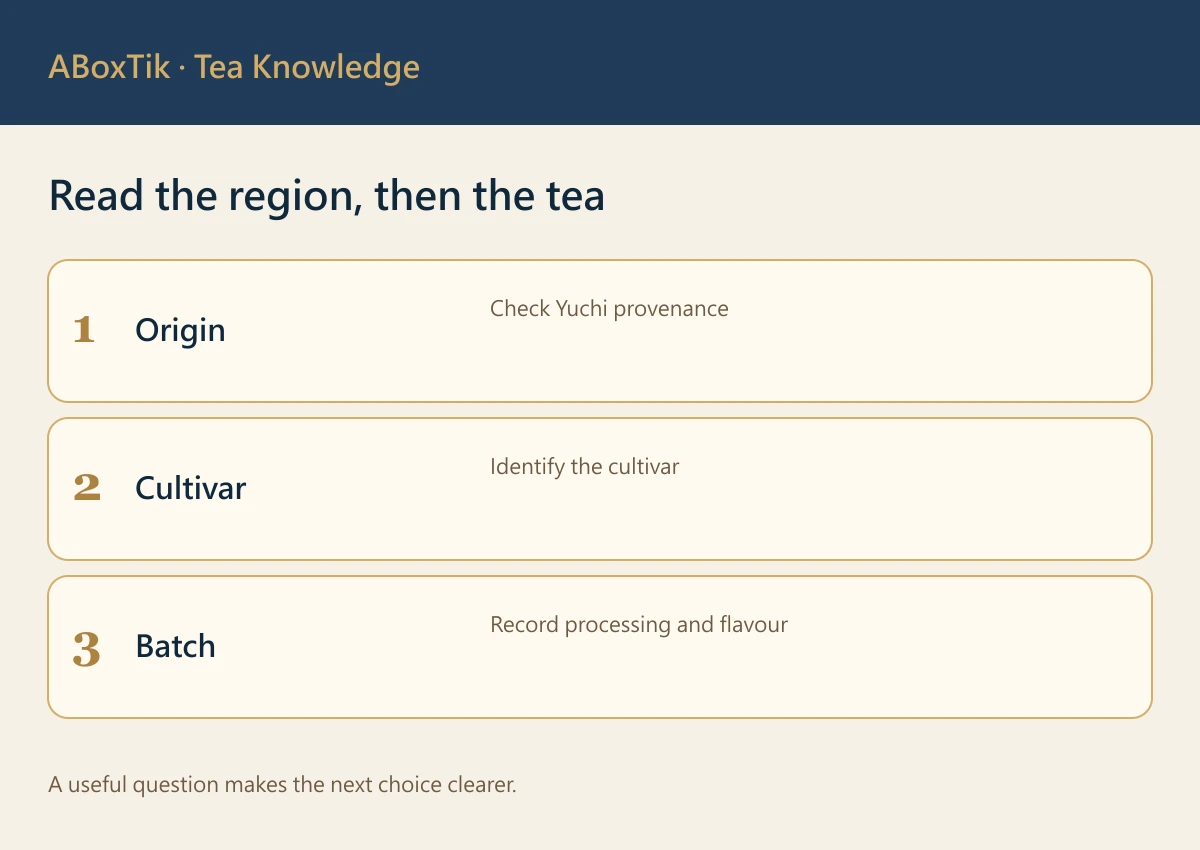
Assam, Ruby and Hongyun: match the name to the number
TTES No. 8 is commonly introduced as Assam tea in the region. TTES No. 18 is Ruby, a cultivar developed from Burmese large-leaf tea and Taiwan native tea. Official descriptions use cinnamon and mint as aromatic reference points for Ruby. TTES No. 21 Hongyun has a separate breeding background and is often introduced through citrus-flower associations.
All three can be discussed within Yuchi’s black tea tradition without becoming synonyms. A larger cultivar number is not a higher grade. A mint association does not mean mint leaves were added, either; ingredients belong on the ingredient information, while aroma words describe a sensory impression.
Read the Ruby black tea guide for the cultivar’s fuller background, and Hongyun versus Ruby for a focused two-cultivar comparison. This regional guide keeps those identities visible while leaving detailed breeding history to the dedicated articles.
Processing gives the leaves another part of their story
Black tea production involves withering, rolling, oxidation and drying. These operations change and stabilise the leaves rather than merely leaving them to wait. Withering softens the material; rolling works the leaf tissue; the subsequent oxidation and drying contribute to the finished tea’s appearance and flavour. Actual practice follows the material and the producer’s process.
That is why a cultivar name cannot fully predict a finished batch. When a maker provides leaf format, harvest information, processing notes or brewing guidance, read them together. A whole-leaf tea and a smaller-leaf format also need appropriate preparation before a sensory comparison means much.
Whole and broken leaf formats helps with that distinction. For a broader view of craft and place, return to why Taiwanese tea is distinctive. Neither a processing term nor an attractive origin story removes the need to taste the actual tea.
Let this batch, rather than the region, fill the tasting card
Dry aroma, warm-cup aroma and the flavour after a sip may give different impressions. Record a familiar association first: floral, ripe-fruit, spice or a softer developed note. Describe it as a feature of this batch prepared this way, rather than a requirement that every Sun Moon Lake black tea must meet.
Follow the tea’s own brewing guidance, noting leaf amount, water amount, temperature, time and vessel. If the cup is too forceful, use a fresh portion of the same tea and alter one condition next time. That gives the change a clear context; re-steeping already-used leaves is a different comparison.
The aroma sequence and the steeping-time guide can support those notes. A quiet nose is not a failed examination. “I would like a lighter cup next time” is already useful information, even before any cinnamon or citrus flower joins the conversation.
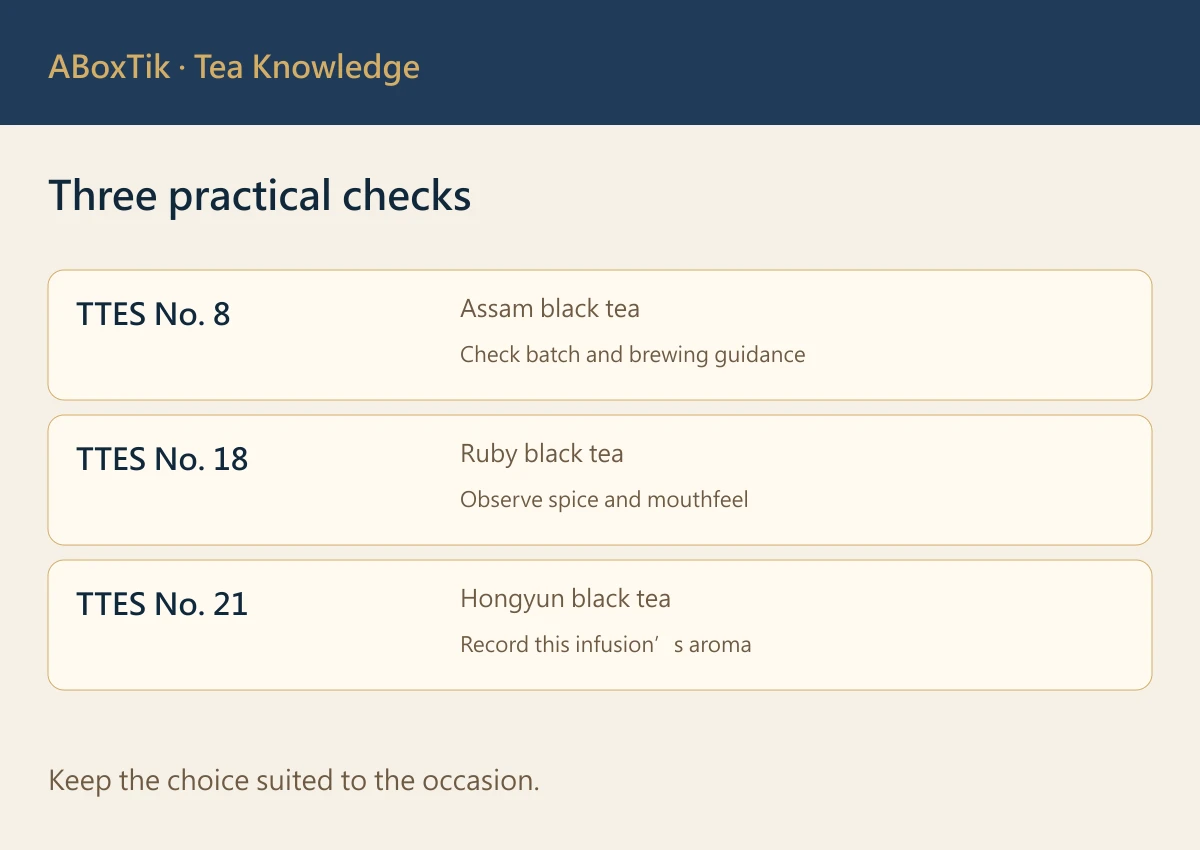
Six fields worth reading before buying
| Field | Question to ask |
|---|---|
| Cultivar | Which name and number describe this tea? |
| Origin | How is the actual growing location stated? |
| Leaf format | Whole leaf, smaller leaf or tea bag? |
| Batch | What harvest or production information is available? |
| Preparation | Which vessel and brewing directions are suggested? |
| Storage | How should this packet be kept after opening? |
These fields make price comparisons more useful too. Compare net weight, format, packaging and the information supplied together. A place name cannot do all that work alone. If one tea was opened much earlier than another, note that background before attributing the difference entirely to cultivar.
Tea storage helps arrange the packet at home, while observing bitterness, astringency and strength offers language for a cup that feels stronger than expected. Keep purchase questions concrete enough for a seller to answer rather than asking for a universal “most authentic” ranking.
Visiting Yuchi: questions that connect the cup to the place
Before visiting a tea factory, garden or shop, check its actual arrangements for entry, guiding and tasting. The national scenic area describes retained machinery and production spaces at the Old Tea Factory. Those features can help explain the work, but they should not be assumed to represent every producer or current batch.
At a tasting, try asking: which cultivar is in this cup, where was it grown, and what did the maker want to bring out? A small serving and one clear question often produce a more memorable exchange than a long list of aroma terms. Follow the host’s directions for utensils, photography and work areas.
Taiwanese tea hospitality offers further context. Take home the name, a useful brewing note and perhaps a packet you actually enjoyed. A clearly recorded detail tends to keep better than a grand legend that nobody had a chance to check.
Tea, one box at a time
Let the label lead to a better question
At ABoxTik, we like the point where a place name becomes a conversation: which cultivar is this, where was it grown and how would the maker prepare it? Keep those questions beside a first cup and allow preference to emerge without a regional league table.
For a wider comparison, view the actual teas and portions in the Classic Taiwanese Tea Four-Box Set. Choose Ruby or Assam separately according to the cultivar and origin information on the relevant product. A small, well-understood beginning leaves plenty of room for the next tea.
Related reading
Sources
- Sun Moon Lake National Scenic Area: Old Tea Factory
- Tea and Beverage Research Station: TTES No. 18
- Tea and Beverage Research Station: Taiwanese tea classification and processing
Sources checked 20 October 2026.