
Tea Knowledge
Taiwan Gifts for Overseas Friends: Tea, Teaware and Stories
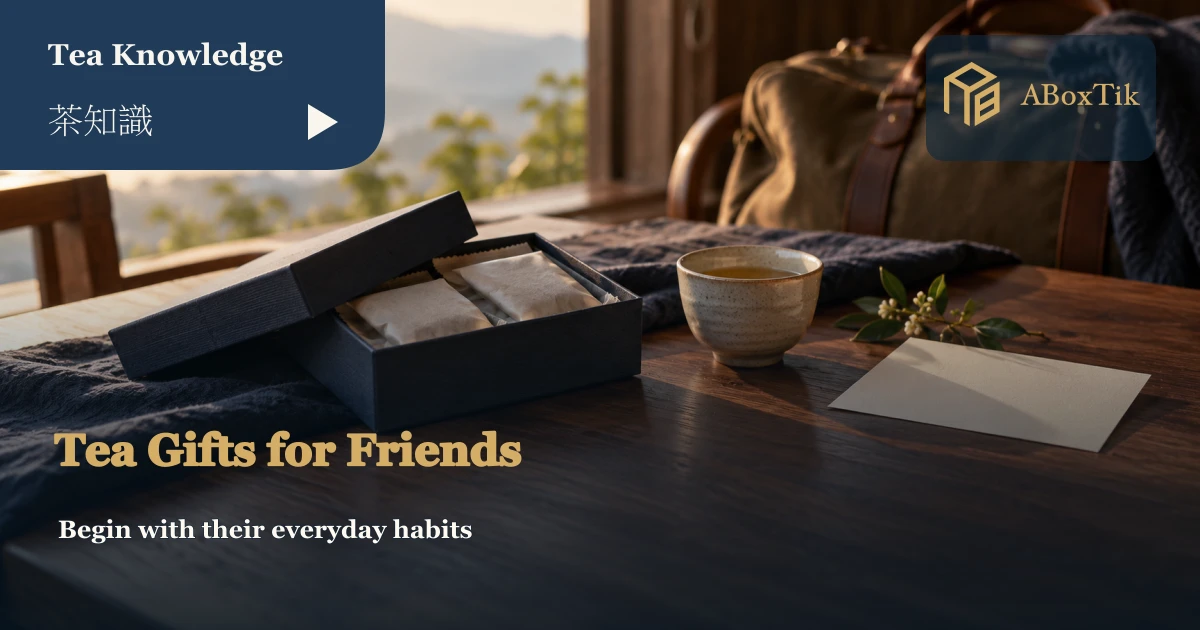
The kindest clue for a gift travelling far is often hidden in how its recipient lives every day.
Choose a Taiwanese gift for an overseas friend by asking whether they drink tea, what equipment they use and what kind of cultural sharing they enjoy. Tea, tea bags, teaware and a story card serve different routines.
Ask whether they would rather try several Taiwanese teas or receive one object they can use every day. Once the answer is clear, portion, language and travel planning become much easier.
Ask about daily life before guessing nationality
Ask whether the friend drinks tea, enjoys fresh floral or roasted notes, and has hot water, a cup and a way to strain leaves. Someone who steeps slowly on weekends and someone who wants a tea bag at work both offer good answers. A gift should fit a life; it need not rebuild one.
If tea is not their habit, choose a clear cultural card, a useful object or another Taiwanese selection. First-visit host gifts and cross-cultural gift communication help keep the conversation considerate. A passport cannot answer a person’s preference.
For an office gift, ask whether a mug and hot water are available where the tea will actually be used. Individually wrapped portions are easier to divide between home and work than a large open pouch. For a weekend brewer, ask which pot or infuser is already a favourite; matching that routine often matters more than adding another accessory.
Choose leaves, bags or teaware for the person’s routine
Loose leaf suits someone with a pot or infuser who enjoys adjusting quantity; individually wrapped tea bags make portions and sharing simpler. Neither is a higher form of care. Whole-leaf tea bags and whole and broken leaf explain what to check beyond the outside box.
Teaware also needs to fit washing and storage. A small, easy-to-clean cup can be kinder than a large set in a compact kitchen. Teaware materials and use helps with capacity, handling and cleaning before an object begins a long journey.
If a ceramic cup is the preferred gift, check its usable size and cleaning instructions, then package it separately from the tea. Keep a small explanation of who made it when that information is available. A cup that fits the cupboard and a tea that fits the brewing setup have a much better chance of becoming everyday companions.
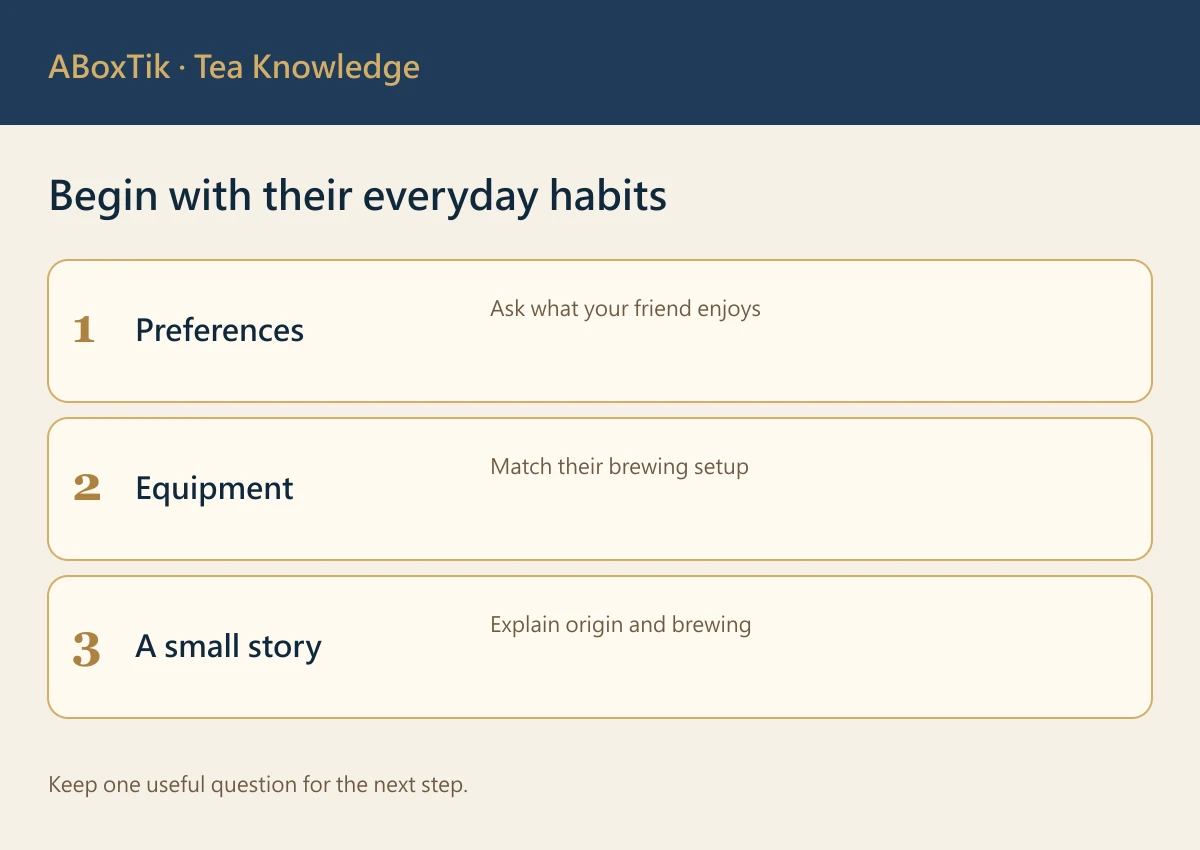
Match a gift form to a real use case
A work mug and hot water suggest clearly labelled tea bags; a weekend leaf brewer may enjoy a smaller loose-leaf selection; someone who enjoys objects but has little space may welcome one useful cup. Match the form to the routine before adding decoration.
| Everyday situation | Possible gift | Ask before choosing |
|---|---|---|
| Office mug and hot water | Clearly labelled tea bags | Preferred aroma and portions |
| Weekend leaf brewing | Small loose-leaf tea | Usual pot or infuser |
| Limited space | One easy-use cup | Cleaning and storage |
There is room for a mixed choice: a modest tea selection with one readable card, rather than a full tea service. Write which packets belong to which tea and keep the brewing guidance beside them. The friend can then choose one on an ordinary morning without first arranging a ceremonial table.
Tell the story of this tea, not all of Taiwan at once
A short card can name one true detail about the tea’s origin, cultivar or processing, then offer a brewing starting point. Taiwanese tea terroir and craft supplies background, while the card should return to the product in the hand. The box is not required to contain a full textbook.
For English wording, use the actual product information and natural English for Taiwanese tea. Do not add an unverified altitude, award or certification. Invite a response such as “Would you begin with floral or roasted?” rather than demand a correct tasting answer.
Try writing the card in three lines: the tea name, one confirmed detail of its origin or making, and how to begin brewing this product. Leave unfamiliar specialist words for a later conversation. A short invitation such as “Tell me which one you enjoyed” gives the story somewhere friendly to go after the package is opened.
Plan carrying, shipping and handover separately
Personal carrying and mailing are different journeys. Taking a tea gift abroad frames traveller checks, while overseas tea shipping concerns carrier and information preparation. Do not use one route’s conditions as an answer for the other.
Protect box, tea, vessel and card individually against pressure and moisture while retaining product information. Tea storage helps with dry leaves. Confirm when the friend can receive the gift and whether its language is readable; comfort at handover is part of the present.
Before packing, check whether the recipient will be home and whether the gift is arriving with a traveller or through a carrier. Keep the ingredient list and original packaging readable. If a cup is included, allow space for protective wrapping and check the combined weight; the smallest box is not always the easiest box to carry safely.
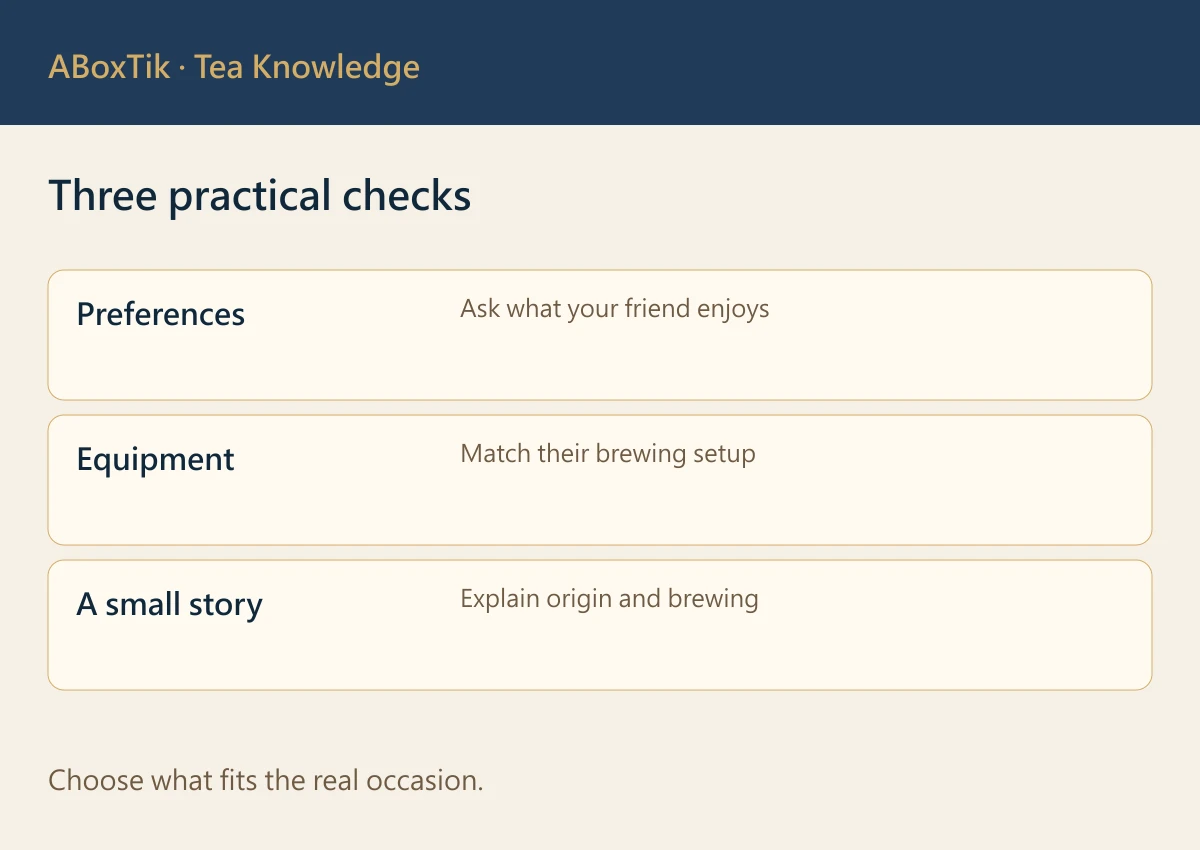
Leave the budget for what will be used
Choose a comfortable total amount, then divide it between tea, packing, card and delivery. gift budget planning offers a method, but a private friendship has its own scale. There is no need to race an unknown shopping cart.
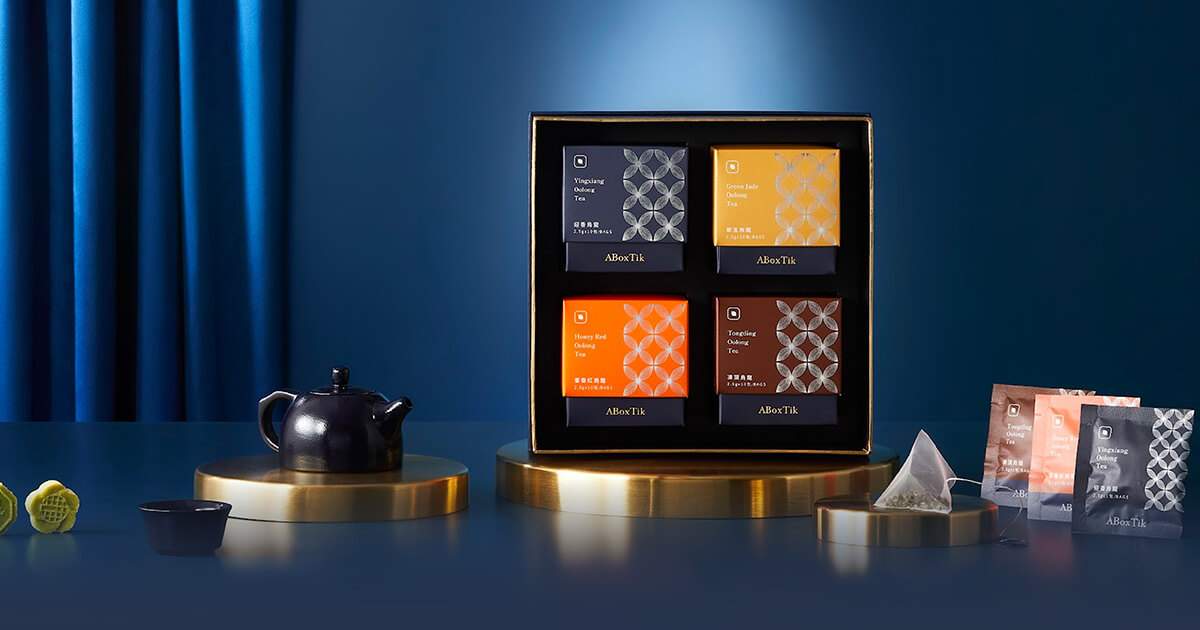
Two-box tea bags and a multi-tea gift box make it possible to compare current contents and portions. Next time, asking “Was that format convenient?” is enough. A tea gift need not carry performance targets.
After arrival, ask about convenience before asking for a flavour review. Was the packet easy to identify? Did the brewing instructions make sense? Those answers help choose a useful refill later. A friend who enjoys one tea does not need the whole range next time; remembering a small preference is already a thoughtful continuation.
A thoughtful overseas gift also leaves room for the recipient to use it later, share it with another person, or simply enjoy the card before opening anything. That freedom matters more than an oversized gesture. By choosing a clear format, keeping ingredients and brewing information available, and asking one gentle follow-up after arrival, the sender turns a package into a conversation that can continue at the recipient’s own pace.
Four questions before choosing tea for family overseas
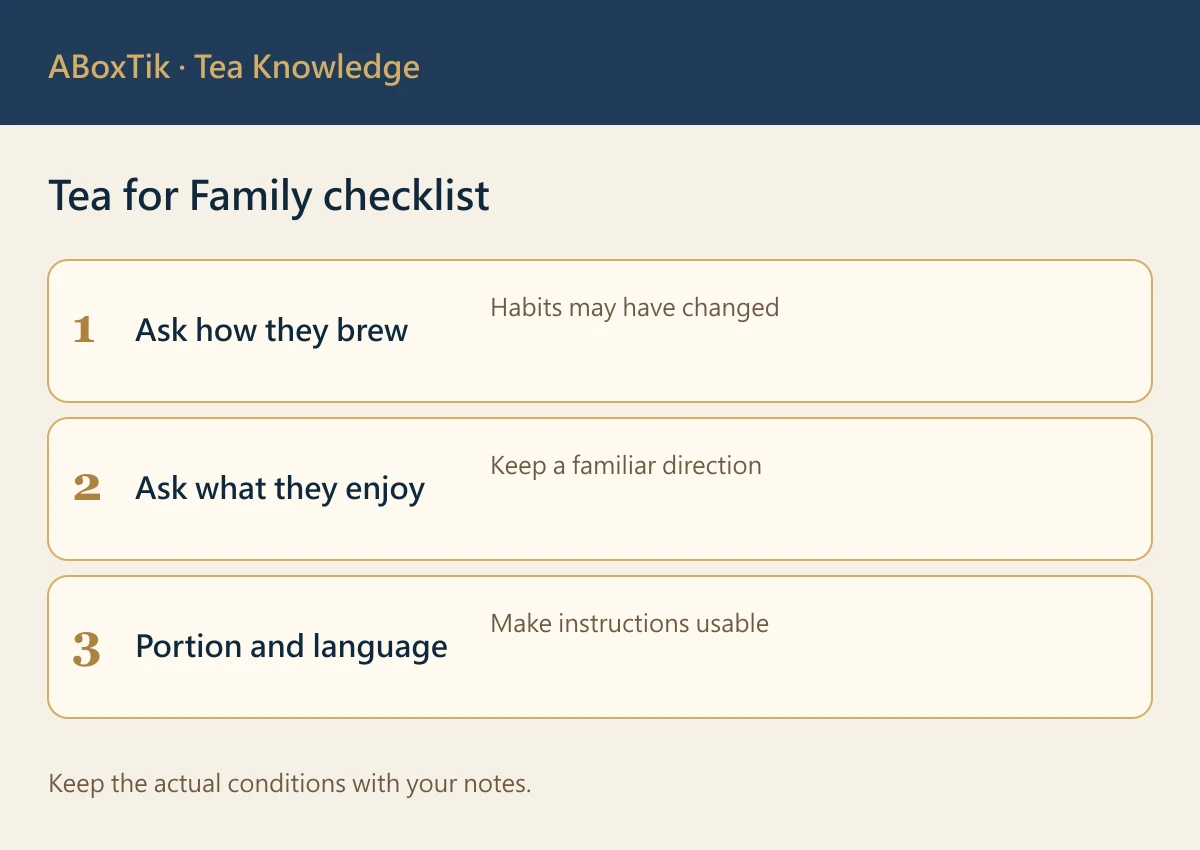
Ask about equipment first or flavour first; either order works when four answers are covered: how tea is made, which direction is enjoyed, how much is used, and what instructions would help. Equipment makes the first cup manageable. Preference respects the person. Neither question needs to win. After years of living apart, even the large teapot you remember may have quietly retired.
| Question | An easy way to ask | What it changes |
|---|---|---|
| What do you brew with now? | A mug, basket or small pot? | Loose leaf or bags, portions and handling |
| Which cup have you enjoyed recently? | Light aroma, roast, or the familiar tea? | A familiar direction plus an optional discovery |
| Who usually drinks it? | Mostly you, or several people sharing? | Pack count, portions and opening pace |
| Which language helps at home? | Chinese, English, or short lines in both? | Instructions other household members can use |
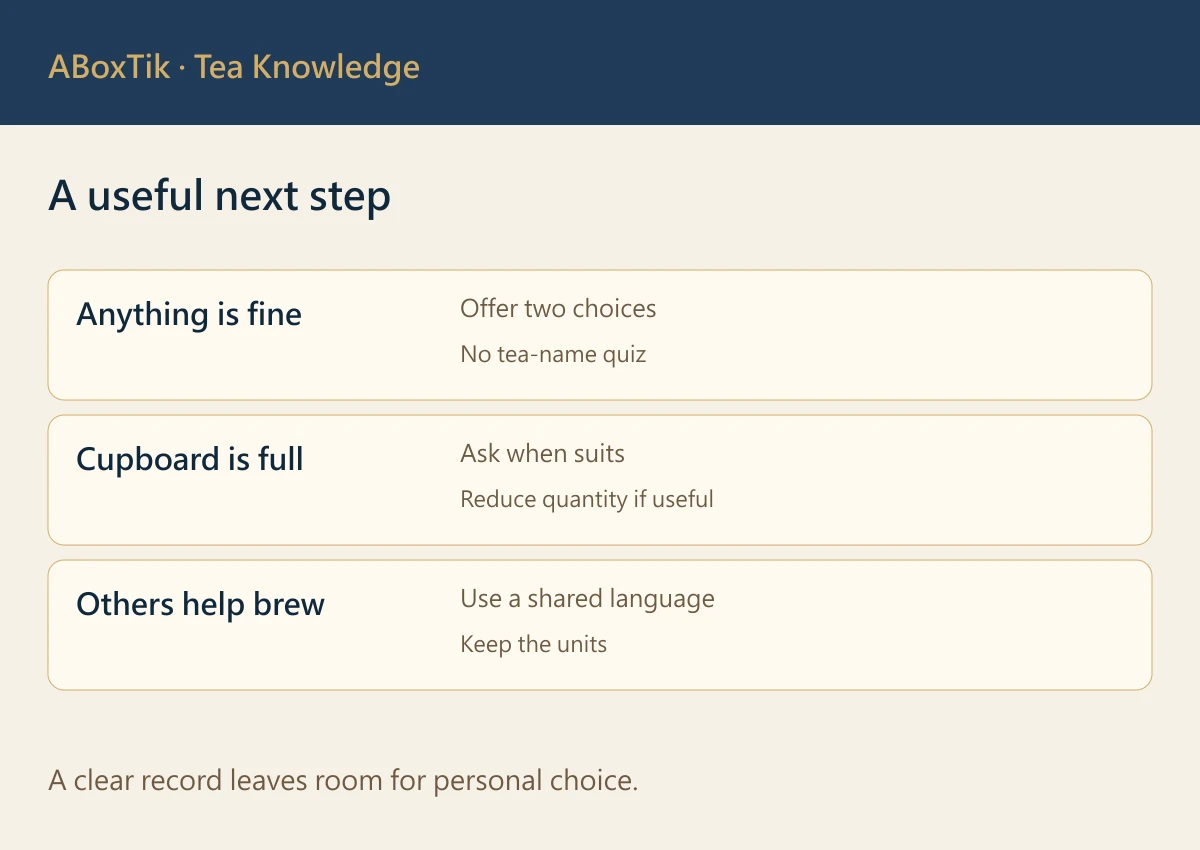
If the reply is “anything is fine,” offer a small choice: the familiar roasted direction, or one lighter tea alongside it? If the cupboard is already full, ask whether a later gift would be more useful. Affection need not arrive before shelf space does. Living overseas also does not automatically mean someone wants an unfamiliar brewing format.
Once chosen, separate the actual name, portion directions, storage information and personal greeting. A note might say, “I thought of the mug you use every day. Enjoy this whenever you have time, and tell me which direction you would like next time.” Ask before using a household photo as a reference, and keep addresses or delivery labels out of public sharing. An honest dislike is often more useful than a polite “all lovely.”
Use the article’s separate guidance for carrying or shipping the gift. These four questions help choose something usable; destination requirements remain part of the actual delivery arrangements. After arrival, ask whether brewing was convenient. There is no need to audit how quickly the tea disappears. A kind follow-up makes the next choice more thoughtful.
A tea card for a first visit to Taiwan
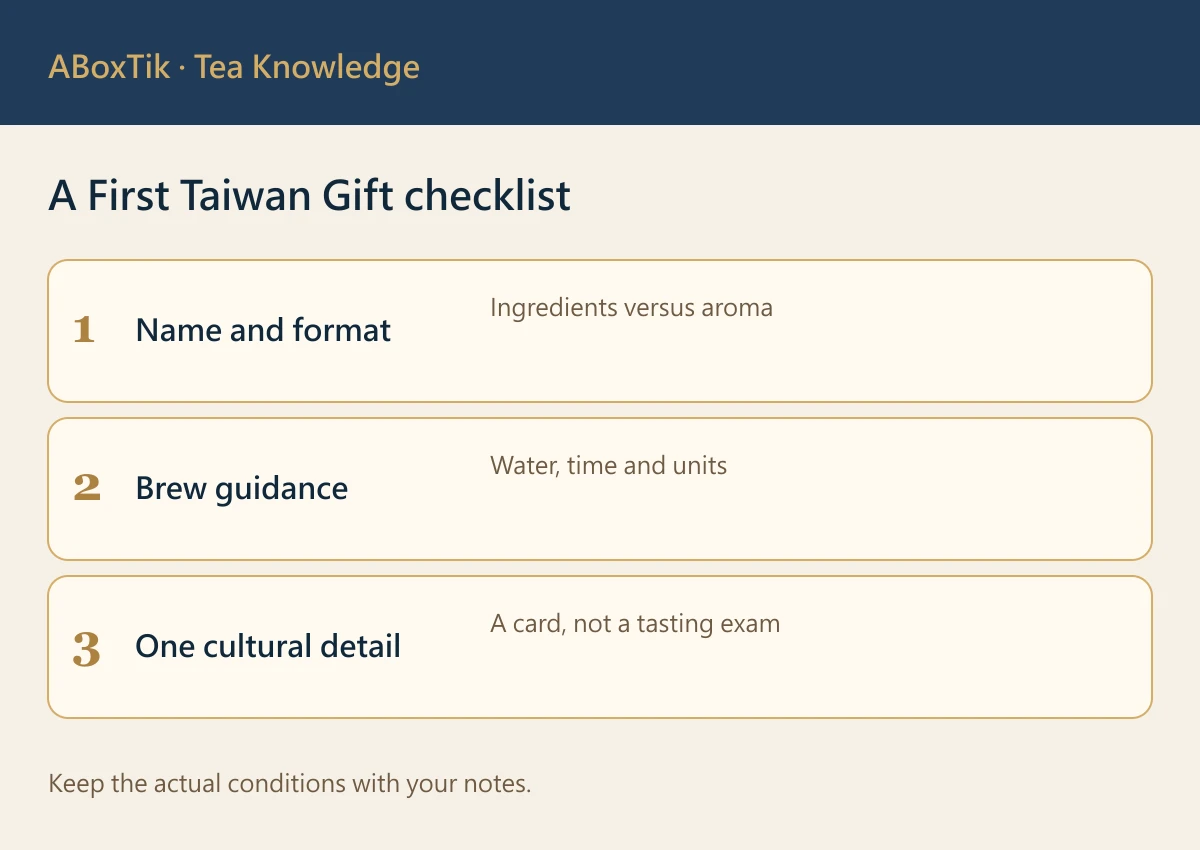
Keep the card practical: name the tea, offer one or two flavour cues supported by the actual product, and explain how to begin. Use the package names, indicate loose leaf or tea bag, and adapt preparation and storage directions from the label.
For example: “This Taiwanese oolong is described as floral on the package; please follow the package directions.” Replace the example with verified details for the selected tea. Add a short memory of the visit or an invitation to share a cup next time. For travel across a border, the recipient should check current destination authority and airline requirements and keep the original package information.
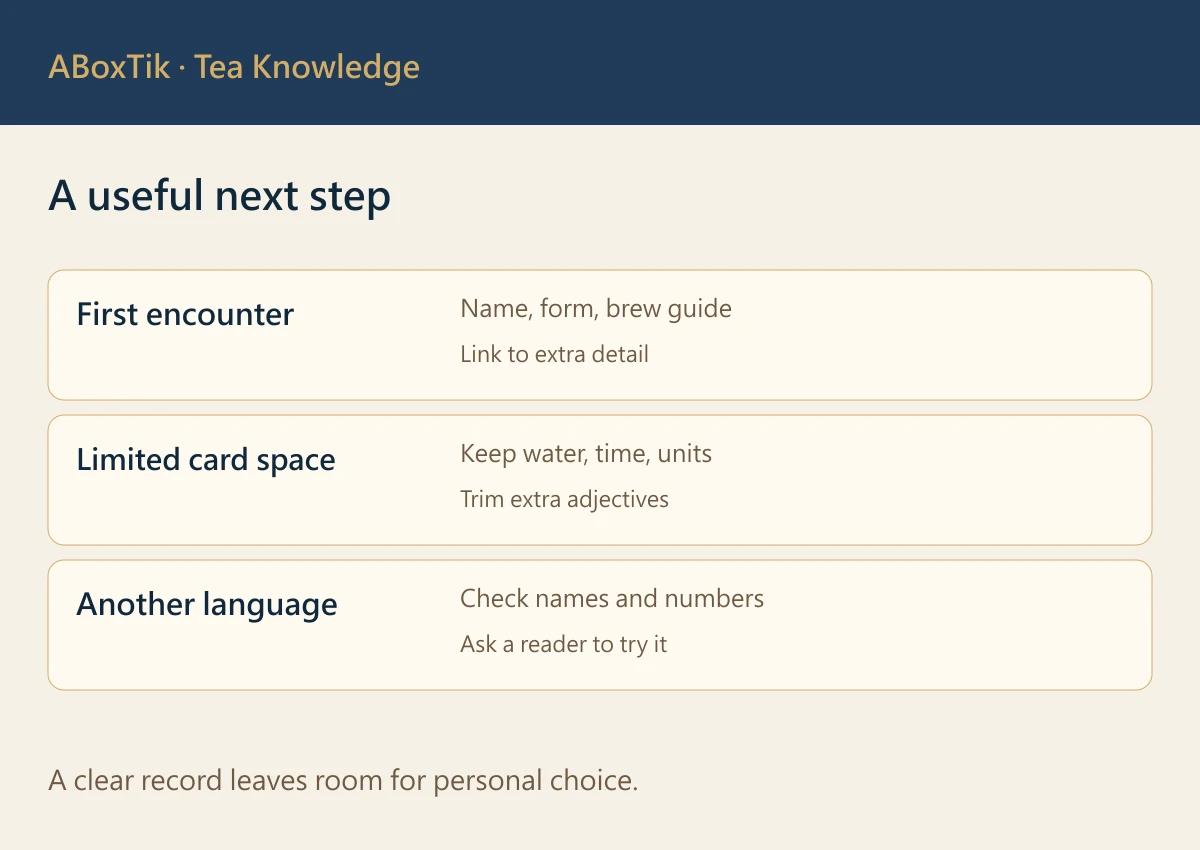
For preparation, follow the actual product instructions. A loose tea card can identify the strainer or pot needed; a tea bag card can explain how the bag is removed. If the card is in an unfamiliar language, ask a fluent reader to check names and units. Do not guess at an origin, cultivar or special attribute missing from the package simply to make the story sound fuller.
Match each card to the tea inside before wrapping. For a mixed set, numbers or colours can help the recipient find the right packet. A contact detail or invitation to ask about equipment can make the gift feel approachable later. The card does not need to be an encyclopaedia; its job is to make the first cup easier to begin.
When space is limited, give the tea name, format and preparation instructions priority. A link can offer background on the region for anyone who wants to read more later. At the moment of receiving the gift, knowing how to make that first cup is a thoughtful place to begin.
If the gift contains several formats, say which card belongs with each one. A small handwritten note can sit beside the practical instructions without replacing them. This keeps the personal message and the details needed for preparation easy to find.
| Observe or record | Next step |
|---|---|
| Tea name and format | Add preparation from the package |
Follow ABoxTik
Let a Taiwanese gift become an easy conversation
ABoxTik begins gift selection with daily details: a cup’s size, a readable card and a tea someone may try at their own pace. A useful form makes the story easier to keep.
Start with Taiwanese tea terroir and craft and shareable tea bags. Explain the choice clearly and leave the rhythm of enjoyment with the friend.
Related reading
- Tell the tea story in natural English
- Compare everyday tea bag formats
- See actual multi-tea gift box contents
Sources
Sources checked 21 October 2026.