
Tea Knowledge
Visiting New Parents: A Thoughtful Tea Gift They Can Enjoy Later
“I’d love to bring you some tea. When would suit?”
“Could we accept the thought from a distance this week?”
“Absolutely. The tea—and the visit—can wait.”
Tea gifts for new parents work best when the adults actually want tea, the amount fits their routine, and delivery happens at a convenient time. Ask first, choose clear packaging and straightforward instructions, and add a note saying there is no hurry to open it. If tea is not wanted right now, a requested item or a practical favour can carry the same care.
A new arrival brings new arrangements at home. Wanting to help without adding another thing to organise is a thoughtful instinct. Our tea gift box guide covers general selection; here, the question is how to make receiving a gift easy. A small box need not audition simultaneously as a celebration, a refreshments service and an unboxing event.
Tea gifts for new parents start with asking, not arriving
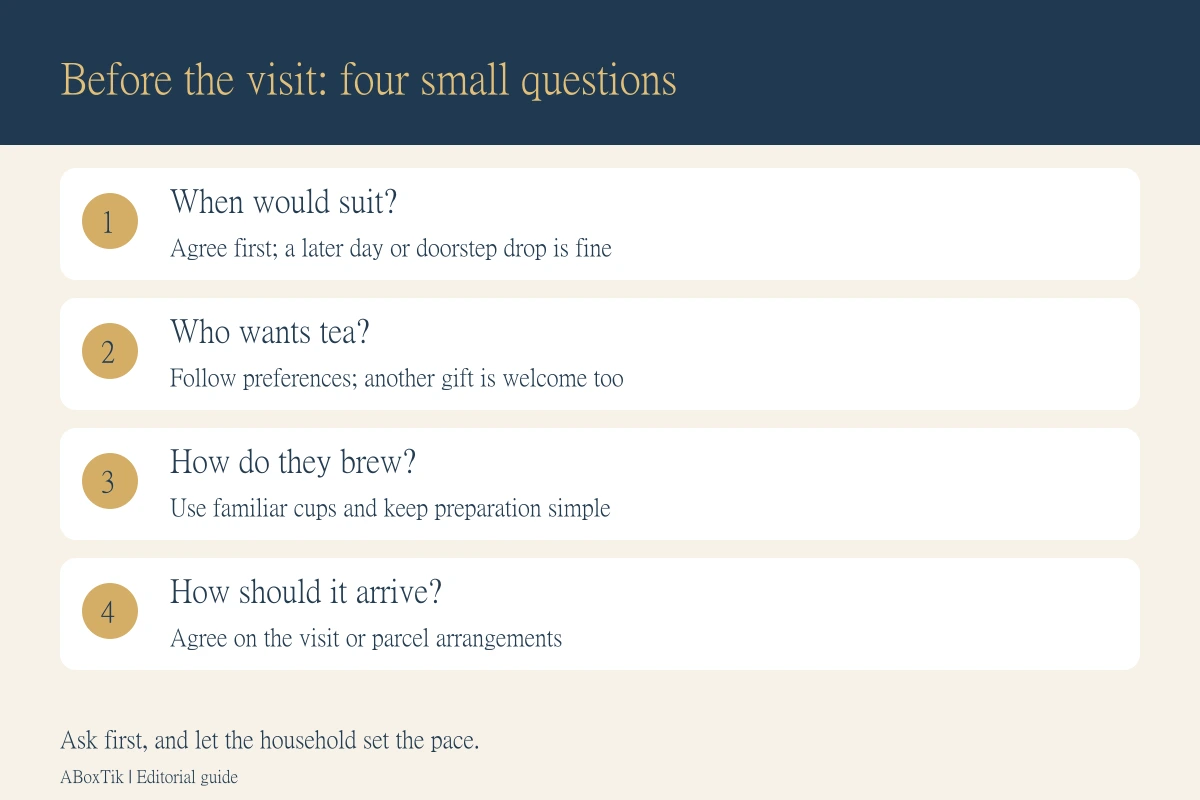
Raising Children Network’s early-parenthood guide encourages parents to choose how and when they want visitors. Let the household set the pace: send a message, wait for agreement and then make the plan. “I’m already downstairs” is rather less flexible than it sounds.
Keep the question easy to answer: “Would a small gift be welcome? Would you prefer a doorstep delivery, a parcel or a visit later?” Giving a few workable options can be kinder than asking for several dates, times and explanations. If a reply takes a while, leave the arrangement open. A caring message does not need a countdown attached to its read receipt.
Next ask who drinks tea, which flavours they enjoy, whether they use mugs or a teapot, and which drinks or ingredients they avoid. Follow the preferences they give you. “Not tea at the moment” is a helpful answer, too. For the wider meaning of the gesture, read the culture of giving tea; the right gift leaves room for a polite no.
Tea bags, loose leaves or another gift: follow their routine
Portioned tea bags reduce the preparation involved in weighing leaves and using a strainer. They suit an adult who wants to make a cup with familiar equipment and the pack’s instructions. Loose leaves suit someone who already enjoys brewing that way. Start with the household’s habits rather than assuming every new parent needs the same format.
| What you know | A possible choice | One more question |
|---|---|---|
| They drink tea from a mug | A manageable amount of portioned tea bags | Does the mug capacity suit the brewing instructions? |
| They have a teapot and a favourite tea | A familiar single tea | Would they welcome more of it? |
| The two adults like different flavours | Two clearly labelled, modest selections | Which tea would each person choose? |
| You do not know, or tea is not wanted now | Ask what would be useful before shopping | Would an errand, agreed food delivery or a later visit help? |
Compare whole-leaf tea bag features and space inside a pyramid tea bag if format is still unclear. Convenience means fitting into the life they already have. A set of unfamiliar accessories can be lovely for a keen tea collector, but less useful when it needs washing and a new home in a crowded cupboard. For established tea enthusiasts, the gaiwan and teapot comparison offers a more detailed next step.
Choose an amount and a box that fit the cupboard
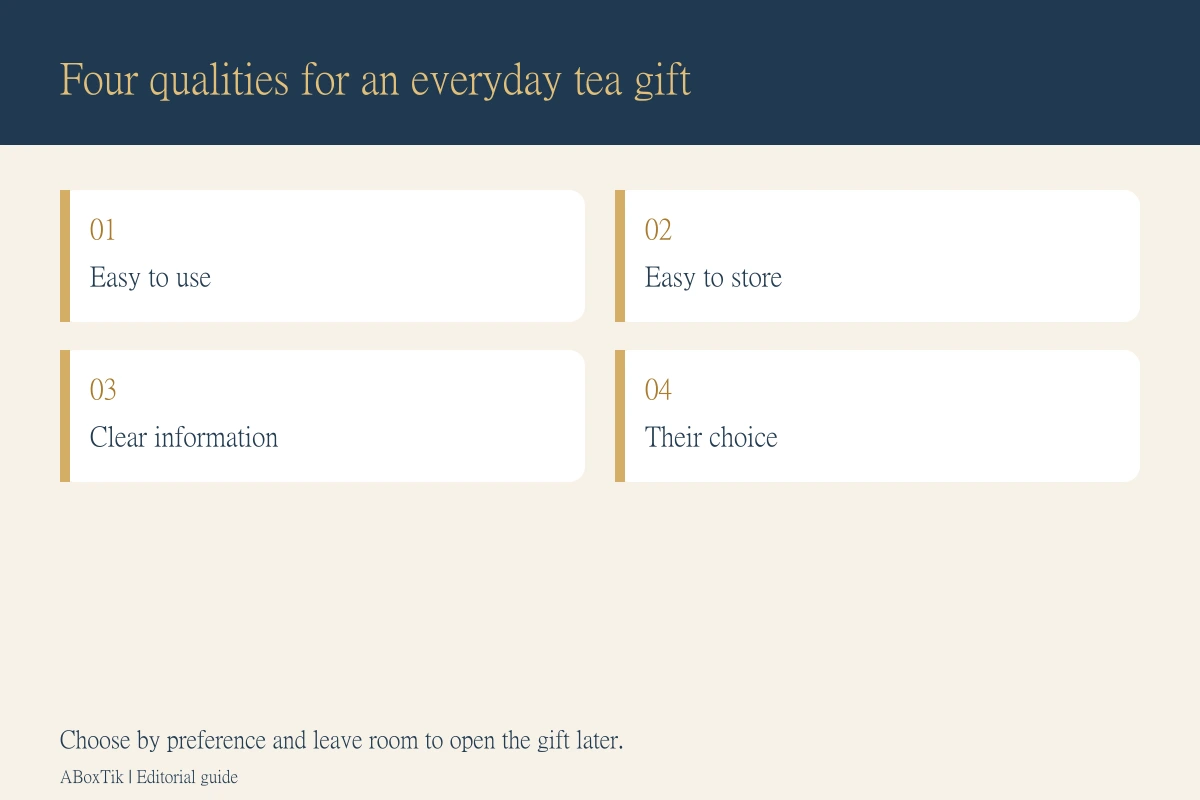
Consider contents, quantity and delivery together when setting a budget. Decide how many teas are wanted and where they can be kept before choosing the outer box. A handwritten note or remembering one favourite flavour can express closeness beautifully. The box does not need to enter a heavyweight friendship contest.
Check tea names, ingredients, bag counts or weights, dates, storage directions and sealed inner packaging. Words such as “two-piece” and “four-piece” need their product specifications alongside them. ABoxTik’s classic Taiwanese tea assortment lists four inner boxes of ten tea bags, forty in total. Consider whether that amount fits the household’s drinking and sharing habits before choosing a larger selection.
The Taiwan Tea and Beverage Research Station’s storage guidance identifies moisture, light, temperature, oxygen and odours as factors in tea quality. Leave unused inner packs sealed and make the product’s storage instructions easy to find. Opening every packet for a beautiful display trades away practical protection. Tea aroma need not volunteer as the home’s welcome fragrance.
Our tea storage guide explains more. When comparing value, look at the actual contents and the ease of using them together; the premium tea price and value guide helps separate those questions from the size of the box.
Choose a flavour, then leave the drinking schedule to them
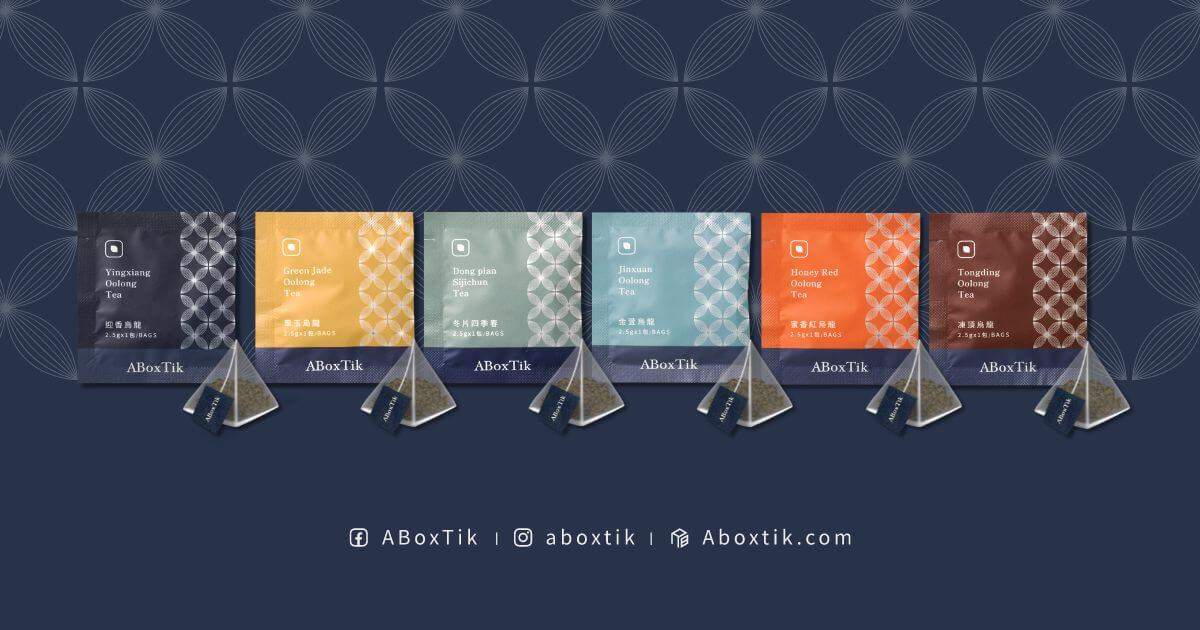
Ask whether they prefer floral notes, a roasted character or simply more of the tea they already like. ABoxTik’s Yingxiang oolong description offers orchid and floral-fruit notes; its Jinxuan oolong describes roasted sugar and sugarcane sweetness. Those descriptions make useful conversation starters: “Would you rather have a floral tea or something with a roasted sweet character?” There is no score to award for the answer.
If you know their favourite, staying with it is perfectly thoughtful. Add a different tea only if they want to explore. New parenthood does not require a complete flavour curriculum. The fresh and roasted aroma guide can help turn “something fragrant” into a clearer preference.
Each adult may make a different choice about drinks. A tea gift can wait for later, or be enjoyed by another adult in the household who wants it. Write about flavour and friendship: “This is the floral tea you liked last time; open it whenever you’d enjoy a cup.” Let the recipients decide when, how often and whether to use it.
Add a little card with one clear starting point
Use one side for the message and the other for practical information. “A familiar tea for whenever you fancy it. No hosting required today.” Or: “Open it when you like, and let’s catch up when you like. I’m surprisingly efficient at doorstep deliveries.” Clear writing and a little empty space can make the card as welcoming as the words.
- Tea name and recipient: identify each tea; add a personal line if the adults have different preferences.
- Brewing starting point: copy the chosen product’s quantity, water volume, temperature and time. “One cup” leaves too much guessing.
- Storage: follow the pack’s directions and keep the sealing and strong-odour reminders brief.
- A place to ask: include the product page or a short contact detail, alongside readable information.
The Taiwanese tea steeping-time guide helps explain removing a tea bag at the chosen time. Friends who use a pot can turn to basic tea brewing steps. Fill in numbers from the actual product instructions; clarity about the first cup is more helpful than one universal recipe for every tea.
Make handover one less task
Agree on a visiting time and whether the plan is simply to leave the gift at the door. Follow the hosts’ lead when you arrive; opening the box, making tea and taking photographs can wait. Imagine a friend asking, “Are you sure you don’t want to sit down?” You might smile: “Today I’m delivering the thought, not an extra washing-up assignment.” Stay for a conversation if invited, and keep another day open if now is busy.
For a parcel, confirm the recipient’s name, address, phone number and receiving arrangements. Ask about dispatch and delivery before ordering; postpone if receiving a package is inconvenient. When discussing gift choices and order arrangements with ABoxTik, give the quantity, destination and hoped-for receiving date together. A little planning on the sender’s side can reduce back-and-forth for the family.
Raising Children Network’s family-support guidance also suggests discussing contact with friends and family and the timing of visitors. Follow the agreed arrangement. If you can help further, ask about a specific errand and wait for agreement. There is no need to request a report on whether the tea has been opened or finished.
Follow ABoxTik: send the care, leave the choice
Tea gifts for new parents can be thoughtful in small ways: remembering a flavour, asking when delivery suits, writing a readable brewing card or happily delaying a visit. The story of Taiwan’s tea landscapes and craft can unfold whenever there is interest. Right now, noticing the recipients’ pace is a good place to begin.
For a household that enjoys several Taiwanese teas, compare the classic Taiwanese tea assortment. For someone with a settled favourite, one familiar choice can be enough. Learn more about ABoxTik if you would like to share the brand’s story. The message can stay simple: open this when you want to, and we’ll see you when you want company.
Related recommendations
- Yingxiang oolong: a floral direction for friends who already enjoy it.
- Classic Taiwanese tea assortment: check the quantity, then choose flavours to share.
- Tea gift box guide: narrow the options around everyday habits.
Sources
- Raising Children Network: visitors and practical support in early parenthood
- Raising Children Network: planning family contact and visitors together
- Taiwan Tea and Beverage Research Station: tea packaging and storage
Sources and products checked: 5 October 2026.