
Tea Knowledge
Taiwanese Lacquerware: Natural Lacquer, Layering and Everyday Care
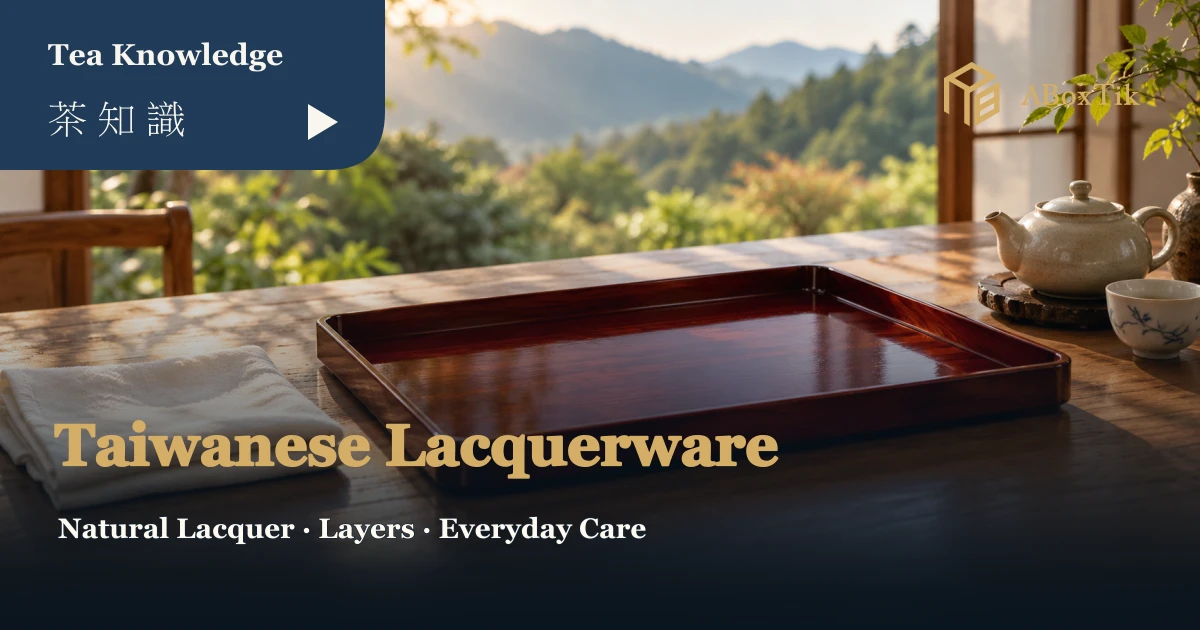
Some lustre comes from waiting, layer by layer. Taiwanese lacquerware does not ask you to become an expert before you live with it; a maker’s note and a soft cloth are a gentle beginning.
Taiwanese lacquerware is best appreciated by reading its core, coating and intended use; everyday care follows the instructions for the individual piece. Natural lacquer comes from a lacquer tree, while lacquer techniques can be built up on different cores. The colour and sheen you first notice are an invitation to learn more, not a complete material label. Avoid direct sun, heat and abrasive wiping; find out whether washing is permitted before you choose cleaning or storage.
It is natural to look at a beautiful piece and wonder, “May I really use this?” Try a kinder question: what was this particular work made to do? Use a daily piece according to its instructions, and give a display work a stable place. Taiwanese lacquerware does not require a vocabulary test or a year-round shift inside a cabinet. For other materials, pair this guide with Taiwanese ceramic craft history and Hsinchu glass craft; each material brings its own working language.
How should you begin looking at Taiwanese lacquerware?
National Taiwan Craft Research and Development Institute material places natural lacquer and related coatings alongside cores such as wood, bamboo and ceramic, and connects Puli with lacquer materials and Fengyuan with woodcraft. Place names give helpful background. The materials and construction of one work still come from that work’s own documentation.
At an exhibition, look at the edge, interior and underside from an allowed distance. Red, black, brown and visible grain can each begin a conversation; high gloss and quiet lustre can be deliberate choices. “I like the way this catches light” is already a useful observation. Then ask the maker how that surface was made. Reading it beside Sanyi woodcarving and Yingge ceramics makes the local material choices easier to see.
Natural lacquer and the core: ask about both inside and outside
“Natural lacquer” describes the coating material’s source; “wood core” describes the body carrying that coating. Ask about both. Check whether natural lacquer is used, whether other coatings or decoration are present, and whether interior and exterior are treated alike. Weight, touch and shine cannot replace a material record.
Before buying, keep three questions together: what is the core, how is the surface made, and how is the work meant to be used? If it may sit on a tea table, add questions about load, cup-bottom contact, hot water and cleaning conditions. Liking a colour and checking whether it suits today’s tea setting can happen at the same time. The same practical logic appears in our teapot material guide and stoneware teaware guide.
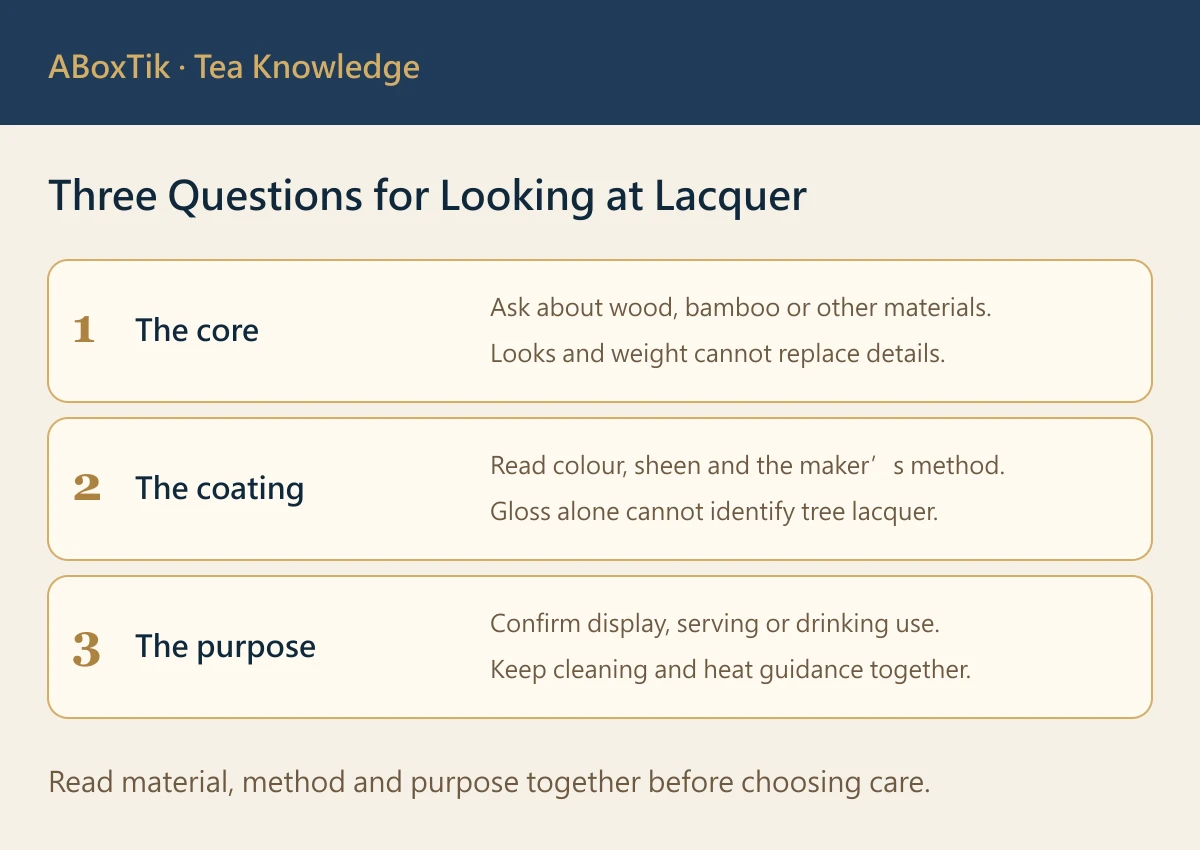
A one-minute exercise: complete three sentences: “I first noticed…”, “The object label says…”, and “I would still like to ask…”. You may notice a soft brown surface, read that the core is wood, then ask whether it can be washed. Let the eye discover and the documentation answer; they make excellent colleagues when they do not fight over the same job.
What does layered lacquering tell you?
“Lacquering” describes applying lacquer. Smithsonian research on lacquer construction explains that lacquer can be applied in layers, with each layer needing to cure before the next; different ground and surface treatments may be involved. That is a starting point for reading a process, not a fixed layer count to apply to every contemporary vessel.
Ask which areas were repeatedly coated, which were polished or decorated, and what surface the maker wanted to leave. Visible grain does not prove fewer steps or lower quality; a bright shine does not prove a set number of layers. Process and price both need context. There is no need to enter a beautiful piece in a “who is thicker” contest.
The same curiosity about process can lead to oolong oxidation and making. Tea and lacquer each have materials, actions and waiting; understanding one does not mean they share a mechanism. At a workshop, follow the studio’s instructions for observation and handling rather than borrowing a technique from a paragraph.
How should you clean it? Confirm washing first
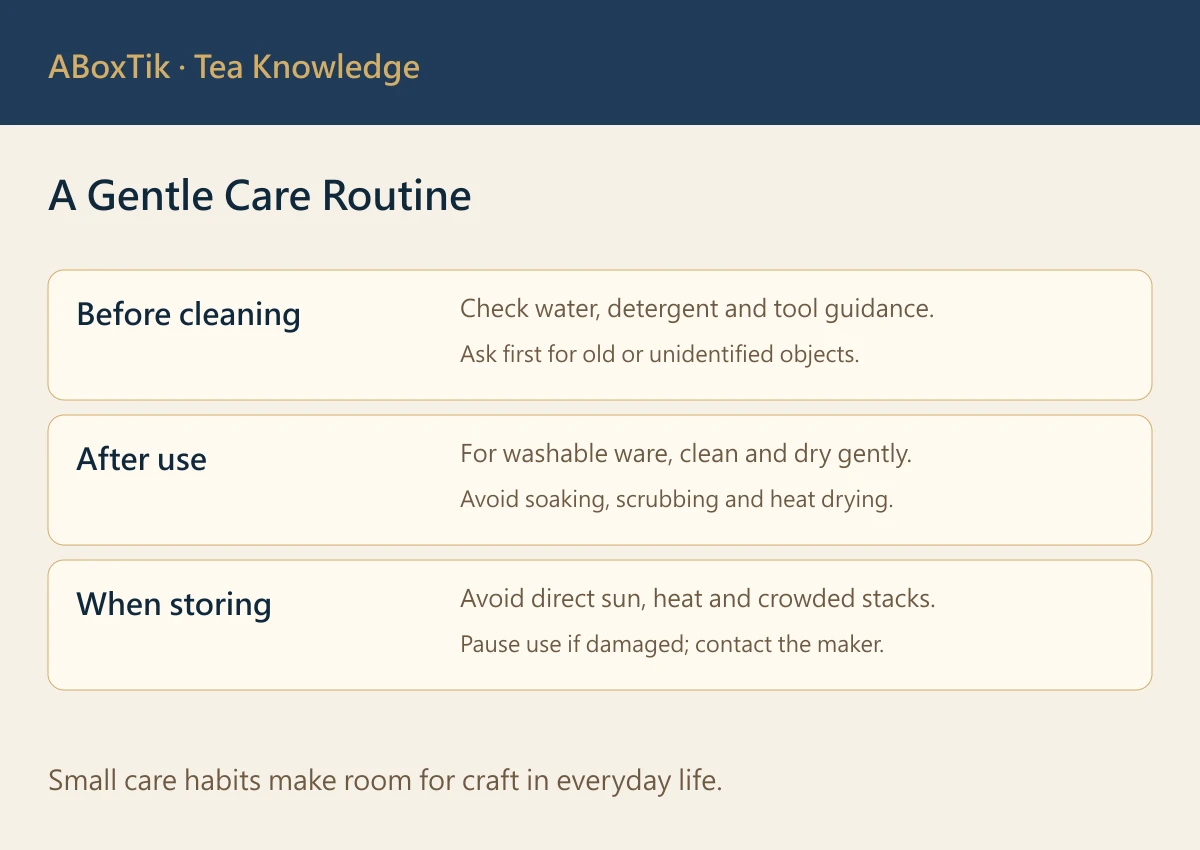
Keep the maker’s instructions close. A daily piece that is explicitly suitable for washing can be cleaned according to the stated water temperature, cleanser and soft tool, then dried gently. For an older work, display piece, unknown coating or a piece without clear instructions, ask its maker or a conservation professional before importing an ordinary dishwashing routine.
A tea-table close can be simple: move cups and pot away, deal with drops or marks as the work’s directions allow, then make sure surfaces and joins are dry before storage. Avoid prolonged soaking, scouring pads, abrasive cleaners and drying against a heat source. Alcohol, solvents, oil and wax each need work-specific guidance. If the sheen changes, it does not have to be scrubbed back into “new product mode.”
A dishwasher, drying cabinet, microwave or direct heating also need explicit permission one by one; the word lacquerware does not decide for them. Clay teapot care has a different relationship with an unglazed interior, while porcelain brewing concerns glaze and shape. Keep their notes separate, and the objects will not receive care instructions meant for another household.
Where should lacquerware live when it is not in use?
Lacquerware should not sit in direct sun for extended periods. Smithsonian exhibition-lighting guidance includes lacquer among materials for which light exposure is controlled. At home, that suggests a stable place away from direct sunlight and heat sources such as heaters or stoves. For a special or historic work, ask a conservation professional about its display conditions.
Let the piece dry before storage. When stacking is allowed by the maker, leave space or use appropriate soft separation so edges do not press and rub. Heavy objects on a thin-edged tray and an overfilled drawer both make care harder. Measure the storage space before choosing a size, and the object and cabinet will avoid a small moving-day negotiation.
Small routines help: keep the cloth in one place, photograph the object card, and separate the drying area for teaware from tea storage. Our tea storage guide looks after the leaves; gongfu tea in Taiwan helps organise the brewing flow. A place for each task makes slow tea easier to clear away.
What if you find a scratch, crack or lifting surface?
Stop using a work with a crack, lifting or flaking surface. Move it somewhere stable, photograph the whole piece and close details, then contact the maker. Note when you found it, any impact and normal cleaning practice; that gives the maker useful context. Do not pick at a loose layer or cover the question with household glue, oil or solvent.
The cause and appropriate response to a line on a surface depend on the core, coating and condition. Ask the maker to distinguish ordinary use marks from damage needing attention. Before purchase, ask whether repair is offered, how a return is arranged and what an assessment involves. It is calmer than looking for contact details in a drawer only when you need them.
For a gift, pass along the object card, intended use and care instructions, and ask whether the recipient hopes to display or use it. Our premium tea gift guide can help you think about their routine; About ABoxTik continues the conversation about tea and everyday craft.
Common questions about Taiwanese lacquerware
Does greater shine mean better natural lacquer?
Read the material and process record first. Shine is one surface expression; it cannot, by itself, identify a coating source, layer count or quality.
Can every lacquered piece hold hot tea or food?
Check the individual work’s intended use and conditions. Display, carrying, serving food and drinking have different requirements; ask about temperature, cleaning and interior/exterior treatment.
Should I oil it regularly to make it shine?
Follow the maker’s care guidance. Do not transfer an oiling practice from wood or leather; a photograph and a question are better first steps when a surface changes.
How much technique should I remember on a first visit?
One detail you like, the listed material and one question are enough. Understanding can arrive in several visits, and the same work may show something new next time.
Tea with ABoxTik

After caring for an object, leave a little time for yourself. Brew a familiar tea in the cup you already use, and look over today’s object card; there is no need to fill the table with new things. The Classic Taiwanese Tea Set lets you choose by flavour and product information, while what makes Taiwanese tea special brings you back to origin and craft.
Next time you see Taiwanese lacquerware, try asking, “How was this surface completed?” The answer may add a story to the sheen you already liked. Keep the use instructions, make the small care habits easy, and craft can find a comfortable place in ordinary life.
Related recommendations
- Hsinchu glass craft: practise looking and asking through another material.
- Taiwanese ceramic craft history: follow the connection between daily vessels and making.
- Classic Taiwanese Tea Set: choose a tea for post-exhibition conversation.