
Tea Mixology
Taiwanese Tea Cocktails for Beginners: Tea, Spirits, Citrus and Ice
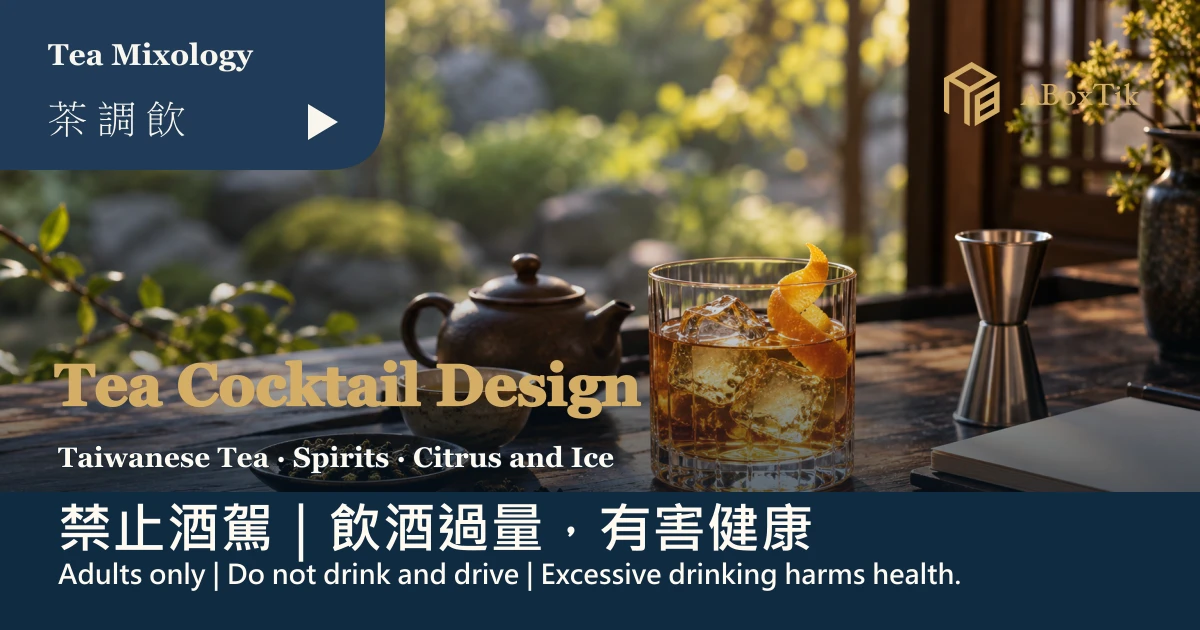
Give the tea a name in your notes before inviting spirits, citrus and ice to the table. One clear question can be more useful than a whole shelf of ingredients.
Alcoholic drinks for adults of legal drinking age. Do not drink and drive. Excessive drinking is harmful to health. In Taiwan, drinking is prohibited for people under 18.
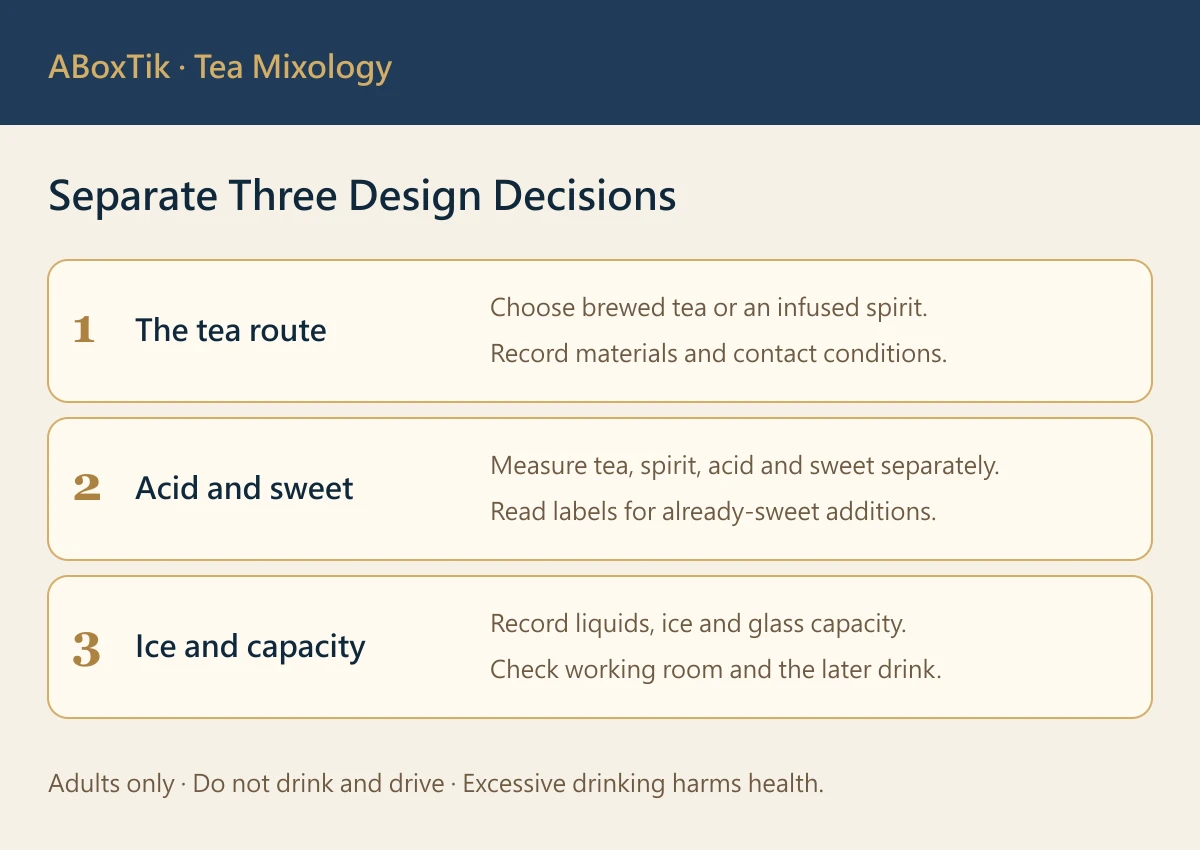
Tea cocktails for beginners are easier to plan when tea, spirits, acidity, sweetness and melting ice have separate jobs. Start with a Taiwanese tea you already know, then choose whether to add cooled brewed tea or infuse tea into a spirit. These two routes bring different amounts of water and different adjustment questions. Measure a small trial, write down its conditions, and decide what to change next.
Perhaps the tea seemed lovely on its own, yet the mixed glass seems to contain only lemon. That is a useful question to bring back to the ingredients. The tea does not have to rescue every addition. This guide helps adult readers plan a drink and keep a trial worksheet. For a drink without spirits, our non-alcoholic tea mixology guide and sparkling oolong tea offer another starting point. Everyone can have a clearly labelled choice.
Tea cocktails for beginners: choose brewed tea or an infused spirit
The first route starts with tea brewed in water. Strain, cool, and then combine it with the spirit and other ingredients. The tea adds both flavour and water, which makes these contributions useful to record separately. Follow the tea’s brewing instructions first, before deciding what character you want to retain after mixing. Our brewing guide, oolong water-temperature guide and steeping-time guide can help establish that familiar starting cup.
The second route steeps tea leaves in a spirit and then strains them out. Harney & Sons describes spirit infusion as well as a separate tea-syrup route in its first-party cocktail material. These illustrate different ways to introduce tea. For the actual Taiwanese tea and spirit in hand, record the leaves, contact time and ingredients separately; a water-brewing time does not automatically transfer.
Choose one route for a first comparison. Combining concentrated tea, infused spirit and tea syrup at once makes it harder to find which ingredient changed the result. The colleagues have all edited the same document. Use a clean, closable container suitable for food and alcohol contact, label it clearly, and keep it away from flames and heat sources. Follow suitable ingredient and preparation guidance. Do not heat alcohol to hurry an infusion.
Pair Taiwanese tea and spirits around one flavour you want to keep
Try the plain tea first and keep one concrete description: floral aroma, roasted character, or the body of the liquor. Then read the spirit’s label and flavour description. A fragrant oolong and a botanical spirit might be candidates for one comparison; roasted tea and a wood-influenced spirit might prompt another. These are questions to explore with the actual ingredients, rather than a pairing rule.
Gin, whisky and rum each cover many styles. An oolong does not have to be assigned to gin, and black tea does not have to be assigned to whisky. Start with something familiar instead of buying a famous bottle for its name. Our comparison of Yingxiang, Cuiyu and Jinxuan, guide to roasted tea aromas and introduction to Taiwanese black tea help keep the tea’s own information in view.
Tea bags and loose leaves both need a consistent tea and brewing method. Record the portion for whole-leaf tea bags and the instructions for pyramid bags. A leaf shape or brand name cannot replace the actual brew. Once that tea is familiar, a mixed drink becomes a more useful observation than a pretty colour alone.
Think about proportions by measuring each ingredient separately
Give spirits, brewed tea, acidic ingredients and sweet ingredients their own columns. Juice may bring water, acidity and sweetness together; a liqueur or flavoured syrup may already be sweet. Read the ingredient information before adding another sweet component. Pouring a loop of syrup is an attractive gesture, but a measurement is easier to repeat.
The IBA Whiskey Sour page uses spirit, lemon juice and syrup as a basic structure. It offers a way to understand the ingredients’ jobs. Once brewed tea is introduced, the water and flavour balance need a fresh look. Understand the structure, then record the actual materials rather than relying on a classic name to settle every substitution.
Change one thing in the next trial. If acidity overwhelms tea, reduce the acidic ingredient first; if sweetness dominates, reduce the sweet ingredient first. If the original tea is already harsh, return to its brewing conditions before asking syrup to erase all the clues. Our bitterness and astringency guide can help describe the plain tea. Keep the previous version so the difference has a clear starting point.
Ice and glass capacity: include the later part of the drink
Ice cools the drink and adds water as it melts. Brewed tea, juice and extra water are other sources to record. Add up the measured liquids, then check whether the actual glass has room for ice and mixing. Liquid volume alone does not prove that everything will fit: ice shape, ice weight and the glass’s outline also need checking.
Cool the brewed tea before measuring and mixing, and record the ice weight or a consistent ice form. If the drink is meant to accompany a slow conversation, include a later observation of the tea aroma. The first moment is only part of what happens in the glass. Ice will not write the notes, although it certainly participates in the revision.
If the design includes carbonation, prepare the other ingredients first, add the carbonated drink last and stir gently. Do not vigorously shake the sealed drink after carbonation is added. Use the tea aroma observation sequence to keep aroma and mouthfeel notes separate, alongside the conditions immediately after mixing and later. Carbonation, dilution and alcohol information answer different questions.
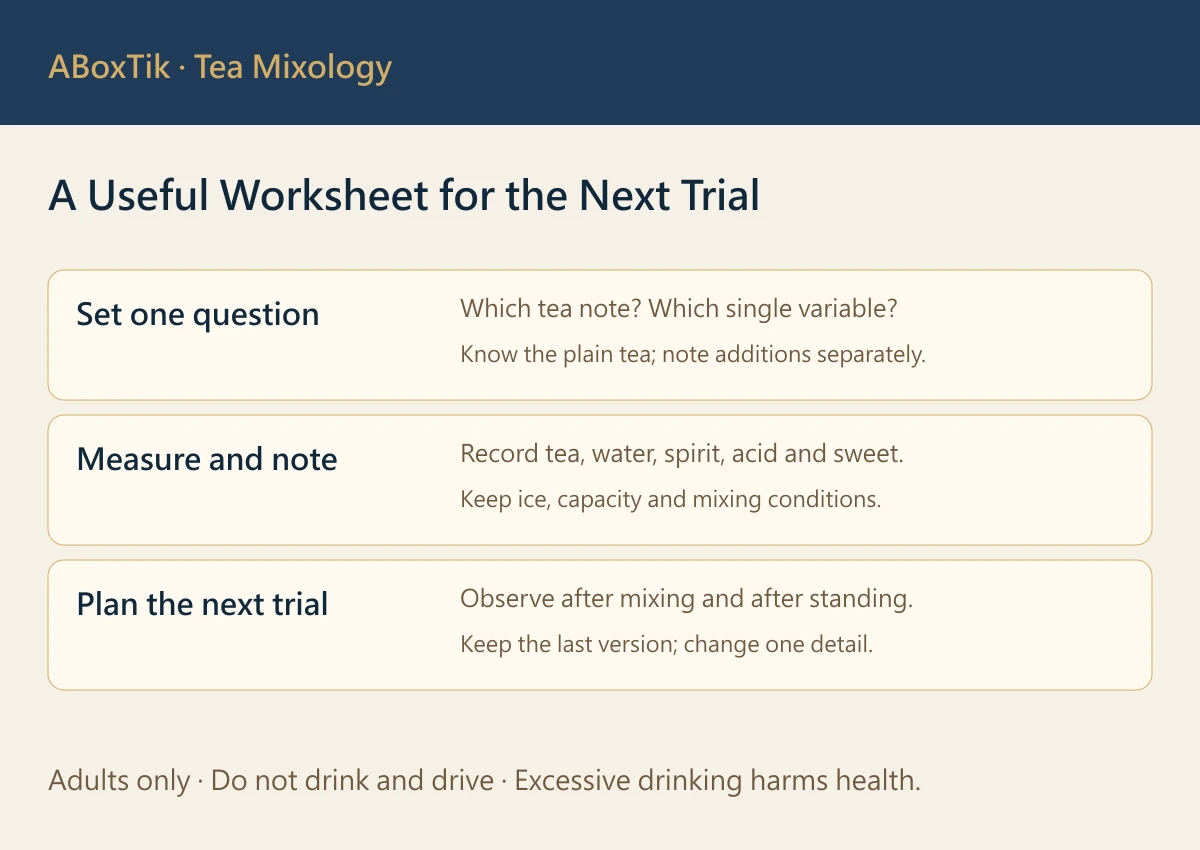
A tea cocktail worksheet: a question, measurements and the next version
A small planning exercise: finish three sentences: “I want to retain this tea’s…”, “This time I am comparing only…”, and “Next time I might change…”. Perhaps roasted character is the aim and acidity is the one variable this round. Ice can wait for a later comparison. A useful record can come before a grand name for the drink.
| Record | What to write | How to continue |
|---|---|---|
| Tea | Tea and lot, leaf and water amounts, temperature, time and strained yield | Keep the original tea steady; change one detail if needed |
| Spirit and additions | Names, labelled alcohol content, millilitres of each addition and syrup type | Compare acidity and sweetness separately; note water sources |
| Ice and glass | Ice weight or consistent form, glass capacity, mixing and standing time | Check working room, then observe the later drink |
| Observations and version | Tea aroma, acid/sweet balance, dilution and this round’s one variable | Keep the last version instead of adding ingredients at random |
Keep alcoholic trials and non-alcoholic drinks in separate records and label them separately. Adding liquid amounts helps with choosing a glass, but a total volume or a mild taste does not show that alcohol has disappeared. Preserve the actual ingredients and observations. For a non-alcoholic choice at the table, prepare plain tea or a separate non-alcoholic tea drink.
Before serving: clear labels and a comfortable choice for everyone
Check who wants an alcoholic drink and who prefers plain tea or a non-alcoholic drink, then arrange glasses and tools separately. Label the tea and whether the drink contains alcohol; colour alone is not a label. Someone choosing not to drink does not need to explain the decision. A plain tea can take a full part in the conversation.
Arrange the journey home first, and do not drive after drinking. If friends want to choose a tea flavour, prepare the plain tea separately and make the alcoholic drinks as a distinct task. Our tea etiquette guide brings the same respect to a tea table: ask what is needed instead of assigning other people a taste score. A clear ingredient record also keeps the host from solving the previous glass while talking.
One design direction is enough for today. For another drink without spirits, see our Halloween tea mocktails; put the remaining leaves or bags away using the tea storage guide. Looking after the ingredients makes a small routine easier to continue than filling a cabinet for one gathering.
Common questions about tea cocktails for beginners
Must the tea be very concentrated?
Start with the tea’s directions and a familiar plain brew, then consider the other liquids and melting ice. Record leaf amount and brewing conditions when changing it, rather than relying on a long steep for concentration.
Can brewed tea and tea-infused spirits replace each other in equal amounts?
They bring different water and alcohol contributions. Choose one route for a small trial and record a new design rather than making an equal-volume substitution.
Does leaving out the base spirit make a drink non-alcoholic?
Check the other ingredients’ alcohol labels too, including liqueurs and any other alcoholic additions. Prepare the non-alcoholic option separately so the choice is clear.
What if the tea aroma is missing?
Check the original tea first, then read the additions and water sources. Change one condition at a time and keep the observation next to the ingredients used.
Tea with ABoxTik
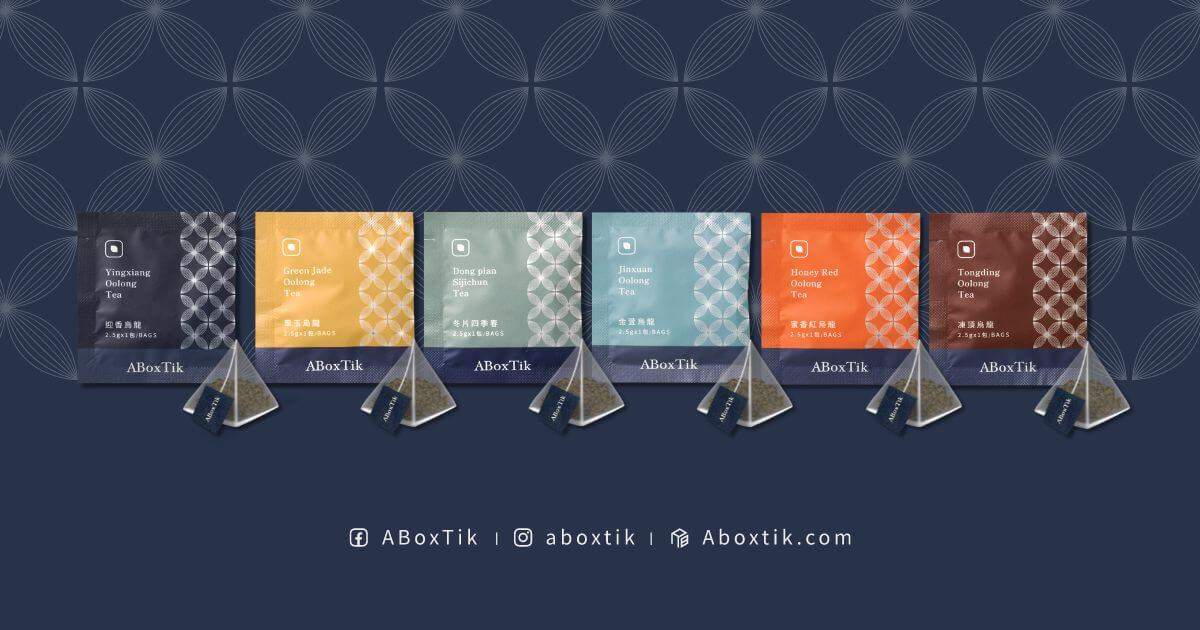
Choose a tea you already enjoy, brew it plain, and write the flavour you want to retain. The Classic Taiwanese Tea Set offers tea choices to explore through the actual product information; Taiwanese tea’s landscape and craft continues the story before the cup. There is time to ask the first clear question before adding more ingredients.
Related recommendations
- Non-alcoholic tea mixology: plan a separate drink without spirits.
- Classic Taiwanese Tea Set: choose a plain tea by flavour and brewing format.
Sources
- Harney & Sons: tea-infused spirits and tea syrup
- IBA: Whiskey Sour ingredient structure
- Taiwan Laws and Regulations Database: Tobacco and Alcohol Administration Act
Do not drink and drive. Excessive drinking is harmful to health. In Taiwan, drinking is prohibited for people under 18.