
Tea Knowledge
Tea Mouthwatering: How to Observe Changes in Your Cup
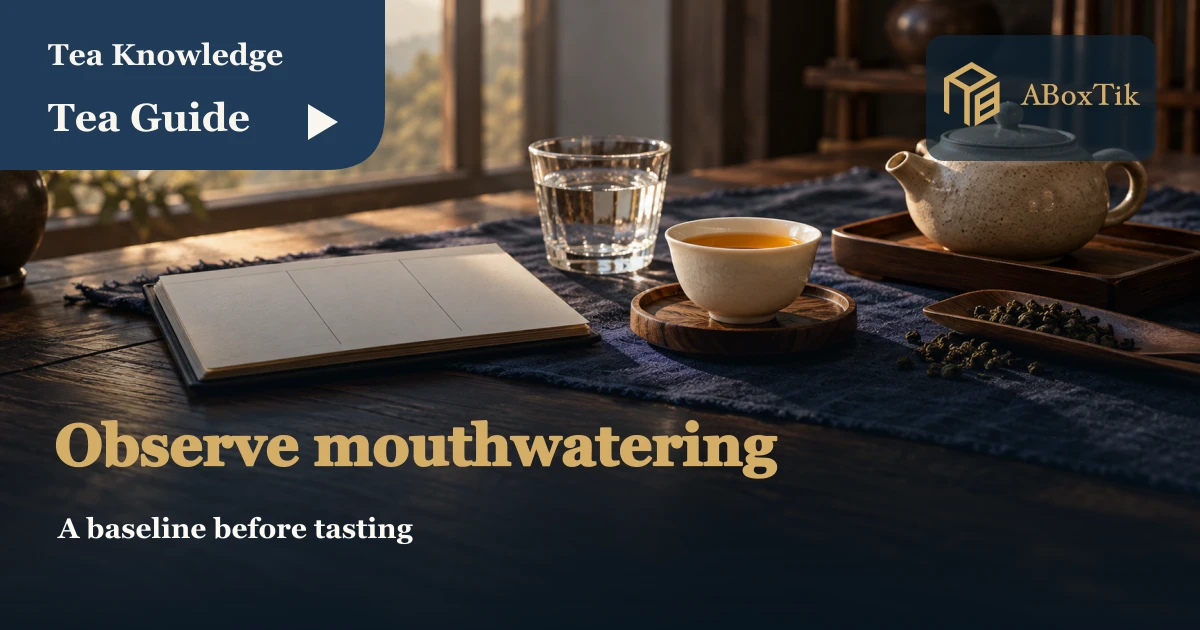
A cup does not need to answer every question at once. Keep one clear impression, leave room for another, and let the next tasting begin where this one paused.
Tea mouthwatering, in everyday tasting language, describes a subjective difference in how moist the mouth feels before and after drinking. This guide records perception; it does not measure or infer salivary secretion. Start with how your mouth feels beforehand, then note the sip, the moments after swallowing and what remains later. Keep sweetness, aroma and astringency in separate fields.
A friend may describe a dramatic sensation while you notice only a clean finish. Both observations can start a useful conversation. This guide offers a small tasting worksheet rather than a ranking. The tea aroma sequence and sweet-aftertaste guide explore neighboring questions without making them interchangeable.
Tea mouthwatering: describe moisture before reaching for a score
In everyday tea conversation, mouthwatering is a description of a sensation. It is not a flavor that every drinker must identify, nor a required outcome of a particular tea. Someone might notice a moister feeling along the cheeks; someone else may find the location difficult to name. Write the difference instead of borrowing an impressive phrase.
Taiwan’s Tea and Beverage Research Station describes its flavor wheel as an index that supports description and communication. That is a useful spirit for a home notebook: choose words that make an experience easier to explain. The worksheet here uses ordinary categories such as more moist, similar, drier or uncertain; it is an editorial exercise, not a professional scoring procedure.
Keep a sweet impression and a lingering floral aroma beside, rather than inside, that note. A cup asked to perform every tasting term at once would need a very energetic host. One clear question is a kinder beginning. The roasted-aroma vocabulary can wait until aroma becomes the question you actually want to explore.
Leave one line for the starting point
Use a familiar tea with clear brewing instructions, a clean cup and a comfortable place to sit. Follow the product’s directions and let the liquor reach a temperature suitable for a small sip. If a strongly flavored snack is still part of the moment, note it or try another day. A quiet break is allowed to remain a quiet break.
Before drinking, write a short baseline: what is noticeable now? Perhaps nothing particular, a recent drink of water or the taste of lunch. This line is background information, not a judgment about anyone’s normal condition. Without it, a later note saying more moist loses the earlier moment it is supposed to describe.
Record tea name, package or opening information, dry-leaf amount, water and actual steeping time. The everyday brewing guide and steeping-time discussion help organize those practical details. Keep the setup steady for this round; the notebook then has somewhere to stand when you choose one adjustment next time.
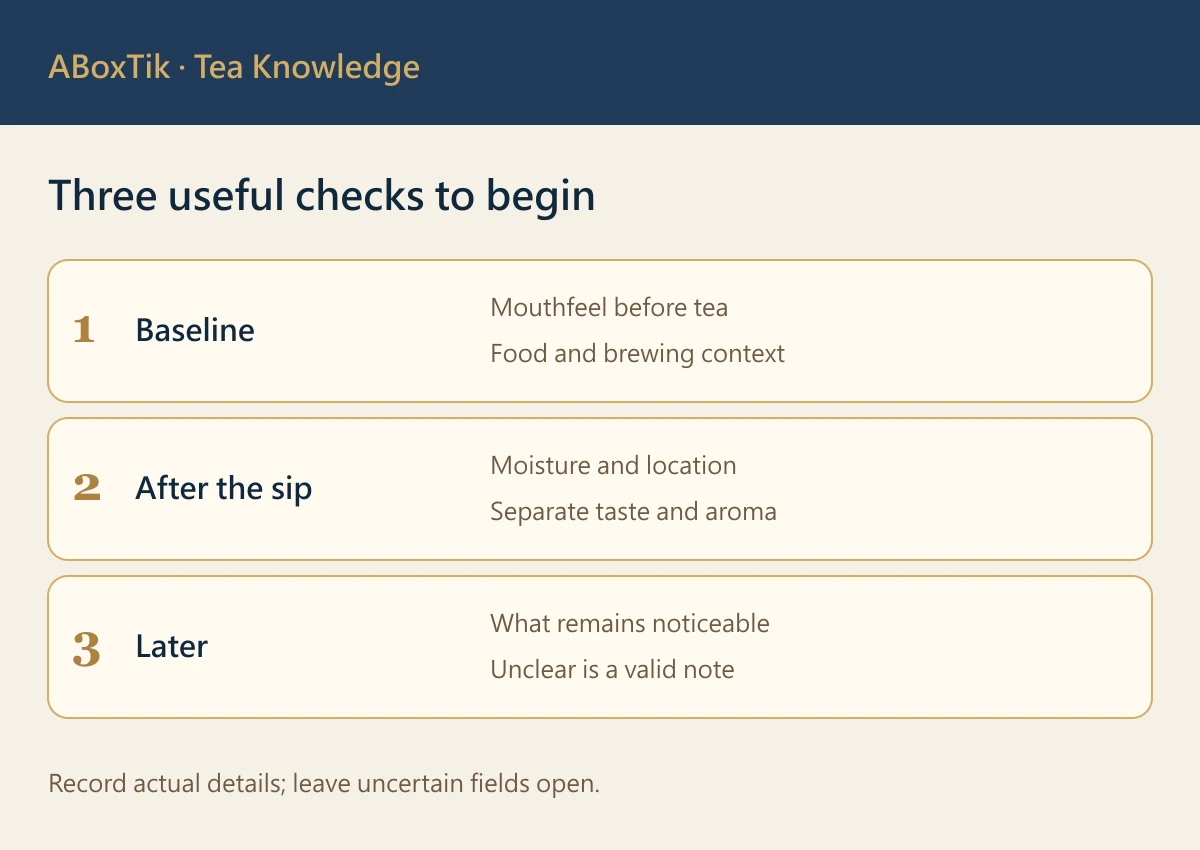
Follow the sip, the pause and the later impression
During the sip, notice what arrives first: strength, sweetness, bitterness or texture. After swallowing, pause comfortably and ask what has changed. Later, glance back once more and write what remains. You can record your own timing, but there is no universal number of seconds that makes an observation valid.
Location may be the tongue, the inner cheeks or simply hard to place. If the sequence feels slightly drying followed by more comfortable moisture, keep that sequence without assigning a chemical explanation. When friends compare notes, asking what happened first is usually more informative than insisting that the same location must be named.
| Stage | Moisture note | Separate context |
|---|---|---|
| Before tea | At present __ | Recent food or drink __ |
| Sip and swallow | Change and location __ | Taste or texture __ |
| Later | Still noticeable or unclear __ | Next question __ |
Leave a field empty when needed. The table is a place for an observation, not a request to invent one. A simple note that you wanted another sip is useful too. For a different question, the bitterness guide gives bitter taste its own space.
Give aftertaste, moisture and astringency separate seats
A sweet impression after swallowing belongs in an aftertaste note. Dryness, tightness or a rough sensation can occupy a texture note. Perceived moisture receives a third description. These experiences do not have to be unrelated; separating the words simply makes a later conversation clearer than calling everything smooth.
Try a friendly comparison without announcing prices first. Each person writes privately, then exchanges one sentence. One may report mild sweetness later, another a drying sip followed by a more comfortable finish. Keep both accounts and ask which brewing detail each person would repeat. Different answers are a reason to talk, not evidence that somebody failed.
The astringency and balance guide can help when texture is the main concern. The floral-aroma guide serves another purpose. Pick one path at a time; a notebook does not need to become an encyclopedia on its first afternoon.
Adjust one brewing detail, then ask whether you prefer it
If the cup feels too strong, choose one small change for the next brew, such as a shorter steep while retaining tea, water volume and equipment. If you change water volume, avoid changing everything else at once. The aim is a traceable personal comparison, not a promise that a certain adjustment will produce stronger mouthwatering.
For two teas, first decide what you are comparing. Brewing each from its own instructions answers how each performs in its suggested preparation. Deliberately using the same settings answers a narrower question about that single setup. Note which approach you used rather than declaring a universal winner from either round.
The light and roasted tea comparison offers a separate flavor direction. A familiar Jinxuan oolong product can provide an everyday starting point; read its current preparation details, then consult the Jinxuan cultivar introduction for background. Names and processing information explain context, but do not predict every drinker’s next sensation.
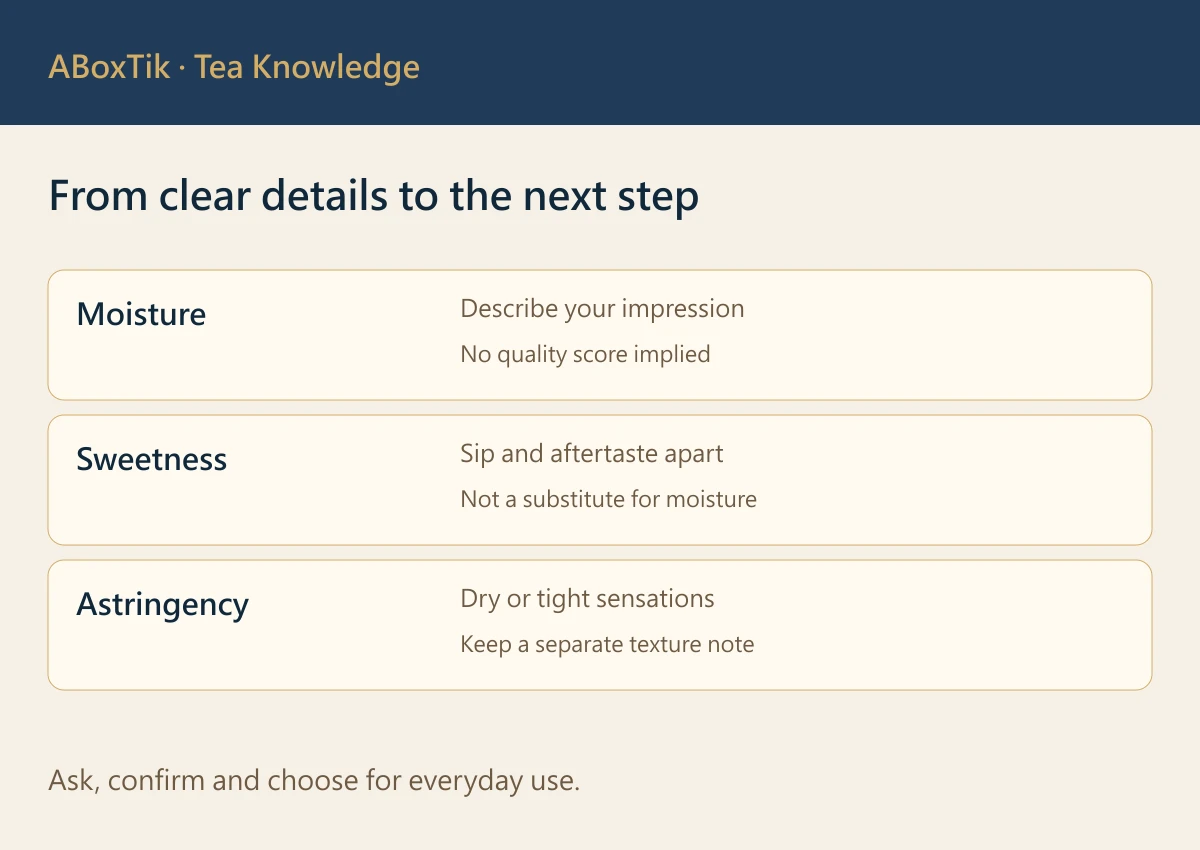
Turn the notebook into better questions for buying tea
Instead of asking only whether a tea is very mouthwatering, ask how to begin brewing it, what to change if it feels astringent and whether a smaller quantity is available. Those questions invite practical information. A beautiful adjective is pleasant; an instruction you can use tomorrow often travels further.
Date the note and preserve two things: one condition to keep and one impression to revisit. If a different cup or meal changes the next experience, add that background rather than crossing out the earlier self. The Taiwanese tea and craft introduction supplies broader context when you want to explore beyond this exercise.
Finally keep a preference field. A tea with no striking technical term can still be an excellent everyday companion. Observation should help explain enjoyment, not persuade you to abandon it. Being able to say this feels pleasant, but I cannot yet name why is already an honest and useful answer.
Follow ABoxTik | Keep one impression and one question for another cup.
Let a small tasting note guide the next tea choice
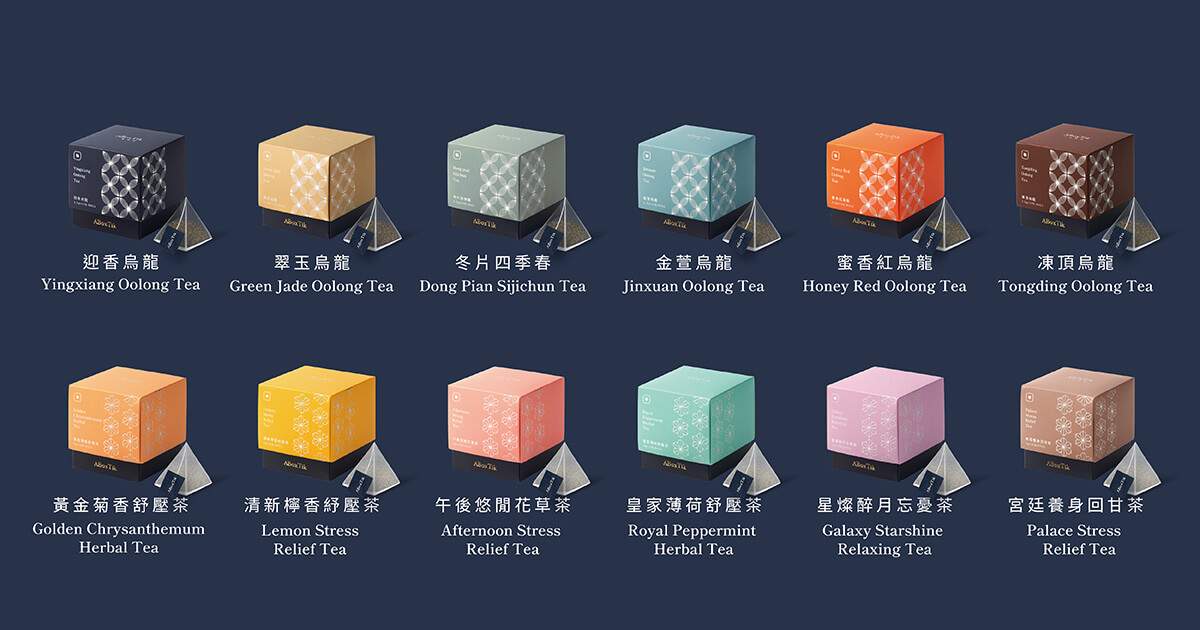
ABoxTik’s approach is to connect flavor information with actual use. Read the current choices in the classic Taiwanese tea four-box selection for a modest comparison, or explore pyramid tea bags if a simple cup suits your day. A new exercise does not require an entirely new set of equipment.
This time, leave three lines for before, after swallowing and later. Next time, exchange one discovery with a friend. Wanting to brew again, and feeling free to say that no clear change appeared, can teach more than performing an elaborate tasting phrase. The useful outcome is a cup you understand a little better.
Related reading
- Sweet-aftertaste observations keep sweetness separate from moisture.
- The aroma sequence gives fragrance its own place.
- The two-box tea-bag gift offers current options for familiar and exploratory choices.
Sources
Sources checked 16 October 2026.