
Tea Knowledge
Teaware Glaze Safety: Questions Before Buying Handmade Cups
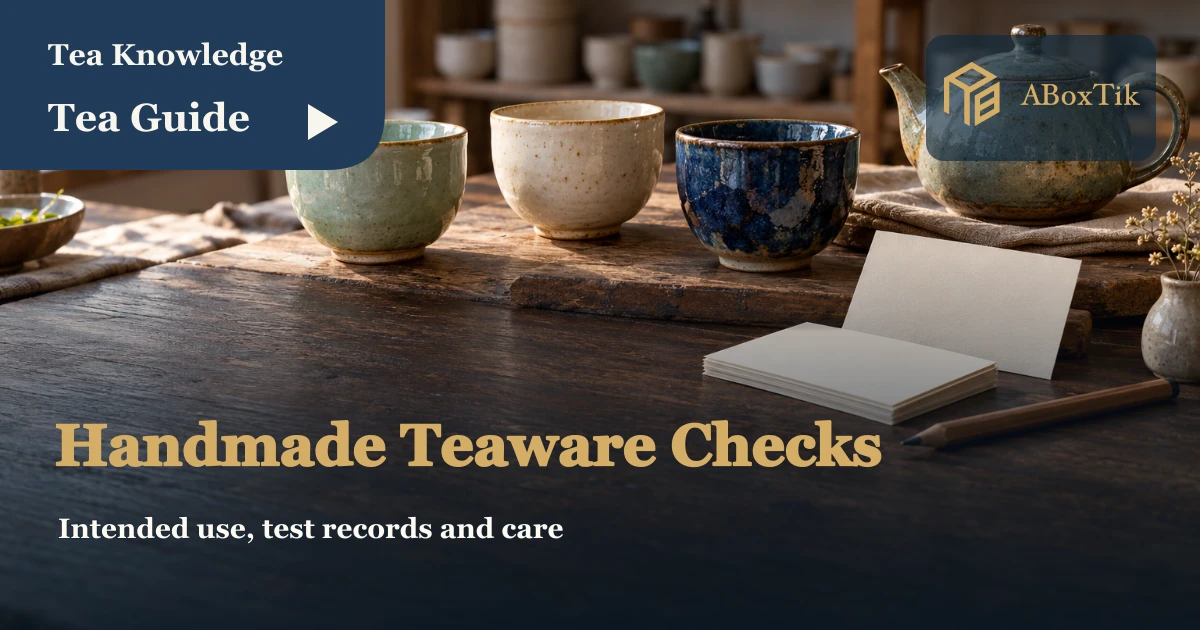
A favourite glaze deserves a clear everyday role. Admire its colour, ask how it is meant to be used, and leave room for a considerate conversation with the maker before the next cup.
Assess teaware glaze safety through intended food contact, relevant finished-item testing and actual use conditions. Ask whether a handmade cup or pot is suitable for hot tea, then match the item to its supporting records. Colour, an unglazed surface or a high firing temperature alone cannot establish safety. A useful question can be as simple as: “I plan to drink hot tea from this every day; what should I know?”
This is a purchasing question guide. Taiwanese ceramic craft provides cultural context, while the teapot materials guide helps separate materials and operation. There is no need to memorise a studio’s entire vocabulary before discussing one cup. Start with the way it will actually be used.
Teaware glaze safety starts with the intended use
Distinguish display pieces, flower vessels and items intended for food contact. A cup-like shape does not establish that a maker designed the object for hot tea, acidic drinks or repeated washing. A single studio may produce several kinds of work. Explain the drink, temperature and expected contact time so the maker can answer the relevant question. Porcelain brewing discusses everyday handling and cleaning; suitability comes first.
Identify the contact surfaces too: inner wall, drinking rim, pot interior, filter holes, spout and joints. An exterior decoration may differ from the inside. For a set, ask how the records relate to each form, rather than allowing a document for one piece to cover everything by assumption. Keep the item’s name, photograph, capacity and maker’s contact details together. “That lovely blue one” is a fond memory, but an awkward filing system.
A piece intended for display can be enjoyed in that role. For an everyday working cup, establish its use before checking grip and pouring. The beginner gaiwan guide and gaiwan versus teapot comparison address operation. Food-contact suitability and comfortable handling are separate conditions, both worth considering.
What colour, ingredients and firing cannot settle alone
Glaze formulation, application and firing help create the finished surface. When a description says natural minerals, high-fired or lead-free glaze, ask whether that describes an ingredient, formulation, process or finished-item test. These terms can be informative without completing the food-contact assessment. An ingredient statement does not automatically replace migration testing of a finished article under specified conditions.
White, clear, dark and crackled surfaces do not give a consumer a visual pass-or-fail formula. Taiwan’s Food and Drug Administration identifies poorly made ceramic glazes as a possible source of lead release and advises choosing utensils meeting the relevant hygiene standard. The practical response is to ask about the item and its use, rather than turn colours into a safety ranking.
Keep the pleasure of looking at celadon, Miaoli pottery or wood-fired surfaces. Then ask separately about contact surfaces and supporting information. A kiln’s visual character and a test report have different jobs. Neither needs to speak on the other’s behalf for the object to be interesting.
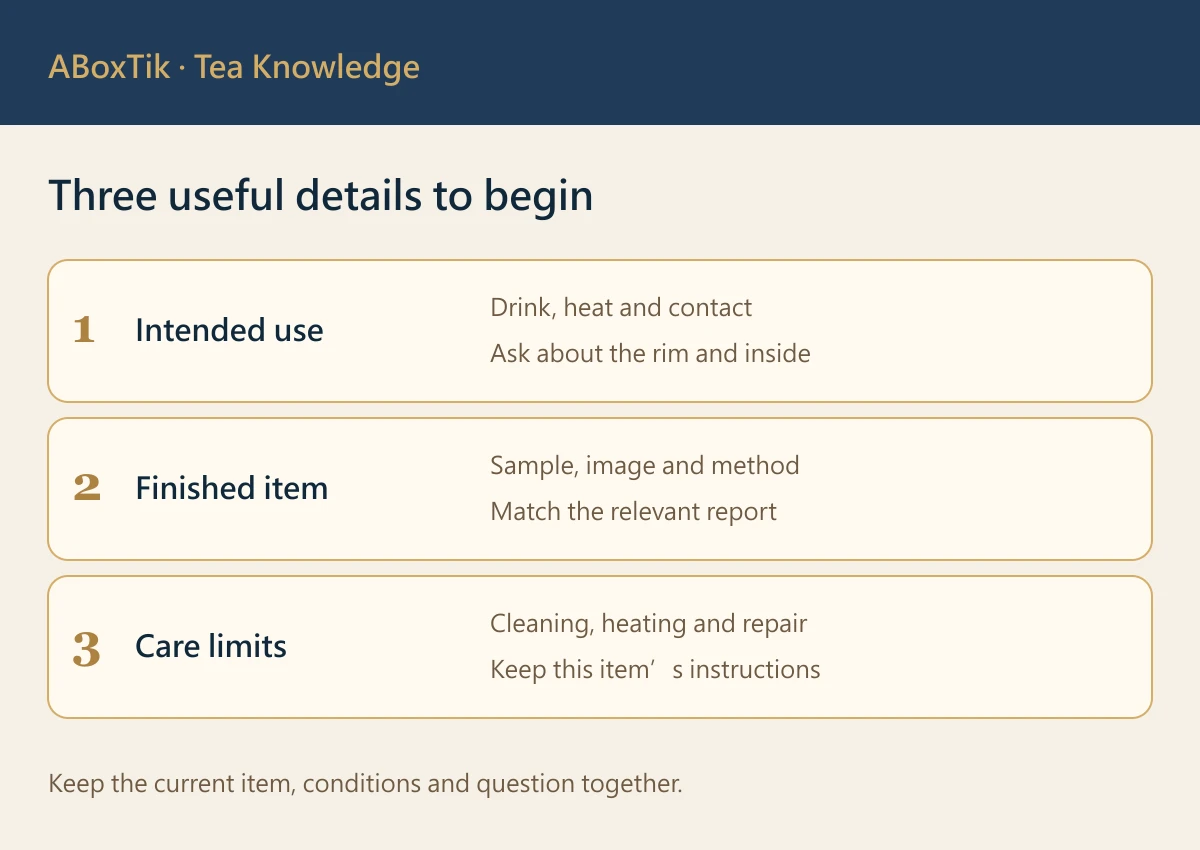
Read the sample identification before the test result
Request the complete report, including issuer, date and reference. Match its sample name, photograph, material or model to the item offered. If it concerns an ingredient or another specimen, ask the supplier to explain the relationship to this finished piece. For individual handmade work or changes in formulation and firing, that relationship is particularly useful to clarify. A cropped photograph containing the word pass leaves much of the conversation unfinished.
Distinguish total material content from migration testing. Taiwan’s food-utensil standard includes lead and cadmium migration provisions for glass, ceramic and enamel articles, with categories linked to vessel characteristics. Ask the testing or supplying party to identify the applicable category, method and assessment basis. A single numerical limit should not be lifted from one category and applied to every cup.
Look for solvent, duration, temperature, units and results. If a result says not detected, check the method’s reporting information instead of translating it into an absolute claim that every substance is zero. List the missing pages or unclear fields and ask for them specifically. While waiting, continue with familiar utensils whose use is clear. An attractive cup can wait for a reply without losing its appeal.
Why a home vinegar soak is not a compliance test
A vinegar soak with no visible colour change cannot establish compliance. Laboratory methods control extraction, sampling and analysis; an unchanged surface is not a quantified lead or cadmium result. Nor should a taste test be used to decide chemical safety. A palate has a delightful job recognising tea and need not take on a laboratory instrument’s second shift.
For an unresolved question, provide photographs, purchase information and intended use to the supplier, and request the relevant food-contact evidence. A qualified testing service or competent authority can help where professional interpretation is needed. Do not treat boiling tea, rice water or repeated rinsing as a guarantee that an unknown chemical concern has been removed. Keep cleaning advice within the actual item’s instructions.
Once use and condition are established, aroma observation can begin. If comparing cups, divide the same brewed tea and note rim comfort, grip and ease of cleaning. That notebook records a personal preference. Giving it a clear purpose makes it more useful than expecting a pleasant first sip to answer every question about the vessel.
Give care instructions and changes in condition a place
Follow the maker’s instructions for washing, heat and use. Do not assume that all handmade ceramics can be microwaved, put in a dishwasher, directly heated or exposed to rapid temperature changes. Metallic decoration, repairs, adhesives and combined materials raise their own use questions. Save the instructions somewhere accessible; they are often more practical than a universal pot-seasoning tradition borrowed from another object.
During cleaning, look for chipped rims, flaking glaze, cracks, persistent unusual odours or changes that are hard to clean. Stop using an affected item for food and drink while seeking advice from the maker. Observation does not diagnose a contaminant, but can support the decision to pause use. An existing designed crackle and a newly developing crack should not be casually assigned the same explanation.
Clay-pot care explores routine cleaning, and a small home tea bar can provide room for drying and storage. Keep tea according to its storage guidance as well. Careful arrangements serve the person who actually washes the cup tomorrow, which is a useful form of hospitality even when that person is oneself.
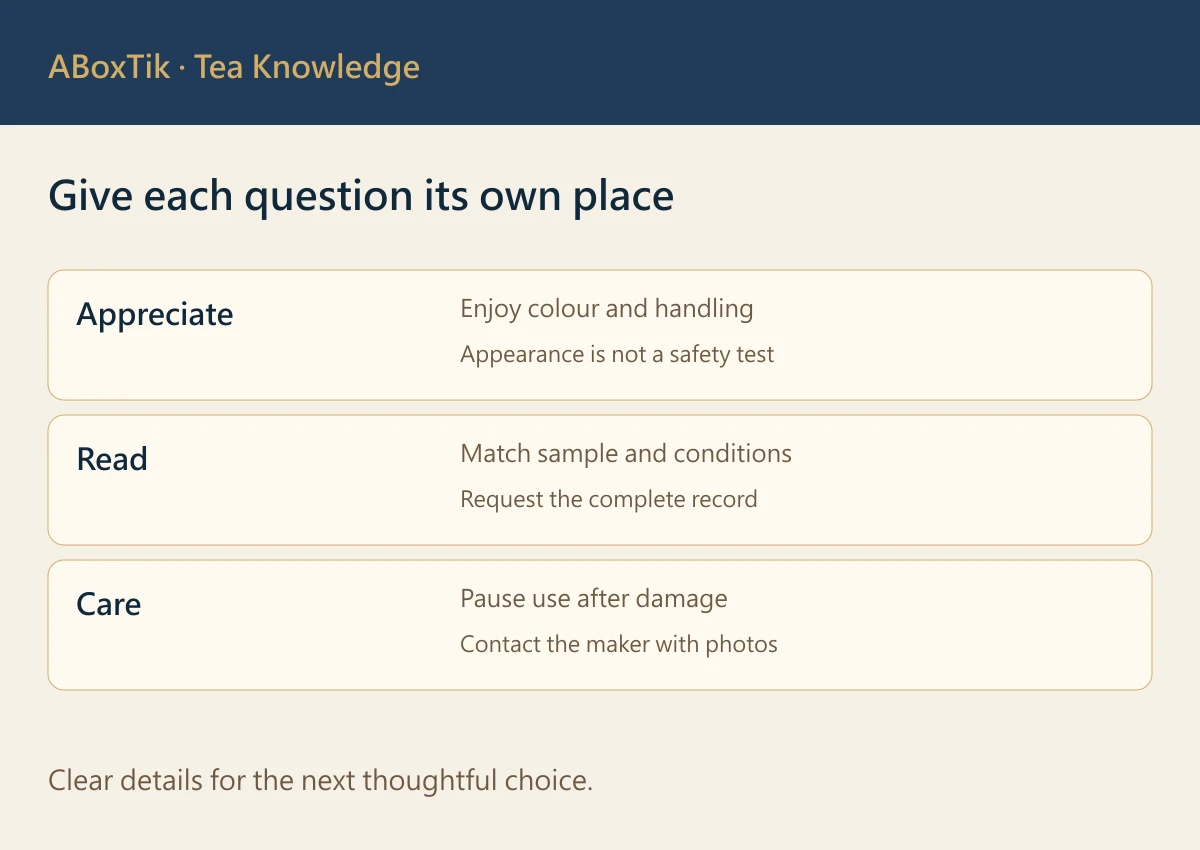
Five questions to take into a studio
Ask what foods, drinks and temperatures the piece is intended for; which surfaces contact tea and lips; which finished-item records apply and how; what cleaning and heating restrictions exist; and whom to contact if damage develops. Retain the object card and instructions. A gentle tone and a precise question work well together, especially when a maker is discussing a particular piece rather than an entire category.
For a gift, consider whether the recipient wants to care for handmade ware, and include the maker and care information. The tea-gift selection guide addresses the drinking occasion separately. If utensil habits are unknown, a familiar tea format may be more considerate. Opening a present need not enrol a friend in an unexpected ceramic-care course.
ABoxTik’s editorial sequence is intended use, supporting information and handling, followed by the proportions and surface that appeal. Browse teaware and craft selections item by item. Pair familiar tea from the classic four-box selection or two-box tea gift with an established routine, then get to know a new cup at an unhurried pace.
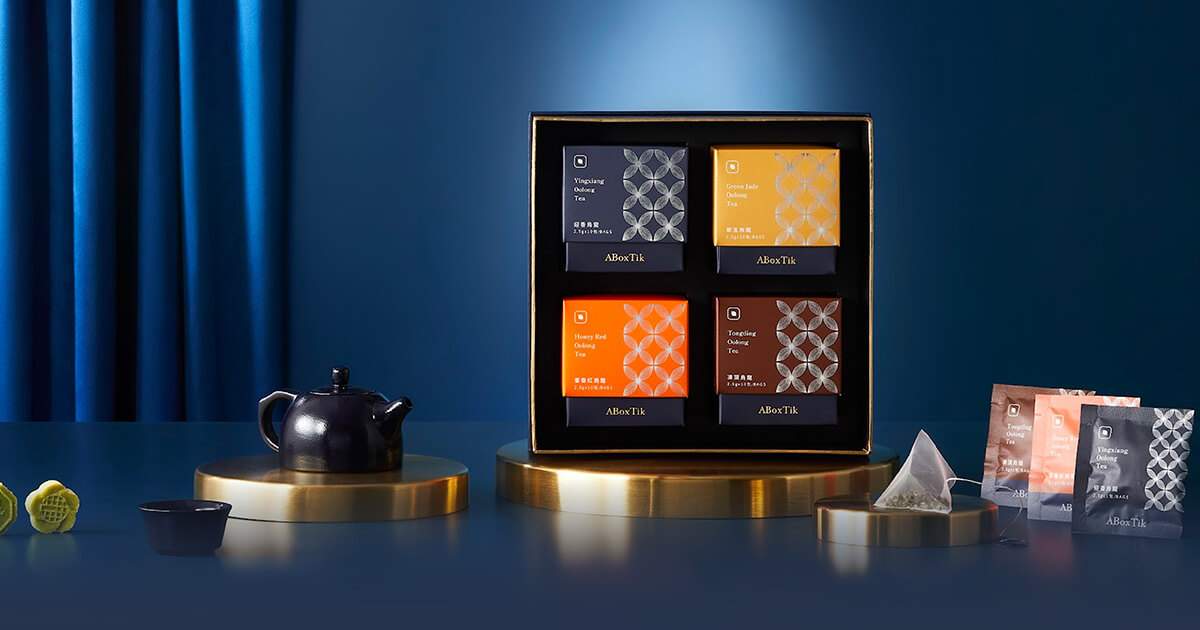
Follow a box of tea: admire the object, and understand its everyday role.
Let a favourite cup come with clear everyday guidance
Teaware glaze safety does not require guessing from colour. Begin with use, finished-item information, care limits and changes that warrant a pause. While an answer is pending, make tea in familiar utensils. Enjoying an object and waiting for clarification can comfortably coexist.
On the next studio visit, explain the way tea is usually served and ask one specific question. Continue with Taiwanese tea’s origins and craft when ready. An unhurried cup often begins with small details that someone took time to confirm.
Related reading
- Porcelain brewing: everyday handling and cleaning.
- Celadon cup observation: separate visual and tasting conditions.
- Taiwan ceramic craft: materials and cultural context.
Sources
- Taiwan Laws Database: Sanitation Standard for Food Utensils, Containers and Packages
- Taiwan FDA: lead and ceramic food-contact risk information
- Sanitation Standard: Annex 1, general provisions
Sources checked 16 October 2026.