
Tea Knowledge
Teacup Shape and Aroma: A Two-Cup Comparison
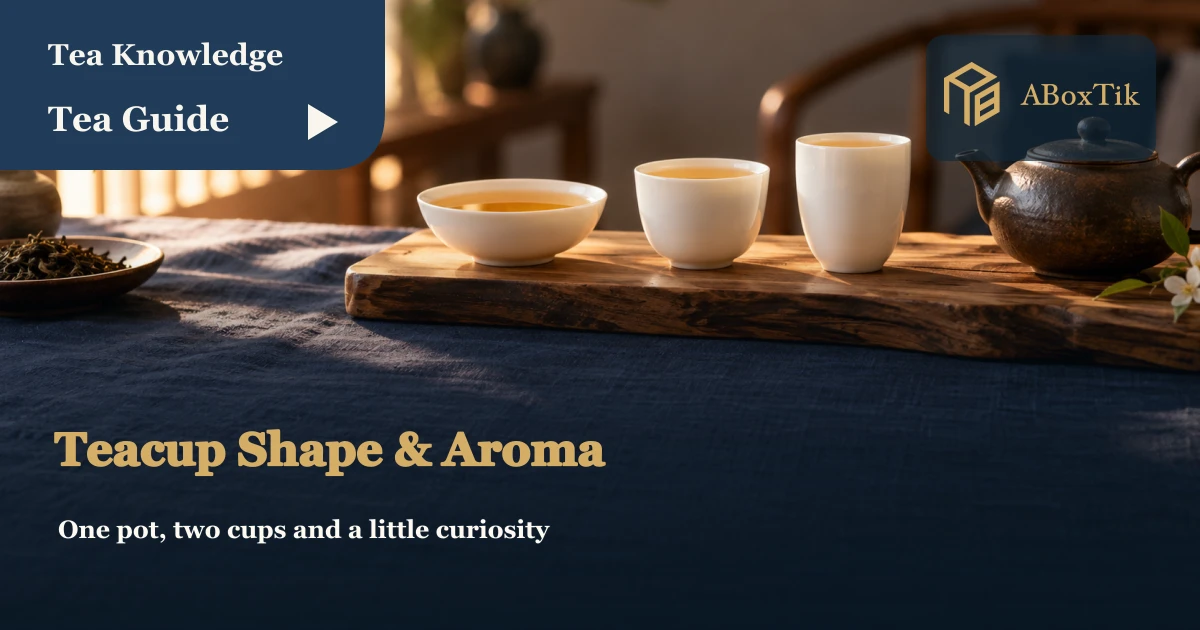
One pot, two cups, and a new opinion from your nose and hands. Leave room for curiosity before choosing a winner.
Teacup shape may affect perceived aroma and flavour, alongside rim thickness, surface feel, serving conditions and personal preference. Research makes vessels worth comparing; it does not establish one shape that makes every tea smell best. At home, start with the same brewed tea, similar cup materials and equal servings, then record aroma, sipping and cooling separately.
If yesterday’s favourite cup seems less convincing today, there is no need to give it an award or a dismissal. Choose two cups already at home and spend one pot of tea describing the difference. Not noticing a clear difference is a complete answer too.
Research concerns perception rather than a universal cup formula
A 2024 study in Frontiers in Psychology examined visual and haptic teacup cues and perceived tea flavour through an experimental design and questionnaires. It considered dimensions, rim thickness, surface feel and cup preference. The work is a reminder that a tea-drinking experience includes more than the liquid alone.
A 2019 Sustainability study explored cognitive perceptions of tea using different cup shapes and expert participants. Its tea, participants and design give the findings a particular scope. These papers are useful for generating questions, rather than transferring a cup ranking unchanged to every household and tea style.
Begin with the tea-smelling sequence and the background in Taiwanese tea characteristics. Leave space for the vessel, the tea, the brewing method and the person. Understanding their relationship does not require purchasing an entire cup collection before making one observation.
Separate the opening, depth, rim and hand feel
Notice whether the rim flares, rises more directly or narrows inwards. Record depth and serving volume too. Different shapes may change how you bring your nose towards the tea, tilt the cup and take a sip. These are observable actions, rather than automatic proof that a particular aroma has increased.
Next, describe rim thickness, comfort in the hand and visual liking separately. Enjoying the cup and noticing a clearer tea aroma can both be true, but belong in different fields. The celadon-cup observation guide and Hsinchu glass introduction offer ways to look at form, transparency and thickness.
Avoid changing material, colour, capacity and shape all at once if shape is the question. A thick clay cup and thin glass cup can still be compared for overall usefulness, but their difference cannot be assigned to the opening alone. When every variable talks at once, the notebook quickly runs out of useful room.
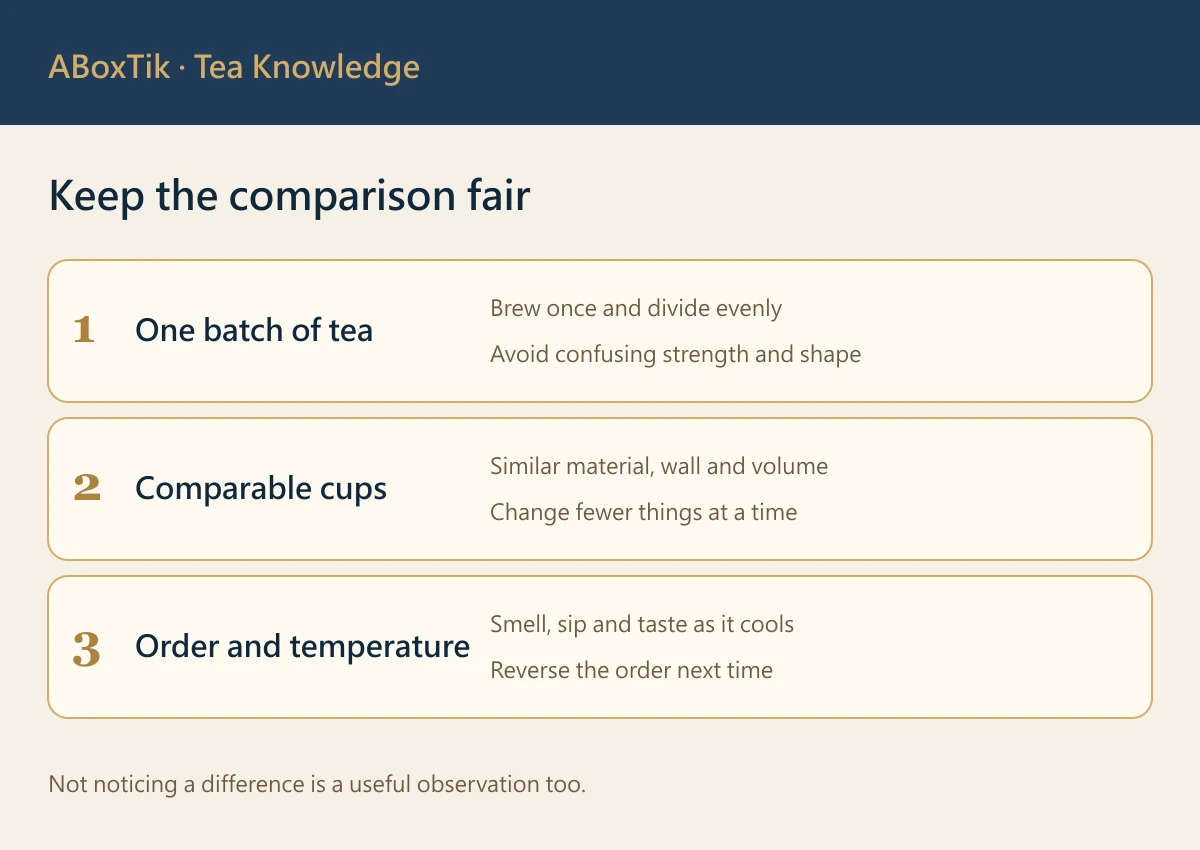
Prepare one pot and two comparable servings
Choose two clean, undamaged cups without residual smells, keeping material and wall thickness as similar as practical. Label them A and B and record their shapes. Brew a familiar tea using your usual or the package method. Divide the same infusion evenly; a serving pitcher can help mix the tea before pouring.
Write leaf amount, water volume, temperature and time. The brewing guide and oolong temperature guide can help organise those fields. Observe the two servings at similar times. If one feels warmer, record that instead of silently removing it from the explanation. A home comparison can be useful without pretending to achieve laboratory control.
Try A then B in one round, reversing the order next time. Allow tea to reach a comfortable drinking temperature. You can see and feel the vessels, so calling them A and B does not make this a blind test. Keep the brewing vessel fixed as well; the teapot need not change jobs halfway through.
Keep smelling, sipping and cooling in separate stages
First take a brief smell at a comfortable distance and keep one clear word for each cup. Then sip and note taste and mouthfeel. Return as the tea cools to see whether aroma and preference change. Our floral vocabulary, roasted-aroma words and honey-versus-fruit comparison offer possible language rather than required answers.
Make an independent note before reading a product’s full aroma list. If hand feel is what you prefer, write that directly. Separating function and liking is more useful than asking “premium” to explain every positive impression.
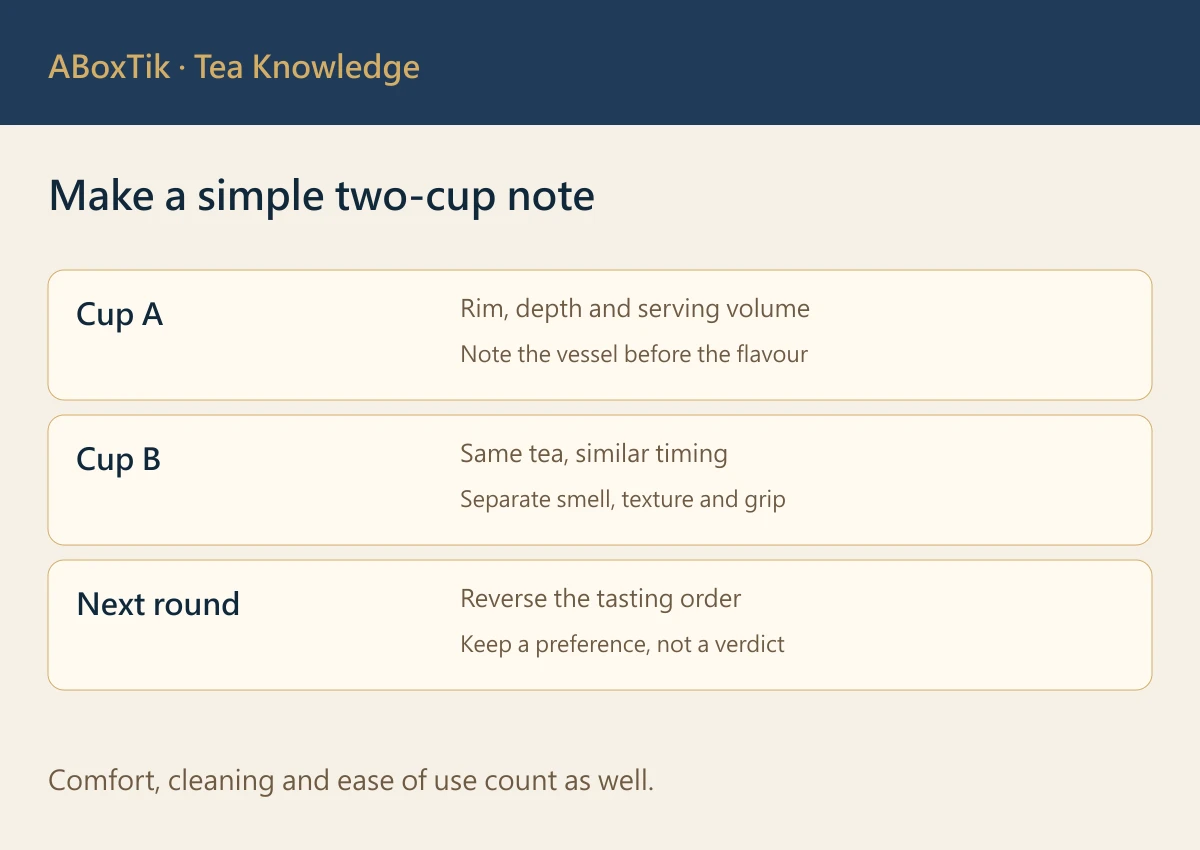
| Field | Cup A | Cup B |
|---|---|---|
| Opening, depth, material | ____ | ____ |
| Serving volume and order | ____ | ____ |
| Aroma while warm | ____ | ____ |
| Taste and mouthfeel | ____ | ____ |
| Cooling and preference | ____ | ____ |
Add one line outside the table for conditions you could not keep the same. It is a reminder for another attempt, not a penalty box. With a friend, record first and compare afterwards. Otherwise, the first mention of a flower can very quickly plant a whole garden in everybody’s notes.
Write the outcome as an observation from this tasting
A useful sentence model is: “With this infusion, aroma seemed clearer in A, while B felt more comfortable to hold. The difference was less obvious after cooling.” Replace it with your own outcome. The sentence identifies a moment and a preference instead of promising a permanent property of every cup with that shape.
If you cannot distinguish the servings, record “no clear difference this time”. There is no need to keep brewing until tired simply to confirm a paper or product description. The fresh-versus-roasted style guide can help choose tea for another day, but a new tea needs a new note.
If the difference is large, check volume, tasting order, residual cup smell and waiting time. Improve one condition on the next attempt. A personal preference is useful for choosing a cup; one home comparison is a much smaller basis for a claim about all tea drinkers and all tea styles.
Let everyday use have a vote in the final choice
When buying a cup, consider grip, cleaning, serving size and whether the particular piece is intended for hot tea. Follow its maker’s use and care information. Aesthetic liking and practical needs deserve attention together. The craft-use and care guide illustrates that habit of asking about intended use, while different materials still require different instructions.
For a shared exercise, choose one familiar tea from a two-tea gift set, or plan separate sessions with a four-oolong selection. Keep one tea fixed within each comparison. Variety can wait for another afternoon while the cups have their turn to be understood.
Finish with one simple question: which cup would you want to take out again tomorrow? The answer might concern aroma, grip, easy cleaning or colour. You do not need one impressive scientific reason to replace all everyday liking. A clear, modest observation is enough to make the next choice more personal.
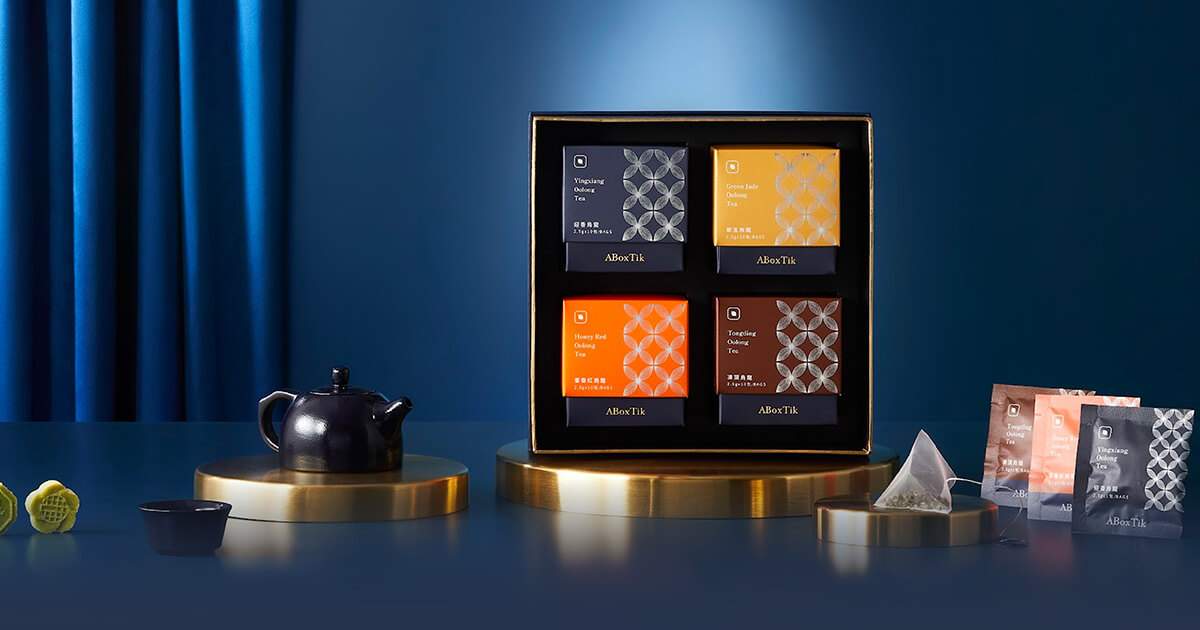
Follow ABoxTik: a little curiosity for the nose and a comfortable cup for the hands.
Let a comfortable cup give the tea its own pace
Exploring teacup shape is most useful when it helps you compare fairly and describe a preference. Keep the A-and-B note and reverse the order next time, without reorganising the ranking of every vessel at home.
The tea is ready. Choose a comfortable cup, smell once more and give the next sip a little time. The vessel has already made a useful contribution to the day.
Related reading
- Practise smelling one batch of tea
- Look more closely at a celadon cup
- Choose a tea for a two-cup comparison
Sources
- Yang and Hsu (2024): visual and haptic teacup cues and tea flavour perception
- Yang et al. (2019): teacup shape and cognitive perception of tea
Sources checked 18 October 2026.