
Tea Knowledge
Tea with Snacks: Pastries, Nuts and Jerky
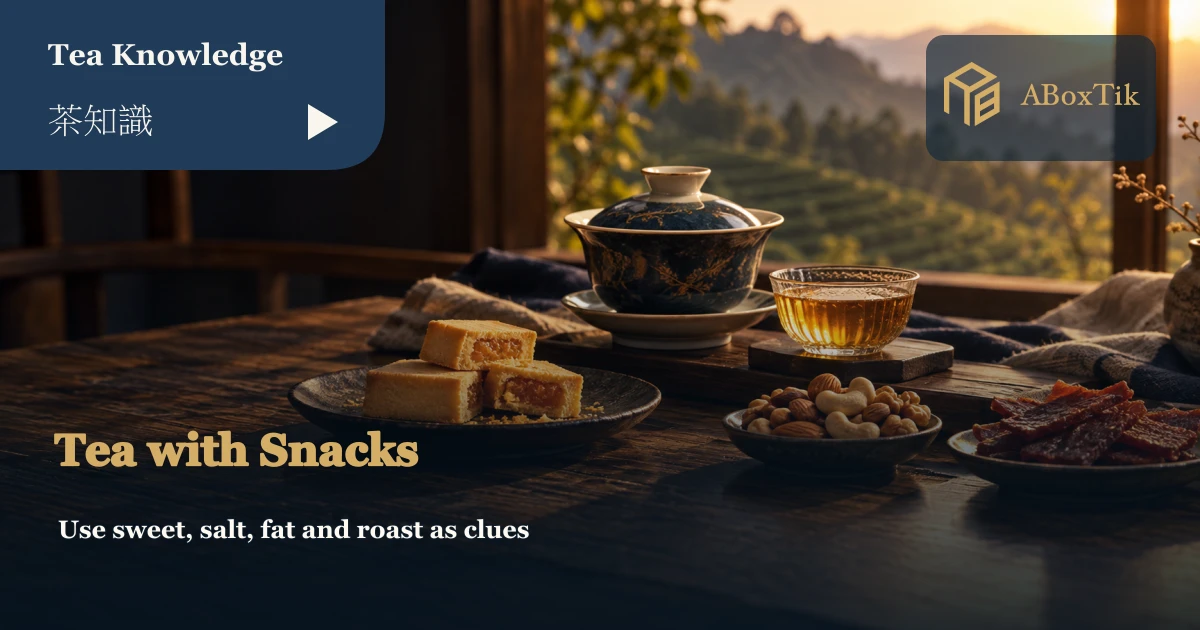
Put the snacks on the table first; let the tea find its place beside them.
Tea with snacks becomes easier when the first question is about the plate, not a supposedly perfect pairing. Is sweetness, salt, richness, roast or spice doing most of the talking? Choose Taiwanese tea that leaves that character visible or gives the palate a little room, and pastries, nuts and jerky begin to feel less like three separate problems.
Treat the first round as a small tasting, not a rulebook. Take a bite, take a small sip and notice which cup you want to revisit. This guide offers a practical starting map for an afternoon tray, a holiday table or friends dropping in.
Read the snack before making claims about the tea
A butter pastry or fruit-filled biscuit often leads with sweetness and richness. Roasted nuts bring dry, warm notes. Jerky can put sweet-salty seasoning, spice and savoury character forward. The tea does not need to overpower any of them; it only needs to leave their outlines intelligible after a sip.
Start with the broad directions in the six tea categories, then use a simple aroma sequence to decide whether floral, fresh or developed notes interest you. These words are observation tools, not medals for tea or food.
If the plate feels busy, ask one question only: after a bite, did this tea make the experience feel lighter or weightier? That answer is enough to guide the next cup.
Pastries: give sweetness some room to breathe
With sweet, buttery or fruit-filled pastries, begin with a tea that offers a clear floral lift, freshness, or a measured developed roast. Pouchong, light oolong, roasted oolong and black tea can all be useful comparison points. Their actual expression depends on the tea in hand, so its package information remains the practical reference.
Taste a small bite before a small sip. If only sweetness remains, try a gentler brew next time or a tea with a clearer aromatic direction. If tea hides the filling entirely, pause before asking either side to work harder. Our moon-cake pairing guide extends this way of thinking to festive pastries without claiming that every biscuit needs the same partner.
For a gift, these questions for choosing a tea gift box help keep the recipient’s own exploration at the centre. That is usually the more generous part of the pairing.
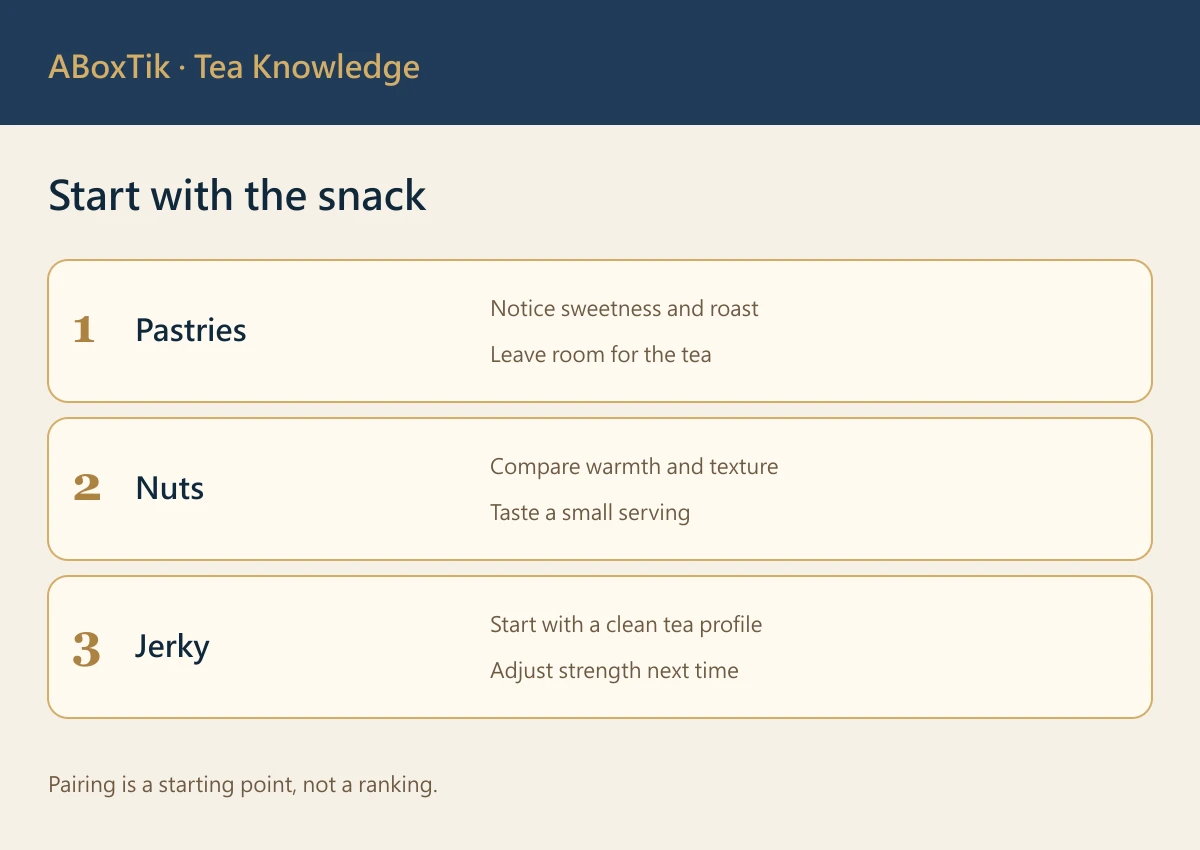
Nuts: separate roast from texture
Nuts invite an easy shortcut: roasted tea with roasted nuts. It can work, but first notice whether the nuts are plain, salted, sugared or heavily seasoned. A plain or lightly salted nut may be pleasant with a fresh or rounded tea; a deeper roast can be compared with roasted or ripe-fruit directions.
Smell the nuts, smell the tea, then bring them together. When both have very high roast character, they may crowd one another. A brighter or floral tea can create more shape on the plate. Light and roasted Taiwanese tea offers a useful map for that comparison.
Write down texture as well. Does the tea make the nut feel cleaner, or does it make the mouthfeel feel fuller? Neither result is a quality judgement. It is simply a clue worth keeping.
Jerky: begin with sweet-salty intensity
Jerky seasoning often arrives before the meat itself, so a clean, clearly shaped tea is a sensible first pour. Those who enjoy developed notes may compare roasted oolong or black tea; those wanting a lighter finish may begin with light oolong or pouchong. Each seasoning blend deserves its own tasting.
Cut the jerky into small pieces and pour small cups. If the tea feels too forceful beside food, alter only one condition in the next round: leaf amount, steeping time or starting temperature, following the package direction. Our steeping-time guide explains how to keep variables from changing all at once.
After a small bite, pause and ask which cup you would honestly like to return to. Keep that preference in the note for the next tray.
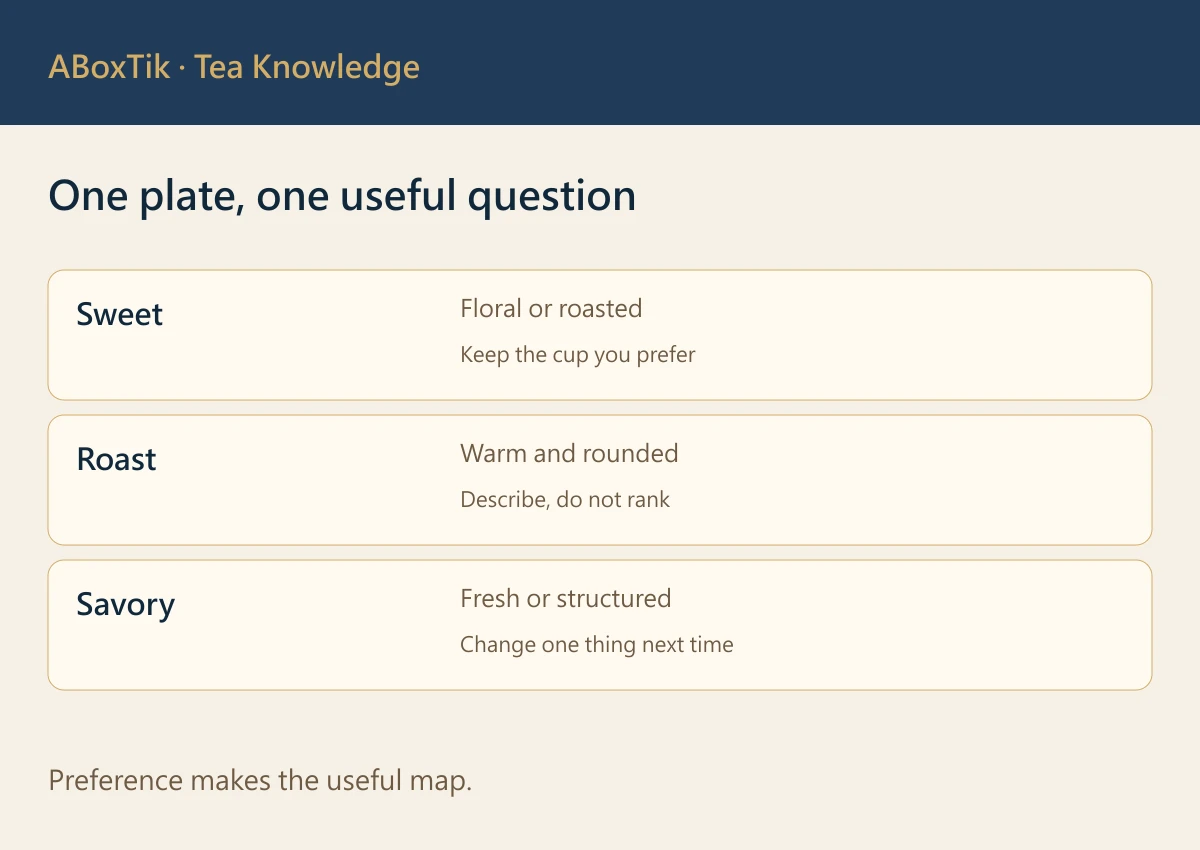
A three-snack pairing table
| Snack character | Tea directions to compare | A useful question |
|---|---|---|
| Sweet pastry | Floral, fresh or measured roast | Is the tea still clear after sweetness? |
| Roasted nuts | Rounded, roasted or bright aromatics | Do the roast notes support or crowd each other? |
| Sweet-salty jerky | Clean, structured oolong or black tea | Which cup calls you back after food? |
The table narrows a first choice; it does not turn taste into a law. Observing bitterness, astringency and strength can help unpack a vague “too much” into something you can adjust.
Compare two teas at a time, preferably in similar cups and with the same water. Your afternoon and your nose do not need a committee meeting.
When the pairing is too strong or too quiet
If tea feels too strong beside a snack, return to the package guidance and change one element next time: leaf amount, starting water temperature or steeping time. If it feels too quiet, notice whether a very sweet, salty or spicy snack has taken over the frame. This sequence makes the next brew easier to understand.
A Taiwanese tea style starter set can broaden a later comparison, while whole-leaf tea bags offer an easy sharing format. Check the current product page for the tea and brewing details actually available.
Keep a note in ordinary language: “salted almonds with a gently roasted oolong, brewed lighter.” It does not have to be permanent to be useful at the next tea tray.
A small tasting that fits around conversation
Set out two similar cups, one familiar snack and a small note card. Brew each tea according to its own package guidance rather than forcing different teas into identical instructions. Label the cups A and B. Take a little food on its own, then try a similar bite with each tea. Keeping the bite size fairly consistent makes the comparison easier to follow: a double helping of filling can make a perfectly reasonable tea seem suddenly quiet.
Ask each person to write a sentence before discussing the cups. Someone may want the pastry to keep its buttery character; someone else may enjoy a floral contrast. Both observations can help arrange the next tray. Agreement is useful when planning a shared pot, but it is not the price of admission to the tea table. The biscuit has not hired a judging panel.
For a mixed plate, divide the tasting into three short rounds: pastry, nuts, then jerky, or any order that suits the actual seasoning. Keep the question small in each round: would you choose this tea again beside this particular snack? If the pairing is appealing but the tea feels forceful, leave its style in place and adjust one brewing condition next time. That separates choosing a flavour direction from changing its strength.
Write the snack name, tea name and the reason for the preference together. A note such as “floral tea beside a fruit pastry; lighter brew next time” is enough. When the filling, seasoning or tea batch changes, repeat the sequence rather than expecting the old result to be a permanent rule. The result is a useful record of a real preference, ready for the next visitor or the next quiet afternoon.

Tea, one box at a time
Let one small plate lead to the next cup
At ABoxTik, we think a snack pairing is most enjoyable when it makes room for discovery rather than a fixed answer. Start with a small tasting and allow sweetness, roast and tea liquor to leave space for one another.
For more language for what you notice, return to the aroma guide; for a tea set made for gradual exploration, see Classic Taiwanese Tea Four-Box Set.
Related reading
- Read the moon-cake and tea pairing guide
- Compare light and roasted Taiwanese tea
- Observe strength, bitterness and astringency separately
Sources
- Tea and Beverage Research Station: Taiwan specialty tea cuisine
- Tea and Beverage Research Station: Taiwan tea flavour wheel
Sources checked 19 October 2026.