
Tea Knowledge
How to Brew Tea in a Mug: Four No-Teapot Methods
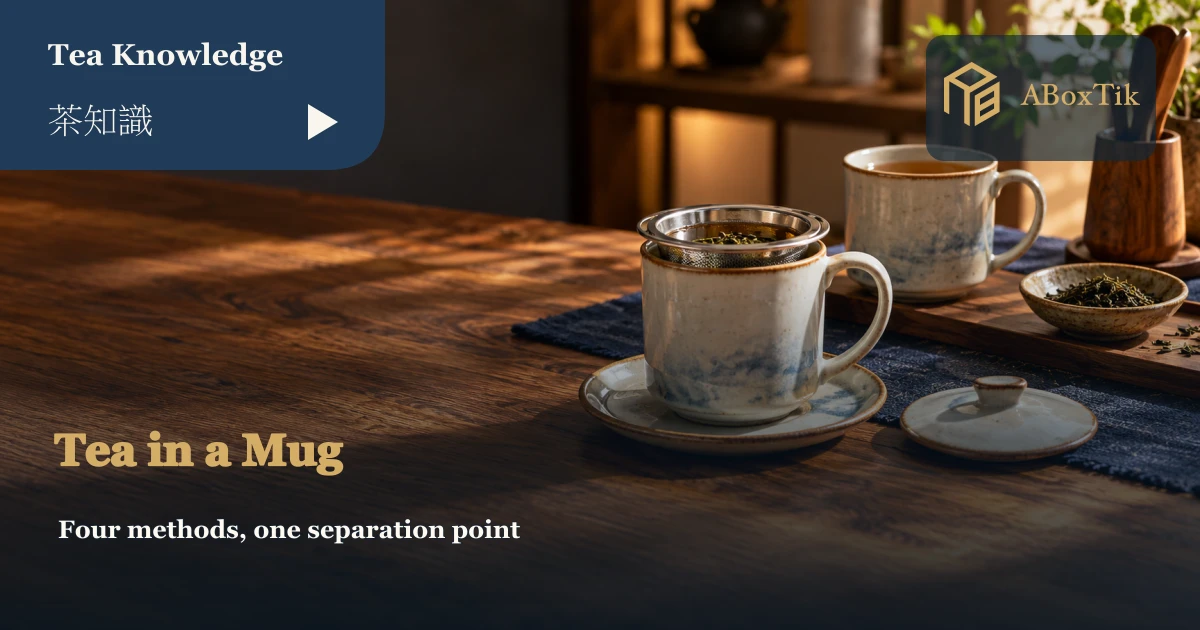
A full tea set is optional. A clear, manageable cup can begin today.
A mug can brew tea with a removable infuser, a tea bag, a second mug and strainer, or a small amount of loose leaf left in the cup. The main differences are when the leaves leave the water, how much equipment is used and what remains to clean. Begin with the tea’s instructions for leaf amount, water and time.
Having only a mug does not postpone the tea break until a parcel arrives. Choose a clean, undamaged vessel intended for hot drinks and decide where the leaves will go. Equipment can develop around a real habit, one comfortable cup at a time.
Prepare the mug, water and a place for wet leaves
Check that the mug is suitable for hot drinks according to its maker, with a usable capacity and no damage. Prepare drinking water, tea and a washable saucer for wet leaves or the infuser. Do not test an unknown or damaged decorative vessel by filling it with hot water.
Use the tea’s guidance as the starting point and note the actual water volume. One tea bag in different mug sizes can produce quite different strength. basic brewing and pouring steps and steeping-time notes can keep the first attempt straightforward.
Place hot vessels securely away from edges and electronics. Set the timer and identify the wet-leaf landing place before pouring. basic brewing and pouring steps deals with interruptions; here the task is choosing one workable mug method.
Method one: remove the entire infuser
Fit a removable infuser securely to the mug, add the measured tea and pour as directed. When the time is reached, lift it out, let drips return to the mug and move it to the saucer. Repeated lifting, stirring or squeezing is unnecessary when the aim is a clearly timed starting brew.
This suits someone who wants to measure loose leaf and end contact with the water directly. Leave enough internal room for the leaves to expand and check that the handle or cover does not obstruct removal. Leaf formats helps explain why the material in the basket matters.
Clear the used leaves, wash according to the utensil material’s instructions and dry it. Include the saucer in that routine. Tomorrow’s tea break is easier when it does not inherit yesterday’s unfinished washing.
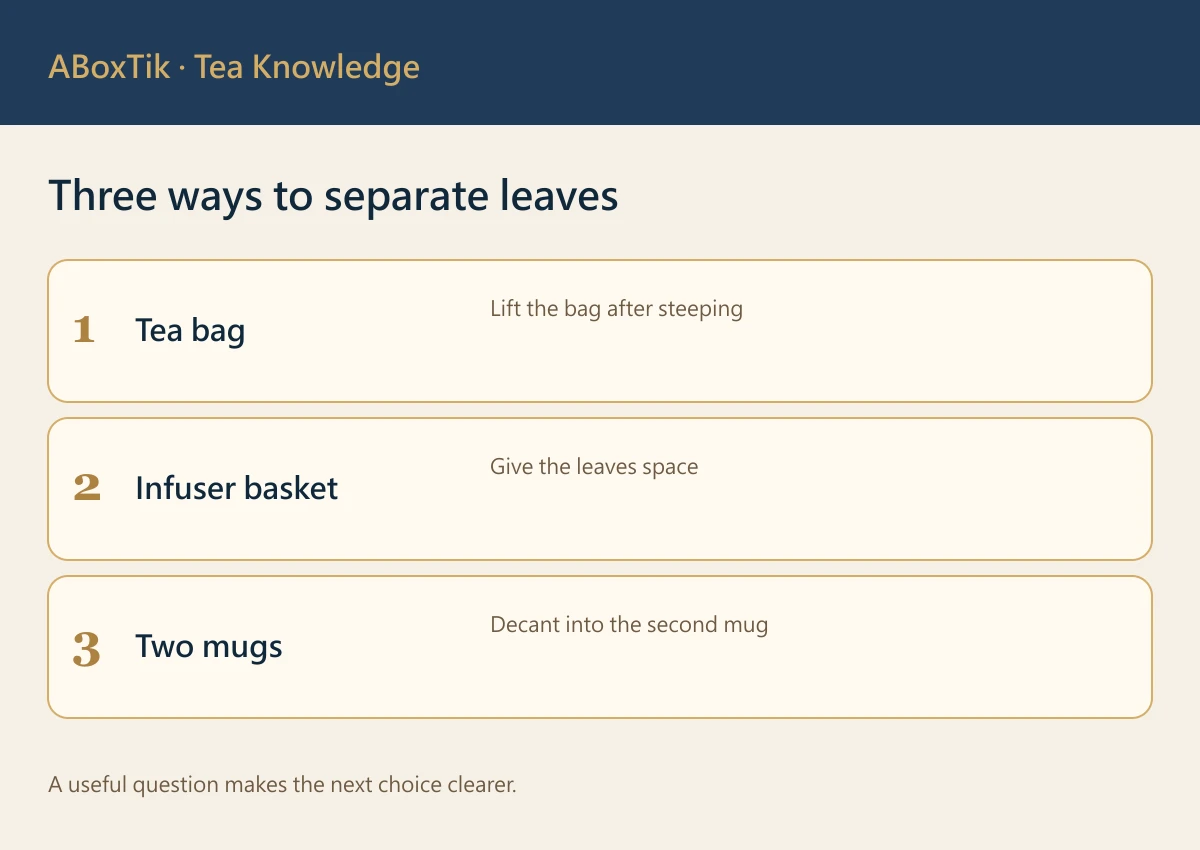
Method two: a tea bag still needs an exit
Read ingredients, portion weight and suggested water volume before brewing. Remove the bag at the indicated time and put it on a suitable saucer. That separates the planned infusion from the continued contact that would occur if the bag stayed in the cup throughout a conversation.
Whole-leaf tea bags simplify handling but do not guarantee identical results at every steeping time. For a lighter cup, use a fresh bag and alter one condition next time rather than forcing yourself to finish an overly strong first attempt.
For several people, individual mugs let each drinker choose an appropriate removal point. Compare the current contents and formats in the two-box tea bag set and the mixed tea bag set, rather than assuming every combination contains the same teas.
Method three: let two mugs divide the work
Brew loose tea in one heat-suitable mug according to its guidance. At the planned time, pour through a securely supported strainer into a second compatible mug with enough capacity. The first vessel steeps; the second receives the tea for drinking. Leaf separation now has an identifiable moment.
Check both capacities and the support before the hot pour. Do not balance a strainer on a rim it does not fit. Keep the stream visible, hands clear of its route and a washable place ready for drips. A simple arrangement should reduce awkward handling rather than introduce it.
porcelain brewing and utensil choices and basic brewing and pouring steps use related receiving principles. This version does not require buying a tea pitcher. If only one mug is available, choose an infuser or bag instead of improvising an unstable hot-water arrangement.
Method four: leaves remain in the mug
If loose leaves remain directly in the cup, start with a small serving and observe both strength and where the leaves sit. Let the drink reach a comfortable temperature and sip gently. Do not use your mouth to solve an awkward hot-leaf arrangement. Unlike lifting an infuser, this method does not clearly end contact.
Topping up changes concentration, temperature and the ongoing extraction together. It therefore makes a poor fixed comparison between sips. It can suit someone comfortable with an evolving cup; anyone repeatedly finding it too bitter or disliking sediment may prefer a method that separates the leaves.
observing bitterness, astringency and strength helps describe adjustments, while the re-steeping guide asks whether another cup is wanted. Leaving leaves in a mug is a handling choice, rather than a lower quality grade or a universal method for every tea.
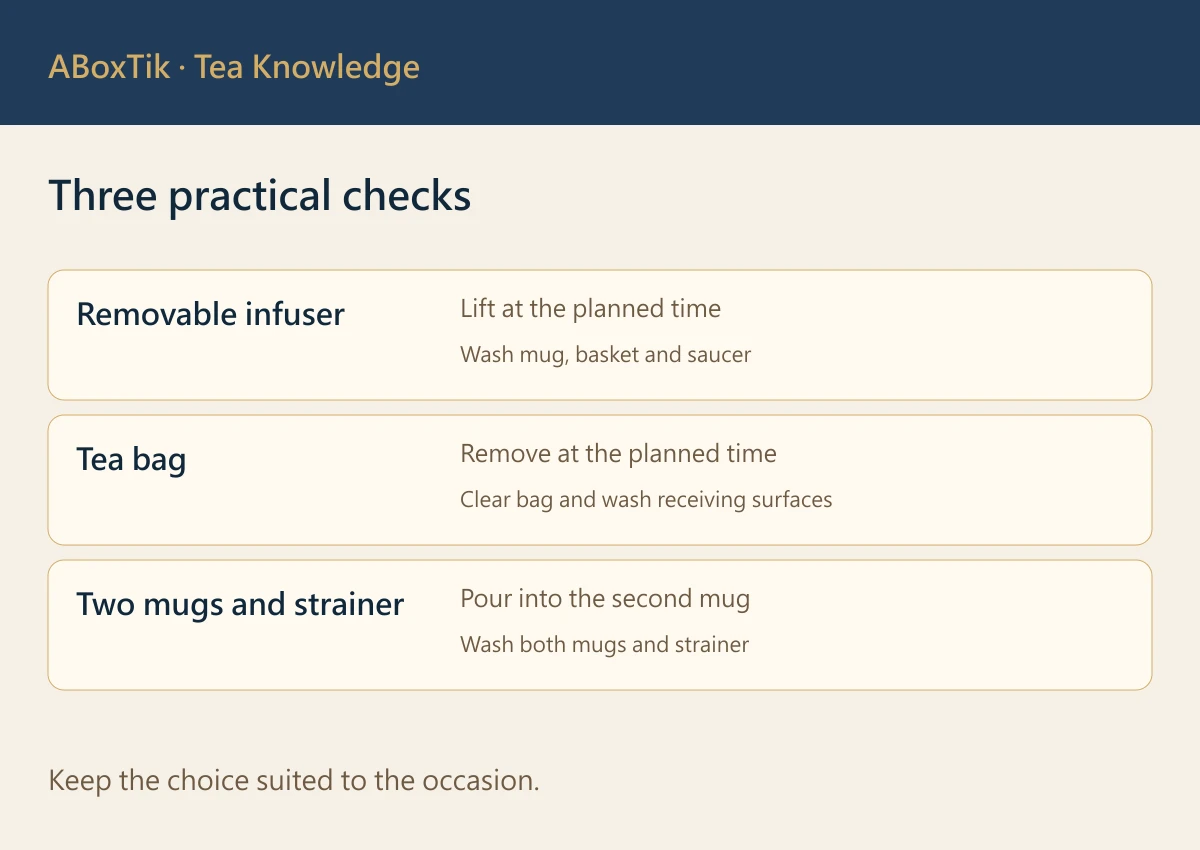
Compare the four methods by the work they leave
| Method | Leaf separation | Afterwards |
|---|---|---|
| Removable infuser | Lift at the planned time | Wash mug, basket and saucer |
| Tea bag | Remove at the planned time | Clear bag and wash receiving surfaces |
| Two mugs and strainer | Pour into the second mug | Wash both mugs and strainer |
| Leaves stay in the cup | Contact continues | Clear settled leaves and wash |
Choose one method for the first attempt, follow the tea’s guidance and finish with one note: “Next time I would change ___.” If leaves are regularly forgotten, improve the reminder and working space before changing the tea. A small home tea corner can help organise a minimal setup.
Ask the mug which job it has today: brewing or drinking? One clear role is enough; it need not be infuser, fairness pitcher and storage box at once. Wash and dry it as directed, with the dry tea kept separately according to appropriate storage guidance.

Tea, one box at a time
Let one mug make room for an everyday tea
At ABoxTik, we like a practical beginning: a suitable mug, a clearly sourced tea and a small sequence that can be completed. Enjoy a comfortable cup first; adjust the equipment as the habit becomes clearer.
Explore the convenience of the two-box tea bag set, or view the teas in the Classic Taiwanese Tea Four-Box Set. The accessory list need not stand between tea and an ordinary day.
Related reading
Sources
- Tea and Beverage Research Station: brewing water and temperature
- Tea and Beverage Research Station: introduction to sensory evaluation
Sources checked 20 October 2026.