
Tea Knowledge
TTES No. 26: Fenghe, Commercial Tea and Rapid Extraction
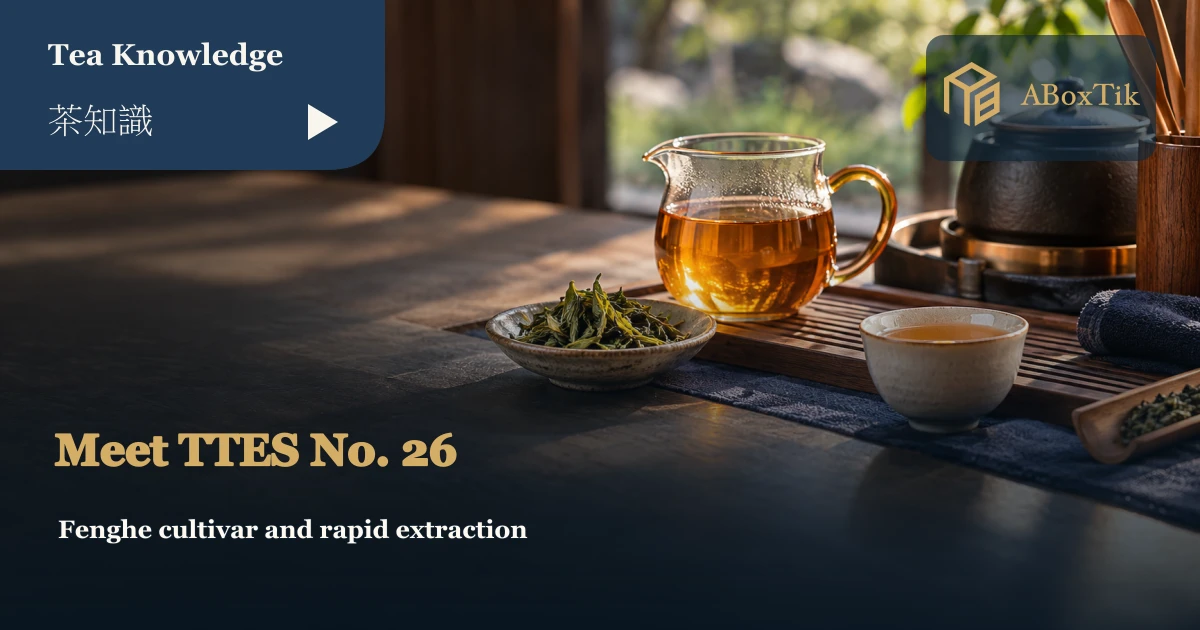
A new cultivar brings a new question: which everyday use is this leaf being prepared to serve?
TTES No. 26 is a Taiwanese tea cultivar with the commodity name Fenghe, introduced with commercial green and black tea uses in view. It has been evaluated alongside the research station’s rapid-extraction processing technology. Cultivar identity, processed material and preparation remain separate questions: the number alone does not give ordinary leaves a universal extraction time.
A new number does not mean the tea in the cupboard needs a software upgrade. This guide explains what to look for in industry news, sample information and actual supply enquiries, without treating a development goal as proof of widespread retail availability.
Match TTES No. 26 with the commodity name Fenghe
Official information distinguishes the cultivar denomination TTES No. 26 from its commodity name Fenghe. Keep the two together on first reading, then check whether subsequent descriptions concern the same cultivar. The distinction prevents a second name from accidentally becoming a second plant in the reader’s mind.
A cultivar number is neither a quality grade nor a place name. Tea categories concern processing, regions concern geography and a cultivar identifies the plant. A finished packet still requires its actual origin, format and batch information.
The approach is familiar from Jinxuan and Ruby: identify the name, understand the intended use, then ask how the particular product is prepared. There is no need to make the numbering system do all three jobs.
Commercial tea begins with a different use case
Commercial tea discussions involve beverage preparation, ingredient handling and supply. Those requirements differ from a small home pot used for gradual tasting. Separate harvesting and handling, finished raw material, extraction equipment and drink service before turning one production feature into a claim about quality.
Suppliers and users need to confirm what the actual material is intended to do. A beverage shop, catering team and home drinker may use different equipment and recipes. A new use need not replace every established way of drinking; a small gaiwan does not suddenly have to operate an entire drinks counter.
Whole and broken formats and tea bags offer familiar examples of the principle: when material form changes, preparation needs checking. A name alone is insufficient to transfer a timing instruction from one format to another.
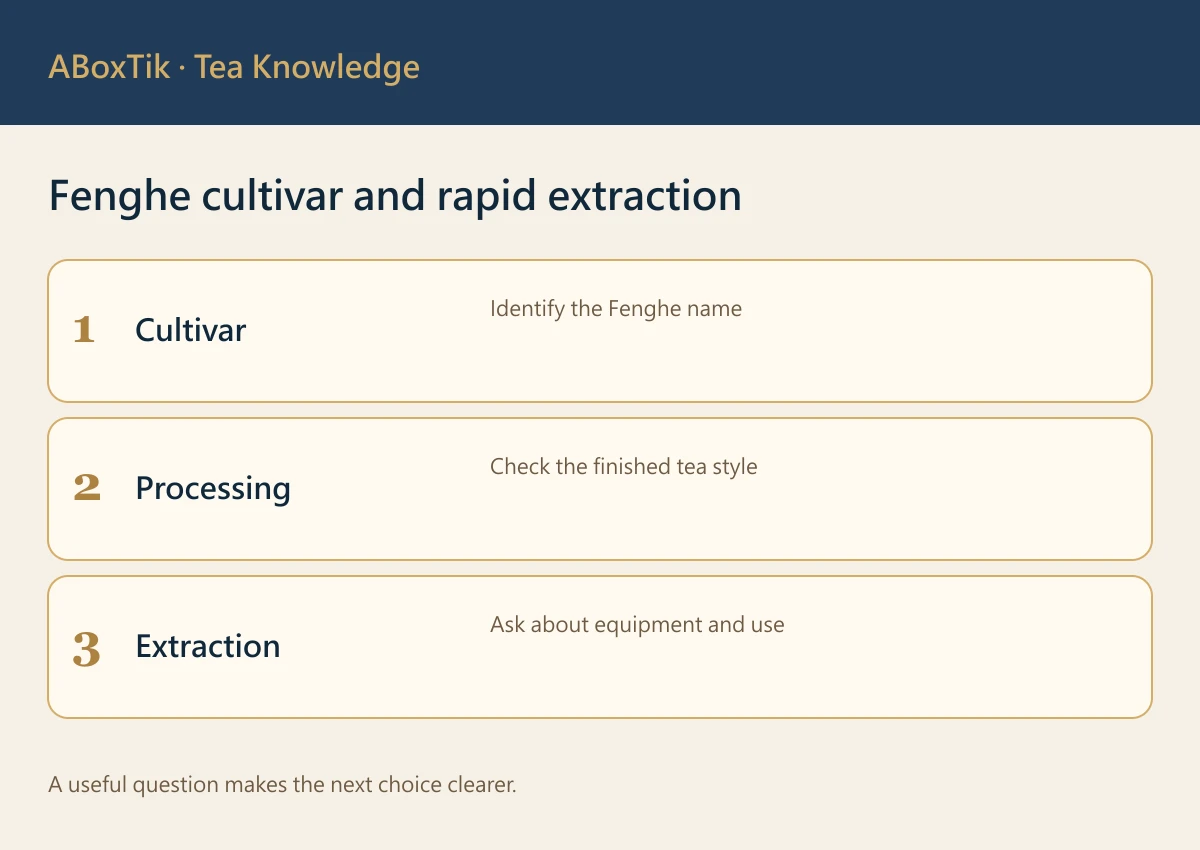
Rapid extraction belongs to processing and use, not a built-in timer
The station evaluated TTES No. 26 with its rapid-extraction processing approach. That is an application involving particular material and treatment. For an actual sample, first ask whether it has undergone the relevant processing and which format is supplied, then obtain compatible equipment and operating guidance.
Ordinary loose leaf, specially processed commercial material and a finished mixed drink are different objects. A timing statement in a technology introduction should not automatically be applied to every tea made from cultivar No. 26. Obtain the directions for the material in hand.
Rolling and tissue handling and oxidation versus roasting help explain processing language. Actual preparation still returns to sample format and supplier guidance; there is no universal countdown activated by the cultivar number.
Read the dates beside naming and promotion information
Official records place the naming review on 11 June 2024. A Ministry of Agriculture announcement approved the plant variety right on 8 September 2026. Earlier accounts using future-tense language about an application need to be read in that chronology rather than repeated as the current position.
For a general reader, the practical lesson is that identification, formal announcements and real supply develop along different tracks. Formal naming does not show that every shop has stock. Finding an older release does not erase a later development either.
For nursery or commercial material enquiries, ask the station or an appropriate supplier about current arrangements directly. This article explains how to read information; a news link does not establish a particular seller’s authorisation, stock or delivery commitment.
A question card between the news item and the sample
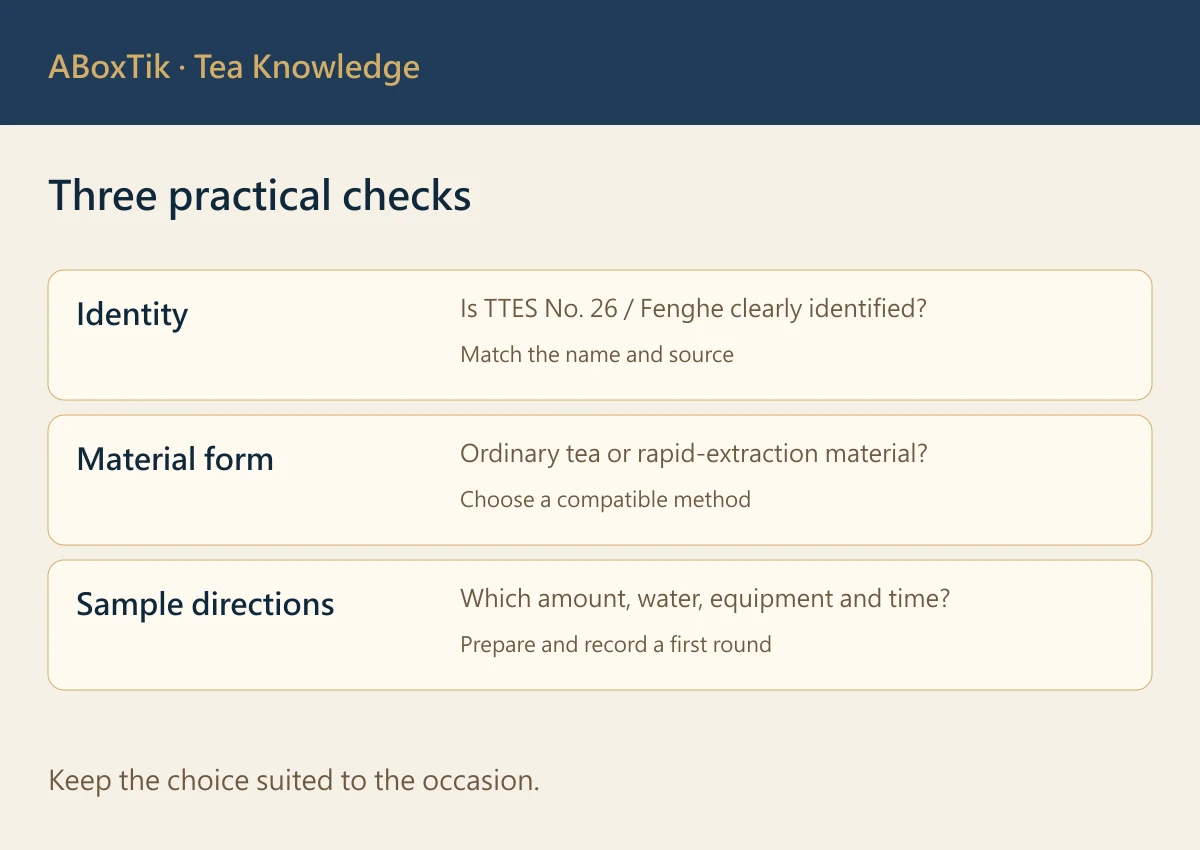
| Object | Question | Use the answer to |
|---|---|---|
| Identity | Is TTES No. 26 / Fenghe clearly identified? | Match the name and source |
| Material form | Ordinary tea or a specific rapid-extraction material? | Choose a compatible method |
| Sample directions | Which amount, water, equipment and time? | Prepare and record a first round |
| Supply | Which item, batch and lead time are currently offered? | Plan from actual confirmation |
When comparing samples, decide whether the question concerns the cultivar, a processing treatment or the final drink. If equipment and recipe differ between samples, every difference cannot be assigned to cultivar. Prepare compatible comparisons and retain the conditions so there is something concrete to discuss later.
Preparation records, aroma observations and observing bitterness, astringency and strength can support those notes. One full-bodied cup does not establish cost, production volume or the amount of a particular constituent.
International development still needs usable information
A cultivar and processing technology can be read within domestic tea ingredient development. Actual export, supply scale and brand adoption require their own current evidence. Keeping goals separate from completed steps makes the news more informative, rather than less interesting.
For an overseas introduction, Taiwanese tea terminology helps separate cultivar, processing and tea type. Identify a plant selected for a particular use first, then describe the real product in hand. That is clearer than asking the tea name to carry every new technology at once.
At the next industry announcement, mark three kinds of sentences: completed development, trial observation and future aim. Sorting those keeps curiosity about a new direction intact without converting expectation into a purchasing guarantee.

Tea, one box at a time
Keep a clear question beside Taiwan’s next tea development
At ABoxTik, a new cultivar should add understanding rather than another number to memorise. Separate identity, processing and real supply so industrial exploration and practical buying questions both have room.
For a familiar starting comparison, see the actual contents of the Classic Taiwanese Tea Four-Box Set and read about Taiwan’s tea landscapes and craft. New knowledge can accumulate while today’s cup keeps its own comfortable pace.
Related reading
- Separate tea categories and processing
- Read Taiwanese tea terminology
- View the Classic Taiwanese Tea Four-Box Set
Sources
- Ministry of Agriculture: TTES No. 26—Fenghe
- Agriculture and Food Agency: TTES No. 26 plant variety right approval
- Tea and Beverage Research Station: next-generation rapid extraction processing
Sources checked 20 October 2026.