
Tea Knowledge
Why Tea Aroma Fades: Leaf, Storage and Brewing Checks
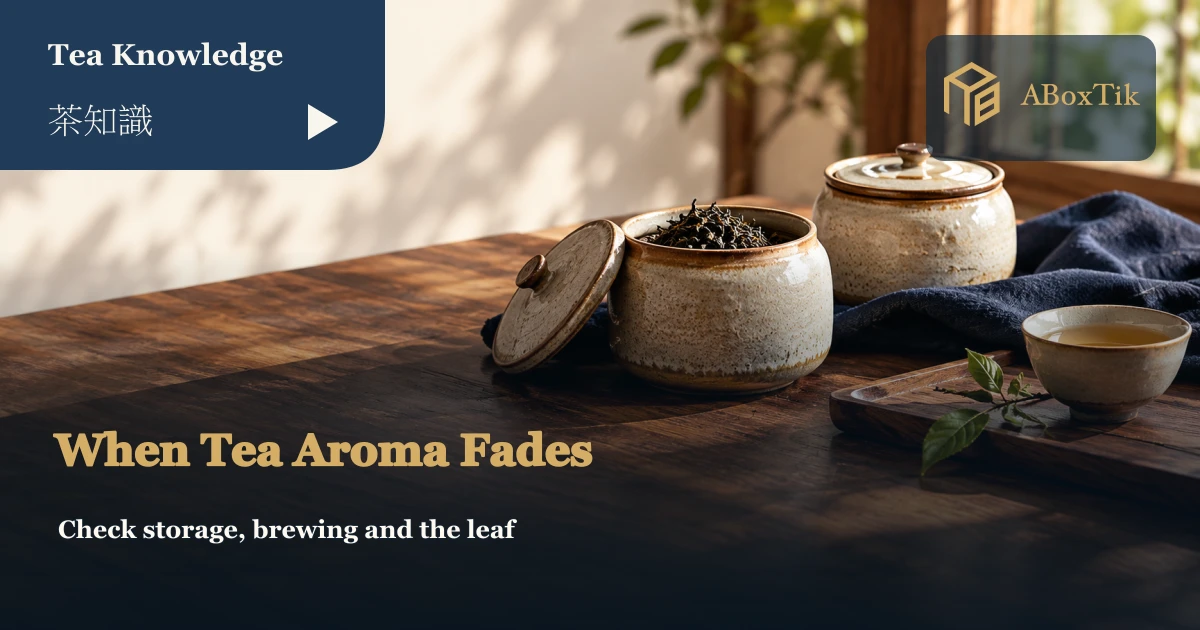
Tea aroma sometimes has not vanished; it may simply need storage, equipment and this infusion to be asked about in order.
Tea aroma needs two separate checks: change after dry tea is opened, and change from hot to cool or from first infusion to later cups. Work through material and processing, storage and brewing so that “it smells quieter” does not become a verdict on the tea.
Start with the easiest facts: seal, equipment odour, leaf amount and time. Find one adjustable condition today; no new tea tin or unexplained interview for the leaves is required.
First identify which aroma changed
Dry-leaf scent at opening, hot aroma after water is poured, flavour in the mouth and the scent left in a cooling cup are not the same observation. Mixing these moments together makes it easy to expect one aroma to remain equally strong from beginning to end. Write down the moment first; deciding the cause can wait.
A change after two weeks of opening points toward storage and the tea’s own development. A quiet first infusion from the same packet calls first for a look at brewing, equipment and water. Dry, hot and cooling aroma gives a shared order for noticing, while tea texture keeps aroma and mouthfeel in separate notes.
Write the opening date on the packet and note whether the same change appears in the dry leaves and the brewed cup. If only the first infusion seems quieter, keep the storage question open while checking the brewing setup. These are different observations and can lead to different next steps.
Ask a companion what ‘less aroma’ means before changing the brewing method. One person may be describing the dry leaves, another the warm liquor, and a third the impression after swallowing. These are worthwhile observations, but they need separate lines. Giving each one a place can settle a surprisingly long tea-table discussion without asking anyone to have a better nose.
Check opened-tea storage before changing the tea
Follow the product’s storage directions and check moisture, outside odours, light and heat. An imperfect seal, a damp scoop or a bag stored beside coffee, perfume or cleaning products can all be practical leads. A handsome tin still needs a dry, compatible seal; it does not perform storage magic by changing the furniture.
Keep hands and utensils dry, work in smaller portions and retain the original package details with an opening date. Tea storage guidance offers a useful framework. Do not invent one universal freshness deadline: tea type, pack, opening frequency and environment all differ.
When a large packet is opened frequently, consider dividing it into suitable smaller sealed portions, following the product guidance. Keep the portion label and original tea details together. Check that the scoop is dry before each use and return the packet to its normal storage place promptly.
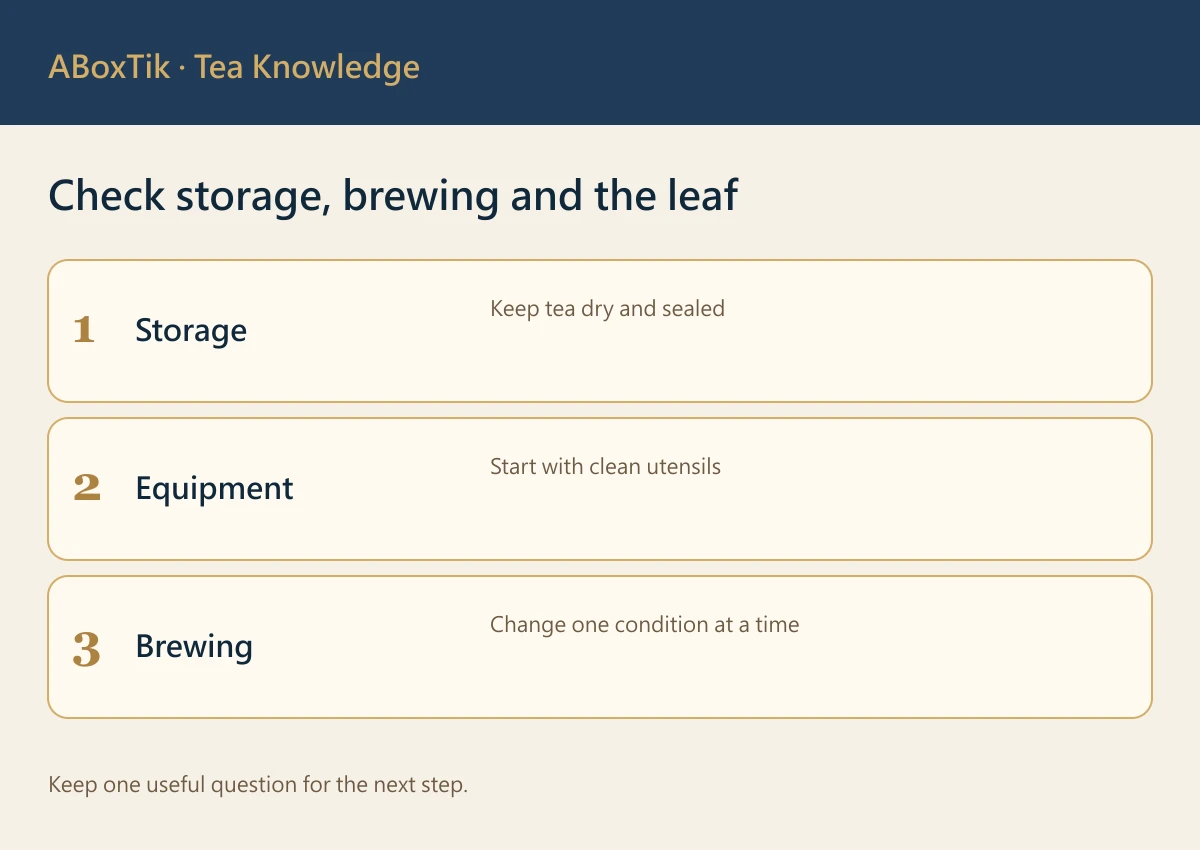
Cups, pots and water can mislead the nose
Smell a clean empty cup and pot before using them. Detergent, a previous flavoured tea or damp storage can become background noise for the nose. Clean and air-dry equipment in a way suitable for its material; strongly scented cleaners merely add another voice to the conversation.
Changing water or a vessel is a new comparison condition. Brewing water and cup shape and aroma help frame those variables. A small amount of drinking water in clean cups can reveal ordinary interference before the tea has to take the blame.
Rinse and prepare the equipment according to its material instructions, then smell the empty cup again. Compare with a second clean cup if available. If an odour remains before any leaves are added, deal with that vessel first rather than changing the tea or lengthening the infusion.
Fix leaf, water and separation time while brewing
A spoonful in a large mug and a spoonful in a small pot are not equal brewing conditions. Record leaf amount, water amount, actual filling temperature, steeping time and decanting method. Steeping time and oolong water temperature make useful columns for the note.
Adjust one variable at a time. A longer infusion may make an aroma more noticeable while also changing bitterness or astringency; bitterness and strength belongs in the same observation. The aim is not to force every aroma out of the leaf, but to find a balance worth another sip.
For the next trial, keep the leaf quantity and water volume the same and adjust only the chosen brewing condition. Separate the liquor fully when the time is reached. Note whether the aroma became clearer and whether the cup remained comfortable to drink; more extraction is not automatically the more enjoyable result.
Use a troubleshooting table before a verdict
Start with the easiest facts to verify: the seal, moisture, foreign odours, cup, pot, leaf amount and timing. Ask a companion whether “aroma” means something smelled or something remembered after drinking. The answers can sit in separate columns; a tea table does not need to become a debating society.
| What you notice | Check first | Change next time |
|---|---|---|
| Dry leaf changed after opening | Seal, moisture and storage | Use smaller portions and record the date |
| First infusion seems quiet | Leaf, water and time | Repeat one small, fixed-condition brew |
| Empty cup smells different | Cup, pot and water | Clean and air-dry before comparing |
Invite two people to describe the warm cup independently before comparing notes. One may notice a floral scent while another follows the finish after swallowing. Keep both observations with the actual brewing conditions rather than trying to make the words identical.
Keep the first comparison modest. Write the tea name, when the packet was opened, the storage arrangement and the brewing setup. Repeat a small infusion after changing just one practical condition. The notebook does not have to prove a grand theory; it only needs to help decide what to do next time.
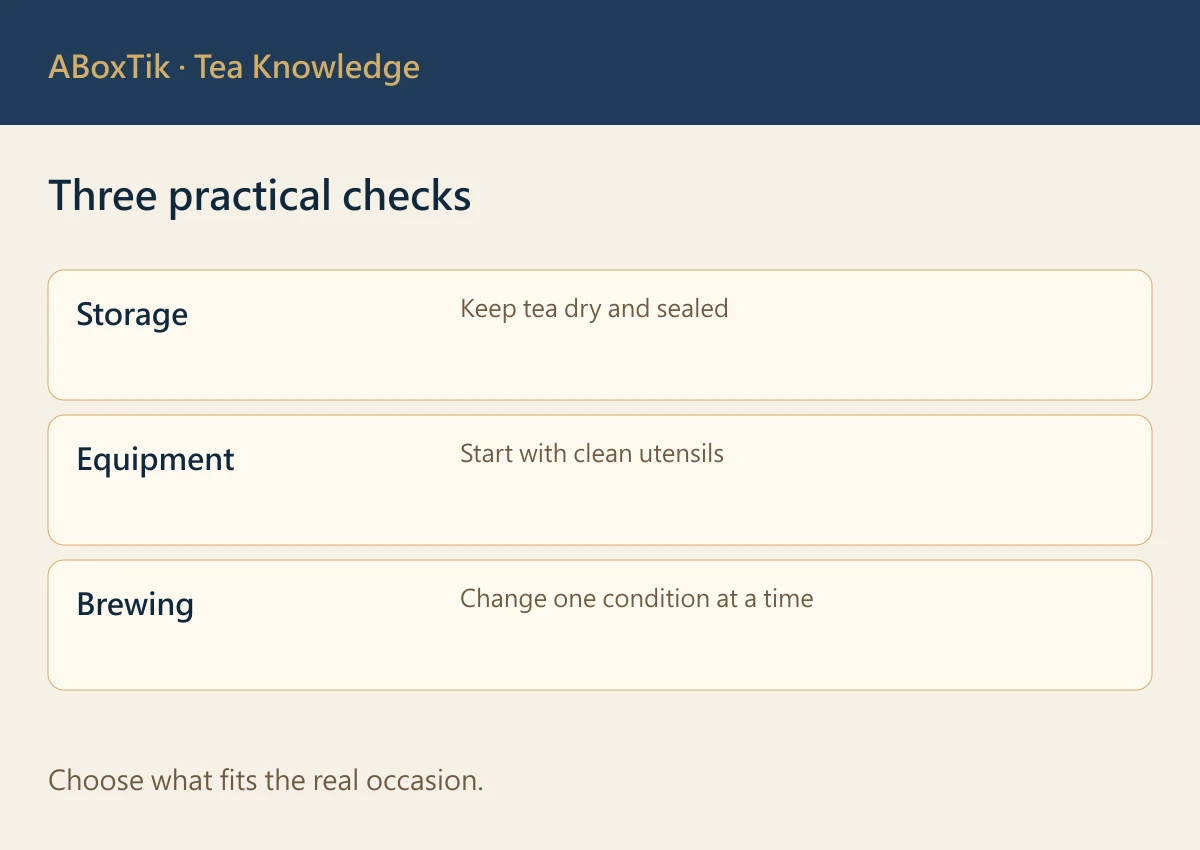
Read material and processing through the actual tea
Cultivar, season, oxidation, drying and roast can lead tea in different aromatic directions. Processing, light and roasted styles and drying give background without making a single aroma a verdict on whether the tea was made correctly.
Keep the package, cultivar and lot details when asking a supplier about a similar style. Whole-leaf tea bags and a multi-tea gift set offer different daily formats. Saying “I prefer this infusion’s aroma” is already a complete and useful answer.
If the question continues after checking storage and brewing, contact the seller with the product name, lot information and opening date. Explain exactly which aroma changed and when it was noticed. Those details give a supplier a practical question to answer, rather than asking them to diagnose an unnamed cup.

Follow ABoxTik
Turn an aroma question into one practical next step
ABoxTik helps make the next comparison calmer: seal the bag, clean the equipment and remember one brewing setting. Small details can make the next cup easier to read.
Explore Taiwanese tea terroir and craft or everyday tea bag formats. Aroma does not need to become pressure; knowing what you enjoy is already a good table discovery.
Related reading
Sources
Sources checked 21 October 2026.