
Tea Knowledge
Water for Brewing Tea: Tap, Filtered or Mineral?
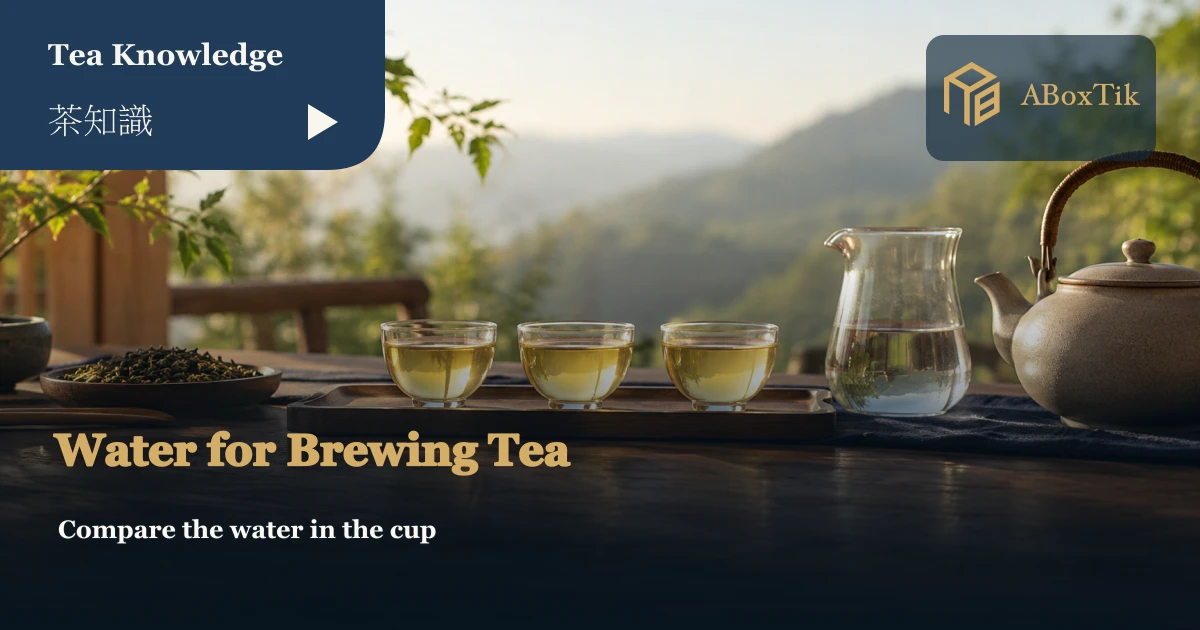
Changing the water can give a familiar tea a different room in which to speak.
Water for brewing tea can change colour, aroma, flavour and texture. Tap, filtered and mineral water are broad descriptions, not a ready-made quality ranking. First confirm that the water is suitable for drinking, then compare samples while keeping the tea, quantity, temperature, time and equipment consistent.
There is no need to buy a shelf of bottles or turn the kitchen into a laboratory. Start with your usual drinking water and one alternative whose source or treatment you can identify. Two small cups and a few clear notes can teach more than assuming that the more expensive bottle must suit the tea.
Water for brewing tea: suitability comes before preference
Choose water in accordance with the supplier’s, package’s or equipment maker’s drinking and use instructions. Clear-looking water from an unfamiliar spring or stream should not become a tasting sample merely because the setting looks beautiful. Establishing suitability and deciding which infusion tastes better are separate tasks. Keep that distinction clear before the kettle is filled.
A tap-water description does not make every household’s supply, storage and plumbing identical. Filtered water also varies with the treatment system, cartridge and maintenance. Ask what the equipment actually does and how it should be maintained. The useful record is the real setup, not simply the word “filtered” written across every comparison.
Use the basic tea brewing sequence to organise filling, steeping and decanting. If an unfamiliar smell is the problem, examine the water and clean utensils before blaming the tea. The guide to bitterness, astringency and strength can help separate sensations once the samples themselves are appropriate to taste.
What tap, filtered and mineral water still leave unanswered
Tap water describes a supply category. Read local water information and consider the actual household setup, following the relevant instructions. For a comparison, collect samples on the same day in the same way. Comparing water left overnight with a newly opened bottle changes more than the source, even if the labels on the notebook suggest otherwise.
Filtered water describes a treatment, yet activated carbon, reverse osmosis and other systems do different jobs. The number of filtration stages is not a complete account of the resulting water. Record the system and cartridge condition so the next comparison can be meaningful. The family kettle does not need a medal; it needs information that can be repeated.
Mineral water also varies by product. Read the stated mineral composition and other package information instead of treating all bottled mineral water as one standard sample. Price, presentation and the word “natural” do not decide which cup you will prefer. Choose an alternative with clear information and compare what it does with the tea in hand.
Read hardness and pH research within its actual scope
Taiwan’s Tea and Beverage Research Station reports that water affected infusion colour, aroma, flavour and extracted components. In its Wenshan Pouchong and high-mountain tea comparison, the better sensory-performing water samples shared lower total hardness and a pH below seven. This supports taking water seriously as a brewing variable; it does not establish one universal formula for every tea.
The Ministry of Agriculture knowledge article “Discussion of Water for Brewing Tea” describes differences among particular water samples as well. Its comparisons concern specific teas, samples and conditions. A higher concentration of a measured component is not automatically a personal flavour preference or a conclusion about health effects. For home selection, keep the questions centred on the cup and everyday use.
Hardness, pH and total dissolved solids describe different aspects of water. One number should not stand in for a full mineral composition. If information is absent, leave the field blank; if it is present, keep its units and source. Today’s task is to notice a useful difference, rather than issue every cup a chemistry report.
Set up a fair two-water comparison
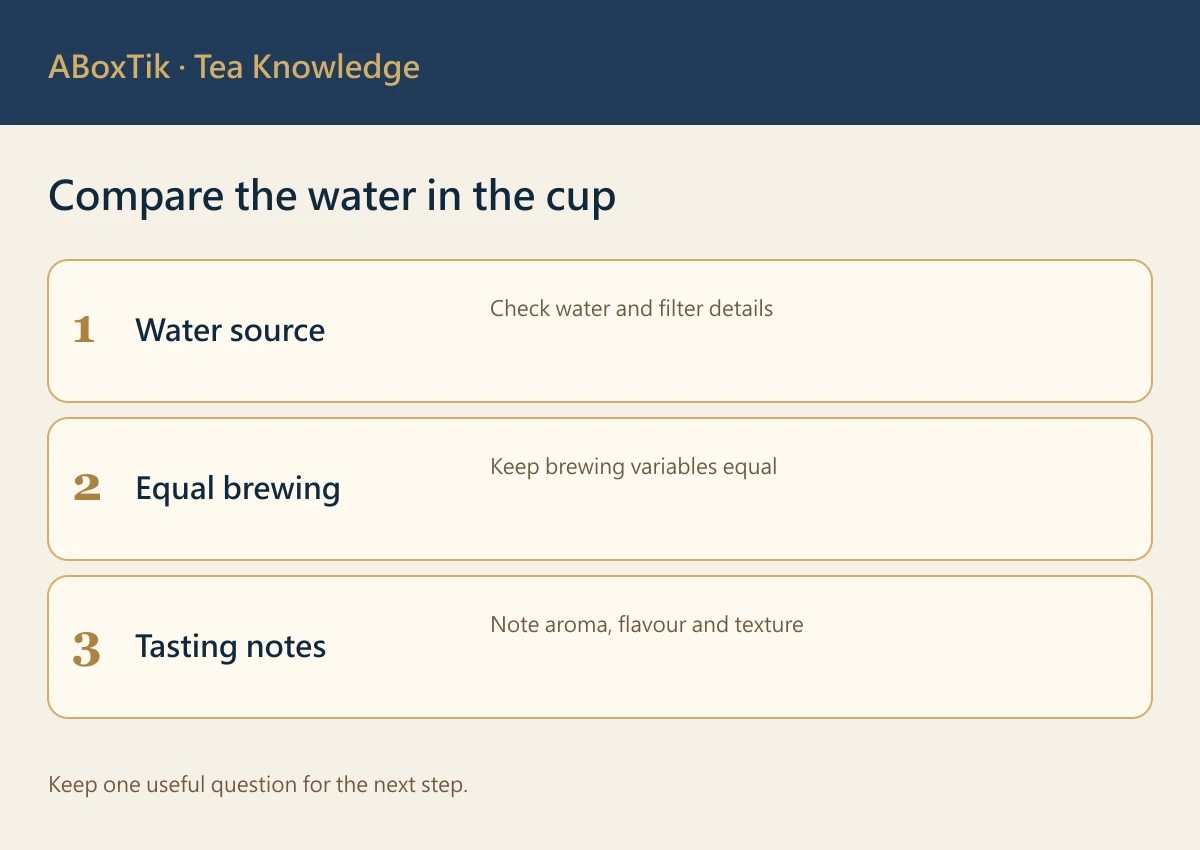
Choose one familiar tea from the same packet and two identical clean brewing vessels and cups. Begin with equal leaf and water quantities, actual filling temperature and steeping time, then separate leaf and liquor in the same way. The oolong water-temperature guide and steeping-time guide provide a useful framework for recording conditions.
If the same pot must be used twice, clean it and keep its starting condition as consistent as possible. A cold vessel in one round and a hot one in another can complicate the result. Record any difference that cannot be controlled. A home comparison need not claim laboratory precision to be useful; it should simply acknowledge what changed.
Mark the samples A and B and ask a companion to withhold the water names until after tasting. Let the tea cool to a comfortable drinking temperature, then record aroma, strength and texture. A note such as “rounder entry” is more useful than guessing the brand. If the result overturns an expectation, the tea table has done a small, quiet piece of comedy.
Keep flavour, convenience and cost in separate fields
| Record | Water A | Water B |
|---|---|---|
| Source and treatment | Actual sample and equipment details | Actual sample and equipment details |
| Brewing conditions | Leaf, water, temperature and time | Check that the conditions match |
| Cup observations | Aroma, strength, roundness or dryness | Use the same descriptive questions |
| Daily practicality | Access, maintenance, storage and cost | Can this choice be repeated comfortably? |
Describe before choosing a favourite. Darker liquor is not necessarily fuller, and a more immediately noticeable aroma is not always the cup someone wants to keep drinking. The tea texture guide helps separate mouthfeel, while the aroma observation sequence keeps the two samples on the same footing.
One result belongs to that tea and those conditions. A different tea style or roast may invite another small comparison. Light and roasted Taiwanese tea offer different things to notice. There is no need to appoint a single water sample permanent judge of every packet in the cupboard.
Know when maintenance matters more than another bottle
If a familiar tea suddenly smells unusual, pause and inspect water, kettle, cup and tea storage. Follow supplier and manufacturer guidance, and ask the relevant provider when the cause remains unclear. Do not mask an unexplained problem with stronger tea or assume that repeated boiling resolves every possible issue.
Kettle cleaning, filter maintenance and dry-tea storage have separate needs. A small home tea station can keep water handling, dry leaves, wet equipment and used tea apart. The tea storage guide helps with moisture and odour management. These ordinary details are often more useful than chasing a supposedly magical water brand.
Finally, choose a suitable, accessible water that works with the tea and the household routine. Whole-leaf tea bags or a selection of Taiwanese tea styles can support later comparisons. Follow the actual tea’s brewing instructions and let water selection help the day, rather than become an extra assignment before every cup.

Follow ABoxTik
Make brewing water a practical part of the day
At ABoxTik, a water comparison can stay pleasantly small: one familiar tea, two samples and a few honest observations. Once a preference is clear, the table can return to everyday life without hosting another awards ceremony.
Explore Taiwanese tea terroir and craft, then try a tea format suited to the daily routine. The best role for water is to help the tea and its drinker meet comfortably.
Related reading
- Keep water temperature consistent
- Observe aroma in the same sequence
- Read the details of different Taiwanese tea styles
Sources
- Tea and Beverage Research Station: Water quality and temperature effects on tea
- Ministry of Agriculture: Discussion of water for brewing tea
Sources checked 21 October 2026.