
Tea Knowledge
Why Tea Leaves Float: Wetting, Taste and Better Cup Brewing

Let the leaves find their place, and let the flavor tell you what the cup needs.
When tea leaves float, check whether they are gradually getting wet and whether the tea tastes right. You do not need to wait for every leaf to sink. Leaf shape, air held around dry leaves, pouring and the space inside the vessel can influence what you see. Keep the method when the cup is pleasant; investigate water contact, timing or filtration when there is a specific problem to solve.
A few leaves enjoying the surface can make an otherwise calm cup look unfinished. Fortunately, leaves do not have an attendance register. “Still floating” and “not ready to drink” are different questions, and a small taste is usually more informative than chasing each leaf with a spoon.
Separate appearance, flavor and drinking comfort
Look first at whether a few wet leaves are floating freely or whether dry tea is crowded above the water in a small infuser. The first situation may simply describe this infusion. The second suggests checking water level, dose and available space. Surface position alone cannot establish quality, and sinking does not mean that extraction is complete.
Record aroma, strength, bitterness and a drying sensation separately. Pale tea may already smell expressive, while dark liquor can still seem thin. The bitterness and astringency guide helps name those impressions. For the wider sequence, see brewing basics and the steeping-time guide. Use the observation that actually bothers you to choose the next step.
Watch leaf form and wetting without timing every leaf
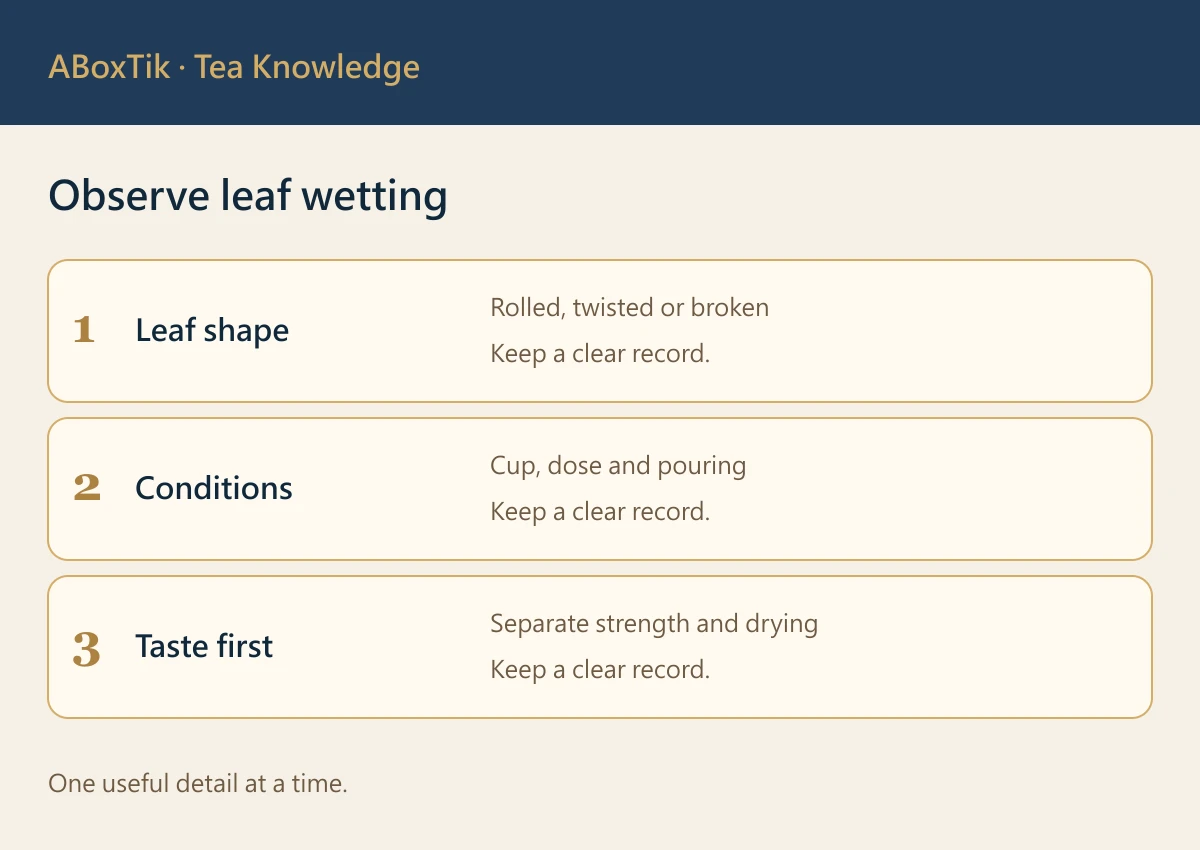
Twisted leaves, rolled leaves and smaller pieces unfold differently. Useful notes include the original shape, any dry areas still above the water, and whether the leaves gradually open. Counting how many sink in the first minute is a less helpful target. The leaf-form comparison explains another part of the picture, while the whole-leaf bag guide helps consider room inside a bag.
For a comparison, keep the same tea, cup and water source. Changing the mug today and the tea tomorrow makes it difficult to attribute a new floating pattern to temperature. Taiwan’s Tea and Beverage Research Station discusses how water and heat affect the cup, which is a good reason to give those conditions separate spaces in the record. Observe what changed rather than asking one visible feature to explain everything.
Use a wetting observation table to choose one adjustment
| Situation | Check first | One possible next adjustment |
|---|---|---|
| A few floating leaves; pleasant tea | Are leaves merely getting in the way? | Strain if helpful; keep the timing. |
| Dry tea gathered above the water | Water level, dose and infuser fit | Try an infuser with suitable opening space. |
| Wet leaves; tea still weak | Recorded dose, volume, time and temperature | Make a small timing change while holding the rest steady. |
| Bitter after waiting for leaves to sink | Was sinking used as the timer? | Separate the tea earlier according to taste. |
| Leaves move around after pouring | Vessel shape, pour height and flow | Reduce the impact of the pour where safe. |
Choose one row for one round. More leaves, different water, a longer infusion and a new cup might produce something pleasant, but the result will not reveal which change helped. Everyday brewing can remain flexible; a comparison becomes easier to interpret when the conditions are deliberately narrower.
Do you need to rinse or pre-wet the leaves?
Start with the particular tea’s instructions rather than making a preliminary rinse compulsory. Additional water contact changes the next infusion and may remove some flavor. If the only issue is that floating leaves distract you, filtration may address it without discarding an infusion. Leaf position alone is not a reason to add an extra process.
If you decide to pour water in stages, record the first amount, its waiting time and the final volume. The early waiting period still belongs to the infusion. Keeping that detail prevents a later comparison from quietly gaining extra time. Set the vessel on a stable surface, and avoid pressing leaves down by hand or leaning into steam.
The mug-brewing guide, temperature guide and brewing-water guide offer other ways to refine the method. Choose the one that answers the present difficulty instead of changing every part of a familiar routine.
Give tea bags, infusers and loose cup brewing different exit plans
A removable infuser or tea bag makes separating leaves and water convenient once the flavor is right. The infuser still needs adequate room and a water level that reaches the tea. With leaves directly in a mug, pouring through a suitable strainer into a second cup can make drinking more comfortable.
A pyramid bag describes a structure, not a promise that every bag will sink on schedule. Repeatedly squeezing a bag to force it down also changes the handling. Follow the product’s directions, then decide whether cup volume or steeping time needs adjustment. A useful method need not create exactly the same picture every time.
For shared tea, keep the filter and receiving cup ready before pouring. This small piece of preparation matters more than persuading every leaf to occupy the bottom of the pot. If an infuser is awkward to lift or drain, include that in the equipment notes; convenience is part of a method that will actually be used again.
Three common questions that can remove unnecessary work
“Was the water too cool?” Check the existing method and the tea’s directions, but do not answer from floating leaves alone. If the flavor is already pleasant, there is no need to raise the temperature simply to move leaves downward. If temperature is the chosen comparison, keep dose, cup volume and timing steady and record flavor, not just a photograph of sunken leaves.
“Should I stir more?” First establish whether dry tea is genuinely missing water contact and whether the vessel permits comfortable handling. Stirring is itself a variable. If it is tried, note the action and timing rather than turning vigorous movement into a compulsory repair. Stable handling without splashing matters more than chasing every leaf.
“Why does my cup look different from someone else’s?” Check whether cup capacity, infuser, dose and pouring are actually comparable. Similar-looking mugs can hold different amounts. Record the known conditions and leave a question for what remains uncertain instead of assigning every difference to a personal mistake.
If today’s goal is simply a comfortable drink, prepare a strainer and receiving cup rather than a comparison session. The log is an optional tool for a real difficulty, not homework that must be completed before tea.
Follow ABoxTik: let the next cup answer one question
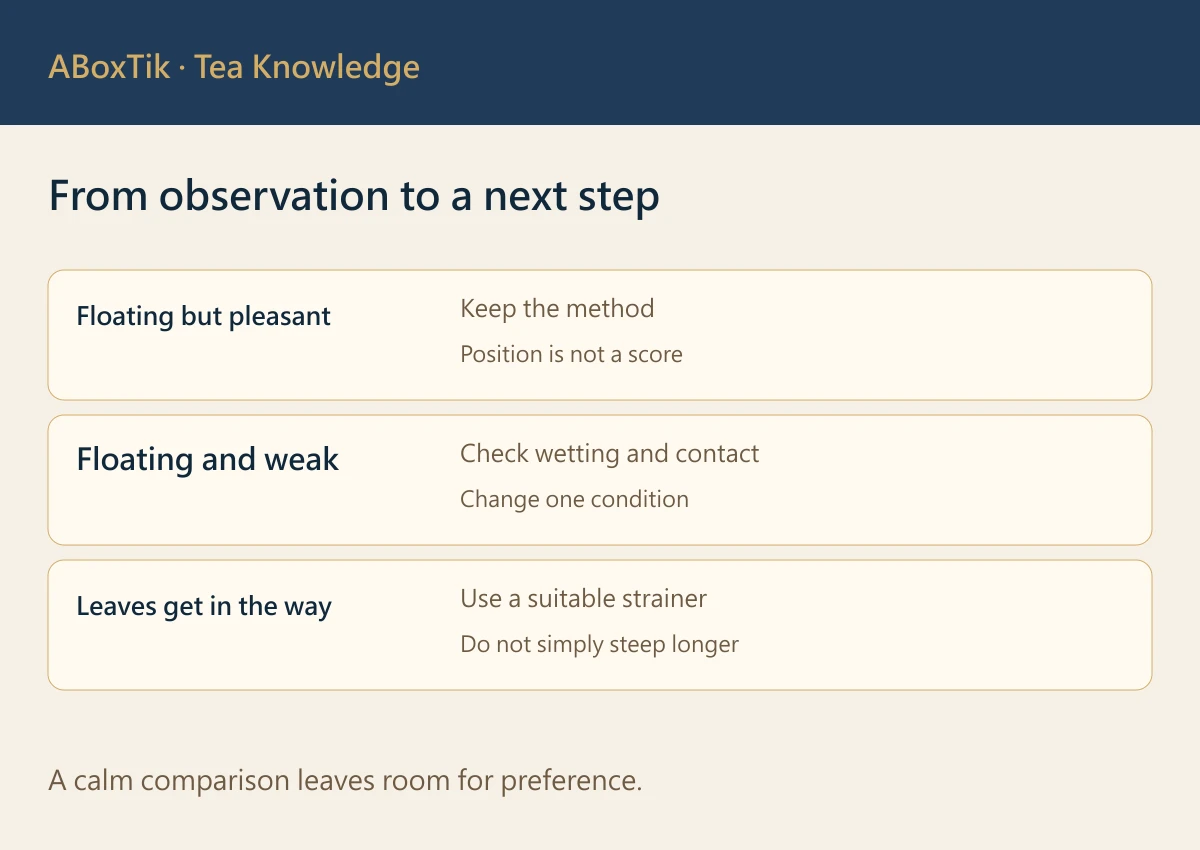
Choose the sentence that sounds closest to today’s cup: “floating but pleasant,” “floating and weak,” or “the flavor is right but leaves get in the way.” Keep the method for the first, check contact and brewing for the second, and arrange filtration for the third. Different problems deserve different next steps.
Write down the smallest change before another attempt, then taste before judging the surface. If nothing needs improvement, that is a perfectly useful outcome. There is no obligation to repair a cup simply because it looks different from a photograph.
To explore different tea forms, review the current choices in ABoxTik’s Classic Taiwan tea selection or two-box tea gift. Readers who enjoy observation can continue with the aroma guide. Floating leaves need not turn into a rescue mission; a comfortable, enjoyable cup is already a sensible destination.

Related reading and tea choices
Sources
Sources checked: 24 October 2026.