
Tea Knowledge
TTES No. 24 Shanyun: Native Origins and Aroma Notes
A mountain leaf has an origin; tea making opens different doors. Learning the name is one way to begin listening to the cup.
TTES No. 24 Shanyun is a tea cultivar selected from Taiwan native Yongkang mountain-tea material and named in 2019. The official cultivar profile lists green and black tea as suitable styles, describing mushroom-, almond- and coffee-like aromas in the resulting teas. These are sensory comparisons, not three ingredients added to a recipe.
If the name is new and the aroma list already feels busy, start with one question: what tea style is in this package? The cultivar is a character in the story; processing shapes the way it speaks this time. There is no need to memorise the whole script before the first sip.
Read the number as an identity, not a quality score
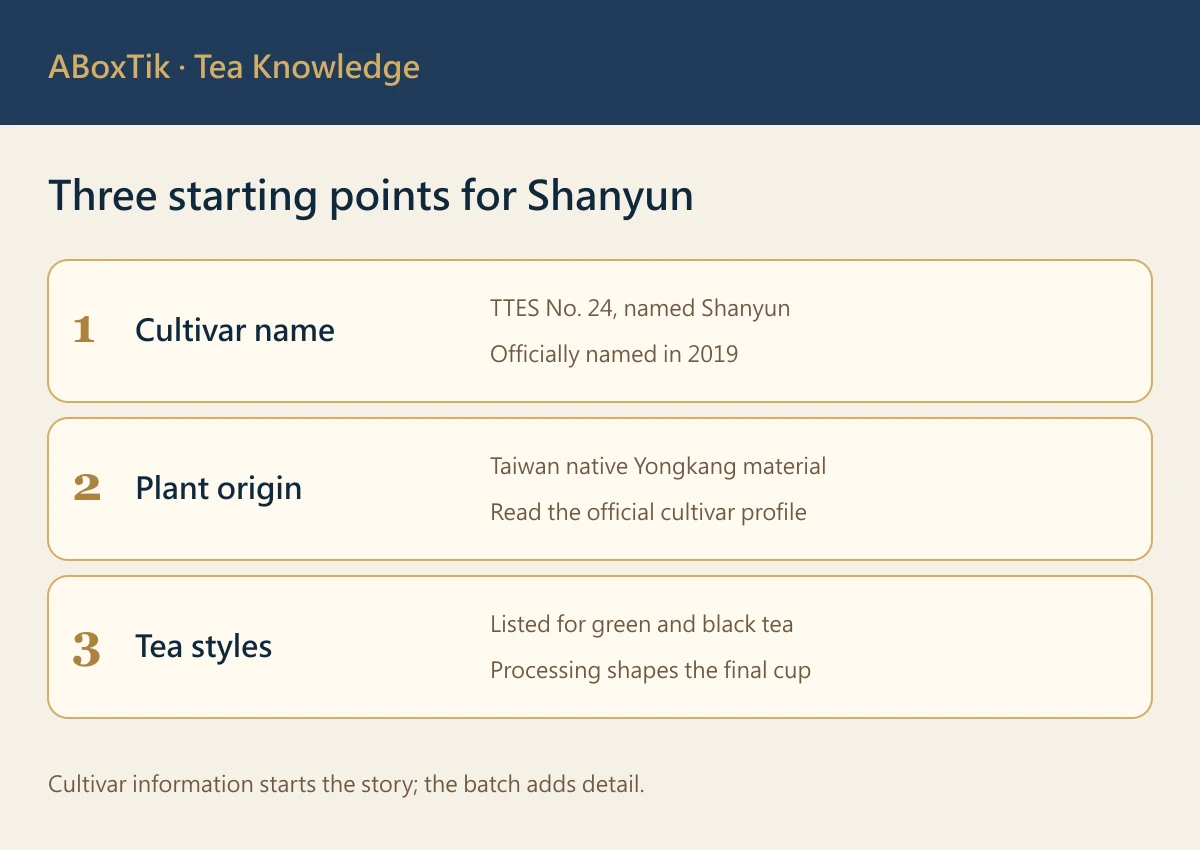
The official Tea and Beverage Research Station profile records the name TTES No. 24, or Shanyun, its Taiwan native Yongkang origin and its naming year. Reading the number with the name helps distinguish a defined cultivar from the broader mountain-tea language found in the marketplace.
Twenty-four does not mean higher quality than eighteen or nineteen. It does not establish the growing region, season or price of a particular tea. Compare the naming examples in TTES No. 18 Ruby, TTES No. 19 Biyu and TTES No. 13 Cuiyu: first identify the plant, then ask how the finished tea was made.
Make three fields on your page: cultivar, tea style and growing origin. A package saying native mountain tea alone does not prove that the cultivar is Shanyun. Likewise, the name Shanyun does not mean every batch came from one garden. Clear information helps without requiring a botany qualification.
Native mountain tea and a named cultivar are related terms
The official profile links Shanyun to introduced material of Taiwan native Yongkang mountain tea. That supplies its breeding background. Native mountain tea is a wider part of the story; Shanyun is a particular named cultivar within it. Keep those levels separate when discussing a finished tea.
Two straightforward questions are enough to begin: “Is this identified as TTES No. 24?” and “What information is available about the leaf origin and processing?” A wild-looking leaf or forest illustration on the package cannot establish cultivar, cultivation or collection method. The guide to Taiwanese tea characteristics offers the wider map; the actual label gives this tea its address.
Native, wild-grown, organic, pesticide-free and forest-understorey cultivation describe different conditions. Do not combine them into one assumed promise. Ask about each detail if it matters to the purchase. The mountain story can be engaging, while clear batch information makes the story easier to understand and share.
One cultivar can become more than one tea style
The cultivar profile lists green and black tea as suitable processing directions. Plant identity and tea classification therefore answer different questions. Knowing the cultivar does not establish the liquor colour, oxidation or roast of the tea in front of you.
Read the guide to tea types alongside the black-tea introduction, separating “which leaf” from “what was done with it”. Our oolong-processing guide explains another branch of tea making. For an individual product, however, use its actual processing information rather than filling in the gaps from a general cultivar description.
| Level | Information to check | What it explains |
|---|---|---|
| Cultivar | TTES No. 24 / Shanyun | The tea plant used |
| Tea style | Green, black or specific process | How this tea was made |
| Batch | Origin, harvest, packing, brewing | How to approach this package |
If a shop offers two Shanyun styles, begin with each recommended brewing method before planning a controlled comparison. The first round can simply introduce both teas. A preference may reflect what you want to drink today rather than a permanent winner.
Understand mushroom, almond and coffee as aroma associations
The word “like” matters in the official description. It relates an unfamiliar tea aroma to a familiar sensory memory. It does not say that pure tea contains added mushrooms, almonds or coffee. For actual ingredients, read the product label rather than converting an aroma term into a recipe.
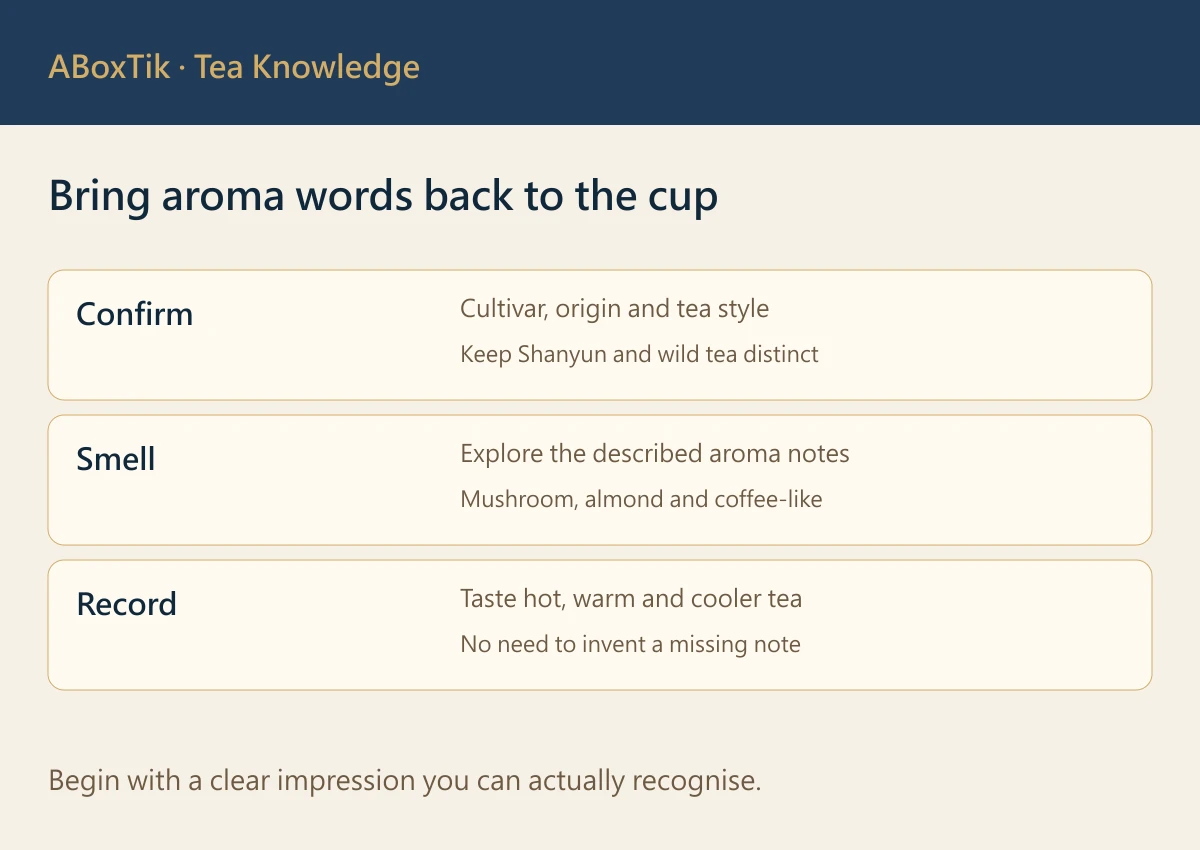
Start with the clearest direction you recognise: something plant-like, toasted or otherwise familiar. If one of the official terms genuinely fits, record it; there is no requirement to locate the other two. Our staged smelling guide and roasted-aroma vocabulary offer ways to make a personal observation more specific.
Try writing three words before consulting the package description. Compare afterwards and preserve differences. Add context such as “this infusion”, “while warm” or “after cooling”. The honey-and-fruit comparison demonstrates how to follow sensory clues, without expecting every tea to supply the same answers.
Keep the first tasting small and repeatable
Follow the supplier or package advice and record leaf amount, water volume, temperature, time and vessel. If advice is missing, ask about the tea style and a suitable everyday starting method. An unusual cultivar name is no reason to double the leaf. The brewing sequence and vessel comparison can help organise the practical details.
Pause at three comfortable stages: smell while warm, take a small sip when ready, then return as the tea cools. Separate aroma, taste, mouthfeel and preference. If the infusion is too strong, change leaf amount or time next round. Give the tea room to speak; it need not start with a loudspeaker.
| Conditions | Actual impressions | Next step |
|---|---|---|
| Cultivar, style and origin | Aroma while warm | One source detail to confirm |
| Leaf, water and temperature | Taste and mouthfeel | Amount or time to adjust |
| Infusion time, cup and date | Cooler impressions and liking | Conditions to keep constant |
With a friend, each record one clear word before comparing. Different answers need no referee. Keep the other person’s impression labelled as theirs rather than quietly turning it into your own tasting evidence. The conversation can widen your attention without replacing it.
Ask for useful details beyond an attractive aroma list
Check the cultivar identification, growing origin, tea style, batch or harvest information, quantity and storage advice. If a grade or award appears, verify what it applies to; our tea-label guide offers a reading sequence. A distinctive aroma phrase is an invitation to explore, not a completed quality assessment.
To build a familiar reference, use fresh and roasted oolong styles to organise preferences, then arrange separate sessions with a selection of Taiwanese oolongs. That is a different route into tea appreciation. Each tea can represent its own style without being made to demonstrate Shanyun characteristics.
For a gift, include a short note suggesting that the recipient check the tea style and write the impressions they genuinely recognise. With an everyday format such as a two-tea gift set, consider the person’s cup size and habits first. Knowledge can grow later; an approachable first cup is how the thoughtfulness arrives.

Follow ABoxTik: bring a cultivar’s story back to a particular cup.
Let curiosity meet the tea actually in the cup
Shanyun offers another entrance into Taiwanese tea: a cultivar with an origin, processing choices and impressions that emerge at their own pace. Remembering that Shanyun and TTES No. 24 identify the same cultivar is already a useful beginning.
When you next encounter a tea bearing the name, bring the three-field checklist and one honest question. A real word from your own cup is worth more than an imaginary list of aromas.
Related reading
- Separate cultivar and tea style
- Practise your own aroma description
- Explore Taiwanese oolong preferences
Sources
Sources checked 18 October 2026.