
Tea Knowledge
Single-Origin Taiwanese Tea: Terroir and Traceability
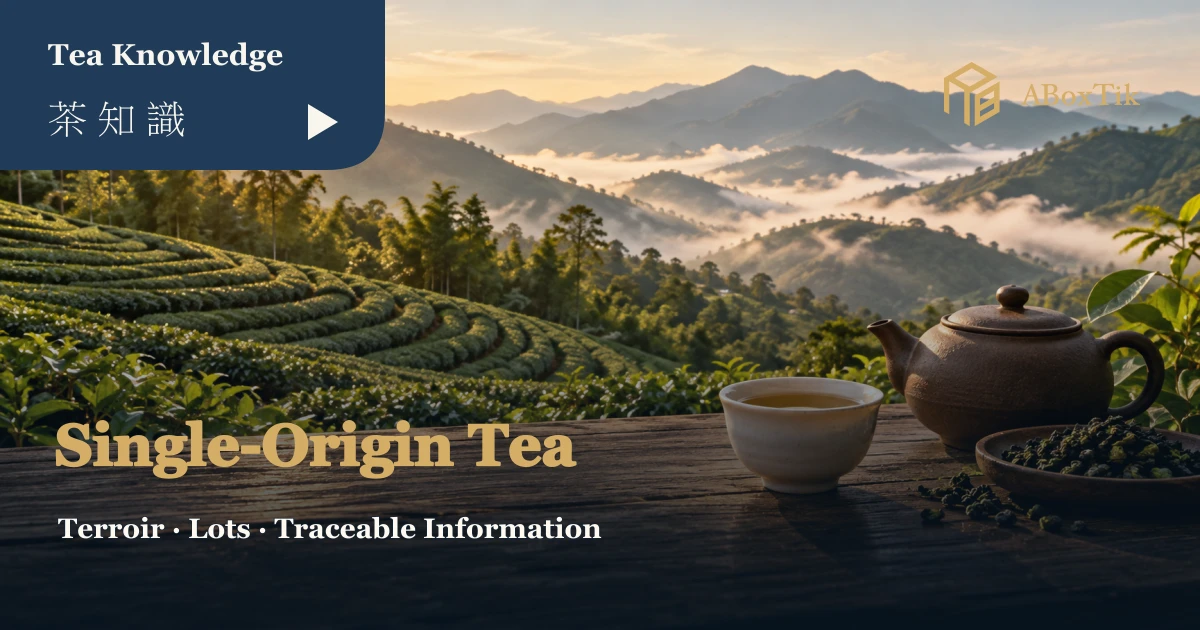
A place name is a starting point on a map. Read where the tea comes from and how it was made, and the next cup brings better questions.
Single-origin tea offers a named place to explore, with lot and processing details completing the picture. A region name does not automatically establish one farm, one cultivar, one harvest, an unblended tea or certification. Its useful buying value lies in understanding the source and asking how the actual tea fits a preferred flavour and everyday routine.
Familiar names such as Alishan or Shanlinxi can make a shortlist feel tempting. Begin with the Taiwan tea regions guide for the wider map, then return to the packet and the seller’s information. A place can open the conversation without deciding the outcome of the cup.
What does single-origin tea mean? Ask about the scope
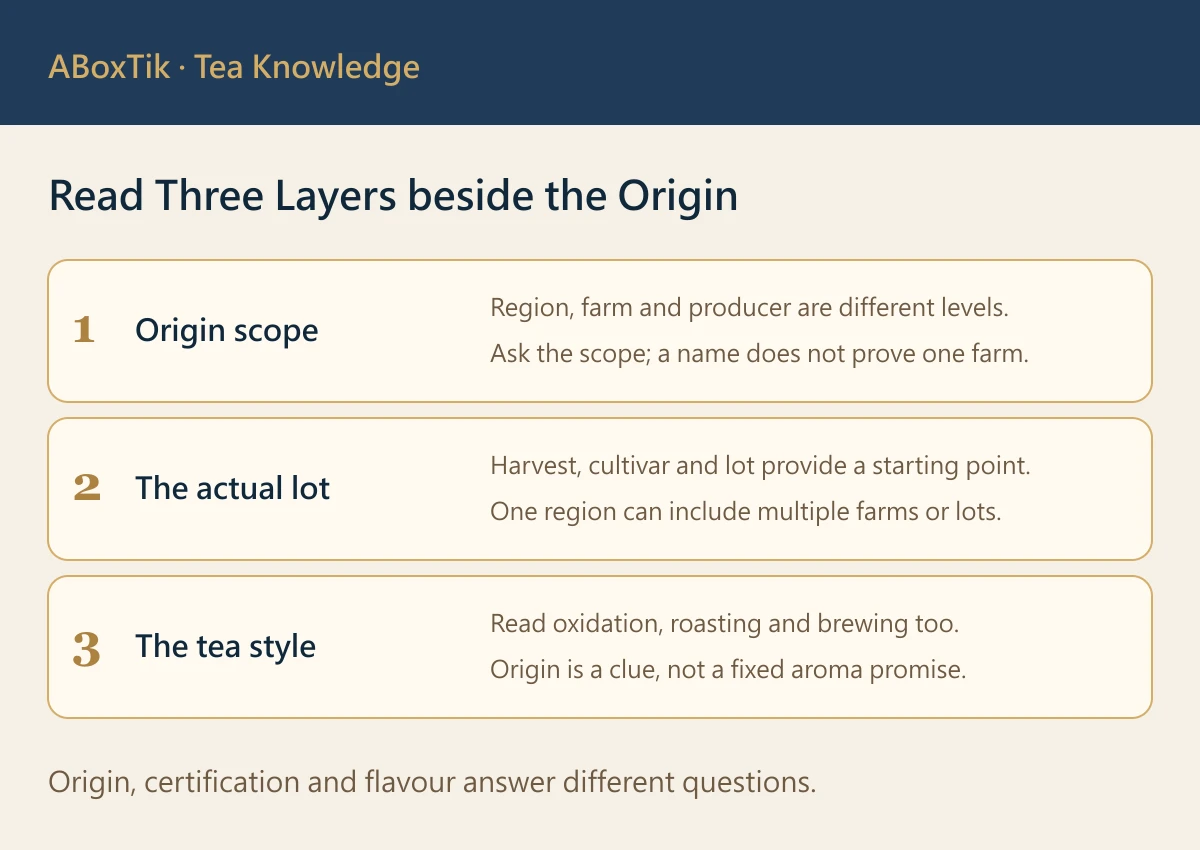
In everyday buying language, a single-origin description presents a named source area. Read how the seller defines that area: an administrative district, a mountain region, a cooperative’s sourcing area, a village or a particular farm? More detailed wording can make questions more specific, while the other product details still need checking.
A broad place name is a useful regional clue. For comparison, add tea type, cultivar, harvest, processing and lot details where supplied. Taiwan’s official premium-tea information site lists soil, climate, altitude and manufacturing methods among the backgrounds to regional character. Read the growing setting beside the finished tea’s processing.
| Information level | A starting point | Ask next |
|---|---|---|
| Taiwanese tea | Country-level origin | More specific place or lot? |
| A named tea region | A geographical context | Source scope, harvest and producer? |
| A farm or smaller locality | A closer source description | Which product and lot does it describe? |
| Cultivar or roasting name | Plant or processing information | Where was the tea grown? |
Yingxiang, Cuiyu and Jinxuan, for example, identify cultivars. A Jinxuan tea still needs origin and processing information. Think of the cultivar as a name and the source as an address: both help, provided their labels stay on the right envelopes.
Terroir is a meeting of conditions
Altitude, temperature, light, rain, mist, soil and slope are among the conditions discussed under terroir. Smaller differences can exist within a region. Cultivar, leaf maturity, seasonal weather and processing choices, including withering and roasting, also contribute to the finished tea. A common geographical name leaves room for different cups.
Use origin to ask where the tea’s background lies, then read the flavour and manufacturing information to understand this product. The Shanlinxi terroir guide and Alishan regional comparison offer closer examples. Keep each article’s cultivar and processing context with its descriptions rather than expecting every lot to match.
Why discuss origin in specialty tea? It gives comparison a language
A clear source description lets one tasting sit within a longer exploration. Another harvest from a familiar region, or the same cultivar from another place, provides a question to investigate. A seller can also explain why a tea was selected more clearly when its background is available. The practical value is information that can be revisited.
For a regional comparison, begin with teas of a similar type and broadly similar roasting. For a processing comparison, look for closer origin and cultivar conditions. Changing place, cultivar, roast and brewing at once may produce two interesting cups, but it will be difficult to isolate what caused the difference. Record what changed before drawing conclusions.
The official premium-tea website also describes cooperation among growers, processors and sellers in contracted production areas, alongside branding, refined packaging and varied marketing. This provides context for how local tea gains an identity. When choosing a packet, give that identity practical substance through source details, suitable flavour and a quantity that will be used.
Blending has purposes too, such as shaping a flavour or maintaining a product style. Read whether the seller explains its sources and approach. A regional tea and a blend can serve different preferences without a preliminary contest. The premium-tea price and value guide helps compare price with quantity and production information.
Keep traceability information distinct from the origin story
A place name, traceability record, QR code, testing information and brand story answer different questions. When a product supplies a queryable record, check what it covers and whether it corresponds to that packet or lot. The tea traceability guide explains the tools and labels in more detail.
Limited information leaves fewer comparisons available. Ask about the source area, cultivar, harvest or processing rather than filling the gaps from an attractive landscape. A packing date is a different detail from a harvest season. Save the product name and the relevant information so a question can be put to the seller clearly.
Taiwan’s Research Station describes origin marks as one route for checking their specified scope. Its separate origin-identification page describes an assessment distinguishing Taiwanese from non-Taiwanese tea, which differs from identifying a particular mountain. These examples help keep each kind of evidence within the question it actually addresses.
Try it with one actual product: the ABoxTik Cuiyu oolong page checked for this article lists Taiwan–Nantou as origin and TTES No. 13 as cultivar. Those fields describe a geographical scope and plant identity. For a closer comparison, ask about location, harvest and lot. Reading the available fields first makes the next question more specific.
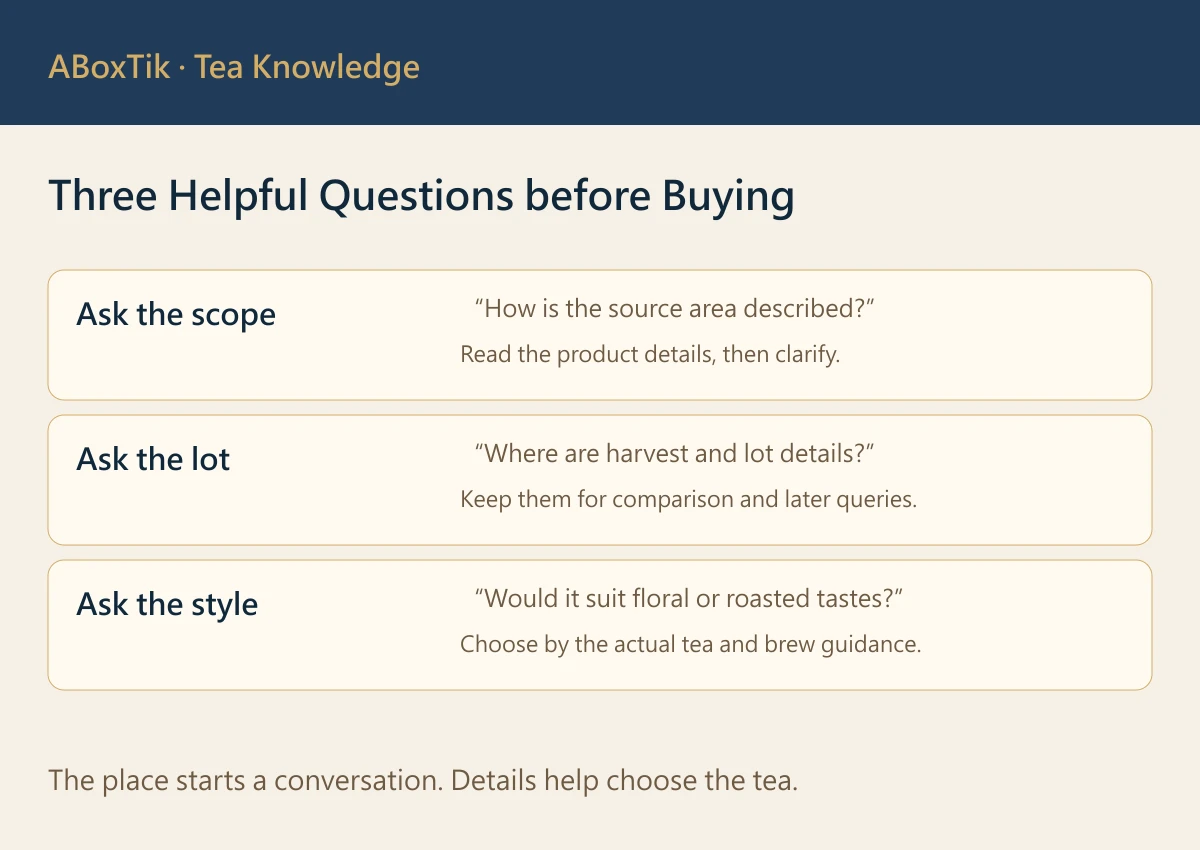
Three buying questions that make a place name useful
- What area does this origin name cover for the product?
- Which cultivar, harvest, lot or processing details are available?
- Does any traceability information correspond to this item and batch?
These questions make expectations clearer. If only basic information is available, decide how important the missing detail is to this purchase, then consider flavour, budget and brewing format. A tasting note remains useful when kept as a note about this lot and infusion. There is no need to turn one cup into a permanent verdict on a whole region.
A little choice to try: one packet has a famous mountain name; another describes its source scope, cultivar and processing. Which would be easier to ask about first? Begin with the more complete information, then check whether the tea sounds enjoyable. A familiar place name need not receive an automatic ticket to the final round.
Keep brewing notes with this single-origin tea
Follow the packet’s guidance first. Record the tea name, purchase information, leaf and water quantities, temperature, time, aroma and mouthfeel. For two cups, use the same water and similar vessel capacities, while recording each tea’s instructions. If the guidance differs, follow it separately and make that difference explicit in the notes.
To investigate one brewing variable, use the same lot of fresh dry tea and change just that variable between brews. Expecting a named “mountain taste” can distract from what is actually enjoyable. Use concrete observations such as a clearer sweetness or a more noticeable roast, and keep them with the conditions that produced the cup.
TAGs classification and grading can extend flavour vocabulary. Processing context is available in the oolong oxidation guide; the aroma guide and steeping-time guide support practical observation. Keep tasting language and actual source information together, with a separate job for each.
Build a personal tea map, one packet at a time
The appeal of single-origin tea can be the invitation to understand a place and the tea supplied from it. Add cultivar, processing and lot details, and that place becomes a more useful part of the choice. There is time to learn one region before remembering an entire map.
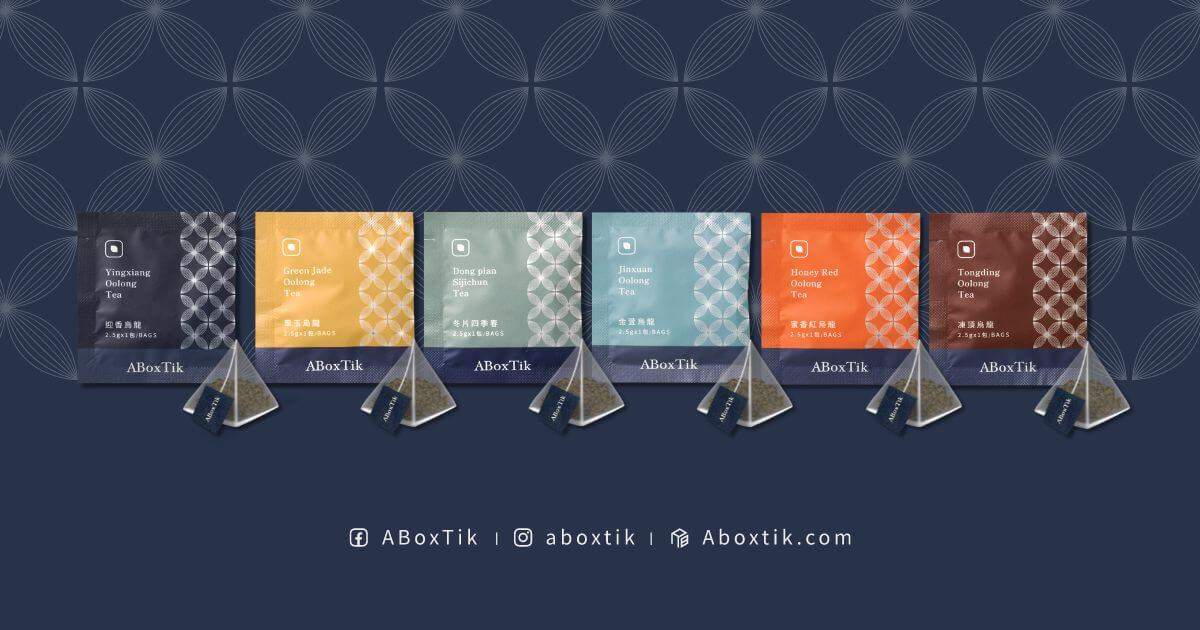
For a flavour exploration, read the current details of the Classic Taiwanese Tea set or Cuiyu oolong. Look at the origin, lot and processing information actually provided for each item. A mixed selection is a way to explore flavours; any individual origin description still belongs with its own product details.
After choosing, follow tea storage guidance and keep source notes alongside the packet. Bring the product name and preferred flavour when talking with ABoxTik. Our guide to Taiwanese terroir and craft can connect the next place name to a familiar everyday cup.
Follow ABoxTik | A place begins the conversation. Details help choose the tea.
Related recommendations
- Taiwan tea regions: begin with the wider map.
- Tea traceability: read marks, QR codes and source records.
- Shanlinxi tea: practise observing a named region.